By: Shelby McCullough| Published: December 25, 2025
Safety incidents related to unmanaged trees cause over $1 billion in property damage across American commercial sites every year. For commercial property managers in Orlando, keeping your grounds secure and visually appealing means being proactive about tree removal and routine maintenance. With certified arborist assessments and strategic planning, you can spot potential risks early—protecting assets while enhancing your property’s curb appeal.
Table of Contents
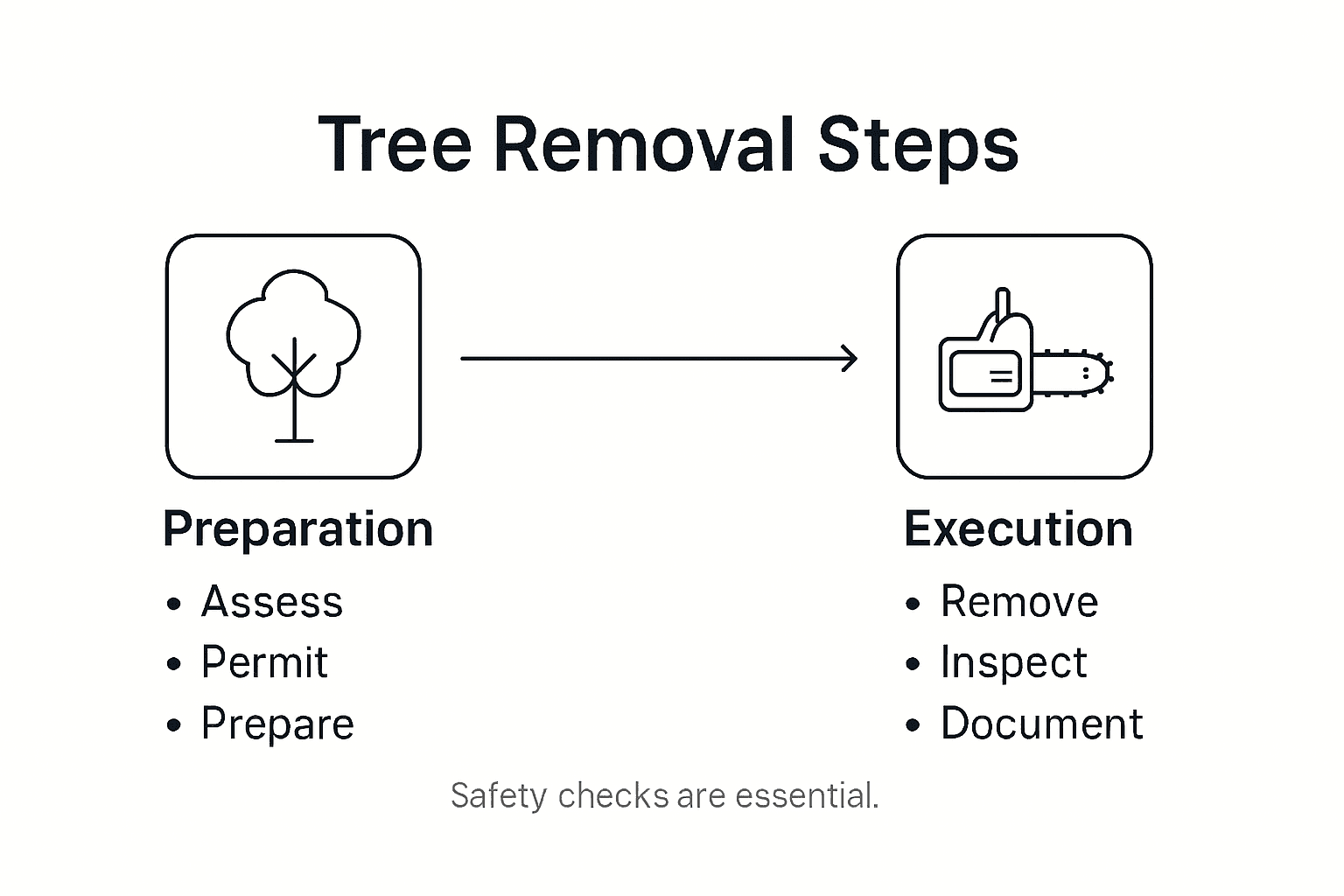
- Step 1: Assess Property For Tree Removal Needs
- Step 2: Obtain Permits And Verify Compliance
- Step 3: Prepare Site And Equipment
- Step 4: Execute Safe Tree Removal Operations
- Step 5: Inspect Site And Confirm Removal Quality
Quick Summary
| Key Point | Explanation |
|---|---|
| 1. Conduct Thorough Tree Assessments | Evaluate each tree for health and structural risks to prevent safety incidents and property damage. |
| 2. Secure Necessary Permits | Understand local regulations and obtain permits before tree removal to avoid legal complications. |
| 3. Prepare the Site Effectively | Establish a clear removal zone and select the right equipment to protect surrounding property and ensure safety. |
| 4. Follow Safe Removal Practices | Implement precise cutting techniques and maintain communication among crew members throughout the process to mitigate risks. |
| 5. Document the Removal Process | Perform a detailed site inspection and keep records to ensure compliance with safety and regulatory standards. |
Step 1: Assess Property for Tree Removal Needs
Commercial property managers must conduct systematic tree assessments to identify potential removal risks and opportunities. Your goal in this initial step is to thoroughly evaluate each tree on the property for health, structural integrity, and potential hazards that could impact safety or infrastructure.
Begin by performing a comprehensive tree inventory using specialized assessment tools, which will help quantify both the physical condition and environmental value of existing trees. During your walkthrough, examine critical factors like tree species, trunk diameter, overall height, root system proximity to buildings, visible signs of disease or decay, and potential structural weaknesses. Look for warning signs such as dead branches, fungal growth, significant trunk cavities, leaning trunks, or root damage near foundations. Professional arborists recommend documenting each tree with detailed notes, measurements, and photographic evidence to support your removal decision making process.
Pay special attention to trees located near critical infrastructure like parking lots, walkways, building foundations, and utility lines. Trees with significant structural compromises or those positioned in high traffic areas may require immediate professional evaluation to prevent potential property damage or safety incidents.
Pro tip: Schedule a professional arborist assessment annually to catch potential tree health issues before they become expensive emergency removal scenarios.
Here’s a quick reference table highlighting common tree risks and their business impacts for commercial property managers:
| Tree Risk Factor | Potential Business Impact | Recommended Action |
|---|---|---|
| Disease or Decay | Liability and emergency costs | Schedule professional inspection |
| Proximity to Utilities | Service disruption | Perform routine risk assessment |
| Structural Weakness | Building and infrastructure damage | Engage licensed removal experts |
| Dead Branches | Workforce and visitor safety threat | Remove hazardous limbs promptly |
Step 2: Obtain Permits and Verify Compliance
Navigating the legal requirements for commercial tree removal demands careful attention to local regulatory frameworks. Your primary objective in this step is to secure all necessary permits and ensure full compliance with municipal ordinances before initiating any tree removal activities.
Begin by contacting your local municipal office to understand specific tree removal license requirements. Each jurisdiction has unique regulations that mandate detailed documentation, including property site plans, precise tree locations, removal justification, and potential replacement strategies. You will typically need to submit a comprehensive application package that includes detailed measurements, photographs of the trees in question, and a clear explanation of why removal is necessary. Expect to pay associated permit fees and potentially provide proof of professional arborist involvement or tree assessment documentation.
Carefully review all local tree preservation ordinances to understand potential restrictions, protected species considerations, and mitigation requirements. Some municipalities mandate tree replacement ratios, meaning you might need to plant new trees equivalent to or greater than the number being removed. This process helps ensure environmental sustainability and maintains the urban tree canopy even as individual trees are removed for safety or development purposes.
Pro tip: Request a pre application consultation with local environmental officials to streamline your permit process and identify potential compliance challenges in advance.
Below is a summary table outlining key compliance requirements for commercial tree removal:
| Compliance Item | Typical Requirement | Why It Matters |
|---|---|---|
| Permit Application | Detailed site plan and justification | Avoid fines and legal delays |
| Photographic Documentation | Photos of trees and removal site | Verify compliance and approval |
| Replacement Strategy | New trees planned or planted | Maintain local green standards |
| Arborist Involvement | Professional assessments or reports | Enhance approval success rate |
Step 3: Prepare Site and Equipment
Successful commercial tree removal begins with meticulous site preparation and strategic equipment selection. Your goal is to create a safe, efficient workspace that minimizes potential damage to surrounding property and infrastructure.
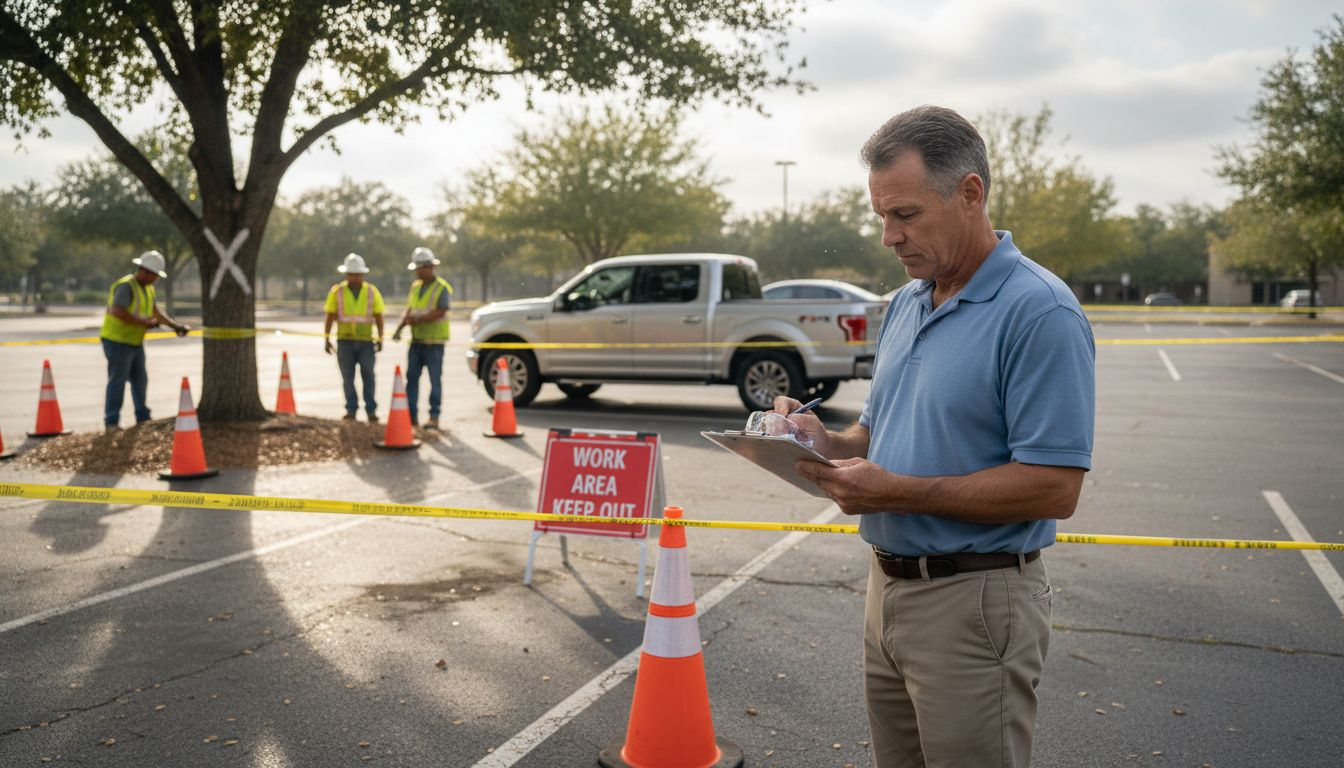
Start by carefully demarcating the removal zone and protecting adjacent areas. Establish clear boundaries around the tree, identifying specific zones for equipment staging, tree felling, and material collection. Create protective barriers around nearby structures, landscaping, and underground utilities to prevent accidental damage. Assess the ground conditions thoroughly, noting soil compaction, root systems, and potential obstacles that might impact your removal strategy. Select appropriate equipment based on the tree’s size, location, and surrounding environment. This might include cranes, bucket trucks, wood chippers, chainsaws, and specialized rigging equipment designed for precise and controlled tree removal.
Prepare a comprehensive safety perimeter by clearing the immediate work area of personnel, vehicles, and movable objects. Ensure all team members are equipped with appropriate personal protective equipment, including hard hats, safety glasses, hearing protection, and cut resistant gloves. Verify that communication systems are in place and that all workers understand their specific roles and safety protocols before beginning the removal process.
Pro tip: Conduct a brief team safety briefing and equipment check immediately before starting the removal to ensure everyone understands the specific challenges of this particular tree removal site.
Step 4: Execute Safe Tree Removal Operations
Executing a commercial tree removal requires precision, strategic planning, and unwavering commitment to safety protocols. Your primary objective is to systematically remove the tree while minimizing risks to personnel, property, and surrounding landscape.
Comprehensive crew preparation and risk assessment form the foundation of successful tree removal operations. Begin by conducting a final team briefing that outlines specific roles, emergency procedures, and potential hazard zones. Implement a systematic removal approach starting from the top of the tree and working downward, using controlled cutting techniques that predict and manage falling branch trajectories. Professional arborists recommend using directional cutting methods that allow precise control over tree section descent, typically employing rigging techniques to guide larger limbs and trunk segments safely to the ground.
Maintain constant communication among team members throughout the removal process. Establish clear verbal and hand signal protocols to coordinate movements, warn of potential dangers, and ensure everyone remains alert and positioned safely. Monitor environmental conditions continuously, being prepared to pause operations if wind speeds increase or unexpected structural weaknesses emerge. Utilize specialized equipment like crane systems, bucket trucks, and advanced rigging techniques to manage complex removals, particularly when trees are located near structures or in confined spaces.
Pro tip: Designate a dedicated safety observer who can maintain an unobstructed view of the entire removal site and immediately communicate any emerging risks to the active work team.
Step 5: Inspect Site and Confirm Removal Quality
The final stage of commercial tree removal requires meticulous site evaluation to ensure complete and professional execution. Your objective is to comprehensively verify that the removal meets all safety, regulatory, and property management standards.
Conduct a thorough post removal site inspection that systematically evaluates every aspect of the cleared area. Begin by examining the ground where the tree was located, checking for complete root removal, ground leveling, and absence of potential tripping hazards. Verify that all tree sections including trunk, branches, and stump have been completely removed, and assess the surrounding landscape for any inadvertent damage to soil, nearby vegetation, or infrastructure. Measure and document the removal site, confirming that the area matches the original project specifications and permits.
Documentate the entire removal process through comprehensive photographic evidence and written reports. Create a detailed record that includes before and after images, specific measurements, debris removal confirmation, and any restoration work performed. Pay special attention to potential underground utility impacts, soil compression, and root system disturbance. Ensure all safety equipment has been properly cleaned and stored, and that the site is left in a condition that meets or exceeds initial project requirements and local regulatory standards.
Pro tip: Conduct the final inspection with multiple team members to ensure multiple perspectives and catch any potential overlooked details during the site assessment.
Ensure Safe and Compliant Commercial Tree Removal with Expert Help
Managing commercial tree removal involves detailed assessment, navigating complex permit rules, and executing precise removal operations all while prioritizing safety and regulatory compliance. The challenges of identifying hazardous trees, obtaining necessary permits, preparing the site correctly, and confirming removal quality can overwhelm property managers. With risks to infrastructure, visitor safety, and legal obligations, professional support becomes essential.
McCullough Tree Service offers licensed and certified arborist expertise in every stage of commercial tree care. From thorough tree health assessments and permit guidance to safe removal and site restoration, we provide comprehensive solutions tailored to your property’s needs. Trust our team to handle hazardous limbs, ensure compliance, and protect your investment with skill and care. Learn more about our expert services at McCullough Tree Service.
Thinking about your next commercial tree project Make sure you partner with a trusted expert who understands the rigorous demands of safe and compliant tree removal
Contact us today at McCullough Tree Service to schedule your professional tree assessment or removal estimate. Don’t wait until risks escalate Take proactive steps now to secure your property’s safety and maintain peace of mind.
Frequently Asked Questions
What are the key steps in the commercial tree removal process?
To ensure safe property management, the key steps include assessing the property for tree removal needs, obtaining necessary permits, preparing the site and equipment, executing safe removal operations, and inspecting the site after removal. Begin with a thorough tree assessment to identify risks and follow up with proper documentation to streamline the process.
How can I ensure compliance with local tree removal regulations?
To ensure compliance, contact your local municipal office to understand tree removal license requirements. Prepare a comprehensive permit application that includes detailed site plans, tree locations, and justification for removal, enabling you to meet local laws effectively.
What should I look for when assessing trees for removal?
When assessing trees, look for signs of disease, structural weakness, or hazards that could impact safety or infrastructure, such as leaning trunks, dead branches, or root damage. Conduct a detailed inventory of each tree’s physical condition to make informed removal decisions.
How can I prepare the site safely for tree removal?
Prepare the site by demarcating the removal zone and protecting nearby structures and utilities. Establish clear boundaries, assess ground conditions, and select appropriate equipment to minimize the risk of accidental damage during removal operations.
What safety measures should be in place during tree removal?
Ensure that all team members wear appropriate personal protective equipment, such as hard hats and safety glasses, and maintain clear communication protocols throughout the operation. Designate a safety observer to monitor the removal site and alert the team to any emerging risks.
What should I document after tree removal?
After tree removal, document the entire process with photographs and written reports, including before and after images and confirmation of debris removal. This documentation will aid in verifying compliance with local regulations and can be useful for future reference.
Recommended
- Be smart heading into storm season with Florida trees – McCullough Tree Service
- McCullough Tree Service
- Tree Removal Maitland FL
- Tree Removal Orlando FL
- Tree Service DeBary FL