By: Shelby McCullough| Published: January 3, 2026
Most American homeowners in Central Florida underestimate the impact proper tree trimming has on property safety and curb appeal. When severe storms hit, neglected branches can pose serious risks to your home and landscape. Certified arborists offer expert techniques that not only prevent future damage but also promote healthier growth for native Florida tree species. This overview shares practical insights into specialized pruning methods designed to boost tree vitality, improve safety, and protect your investment year-round.
Table of Contents
- Defining Tree Trimming And Its Purpose
- Types Of Tree Trimming Techniques Used
- Benefits For Health, Safety, And Appearance
- Timing And Frequency In Central Florida
- Risks Of Improper Pruning And Legal Issues
- Why Certified Arborists Are Essential
Key Takeaways
| Point | Details |
|---|---|
| Tree Trimming is Essential | Proper tree trimming promotes health, safety, and aesthetics in landscapes, especially crucial in hurricane-prone Central Florida. |
| Techniques Matter | Employing the right pruning techniques, such as crown thinning and crown reduction, is vital for maintaining tree structure and health. |
| Consult Certified Arborists | Engaging certified arborists ensures professional expertise in tree care, enhancing the efficacy of trimming and avoiding legal risks. |
| Timely Maintenance is Key | Scheduling tree assessments regularly and trimming during dormant seasons minimizes stress on trees and maximizes health benefits. |
Defining Tree Trimming and Its Purpose
Tree trimming is a strategic landscaping practice involving the selective removal of specific branches to maintain tree health, safety, and aesthetic appeal in Central Florida environments. Proper pruning techniques are essential for preserving the structural integrity and long-term vitality of trees across residential and commercial landscapes.
In Central Florida, tree trimming serves multiple critical purposes beyond simple aesthetic maintenance. Arborists focus on removing dead, diseased, or potentially hazardous branches that could compromise tree stability during hurricane season. Structural pruning helps trees develop strong branch unions, reduces the risk of branch failure, and promotes healthier growth patterns specific to native Florida tree species.
The primary objectives of professional tree trimming include controlling tree size, improving air circulation, eliminating potential safety hazards, and enhancing overall landscape appearance. Professional pruning techniques not only maintain tree health but also increase property value by ensuring trees remain structurally sound and visually appealing.
Pro tip: Schedule professional tree trimming during the dormant winter months in Central Florida to minimize stress on trees and optimize their healing and growth potential.
Types of Tree Trimming Techniques Used
Professional arborists employ several specialized techniques to maintain tree health and structural integrity in Central Florida landscapes. Pruning methods are strategically designed to address specific tree maintenance objectives, focusing on enhancing tree vitality and landscape aesthetics.
The primary tree trimming techniques include crown thinning, crown raising, and crown reduction. Crown thinning involves selectively removing smaller branches to reduce canopy density, which improves light penetration and air circulation while minimizing wind resistance. Crown raising focuses on removing lower branches to create clearance for buildings, walkways, and vehicles. Crown reduction carefully reduces the overall tree size without compromising its structural health.
Tree pruning techniques require precise application based on individual tree species, age, and specific landscape requirements. Certified arborists assess each tree’s unique characteristics to determine the most appropriate trimming approach, ensuring minimal stress and maximum health benefits. Each technique serves a distinct purpose in maintaining tree structure, promoting growth, and preventing potential safety hazards in residential and commercial settings.
Pro tip: Consult a certified arborist before implementing any tree trimming technique to ensure the most appropriate method is used for your specific tree species and landscape conditions.
Here’s a summary of the main tree trimming techniques used by arborists in Central Florida:
| Technique | Primary Purpose | Common Applications |
|---|---|---|
| Crown Thinning | Reduce canopy density, enhance air/light flow | Improve health, lower wind resistance |
| Crown Raising | Create space below tree | Clear walkways, protect buildings |
| Crown Reduction | Decrease tree height/spread | Control size, reduce storm risk |
Benefits for Health, Safety, and Appearance
Tree trimming offers a comprehensive approach to landscape management that extends far beyond simple aesthetic improvements. Proper pruning techniques provide critical health benefits by systematically removing dead, diseased, or potentially hazardous branches that could compromise tree structure and surrounding property safety.
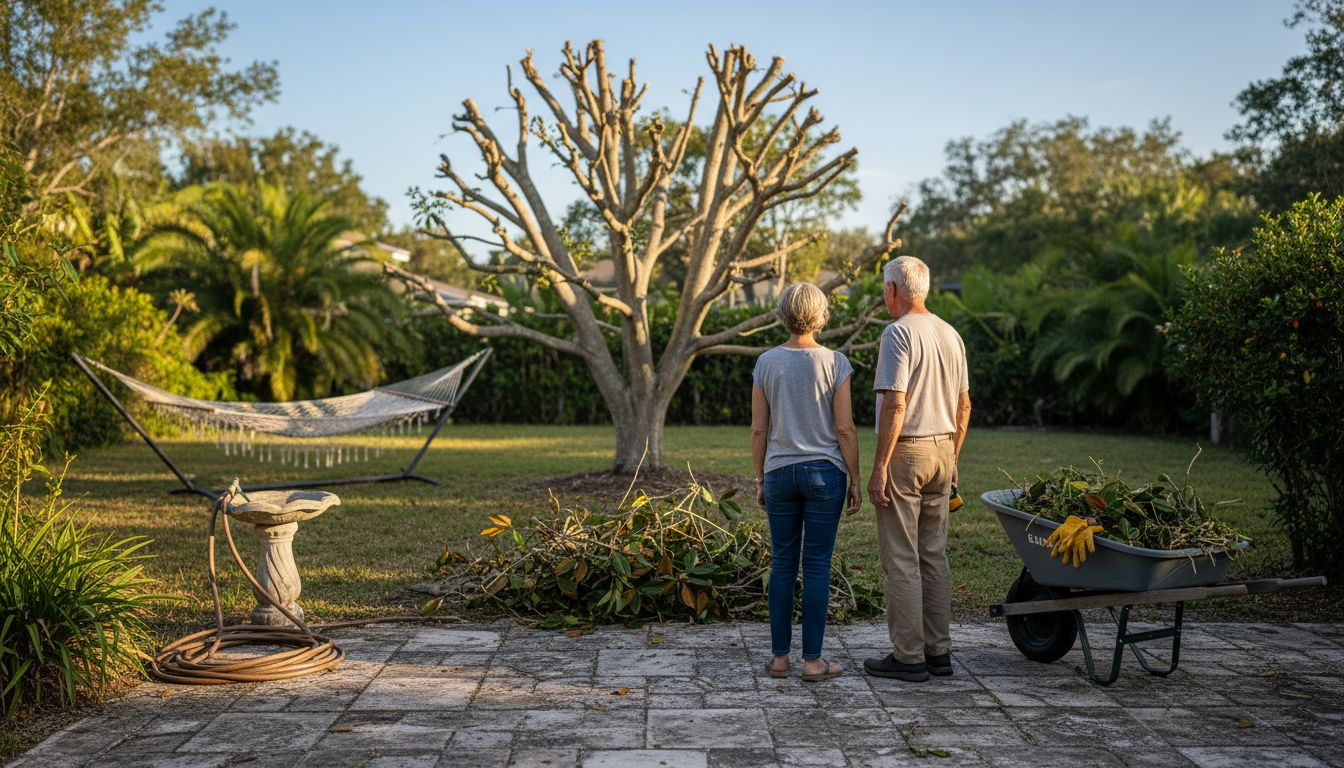
The health benefits of professional tree trimming are multifaceted. By strategically removing weak or damaged branches, arborists prevent potential disease spread, improve air circulation within the tree canopy, and promote robust growth patterns. Tree maintenance contributes significantly to environmental and community well-being, supporting urban ecosystems by maintaining trees that reduce air pollution, manage stormwater runoff, and provide critical habitat for local wildlife.
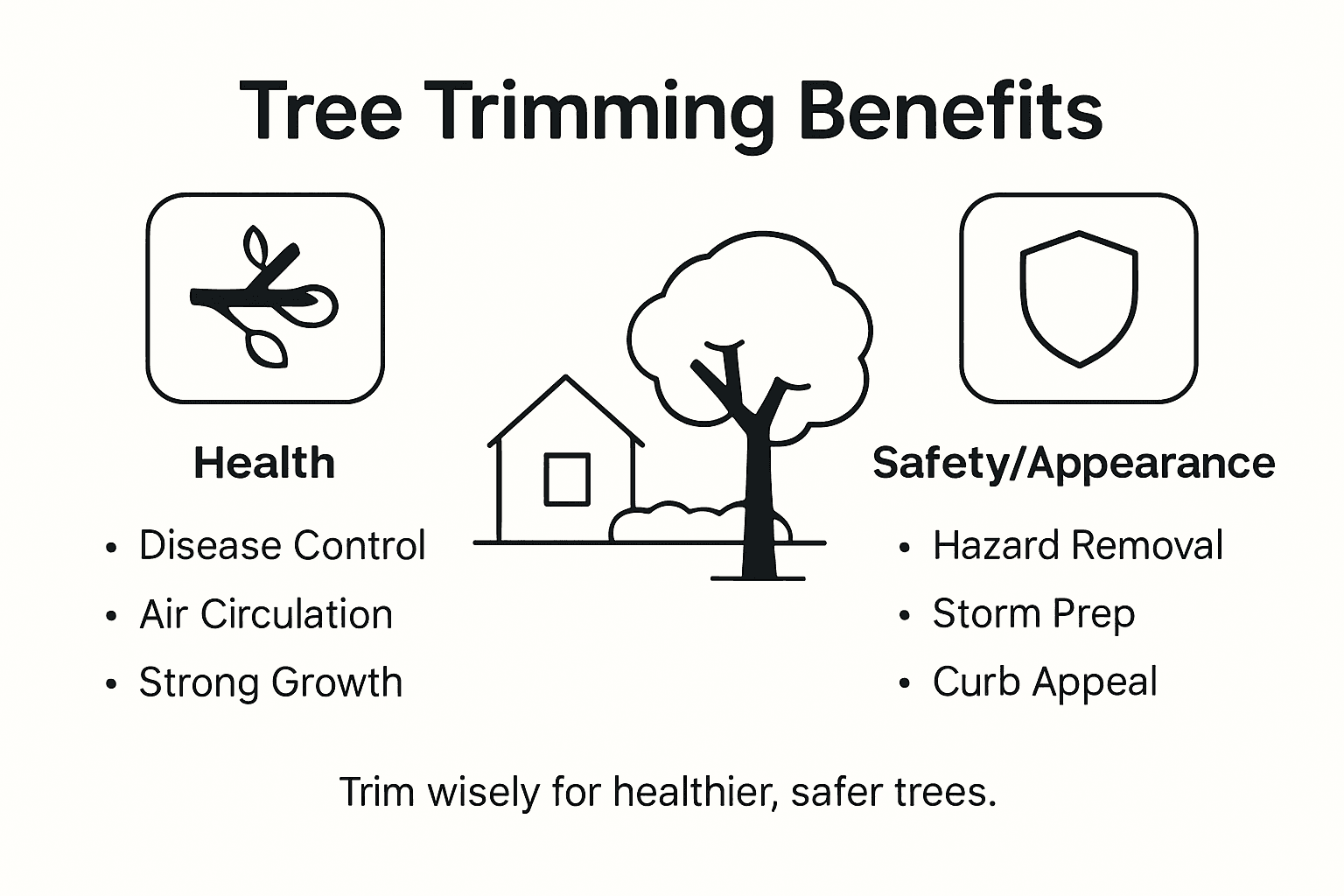
In Central Florida’s unique landscape, tree trimming plays a pivotal role in property safety and aesthetic appeal. Removing potentially dangerous branches reduces risks during hurricane season, prevents potential damage to structures, and enhances overall landscape visual integrity. Well-maintained trees not only increase property values but also contribute to the region’s natural beauty and ecological resilience.
Pro tip: Schedule professional tree assessments annually to proactively identify and address potential health or safety issues before they become significant problems.
Timing and Frequency in Central Florida
Tree maintenance schedules in Central Florida require careful consideration of the region’s unique climate and environmental conditions. Understanding the optimal timing for tree trimming is crucial for maintaining tree health, ensuring property safety, and supporting landscape aesthetics throughout the year.
In Central Florida, tree trimming frequency varies depending on tree species, age, and specific landscape requirements. Young trees typically require more frequent pruning to establish strong structural foundations, while mature trees need less intervention. Seasonal pruning becomes particularly critical during preparation for hurricane season, when removing weak or potentially hazardous branches can prevent significant property damage and tree health complications.
Pruning strategies for Florida landscapes recommend gradual, strategic trimming to minimize stress on trees. Most native and ornamental trees benefit from annual or biannual professional assessments, with actual trimming occurring during dormant periods or immediately after flowering. The goal is to balance tree health, safety considerations, and aesthetic appeal while respecting each tree’s natural growth patterns and regional environmental challenges.
Pro tip: Schedule professional tree assessments during late winter or early spring to identify potential trimming needs before the active growth season begins.
Risks of Improper Pruning and Legal Issues
Improper tree pruning practices can create significant long-term damage to tree health, structural integrity, and property value in Central Florida landscapes. Homeowners who attempt DIY tree trimming without professional expertise risk creating structural weaknesses, decay points, and potentially catastrophic limb failures that compromise both tree and property safety.
Legal liability represents a critical consideration for property owners. Tree maintenance responsibilities require proactive management to prevent potential hazards. Specific dangerous pruning practices like topping or excessive branch removal can create structural vulnerabilities that may result in property damage, personal injury, and potential legal claims if fallen branches cause harm to neighboring properties or individuals.
Central Florida’s unique environmental conditions amplify the risks associated with improper pruning. Techniques such as over-lifting, random branch cutting, and failing to understand species-specific growth patterns can permanently damage trees, reducing their ability to withstand hurricanes, severe storms, and other regional weather challenges. Professional arborists understand these nuanced requirements and can implement pruning strategies that maintain tree health while mitigating potential legal and safety risks.
Pro tip: Maintain detailed documentation of professional tree assessments and pruning work to protect yourself from potential liability and demonstrate responsible property maintenance.
Why Certified Arborists Are Essential
Certified arborists in Orlando represent a critical resource for maintaining the health, safety, and aesthetic value of Central Florida landscapes. These highly trained professionals possess specialized knowledge that goes far beyond simple tree trimming, offering comprehensive understanding of tree biology, regional environmental conditions, and advanced preservation techniques unique to Florida’s challenging climate.
The expertise of a certified arborist encompasses multiple critical dimensions of tree care. Professional assessment involves sophisticated diagnostic skills to identify potential disease, structural weaknesses, and environmental stressors that untrained individuals might easily overlook. Their training enables them to make precise decisions about pruning techniques, ensuring minimal stress and maximum health for each individual tree species native to Central Florida’s complex ecosystem.
Certified arborists bring scientific rigor and regulatory compliance to landscape management. They understand complex factors like soil conditions, native tree species characteristics, hurricane preparedness, and long-term tree development strategies. By combining technical knowledge with hands-on experience, these professionals protect property investments, mitigate potential safety risks, and contribute to the overall environmental health of residential and commercial landscapes throughout the region.
Pro tip: Request to see a certified arborist’s professional credentials and recent continuing education certificates before engaging their services to ensure you’re working with a truly qualified expert.
Compare the roles of certified arborists and homeowners in tree care:
| Role | Key Responsibilities | Required Knowledge | Typical Impact on Tree Health |
|---|---|---|---|
| Certified Arborist | Diagnose, plan, execute pruning | Advanced tree biology | Maximizes health, minimizes risk |
| Homeowner | Basic maintenance, observation | Limited to practical care | May inadvertently harm tree |
Protect Your Central Florida Trees with Expert Trimming from McCullough Tree Service
Maintaining healthy, safe, and beautiful trees in Central Florida requires more than just occasional trimming. The article highlights key challenges such as preventing structural damage, reducing storm risks, and using precise pruning techniques like crown thinning and crown raising. Without professional care, improper pruning can cause long-lasting harm and legal liabilities. If you want to avoid these pitfalls and keep your trees thriving through hurricane season and beyond, partnering with certified arborists who understand the unique needs of Florida’s landscape is essential.
Trust McCullough Tree Service for licensed tree trimming and expert care. Our certified arborists specialize in strategic pruning that enhances tree health and safety while increasing your property value. Whether you need routine maintenance, emergency storm cleanup, or a detailed tree health assessment, we provide the reliable, compliant service that Central Florida homeowners and businesses depend on. Don’t wait for problems to grow — secure the future of your landscape today by visiting McCullough Tree Service, exploring our tree trimming services, and scheduling your professional consultation now.
Frequently Asked Questions
What is the purpose of tree trimming in landscapes?
Tree trimming helps maintain tree health, enhances safety by removing hazardous branches, and improves the aesthetic appeal of landscapes.
When is the best time to trim trees in Central Florida?
The optimal time for tree trimming is during the dormant winter months, which minimizes stress on the trees and promotes better healing and growth.
What types of tree trimming techniques are commonly used?
Common techniques include crown thinning, crown raising, and crown reduction, each serving specific purposes like improving air circulation, creating clearance, and controlling tree size.
Why should I hire a certified arborist for tree trimming?
Certified arborists have specialized expertise in tree biology, regional environmental conditions, and advanced preservation techniques, ensuring proper tree care and minimizing risks associated with improper pruning.
Recommended
- McCullough Tree Service
- Be smart heading into storm season with Florida trees – McCullough Tree Service
- Tree Removal Altamonte Springs FL
- Tree Service Altamonte Springs FL