By: Shelby McCullough| Published: January 5, 2026
Most American homeowners in Central Florida underestimate how much proper palm tree trimming impacts both safety and neighborhood appeal. Improper pruning practices send thousands of dollars in recovery costs soaring every year for those who skip expert guidance or overlook local laws. The right approach keeps your yard stunning and minimizes hazards while following municipal rules that protect Florida’s iconic green spaces.
Table of Contents
- Defining Palm Tree Trimming and Its Role
- Types of Palm Trimming and Common Misconceptions
- Health and Safety Benefits for Your Landscape
- Legal and Permit Requirements in Central Florida
- Risks of Neglect and Improper Techniques
Key Takeaways
| Point | Details |
|---|---|
| Importance of Professional Pruning | Employing certified arborists ensures proper palm tree maintenance, enhancing health and structural integrity. |
| Risks of Over-Pruning | Excessive removal of fronds weakens palms, reducing nutrient production and increasing vulnerability to pests and diseases. |
| Species-Specific Care | Different palm species have unique trimming needs; understanding these can prevent long-term damage and promote resilience. |
| Legal Considerations | Familiarize yourself with local regulations regarding palm tree trimming to avoid legal issues and maintain community standards. |
Defining Palm Tree Trimming and Its Role
Palm tree trimming is a specialized horticultural practice focused on maintaining the health, aesthetics, and structural integrity of palm trees in residential and commercial landscapes. Unlike traditional tree pruning, palm tree maintenance requires precise techniques that respect the unique growth patterns of these distinctive plants. Palm tree pruning involves strategically removing dead, damaged, or diseased fronds to support the tree’s overall vitality and appearance.
The primary goals of palm tree trimming extend beyond simple aesthetic enhancement. Professional arborists understand that proper pruning helps palms maintain optimal photosynthesis capabilities and structural strength. By carefully removing only dead or weakened fronds, tree care experts ensure that the palm can continue producing food and maintaining its natural defense mechanisms. Not all palm species require identical trimming approaches – some are self-cleaning and naturally shed old fronds, while others need occasional professional intervention to remain healthy.
Proper palm tree maintenance involves recognizing the delicate balance between necessary trimming and potential over-pruning. Excessive removal of green fronds can significantly weaken the palm, reducing its ability to generate nutrients and potentially compromising its long-term health. Certified arborists recommend a conservative approach that preserves the tree’s natural canopy structure and supports its inherent growth patterns. This careful strategy helps protect the palm from potential stress, disease, and structural instability.
Pro tip: Schedule professional palm tree inspections during early spring to assess trimming needs and prevent potential health issues before the intense Florida summer season begins.
Types of Palm Trimming and Common Misconceptions
Palm tree trimming is far more nuanced than most homeowners realize, with distinct approaches depending on the specific palm species and its natural characteristics. Different palm types require unique maintenance strategies, ranging from completely hands-off approaches to selective, minimal pruning. Some palm varieties naturally self-clean, dropping dead fronds without human intervention, while others demand careful professional assessment to maintain their health and structural integrity.
One of the most persistent misconceptions about palm tree maintenance involves aggressive trimming practices. Contrary to popular belief, removing excessive fronds does not strengthen palms or prepare them for storm season. In fact, overpruning can significantly weaken the tree, reducing its ability to generate nutrients and protect itself from environmental stressors. Professional arborists emphasize preserving as many healthy green fronds as possible, understanding that these leaves are critical for the palm’s photosynthesis and overall resilience.
The two primary categories of palm trees – those with crownshafts and those without – dictate dramatically different trimming approaches. Crownshaft palms typically require minimal intervention, as they naturally maintain their appearance and health. Palms without crownshafts may need occasional professional removal of dead or damaged fronds to prevent potential safety hazards and maintain aesthetic appeal. Homeowners should resist the temptation to undertake extensive trimming themselves, as improper techniques can cause long-term damage to these unique and valuable landscape features.
Pro tip: Consult a certified arborist who specializes in palm trees before attempting any trimming, as each species has unique requirements that can dramatically impact its long-term health and appearance.
Here’s a comparison of trimming needs for different palm tree types:
| Palm Type | Maintenance Approach | Common Issues |
|---|---|---|
| Crownshaft palms | Minimal pruning required | Rarely accumulate dead fronds |
| Non-crownshaft palms | Occasional professional trim | Dead fronds may pose hazards |
| Self-cleaning species | Little to no intervention | Rare structural concerns |
| Non-self-cleaning | Selective removal as needed | May block pathways or sightlines |
Health and Safety Benefits for Your Landscape
Palm trees contribute significantly to landscape health, offering more than just aesthetic appeal. Proper pruning practices protect both tree vitality and property safety, addressing potential risks before they become critical issues. By strategically removing dead, damaged, or diseased fronds, homeowners can prevent potential hazards such as falling debris, reduce the spread of plant diseases, and maintain the overall structural integrity of their palm trees.
The health benefits of professional palm tree maintenance extend beyond immediate visual improvements. Careful pruning helps prevent nutrient deficiencies, particularly potassium, which can compromise the palm’s ability to resist environmental stressors. Removing dead or weakened fronds allows the tree to redirect energy toward healthy growth, reducing susceptibility to pest infestations and improving overall tree resilience. This proactive approach not only protects the individual tree but also contributes to the broader ecosystem health of your landscape.
Safety considerations are paramount when managing palm trees in residential and commercial environments. Hanging or dead fronds can become dangerous projectiles during Florida’s intense storm seasons, posing significant risks to property and personal safety. Professional arborists understand the delicate balance of removing just enough foliage to mitigate risks without compromising the tree’s natural protective mechanisms. By maintaining proper canopy structure and removing potential hazards, homeowners can create a safer outdoor environment while preserving the natural beauty of their palm trees.
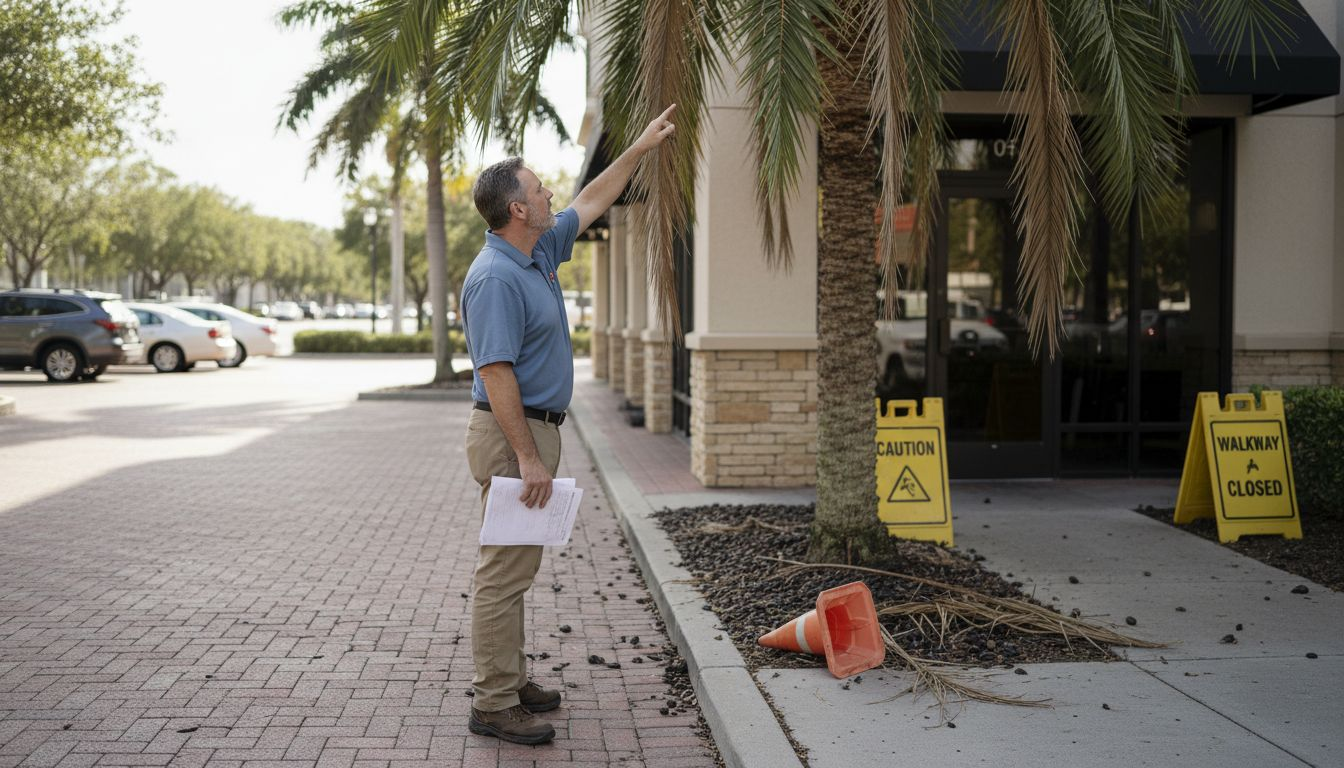
Pro tip: Schedule a professional palm tree assessment before hurricane season to identify and remove potential safety risks, ensuring your landscape remains both beautiful and secure.
Legal and Permit Requirements in Central Florida
Navigating the legal landscape of palm tree maintenance in Central Florida requires careful attention to local and state regulations. Palm tree pruning along public areas demands strict compliance with governmental guidelines, particularly in areas adjacent to highways, public right-of-ways, and municipal spaces. Property owners must understand that palm tree maintenance is not simply a matter of personal preference, but a regulated activity with specific legal requirements designed to ensure public safety and environmental preservation.
Central Florida municipalities have developed comprehensive regulations to prevent harmful pruning practices that could compromise tree health or community aesthetics. Specific prohibited techniques include aggressive methods like topping or hatracking, which can permanently damage palm trees and create potential safety hazards. Homeowners and property managers must obtain appropriate permits for significant pruning or removal operations, especially when trees are located near public infrastructure or in zones with special environmental protections. These regulations aim to maintain the delicate balance between property maintenance and preserving the region’s unique urban forest landscape.
The permitting process for palm tree maintenance involves multiple layers of oversight from local governments and transportation authorities. Different jurisdictions within Central Florida may have varying specific requirements, but most share common principles of protecting tree health, ensuring public safety, and maintaining community aesthetic standards. Property owners should consult with local zoning departments or professional arborists to understand the precise permit requirements for their specific location, as regulations can differ between counties and municipalities within the greater Orlando metropolitan area.
Pro tip: Contact your local municipal zoning office to confirm specific palm tree trimming regulations before beginning any significant landscape maintenance to avoid potential legal complications and fines.
Risks of Neglect and Improper Techniques
Neglecting palm tree maintenance or employing incorrect pruning techniques can lead to severe, often irreversible damage to these iconic landscape features. Improper pruning practices can dramatically compromise palm tree health and structural integrity, creating long-term vulnerabilities that extend far beyond immediate aesthetic concerns. Homeowners who attempt DIY palm tree trimming without professional knowledge risk permanently damaging their trees through well-intentioned but destructive methods.
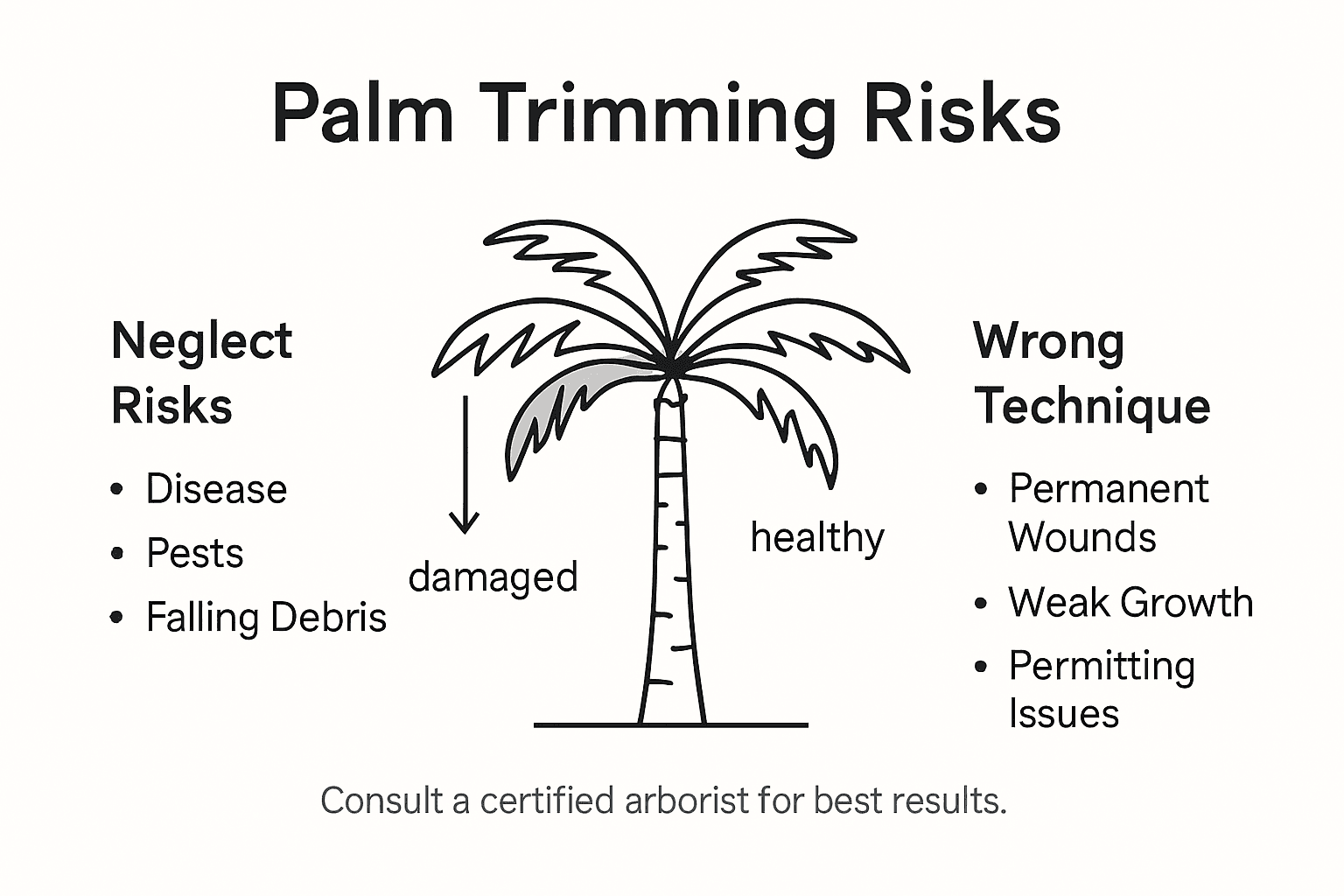
One of the most critical risks associated with improper palm tree maintenance involves the use of climbing spikes and excessive frond removal. These techniques create permanent wounds that never fully heal, leaving palms susceptible to insect infestations, disease transmission, and structural weakening. Overpruning reduces the tree’s ability to produce food through photosynthesis, narrowing its trunk and compromising its natural defense mechanisms. The resulting structural defects can make palms more vulnerable during Florida’s intense storm seasons, increasing the likelihood of catastrophic failure during high-wind events.
The consequences of neglect extend beyond individual tree health to broader landscape ecosystem impacts. Palms with compromised structures become potential hazards, posing risks to property and personal safety. Weakened trees are more likely to drop fronds unexpectedly, create entry points for destructive pests, and struggle to maintain their natural resilience against environmental stressors. Professional arborists understand the delicate balance required to maintain palm tree health, recognizing that each species has unique maintenance requirements that demand specialized knowledge and precision.
Pro tip: Always consult a certified arborist before attempting any significant palm tree maintenance, as professional expertise can prevent costly and potentially dangerous mistakes.
Key risks of improper palm tree trimming and neglect:
| Risk Factor | Potential Consequence | Professional Solution |
|---|---|---|
| Overpruning green fronds | Reduced nutrient production | Trim only dead/diseased fronds |
| Use of climbing spikes | Permanent trunk wounds | Use harness or bucket truck |
| Neglecting inspections | Falling debris, pest infestation | Schedule seasonal arborist assessment |
| Aggressive topping | Permanent structural damage | Preserve natural canopy |
Ensure Your Palm Trees Stay Healthy, Safe, and Compliant with Expert Care
Proper palm tree trimming is critical for protecting your property from risks like falling debris and pest infestations while supporting your trees’ natural health and growth. The article highlights key challenges such as avoiding overpruning, understanding species-specific trimming needs, and complying with Central Florida’s legal regulations. These pain points show how complex palm care can be without professional knowledge. When you consider terms like photosynthesis, crownshafts, and prohibited techniques, it becomes clear that expert intervention is essential for long-term landscape vitality.
McCullough Tree Service offers certified arborist expertise to help you navigate these challenges safely and effectively. Whether you need a professional palm tree health assessment, precise trimming aligned with legal guidelines, or emergency storm damage cleanup, we provide trusted solutions tailored to the needs of Central Florida residents. Don’t risk costly damage or fines from improper trimming. Act now to protect your investment and maintain lush, vibrant palms. Visit McCullough Tree Service to schedule a consultation and learn about our full range of tree care services. Your palms deserve expert care you can count on.
Frequently Asked Questions
What is palm tree trimming, and why is it important?
Palm tree trimming is a specialized practice that maintains the health, appearance, and structural integrity of palm trees. It is important because it helps ensure optimal photosynthesis, supports the tree’s resilience against diseases, and enhances its aesthetic appeal.
How can improper palm tree trimming affect the health of my tree?
Improper trimming can lead to severe damage, including permanent wounds that make the tree susceptible to pests and diseases. Overpruning can reduce the tree’s ability to produce nutrients, leading to structural weaknesses and increased vulnerability during storms.
What are the legal requirements for trimming palm trees?
Legal requirements for trimming palm trees often include obtaining permits for significant pruning or removal, especially in areas near public infrastructure. Regulations aim to protect tree health and public safety, so it’s essential to consult local zoning departments.
How often should I schedule professional palm tree inspections?
It is recommended to schedule professional inspections at least once a year, ideally in early spring. Regular assessments help identify trimming needs and prevent potential health issues as the tree enters the growing season.
Recommended
- McCullough Tree Service
- Be smart heading into storm season with Florida trees – McCullough Tree Service
- Tree Removal Altamonte Springs FL
- Tree Service Altamonte Springs FL