By: Shelby McCullough| Published: January 17, 2026
Powerful storms can leave Orlando neighborhoods littered with broken branches, split trunks, and trees leaning dangerously close to homes or power lines. In the hours after severe weather hits Central Florida, prompt action makes the difference between minor repairs and serious property risks. This guide focuses on the urgent steps Orlando homeowners should take for emergency tree removal and licensed arborist help when safety cannot wait.
Table of Contents
- Step 1: Assess Immediate Risks and Damage
- Step 2: Contact Certified Arborist Services
- Step 3: Secure the Area and Remove Hazards
- Step 4: Execute Safe Tree Removal Procedures
- Step 5: Verify Site Cleanup and Final Safety
Quick Summary
| Key Takeaway | Explanation |
|---|---|
| 1. Assess Immediate Risks First | Evaluate surrounding areas for hazards like hanging branches and cracked trunks immediately after a storm. |
| 2. Hire Certified Arborists | Contact certified arborists with expertise in storm-damaged trees for accurate assessments and safe interventions. |
| 3. Create a Safety Perimeter | Establish a clear perimeter around damaged trees to keep people and pets safe from potential hazards. |
| 4. Follow Safe Removal Protocols | Use personal protective equipment and follow established protocols if attempting to remove damaged trees yourself. |
| 5. Verify Site Safety Post-Cleanup | Conduct a thorough inspection after cleanup to ensure all hazards are removed and the site is safe for occupation. |
Step 1: Assess Immediate Risks and Damage
After a severe storm strikes Orlando, your first critical task is to carefully evaluate potential hazards around your damaged trees. This means looking beyond surface damage and identifying serious structural issues that could threaten your property or personal safety. Immediate storm damage assessment requires a systematic and cautious approach.
Start by scanning your property from a safe distance. Look for obvious warning signs like hanging branches, split trunks, or trees leaning precariously close to your home, power lines, or vehicles. Pay special attention to large trees with significant crown damage or trees with extensive bark wounds. Careful tree examination reveals critical information about potential risks. Note that some trees might appear damaged but remain structurally sound, while others could pose immediate danger despite minimal visible injury.
Your primary goal is identifying trees that require professional intervention versus those that might recover with proper care. Trees with complete leaf loss or broken limbs can potentially survive if their core structure remains intact. However, major trunk damage typically signals irreparable harm. When in doubt about a tree’s stability or condition, always prioritize safety and contact a certified arborist for a professional assessment.
Pro tip: Keep a safe distance from damaged trees and never attempt to remove large branches or evaluate structural damage without professional expertise.
Here’s a summary of types of tree damage and suggested next steps:
| Type of Damage | Immediate Risk Level | Likely Outcome | Suggested Action |
|---|---|---|---|
| Hanging branches | High | Unpredictable falling | Keep clear, call an arborist |
| Split or cracked trunk | High | Structural failure | Professional removal likely needed |
| Broken major limbs | Moderate | Possible recovery | Assess, prune if safe |
| Leaning toward power lines | Critical | Power outage/fire risk | Contact utility company urgently |
| Extensive bark wounds | Medium | Disease entry risk | Monitor, consult arborist |
| Complete leaf loss | Low-Moderate | May recover | Watch for regrowth |
Step 2: Contact Certified Arborist Services
Navigating tree damage after a severe storm requires professional expertise, making it critical to quickly connect with qualified arborists who can assess and address potential risks. Certified arborist services offer specialized knowledge essential for safe and effective tree management during emergency situations.
When reaching out to professional arborists, prioritize those certified by the International Society of Arboriculture who have extensive experience handling storm damaged trees. Professional tree risk assessment requires specialized skills to accurately evaluate structural integrity and potential hazards. Request written estimates from multiple certified professionals, ensuring they provide comprehensive documentation of proposed services, estimated costs, and detailed damage evaluations.
During your initial consultation, prepare to share specific details about the storm damage, including photographs if possible, and the location of affected trees. Reputable arborists will conduct a thorough onsite assessment, recommend appropriate interventions, and help you understand the potential recovery or removal options for your damaged trees.
Pro tip: Always verify an arborist’s current certification, insurance coverage, and request references before authorizing any tree service work.
Step 3: Secure the Area and Remove Hazards
After a severe storm, your immediate priority is creating a safe environment by identifying and mitigating potential dangers around damaged trees and property. Storm damage safety protocols are critical for protecting yourself and your family from unexpected risks that can emerge in the aftermath of destructive weather.
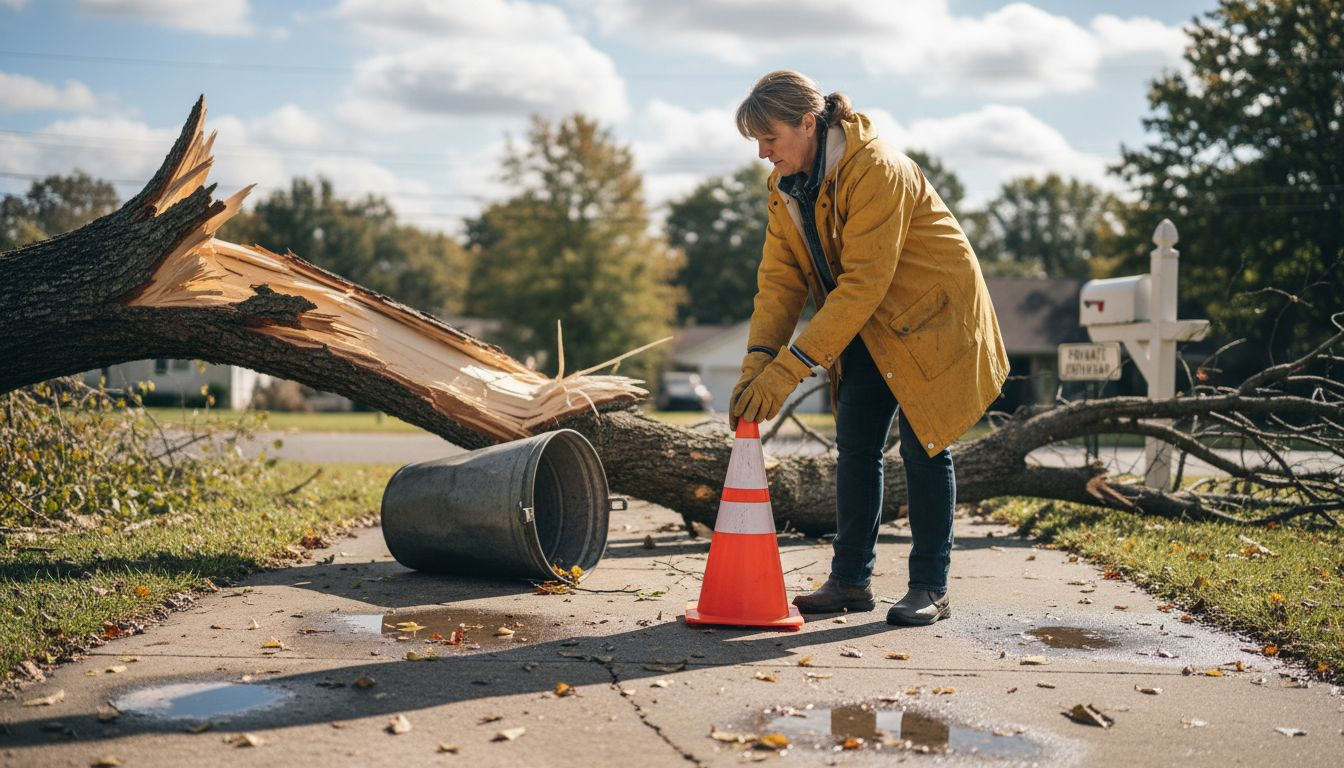
Begin by establishing a clear safety perimeter around damaged trees and fallen debris. Look for critical hazards such as hanging branches, leaning trees near power lines, or split trunks that could potentially collapse. Identifying hazardous trees requires careful visual inspection and an understanding of potential structural weaknesses. Keep all people and pets away from unstable tree areas, and use caution tape or temporary barriers to mark dangerous zones. If power lines are involved or large sections of trees are precariously positioned, immediately contact local emergency services or your utility company for professional assistance.
While waiting for professional help, document the damage by taking clear photographs from a safe distance. These images can be valuable for insurance claims and will help arborists understand the extent of tree damage during their initial assessment. Remember that personal safety always takes precedence over immediate cleanup efforts.
Pro tip: Wear protective gear like sturdy boots, gloves, and safety glasses if you must approach damaged areas, and never attempt to remove large branches or trees without professional support.
Compare self-cleanup and professional tree cleanup options after a storm:
| Factor | Self-Cleanup | Professional Service |
|---|---|---|
| Safety | High risk, limited gear | Trained, proper equipment |
| Cost | Lower upfront | Higher but comprehensive |
| Insurance Claim | May limit coverage | Often required for full claim |
| Convenience | Time-consuming | Faster, handles documentation |
| Hazard Removal | Not for major risks | Handles all hazards safely |
Step 4: Execute Safe Tree Removal Procedures
Removing storm damaged trees requires precision and extreme caution to protect yourself and your property from potential accidents. Chainsaw safety protocols are critical for minimizing risks during tree removal operations, especially in challenging post storm environments.
Before beginning any removal work, conduct a thorough assessment of the tree’s condition and surrounding area. Identify potential hazards such as electrical lines, structural vulnerabilities, and unstable ground that could complicate the removal process. Tree cutting techniques demand careful planning and strategic approach. Ensure you have appropriate personal protective equipment including hard hat, safety glasses, hearing protection, sturdy gloves, and steel toed boots. If the tree is large or positioned near structures or power lines, professional intervention is strongly recommended.
When working with smaller trees or branches, maintain a stable stance and plan your cutting strategy carefully. Always have a clear escape route and communicate with any team members about potential falling directions. Cut branches systematically from the top down, working in sections to control debris and minimize unexpected movement. Remember that storm damaged trees can have unpredictable tension and structural weaknesses that make them extremely dangerous to inexperienced handlers.
Pro tip: Never attempt tree removal alone and always assume a damaged tree is more unstable than it appears from a distance.
Step 5: Verify Site Cleanup and Final Safety
After completing tree removal and debris management, your final responsibility is conducting a comprehensive safety assessment of the affected area. Storm site cleanup procedures are crucial for ensuring no hidden hazards remain that could compromise your property or personal safety.
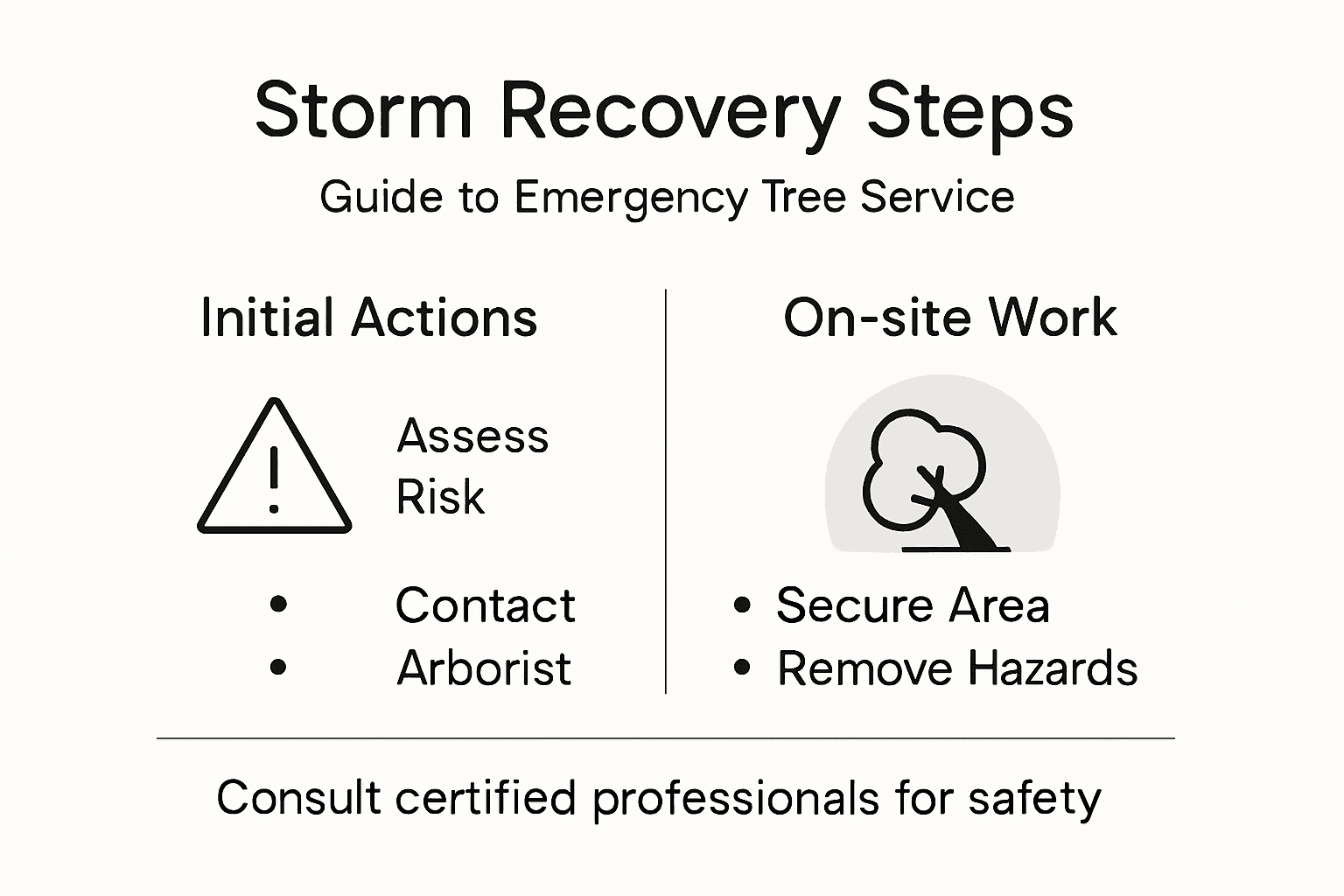
Carefully inspect the entire site for potential remaining risks such as partially detached branches, root systems that might have destabilized surrounding ground, or debris that could create tripping hazards. Systematically walk the area wearing protective footwear and gloves, looking for sharp objects, unstable ground, or potential ecological risks. Disaster recovery safety guidelines recommend thoroughly ventilating any affected structures, removing standing water, and disinfecting surfaces that may have been exposed to contaminated debris or organic materials.
Document your cleanup process by taking detailed photographs and notes about the work completed. This documentation can be valuable for insurance purposes and provides a clear record of the restoration efforts. Pay special attention to areas near structures, power lines, and critical landscaping elements to ensure complete and safe removal of storm damaged vegetation.
Pro tip: Schedule a professional follow up assessment within two weeks to confirm no hidden structural damage or root system instability remains undetected.
Expert Emergency Tree Services When Storm Damage Strikes
Storm recovery can be overwhelming when faced with dangerous hanging branches, split trunks, or leaning trees threatening your property. The article highlights how important it is to identify risks and secure your space while relying on certified arborist expertise to safely assess and remove hazards. At McCullough Tree Service, we understand the urgency and complexity of storm damage situations in Orlando and Central Florida. Our licensed professionals specialize in emergency storm cleanup, tree risk assessment, and safe removal using industry best practices and proper protective equipment.
Protect your family and property by acting now with skilled experts you can trust.
Discover how our certified arborists provide the experience and equipment you need to handle even the most complex storm damaged trees. Visit our McCullough Tree Service to learn about our full range of services including tree trimming, stump grinding, and land clearing. Don’t wait until risks escalate. Call us today to schedule your emergency tree service and ensure a safe and thorough storm recovery.
Start now and regain peace of mind with trusted professionals ready to serve your tree care needs.
Frequently Asked Questions
What should I do first after storm damage to my trees?
Evaluate potential hazards by assessing the condition of your damaged trees. Look for warning signs such as hanging branches or leaning trunks, and determine if you need to contact a certified arborist for further assessment.
How can I identify if a tree is a danger after a storm?
Check for signs like split trunks, extensive bark wounds, or trees leaning towards power lines. If you observe significant damage, prioritize safety by marking off hazardous areas and calling a professional for help.
When should I contact a certified arborist following a storm?
Reach out to a certified arborist as soon as you notice potential risks from damaged trees. A professional evaluation is essential for understanding structural integrity and determining whether trees can be saved or need to be removed.
What safety precautions should I take while assessing storm damage?
Always maintain a safe distance from damaged trees and avoid touching hanging branches or unstable trunks. Use caution tape to mark dangerous areas and wear protective gear if you need to approach the site.
How do I safely remove a tree that has been damaged by a storm?
If you must remove a damaged tree, begin by assessing the surrounding area for hazards. Use proper cutting techniques and protective equipment, and consider calling professionals if the tree poses significant risks or is near power lines.
What steps should I take to ensure safety after tree removal?
Conduct a thorough inspection of the site for any remaining hazards, such as sharp debris or unstable roots. Document the cleanup with photographs and notes, and consider scheduling a follow-up assessment within two weeks.
Recommended
- Quick and Effective Storm Cleanup Strategies
- Tree Trimming Preparation for Storm
- Responsibilities in Storm Cleanup: Essential Guide
- Protect Your Home with Hurricane Season Tree Preparation
- Tree Service Orlando FL
- Tree Service Winter Springs FL