By: Shelby McCullough| Published: May 17, 2026
TL;DR:
- Most Central Florida property owners neglect tree health until damage occurs, risking costly emergencies. Professional assessments identify hidden structural issues early, enabling targeted interventions that prolong tree life and protect property. These evaluations also provide legal documentation, cost savings, and personalized care plans tailored to regional climate challenges.
Most Central Florida property owners don’t think about their trees until something goes wrong. A limb crashes onto a roof, a tree leans after a storm, or a once-thriving oak starts dropping leaves out of season. The advantages of tree health assessments become obvious only in hindsight, and that’s exactly the problem. Professional assessments flip this script entirely. Instead of reacting to damage, you gain the insight to prevent it. This article walks through seven concrete reasons why scheduling a certified arborist evaluation is one of the smartest decisions you can make for your home or business.
Table of Contents
- 1. Early risk detection protects your property and loved ones
- 2. Preserving tree health extends lifespan and enhances curb appeal
- 3. Cost savings through prevention of emergency removals and damage
- 4. Professional evaluations provide legally defensible documentation and liability protection
- 5. Customized care recommendations to save and strengthen your trees
- 6. Adaptation to Central Florida’s climate challenges through ongoing monitoring
- 7. Peace of mind with expert transparency and ongoing support
- Comparison table: summary of key advantages of tree health assessments
- Our perspective: the assessment you skip is the one that costs you most
- Get a certified tree health assessment in Central Florida
- Frequently asked questions
1. Early risk detection protects your property and loved ones
Starting with safety, early detection is where professional tree health assessments deliver their most immediate value. Trees that look perfectly fine on the surface can harbor serious structural problems underneath. Internal decay, root damage, and dead wood buried inside a canopy are nearly invisible to the untrained eye but represent real threats to anything beneath them.
A professional evaluation catches exactly these issues before they escalate. During an assessment, a certified arborist looks for:
- Weak branch attachments that are likely to fail under wind or rain load
- Leaning or root heave, which can indicate root system failure
- Canopy dieback, which often signals systemic disease or root stress
- Fungal growth at the base or on the trunk, a reliable sign of internal decay
- Cracks or splits in major limbs or the trunk itself
Tree risk assessments help identify potential dangers to your property and loved ones before they become emergencies. Catching these issues early allows for timely interventions like targeted pruning, bracing, or cabling, all of which are far less disruptive than emergency removal after a failure.
“The tree that looked healthy last spring took out half our fence in August. A quick inspection before hurricane season would have caught it.”
This kind of situation plays out across Central Florida every year. Reviewing a tree risk assessment checklist before storm season gives you a clear picture of where your property stands.
Pro Tip: If you have mature oaks, laurel cherries, or queen palms on your property, schedule an assessment before June. These species are common in Central Florida and each has specific failure patterns that are easily identified early.
2. Preserving tree health extends lifespan and enhances curb appeal
Beyond safety, a tree’s health directly affects how your property looks and what it’s worth. Diseased or declining trees pull down curb appeal fast. Yellow canopies, thinning crowns, and premature leaf drop signal neglect, even when everything else on your property looks great.
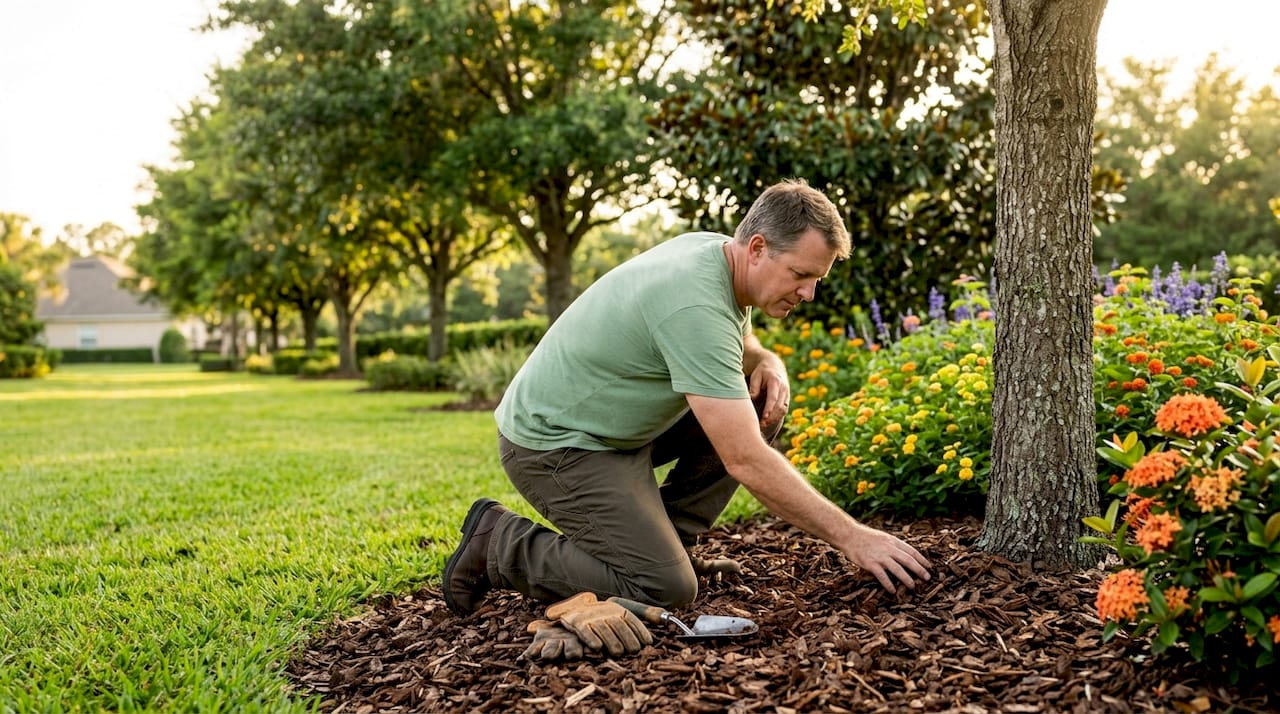
Regular assessments provide insights into tree condition and specific care recommendations to maintain long-term health. An arborist doesn’t just confirm a tree is stressed. They identify why, which makes all the difference in the treatment approach.
Common findings during health evaluations include:
- Pest infestations like ambrosia beetles or scale insects, which are widespread in Central Florida
- Fungal diseases such as laurel wilt, which spreads quickly in warm, humid conditions
- Nutrient deficiencies, particularly manganese and iron in Florida’s sandy soils
- Compaction or poor drainage around the root zone
From there, the arborist prescribes targeted care, whether that’s a soil treatment, a specific fungicide, or a structural pruning schedule. This targeted approach is far more effective than generic seasonal trimming, and it visibly improves the appearance of your landscape over time.
Understanding the importance of regular tree maintenance goes beyond looks. Studies consistently show that mature, healthy trees can add 10 to 15 percent to a property’s market value.
Pro Tip: In Central Florida, many nutrient deficiencies look identical to pest damage. Don’t let a landscaper apply pesticides until an arborist confirms what’s actually causing the problem. Treating the wrong issue wastes money and can stress the tree further.
3. Cost savings through prevention of emergency removals and damage
Understanding the financial picture makes the case for assessments impossible to ignore. The numbers are not subtle.
Basic inspections typically cost $200 to $400, while preventing property damages that can exceed $10,000 to $20,000 per incident. An emergency removal after a storm, especially one involving a tree that’s fallen onto a structure, can run $3,000 to $15,000 or more, plus the cost of roof repair, fence replacement, or vehicle damage.
Cost comparison: assessment vs. emergency response
| Scenario | Estimated cost |
|---|---|
| Level 2 visual assessment | $200 to $400 |
| Level 3 diagnostic assessment | $400 to $900 |
| Emergency tree removal (no damage) | $1,500 to $5,000 |
| Emergency removal with structural damage | $5,000 to $20,000+ |
| Roof repair after tree strike | $3,000 to $12,000 |
| Preventive pruning based on assessment findings | $300 to $1,200 |
The math is straightforward. Spending a few hundred dollars now on a tree risk assessment eliminates the risk of an invoice that could run into five figures. For business owners, add liability exposure and lost revenue during cleanup, and the case for prevention gets even stronger.
Beyond emergency costs, assessments also help you avoid over-spending on unnecessary treatments. Without a professional evaluation, it’s easy to pay for removal when a tree could have been saved, or to pay for repeated spraying when a single soil amendment would have done the job.
4. Professional evaluations provide legally defensible documentation and liability protection
Beyond health and costs, assessments serve as important legal safeguards. If a tree on your property falls and injures someone or damages a neighbor’s structure, the question of liability hinges on what you knew and what you did about it.
A formal assessment using ISA TRAQ (Tree Risk Assessment Qualification) methodology produces a written, dated report that documents:
- Current health and structural condition of each assessed tree
- Risk ratings based on likelihood of failure and consequence of failure
- Photographic evidence of identified hazards
- Recommended actions with timeframes for follow-up
A dated, written report from a certified arborist can significantly reduce your liability and support insurance claims when incidents occur. If you took the recommended action, or even if you documented that you were made aware and responded, you are in a dramatically stronger legal position than a neighbor who had no record of any evaluation.
“Documentation isn’t just paperwork. It’s proof that you acted like a responsible property owner.”
For commercial property managers in Orlando and the surrounding area, this protection is particularly critical. Tenants, visitors, and employees are regularly in proximity to trees, and a single incident without documentation can turn into a costly legal dispute. Working with certified arborist evaluations gives you that paper trail.
5. Customized care recommendations to save and strengthen your trees
Next, let’s look at how assessments lead to tailored care plans, because the goal of a good arborist is rarely removal. It’s preservation.
Many trees that appear dangerous can be stabilized with the right intervention. Early identification allows arborists to recommend non-invasive solutions like structural pruning, cabling, or soil improvement to extend tree lifespan without removal.
Typical non-removal options that come out of assessments include:
- Crown reduction pruning to reduce wind load on a leaning tree
- Dynamic cabling systems to support weak branch attachments without restricting movement
- Root zone aeration and mulching to restore health in compacted soils
- Targeted fertilization based on soil testing results
- Fungicide or pest treatment programs timed to the tree’s growth cycle
Each recommendation is tied directly to what the arborist finds during the evaluation, not a generic package. That specificity matters. A one-size-fits-all pruning schedule can actually stress certain species. A care plan based on assessment findings works with the tree’s biology and current condition.
If you want to understand more about the options available, reviewing information on pruning and tree support methods gives you solid context before an arborist appointment.
Pro Tip: Ask your arborist to explain the difference between corrective and preventive pruning during your assessment. Knowing which one your tree needs tells you a lot about its current health trajectory.
6. Adaptation to Central Florida’s climate challenges through ongoing monitoring
Regular assessments are especially important here in Central Florida, where the climate creates a constantly shifting set of challenges for trees. This isn’t generic advice. The specific conditions in this region create specific risks that need specific monitoring.
Climate change is increasing pest populations, extreme weather damage, and soil erosion, making regular assessments essential for adapting care strategies to current conditions. What that looks like practically in Central Florida:
- Warmer winters allow pest populations like shot hole borers to survive and spread year-round rather than dying back seasonally
- Longer dry seasons increase tree stress, making them more susceptible to secondary infections
- More intense storm seasons produce repeated physical damage that weakens structural integrity over time
- Soil erosion from heavy rain events strips away the organic layer trees depend on for nutrient uptake
- Expanded range of invasive species means new threats arriving each season that weren’t present five years ago
Understanding Central Florida tree health risks means staying current, not relying on a single evaluation from several years ago. A monitoring schedule built around your specific tree species and site conditions keeps you ahead of these moving targets.
7. Peace of mind with expert transparency and ongoing support
Finally, there’s an underrated benefit that property owners rarely consider until they experience it: knowing exactly what’s going on with every significant tree on your property.
Arborists explain findings in plain language and present options tailored to your specific situation and budget, which empowers you to make decisions confidently instead of guessing. That clarity has real value, especially for homeowners who have inherited large, mature trees and genuinely don’t know what condition they’re in.
What good arborist communication looks like after an assessment:
- Written report with clear risk ratings, from low to extreme, so you know which trees need attention first
- Prioritized action list so you can plan and budget rather than address everything at once
- Follow-up monitoring schedule that keeps your trees tracked over multiple seasons
- Photos included in reports so you can see exactly what the arborist observed
Working with professional tree care that includes transparent documentation means you’re never in the dark about a potential hazard. That peace of mind is particularly valuable before hurricane season, when uncertainty about your trees is simply a liability you don’t need.
Comparison table: summary of key advantages of tree health assessments
To help you see the full picture, here’s a summary of each advantage and what it means for your property.
| Advantage | Primary benefit | Real-world outcome |
|---|---|---|
| Early risk detection | Catch hazards before failure | Prevents injury, property damage, and emergency costs |
| Health preservation | Targeted diagnosis and treatment | Longer tree lifespan and better curb appeal |
| Cost savings | Prevent expensive emergencies | $200 to $400 assessment vs. $10,000+ damage event |
| Legal documentation | Demonstrates due diligence | Reduced liability and stronger insurance claims |
| Customized care plans | Tailored solutions, not generic treatments | Preservation of trees that might otherwise be removed |
| Climate adaptation | Ongoing monitoring for regional threats | Resilience against pests, storms, and soil changes |
| Peace of mind | Clear communication and follow-up | Confidence and reduced stress for property owners |
Our perspective: the assessment you skip is the one that costs you most
Here’s something worth saying plainly: in 15-plus years of tree care in Central Florida, the most common phrase we hear before a costly emergency is “it seemed fine.” Trees are not subtle communicators, but their warning signs require trained eyes to read. The property owners who invest in annual or biennial assessments almost never call us in a panic after a storm. The ones who skip them often do.
There’s also a misconception worth addressing. Many property owners assume an assessment ends with removal recommendations and a large invoice. In reality, the majority of assessments result in preservation plans. Arborists want to save trees. Removal is the last resort, not the default. The goal of a tree health evaluation is to give you every option available, not to sell you the most expensive one.
The tree health monitoring benefits extend well beyond any single season. You’re building a record of your trees over time, which makes every subsequent decision easier, cheaper, and more accurate. That continuity is genuinely hard to put a dollar value on, but property owners who have it consistently tell us it’s one of the best investments they’ve made in their landscape.
Get a certified tree health assessment in Central Florida
If your property has mature trees, now is the right time to schedule a professional evaluation. McCullough Tree Service provides certified arborist tree health assessments for residential and commercial properties throughout Orlando and Central Florida.
Our ISA-certified arborists deliver written reports, clear risk ratings, and honest recommendations designed to preserve your trees and protect your property. Whether you’re preparing for hurricane season, dealing with a tree that doesn’t look quite right, or simply want to know what you’re working with, we make the process straightforward and transparent. Request a free estimate and find out exactly where your trees stand.
Frequently asked questions
How often should I schedule a professional tree health assessment?
For most Central Florida properties, an assessment every 2 to 3 years is recommended, though regular proactive assessments every few years are a good baseline. Schedule sooner if you notice signs of stress, leaning, or unusual leaf drop.
What’s the difference between Level 2 and Level 3 tree risk assessments?
A Level 2 assessment is a standard ground-level 360-degree evaluation using visual inspection and basic tools. Level 3 involves advanced diagnostic equipment like sonic tomography to analyze internal decay when Level 2 findings warrant deeper investigation.
Can tree health assessments prevent expensive emergency removals?
Yes. Identifying structural issues early through regular assessments allows for timely interventions that stop sudden tree failures, which is almost always cheaper than emergency removal after the fact.
Are tree health assessments useful during hurricane season preparation?
Absolutely. Assessments identify hazards such as weak branches or lean changes that make trees vulnerable in high winds, giving you time to reinforce or remove problem trees before a storm arrives.
Recommended
- Tree Health Assessment Guide for Central Florida Owners
- Tree Health Assessment: Protecting Orlando Landscapes
- Tree risk assessment checklist: protect your property
- Why regular tree maintenance matters for property owners