By: Shelby McCullough| Published: May 26, 2026
TL;DR:
- Most tree diseases develop silently over months or years before showing obvious signs, making early detection vital.
- Homeowners should recognize leaf discoloration, bark cankers, and canopy thinning, and understand disease categories for proper response.
- Consulting certified arborists is crucial when significant decline or structural issues arise, ensuring effective treatment and tree safety.
Most tree diseases don’t announce themselves with obvious warning signs. By the time you notice something is clearly wrong, the problem may have been developing for months or even years. Knowing how to identify tree diseases early is one of the most valuable skills a homeowner or property manager can have. This guide walks you through the most common types of tree diseases, the symptoms to watch for, a straightforward inspection process you can do yourself, and when to call in a certified arborist before a sick tree becomes a dead one.
Table of Contents
- Key takeaways
- How to identify tree diseases: the major categories
- Signs of tree diseases you can spot yourself
- A step-by-step process for diagnosing tree issues at home
- When to call a certified arborist
- What I have learned from years of watching homeowners misread their trees
- Protect your trees with professional help
- FAQ
Key takeaways
| Point | Details |
|---|---|
| Disease types vary widely | Fungal, bacterial, viral, and pest-related diseases each show distinct symptoms and require different responses. |
| Leaf symptoms are your first clue | Discoloration, spots, and unusual patterns on leaves often signal disease before bark symptoms appear. |
| Timing matters for diagnosis | Seasonal context and recent weather patterns directly affect what diseases are active and visible. |
| DIY has real limits | When more than 30% of a tree shows decline, a certified arborist should evaluate it before you attempt any treatment. |
| Documentation speeds recovery | Photographing symptoms over time gives professionals the context they need to make accurate diagnoses. |
How to identify tree diseases: the major categories
Understanding what type of disease you are dealing with changes everything about how you respond to it. There are four broad categories that homeowners should know: fungal, bacterial, viral, and pest-related. Each behaves differently on the tree and calls for a different fix.
Fungal diseases are the most common. They thrive in wet, humid conditions and spread through airborne spores. Examples include leaf spots (small brown or black lesions on leaves), cankers (sunken dead areas on bark), and blights (rapid browning and death of shoots or leaves). Oaks are frequently affected by oak wilt, while pears and apples suffer from fire blight. In heavy infection years, up to 10 to 20% of a tree’s leaf volume can drop prematurely from pathogens like Entomosporium leaf spot, especially after warm, rainy springs.
Bacterial diseases operate differently. Fire blight, which hits pears and apples particularly hard, causes shoots to blacken and curl as if scorched. The key distinction: fire blight cannot be treated with fungicides. Many commercial antibiotics for bacterial tree diseases are also not available to homeowners, making sanitation and pruning your primary tools.
Pest-related diseases often work alongside pathogens. The Emerald Ash Borer is one of the most destructive examples. Infested mature black ash trees typically die within 4 to 6 years, with nearly 100% mortality in overstory stands.
Here is a quick comparison to keep the categories straight:
| Disease type | Common symptoms | Tree species often affected |
|---|---|---|
| Fungal | Leaf spots, cankers, powdery coatings | Oak, beech, dogwood |
| Bacterial | Ooze, blackened shoots, wilting | Pear, apple, elm |
| Pest-related | Exit holes, frass, canopy thinning | Ash, pine, fruit trees |
| Viral | Mosaic patterns, stunted growth | Elm, cherry, rose family |
Signs of tree diseases you can spot yourself
This is where you do the real work. Knowing what to look for on each part of the tree gives you a major head start on diagnosing what is wrong.
On the leaves, look for:
- Irregular brown or black spots with yellow halos (classic leaf spot fungi)
- Yellowing between veins while veins stay green (nutrient deficiency, but also some viral diseases)
- Dark green to black banding that resembles zebra stripes, which is a diagnostic sign of beech leaf disease visible in a narrow window from late April to mid-June
- Premature leaf drop, especially when only certain sections of the canopy are affected
On the bark, pay attention to:
- Sunken, discolored, or cracked areas (cankers)
- Oozing resin or dark, sticky liquid (bacterial infections or borer activity)
- Woodpecker holes concentrated in one area, which often signal a borer infestation underneath
On branches and roots:
- Dieback starting at the tips and moving inward is a classic symptom of many fungal and bacterial diseases
- White fungal mats or mushrooms at the base of the tree point to root rot
- Soft, crumbly wood around the root flare signals serious structural and health decline
Canopy thinning is one of the most deceptive symptoms because it almost always lags behind the actual problem. By the time you see significant thinning, borers or pathogens may have been active for multiple years underground or beneath the bark.
Pro Tip: Environmental conditions like wet, cool springs directly increase fungal disease activity. If your area just came through a rainy season, be extra thorough about checking leaf health on susceptible species like dogwood, beech, and oak.
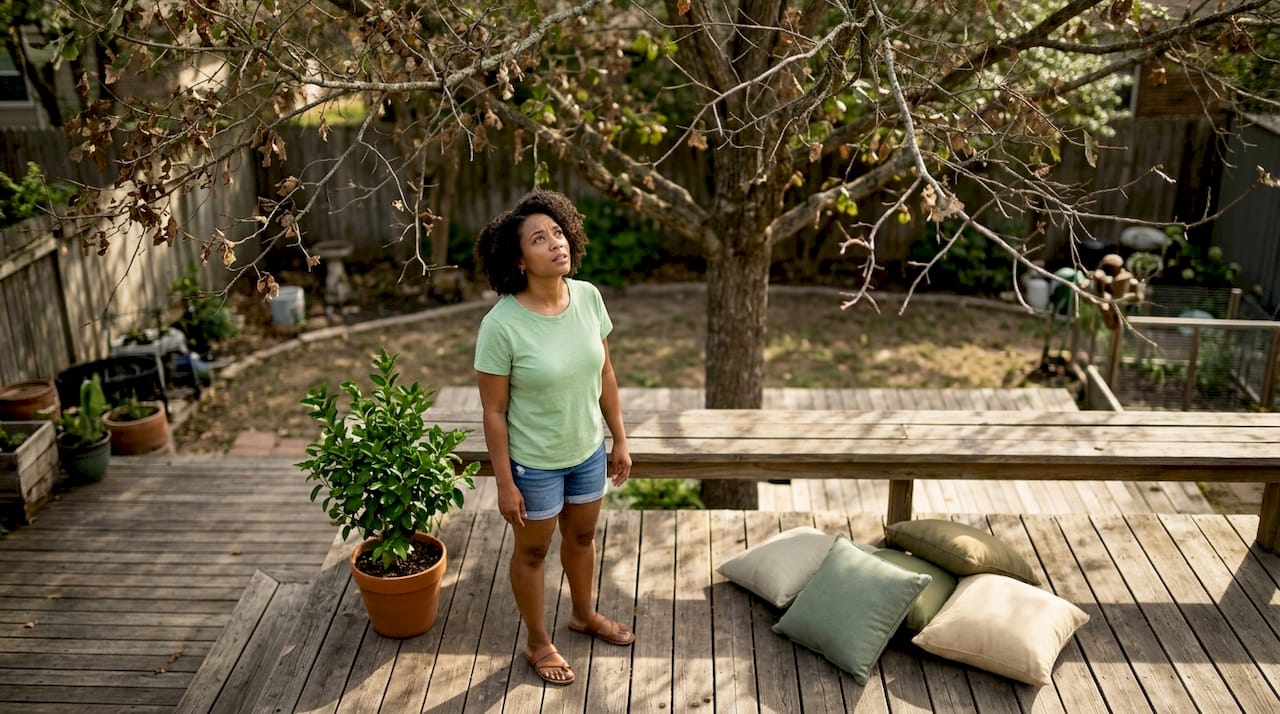
A step-by-step process for diagnosing tree issues at home
You do not need laboratory equipment to do a useful inspection. You need good observation skills, a few basic tools, and a systematic approach.
What to bring:
- A hand lens or magnifying glass
- Your smartphone camera
- A small pocketknife to check bark and wood (use carefully)
- A notebook or notes app to record what you find
The inspection sequence:
- Start at the top. Scan the full canopy for uneven color, missing foliage, or dead branches. Note whether the dieback is one-sided or widespread.
- Move to the leaves. Pick several affected leaves from different parts of the tree. Look at both the upper and lower surfaces. Fungal fruiting bodies often appear as tiny black dots or powdery coatings on the undersides.
- Inspect the bark. Work from the upper branches down to the root flare. Press gently on discolored areas to check for softness. Look for pitch tubes, small holes, or frass (sawdust-like material) that signals boring insects.
- Check the root zone. Look for mushrooms, soft soil, or any visible root damage near the trunk base.
- Photograph everything. Take wide shots for context and close-ups for detail. Include a ruler or coin in the frame for scale.
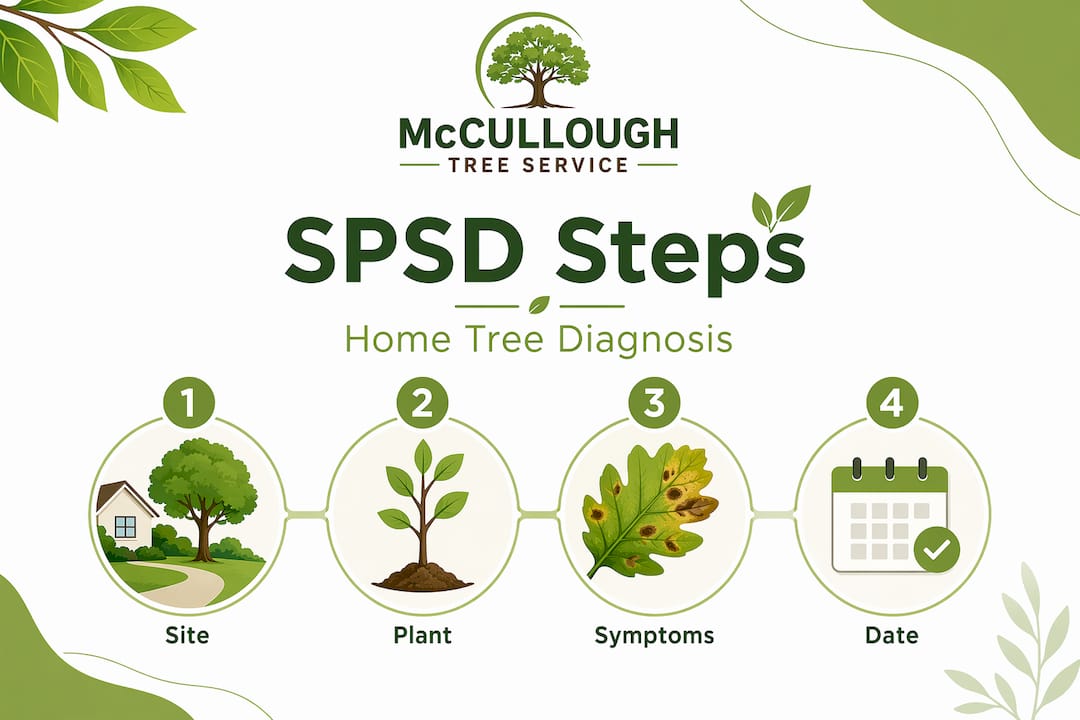
The SPSD framework (Site, Plant, Symptoms, Date) is a professional diagnostic approach you can apply at home. Record where the tree is growing, what species it is, exactly what symptoms you see, and what date and season you are observing. This context dramatically improves diagnostic accuracy because pests and diseases have specific activity windows that change what symptoms look like and where they appear.
| Step | What to record |
|---|---|
| Site | Soil type, drainage, sun exposure, nearby trees |
| Plant | Species, age estimate, recent changes (transplant, pruning) |
| Symptoms | Location on tree, color, texture, pattern |
| Date | Month, recent weather, seasonal context |
Common mistakes to avoid:
- Diagnosing from a single symptom without examining the whole tree
- Assuming discoloration is always disease. Homeowners frequently confuse environmental stress like sun scorch or drought with fungal or bacterial infection
- Treating before identifying. Applying fungicide to a bacterial disease does nothing and wastes time
Pro Tip: The best time to spot symptoms on many trees is a short window each season. Beech leaf disease, for example, is easiest to catch between late April and mid-June. Schedule a full tree walkthrough at the start of each growing season so you do not miss that window.
When to call a certified arborist
Some situations go beyond what a careful homeowner can handle. Recognizing when to call a professional is just as important as knowing how to look for symptoms.
Call a certified arborist if you notice any of these:
- More than 30% canopy decline across the whole tree or in large sections
- Structural symptoms like bark splitting at major branch unions or large deadwood hanging in the canopy
- Repeated year-over-year decline despite your own attempts to manage the problem
- Unknown disease where your own research has not led to a confident identification
- Any situation where the tree is near a structure, power line, or high-traffic area
Professional arborists do more than look. They use tools like resistance drilling to detect internal decay, lab-based soil testing, and foliar analysis to confirm what a visual inspection cannot. When borers or pathogens have been active for years, the visible canopy decline is only the surface of the problem. A professional can tell you whether treatment is still viable or whether removal is the safer, more cost-effective choice.
Treatment options professionals can offer include targeted fungicide injections, soil drenches for root diseases, systemic insecticide treatments for borers, and carefully timed pruning to remove infected tissue and stop disease spread. Timing those treatments correctly matters more than most homeowners realize. A certified arborist can match the treatment window to the disease’s active cycle, which is what makes professional intervention worth the investment.
What I have learned from years of watching homeowners misread their trees
In my experience, the single most common mistake is confusing stress with disease. A tree dropping leaves in August after a dry summer looks sick. It is not always diseased. But that same tree showing bark cracks, resin flow, AND early leaf drop in May? That is a different story entirely.
I have seen homeowners apply fungicide to trees with bacterial fire blight, waste two full seasons, and lose the tree anyway. I have also seen the opposite: people do nothing because symptoms seemed mild, not realizing that advanced signs like woodpecker damage or resin masses often mean the infection has been active for years.
The pattern I keep seeing is this: people make quick judgments based on one visible symptom instead of reading the whole picture. A yellow leaf is not a diagnosis. A yellow leaf on a tree with bark cankers, canopy thinning, and fungal bodies at the root base, that tells a story.
My advice: slow down. Observe the whole tree across multiple weeks if you can. Take photos. Note the season and what the weather has been doing. Environmental conditions like drought and compacted soil make trees more vulnerable to disease and often mimic disease symptoms on their own. Sorting out what is causing what requires patience, not panic.
The homeowners who protect their trees best are not the ones who know every disease by name. They are the ones who notice changes early, document what they see, and know when to call in a professional before a manageable problem becomes an irreversible one.
— Mcculloughtreeservice
Protect your trees with professional help
When you have done your own inspection and you are still not certain what you are looking at, that is exactly the right time to call in an expert. Mccullough Tree Service works with homeowners and property managers across Orlando and Central Florida to diagnose tree health problems correctly the first time.
Our certified arborists do not just look at the surface. They evaluate your tree’s full history, site conditions, and symptom patterns to give you an accurate diagnosis and a realistic treatment plan. Whether your trees need targeted disease management pruning or a full tree health assessment to catch problems early, the team at Mcculloughtreeservice has the credentials and the hands-on experience to protect what is growing on your property. Request a free estimate today and get ahead of any issues before they get ahead of you.
FAQ
What are the most common signs of tree diseases?
The most common signs include leaf spots, cankers on bark, unusual discoloration, early leaf drop, and visible fungal growth like mushrooms at the base. Canopy thinning and branch dieback are later-stage signs that often indicate the disease has been active longer than it appears.
How do I tell tree disease apart from environmental stress?
Look at multiple symptoms together rather than one in isolation. Environmental stress like drought or sun scorch tends to affect leaves uniformly, while diseases often cause irregular patterns, spots, or oozing. If you are unsure, consulting a certified arborist is the most reliable path to an accurate answer.
When should I worry about a diseased tree near my home?
If the tree shows significant canopy decline, structural damage, or is located near a structure or power line, call a professional immediately. A diseased tree that is also structurally compromised can become a safety risk, especially in a storm.
Can tree diseases spread to neighboring trees?
Yes. Fungal spores travel by wind and rain, and bacterial diseases spread through contaminated pruning tools and insects. Isolating infected material and sterilizing your tools after every cut are both important steps in preventing the spread.
What is the SPSD framework for diagnosing tree problems?
SPSD stands for Site, Plant, Symptoms, and Date. It is a structured approach used by arborists to evaluate all factors influencing a diagnosis, including where the tree grows, what species it is, what symptoms appear, and when in the season they show up. Using this framework at home improves your ability to describe the problem accurately when you do call a professional.
Recommended
- Unhealthy Tree Indicators: Expert Tips for Diagnosis
- Signs of a Dying Tree: What to Look For
- Identify a Dangerous Tree: Signs & Solutions
- Signs of Unhealthy Trees: What Every Florida Owner Should Know