By: Shelby McCullough| Published: May 30, 2026
TL;DR:
- Root pruning is a deliberate technique used by arborists to manage root growth, aid transplanting, and prevent structural damage. When performed with proper timing, cut type, and thorough planning, it enhances tree recovery and long-term health, but improper execution can stress or kill the tree. Careful assessment and professional guidance are essential to ensure safe and effective root pruning, especially during construction or relocation projects.
Most homeowners hear “root pruning” and picture someone hacking at a tree’s lifeline. That fear makes sense, but it’s mostly wrong. What is root pruning, really? It’s a deliberate, controlled technique that arborists use to manage how and where a tree’s roots grow. Done correctly, it protects trees during construction, prepares them for relocation, and prevents costly damage to driveways, sidewalks, and foundations. Done incorrectly, it can stress or kill a tree. This guide breaks down what root pruning is, how it works, and how to do it safely — whether you’re managing a yard project or planning a major landscape renovation.
Table of Contents
- Key Takeaways
- What is root pruning, and why arborists do it
- Root pruning techniques: cut types and timing
- Benefits of root pruning and the risks of getting it wrong
- How to prune roots safely: a practical guide
- Root pruning across different settings
- My honest take on root pruning after years in the field
- Protect your trees before the first shovel hits the ground
- FAQ
Key Takeaways
| Point | Details |
|---|---|
| Root pruning is intentional | It involves deliberately cutting roots to control growth, aid transplanting, or protect infrastructure. |
| Timing changes everything | Pruning 4 to 6 months before construction or relocation gives roots time to regenerate closer to the trunk. |
| Cut type shapes the outcome | Heading cuts stimulate regrowth for transplants; reduction cuts limit regrowth near hardscape. |
| Too much removal is dangerous | Removing more than 40% of roots during construction can trigger decline or death in mature trees. |
| Aftercare is non-negotiable | Regular irrigation and conservative foliage trimming help trees recover from root disturbance. |
What is root pruning, and why arborists do it
Root pruning, or rhizotomy in formal arboricultural language, is the intentional cutting or physical restriction of a tree’s roots to influence their direction, density, or length. It is not the same as trimming branches, and it is not punishment for a poorly placed tree. It is a proactive management tool with clear, measurable purposes.
There are three main reasons arborists and landscapers turn to this technique:
- Pre-transplant preparation. When a large tree needs to move, roots are pruned 6 to 12 months in advance so feeder roots regenerate closer to the trunk. This creates a compact, recoverable root ball when the tree is finally dug up.
- Construction protection. When utilities, driveways, or foundations are going in near existing trees, clean cuts made at the correct distance reduce trauma and prevent the jagged, uncontrolled root tearing that causes long-term decline.
- Hardscape conflict management. Tree roots that lift sidewalks or crack driveways can be pruned using specific cut types to limit future regrowth in problem areas.
Root pruning differs from crown pruning because what you remove underground directly affects water and nutrient uptake. Above-ground pruning adjusts structure and form. Below-ground pruning adjusts survival capacity and growth direction. Both matter, and understanding the distinction helps you make better decisions about when trimming and pruning serve different goals.
Root pruning techniques: cut types and timing
This is where most homeowners and even some landscapers get tripped up. Not all root cuts behave the same way. Research shows that cut type directly determines regrowth patterns, which means choosing the wrong method can work against your goal.
Here are the two primary root pruning methods and when to use each:
- Heading cuts. These cuts remove the tip of a root, leaving a stub behind. They trigger vigorous regrowth, with studies showing an average of 26.9 new roots generated per heading cut versus 19.4 from reduction cuts. Use heading cuts when your goal is transplant success, since you want the tree to develop a dense, regenerative root system quickly.
- Reduction cuts. These cuts remove an entire section of root back to a lateral branch point. They limit regrowth rather than stimulate it. When a root is lifting your sidewalk, a reduction cut near the problem area suppresses future conflict without leaving a stub that generates a cluster of new roots.
- Root barriers. This is a physical rather than a cutting method. A deep plastic or fabric barrier is installed in the soil to redirect roots away from infrastructure. It works best as prevention on young trees.
- Trench pruning. A straight trench is dug at a set distance from the trunk, and any roots crossing that line are cut cleanly. This is the most common pre-construction method and works well when timing allows.
Timing matters just as much as cut type. Fall pruning produces less discoloration and decay than spring pruning, giving roots a cleaner wound surface heading into winter dormancy. Regrowth then begins in earnest during spring, which is exactly what you want before a summer transplant or fall construction start.
Pro Tip: New root growth concentrates within about half an inch behind the cut surface, mostly on the bottom half of the root. When you make a cut, that bottom-facing wound surface is where recovery happens first.
Benefits of root pruning and the risks of getting it wrong
When done properly, root pruning delivers real, measurable benefits that most homeowners never realize are even possible.
What root pruning does for your trees:
- Prepares mature trees for successful relocation by stimulating a compact, healthy root ball before transplant
- Protects trees from the traumatic, jagged root tearing that construction equipment causes
- Prevents roots from cracking driveways, foundations, and sidewalks without removing the tree entirely
- Stimulates physiological changes like increased phytohormones and vascular tissue remodeling that support long-term root strength and resource transport
Now for the risks. The line between helpful and harmful is real, and crossing it has consequences.
Removing more than 40% of a tree’s root system during construction can trigger rapid decline or death, with branch dieback appearing within months of the injury. Clean, properly placed cuts and trench distance planning are the difference between a tree that survives construction and one that slowly falls apart afterward.
— Colorado State University Extension
Cutting too close to the trunk is one of the most common mistakes. The root protection zone is the area around the trunk where roots are thickest and most critical to stability. Cuts made inside this zone put the tree at serious risk of toppling or dying from root loss. Distance from the trunk and the total percentage of roots removed are the two most important variables arborists track during any root pruning project.
You also need to coordinate what happens above the ground with what you’re doing below it. Removing more than 25 to 35% of foliage during the same period as root pruning compounds stress and can push a tree past the point of recovery. Root pruning reduces the tree’s ability to absorb water and nutrients. Above-ground foliage demands that water and those nutrients. Cutting both simultaneously strains the system from both ends.
How to prune roots safely: a practical guide
Planning is most of the battle. The actual cuts take minutes. The setup and timing decisions are what determine whether your tree thrives or declines.
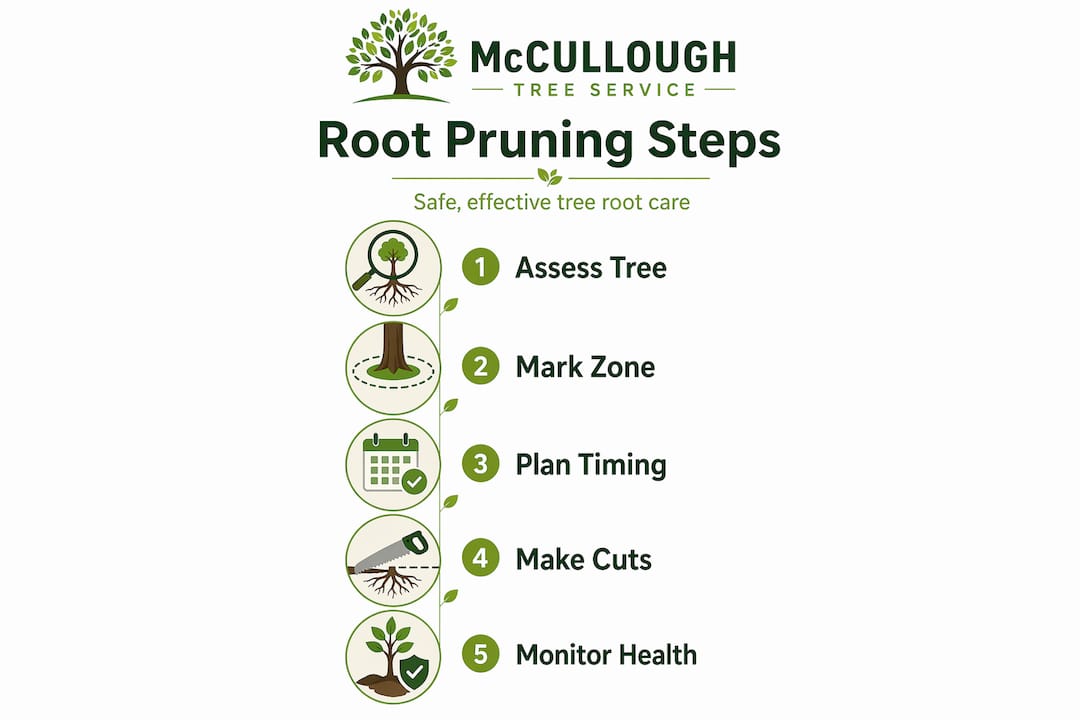
Here is a practical breakdown of what good root pruning looks like in the field:
| Stage | What to do | Why it matters |
|---|---|---|
| 4 to 6 months before disruption | Begin root pruning and establish irrigation schedule | Allows feeder root regeneration before construction stress hits |
| Identify cut location | Measure from trunk and stay outside the root protection zone | Prevents structural instability and mortality risk |
| Make the cut | Use sharp, clean tools; make a single, smooth cut perpendicular to the root | Clean cuts reduce decay and moisture loss versus torn roots |
| Limit foliage removal | Avoid removing more than 25% of canopy during the same period | Reduces compounded water stress during recovery |
| Post-pruning irrigation | Water deeply and consistently for at least 3 to 4 months | Supports recovery and new root formation near the trunk |
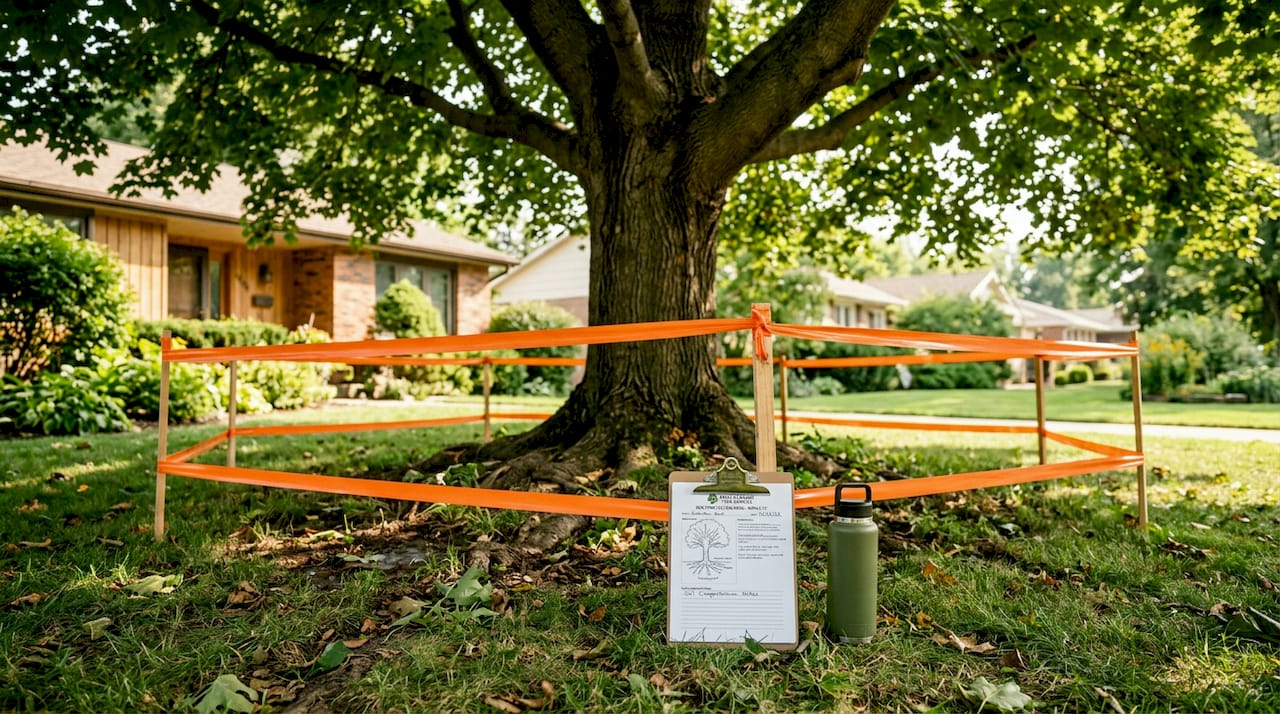
Pro Tip: Mark the root protection zone before any digging starts. As a general rule, allow roughly one foot of protection radius per inch of trunk diameter. A 10-inch diameter tree needs at least a 10-foot buffer before you cut or trench.
Signs your tree is struggling after root work include wilting despite adequate water, early leaf drop, and sudden branch dieback. If you see these, call a certified arborist before assuming the tree will recover on its own. The importance of tree pruning decisions made at this stage cannot be overstated for long-term tree survival.
Root pruning across different settings
Root pruning is not a one-size-fits-all practice. Where it happens shapes how it should be approached.
- Nurseries. Root pruning of seedlings is standard practice in professional growing operations. Removing part of the primary root improves root length, diameter, and dry weight, producing stronger transplants with better survival rates after sale and installation.
- Container plants. Roots in pots circle and compress over time, strangling themselves and limiting growth. Pruning circling roots when repotting redirects them outward and prevents girdling, which is when a root wraps around the trunk and slowly cuts off circulation.
- Urban and street trees. Cities face a constant conflict between mature tree roots and concrete infrastructure. Arborists managing street trees use reduction cuts and directional barriers to keep roots from lifting pavement while preserving the tree’s canopy and structural integrity.
- Pre-construction on private property. This is the scenario most Central Florida homeowners encounter. A home addition, pool installation, or driveway expansion puts roots at risk. Proactive root pruning, done months before breaking ground, consistently outperforms reactive trenching done the day a crew shows up with machinery.
The adaptability of root care practices is one reason certified arborists are trained specifically in site assessment before making any cuts. What works for a 30-year-old live oak in an urban right-of-way is different from what works for a container magnolia headed to a new planting location.
My honest take on root pruning after years in the field
I’ve watched homeowners panic when an arborist tells them their tree needs root pruning. They hear “cutting the roots” and immediately imagine a dying tree. What I’ve learned is that the fear usually comes from a gap in understanding, not from actual evidence of harm.
The truth is, trees regenerate roots aggressively when you make clean, well-timed cuts. The process triggers biological responses that most people don’t expect. What I’ve found consistently is that trees prepped properly with root pruning before construction fare dramatically better than trees where crews just dug without preparation. The ones that survive 10 years post-construction are almost always the ones someone planned for in advance.
The mistake I see most often from homeowners who try to manage this themselves is cutting too close to the trunk and doing it the same week as crown trimming. Both errors are avoidable with a little planning.
My advice: if you’re dealing with a mature tree near a construction zone or planning a transplant of anything significant, consult a certified arborist before touching the roots. The cost of one consultation is a fraction of what tree removal or property damage costs later. For smaller shrubs and container plants, this is something a confident homeowner can manage with the right tools and timing.
— Mcculloughtreeservice
Protect your trees before the first shovel hits the ground
If you have a tree near a planned renovation, pool installation, or driveway project in Central Florida, root pruning may be the single most important step you take to protect it. Mcculloughtreeservice certified arborists assess root zones, plan cut locations, and coordinate timing to give your trees the best possible chance of surviving and thriving through construction.

Our team specializes in professional tree trimming and root management for both residential and commercial properties across Orlando and Central Florida. We bring ISA-certified expertise to every job, so you’re not guessing at cut distances or timing. Whether your situation calls for pre-construction root preparation, a transplant plan for a mature specimen, or assessment of existing root conflicts, we’re ready to help. Reach out to Mcculloughtreeservice for a consultation and get a clear picture of what your trees actually need before the project begins.
FAQ
What is root pruning used for?
Root pruning is used to prepare trees for transplanting, protect them during nearby construction, and manage roots that conflict with driveways, sidewalks, or foundations. It involves deliberately cutting or restricting roots at a calculated distance from the trunk.
When should you prune tree roots?
Root pruning should be done at least 4 to 6 months before construction or transplanting to allow feeder roots time to regenerate. Fall is generally the best season because wounds heal with less decay than cuts made in spring.
How much of the root system can you safely remove?
Removing more than 40% of a tree’s root system during construction or pruning significantly increases the risk of decline and death. Most arborists target cuts well outside the root protection zone and limit total root loss to stay within safe thresholds.
Is root pruning necessary for every tree?
No. Root pruning is a targeted practice for specific situations, mainly pre-transplant preparation, construction proximity, and hardscape conflict. Trees not near construction zones or relocation plans typically do not need root pruning as part of routine tree care.
Does root pruning hurt the tree?
Done correctly, root pruning causes short-term stress but stimulates recovery. Research shows it triggers vascular tissue remodeling and growth hormone increases that support long-term root strength. Done incorrectly, particularly when too close to the trunk or too much is removed at once, it can cause serious decline.
Recommended
- The Importance of Tree Pruning
- Pruning Trees: Essential Tips and Benefits
- What Is Structural Pruning and Why Your Trees Need It