By: Shelby McCullough| Published: June 12, 2026
TL;DR:
- The primary tree pests are categorized into borers, sap-suckers, and defoliators, each requiring different management approaches. Boring insects are the most destructive as they damage vital vascular tissues, often leading to tree death within a few years if untreated. Accurate identification based on damage patterns and timely professional diagnosis are essential for effective, sustainable pest control.
Common tree pests fall into three main groups that cause varying degrees of damage: boring insects, sap-sucking insects, and defoliating pests. Each group attacks trees differently, leaves distinct visual clues, and demands a different response. Borers kill trees within 2 to 3 years by destroying vascular tissue, while defoliators mainly cause aesthetic damage unless infestations repeat year after year, and sap-suckers produce cosmetic symptoms like leaf distortion and sticky residue. Knowing which category you are dealing with is the single most important step in any common tree pests list, because the wrong treatment wastes money and can make the problem worse.
1. Common tree pests list: the three core categories
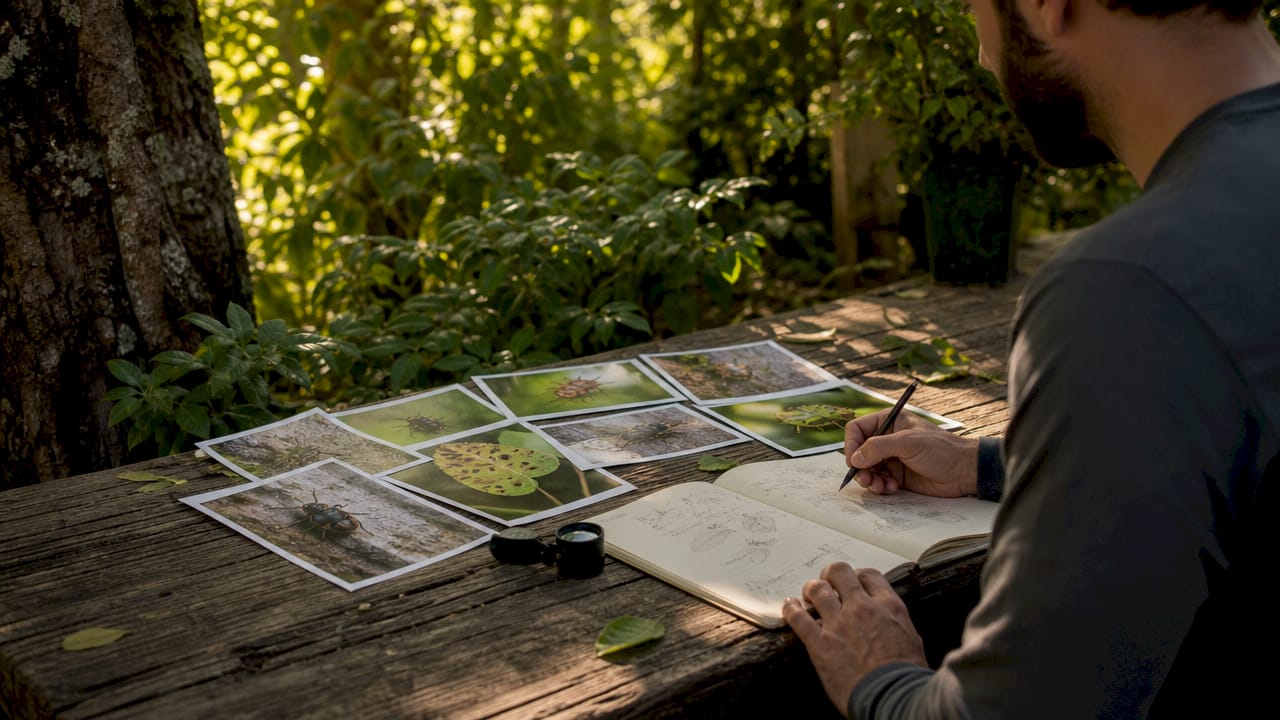
Tree pest identification starts with understanding the three categories recognized by arborists and agricultural extension services. Borers tunnel into wood and bark, disrupting the vascular system that moves water and nutrients. Sap-sucking insects feed on plant fluids from the outside, and defoliators consume leaves. Cosmetic leaf damage rarely kills healthy trees. Serious threats come almost exclusively from vascular tissue-destroying borers, which is why this guide addresses them first and in the most detail.
2. Boring insects: the most damaging tree pests
Boring insects are the most destructive category on any list of insect pests of trees. They lay eggs under bark or in wood, and their larvae feed on the cambium layer, the living tissue that transports water and sugars. Once that tissue is girdled, the tree cannot recover.
Key boring insects to know:
- Emerald Ash Borer (Agrilus planipennis): Targets ash trees exclusively. Look for D-shaped exit holes roughly 3 to 4 millimeters wide, serpentine galleries under bark, and canopy dieback starting at the top.
- Southern Pine Beetle (Dendroctonus frontalis): Attacks loblolly, shortleaf, and other pines. Signs include pitch tubes on the bark and a blue-stain fungus visible when bark is removed.
- Oak Borers (Agrilus bilineatus and related species): Target stressed oaks. Symptoms include branch dieback, sawdust-like frass at the base, and small round or oval exit holes.
- Twig Girdlers (Oncideres cingulata): Sever small branches cleanly at a 45-degree angle. Damage looks mechanical but is entirely insect-caused.
Early borer signs include frass, exit holes, and canopy thinning from the top down, and these symptoms appear before the insects themselves are visible. That timing advantage is critical. A tree showing 30 percent canopy loss from borer activity is already in serious decline.
Pro Tip: Check the upper canopy first. Borer damage progresses downward, so thinning at the crown is often the earliest visible warning sign before bark symptoms appear at eye level.
3. Sap-sucking insects: identification and typical damage patterns
Sap-sucking pests feed on the outside of trees, piercing plant tissue to extract fluids. They rarely kill a mature, established tree on their own, but they weaken it and create entry points for secondary infections.
Common sap-sucking insects affecting trees:
- Aphids: Cluster on new growth and leaf undersides. They produce honeydew, a sticky liquid that coats leaves and promotes sooty mold growth.
- Scale insects (soft and armored): Appear as waxy bumps on bark and stems. Heavy infestations cause yellowing, branch dieback, and significant honeydew deposits.
- Lace bugs (Corythucha species): Feed on leaf undersides, leaving stippled, bleached upper surfaces. Common on oaks, sycamores, and azaleas.
- Spider mites: Technically arachnids, but managed as insect pests. Fine webbing on leaf undersides and a dusty, bronzed leaf surface are the giveaways.
Aphids produce sticky honeydew that attracts ants and feeds sooty mold, and treatment is mainly needed for heavy infestations on stressed or young trees. Natural predators like ladybugs, lacewings, and parasitic wasps keep most sap-sucker populations in check without any intervention. Spraying broad-spectrum insecticides to eliminate aphids often kills those predators first, which triggers a rebound outbreak worse than the original.
4. Common defoliating pests and their effects on tree health
Defoliating insects consume leaves, and their damage is the most visible of the three categories. A tree stripped of foliage looks alarming, but repeated defoliation stresses trees over years rather than killing them in a single season.
Defoliating pests found on trees in Central Florida and across the Southeast:
- Tent caterpillars (Malacosoma species): Build silken tents in branch forks in early spring. They feed in groups and can strip entire branches.
- Bagworms (Thyridopteryx ephemeraeformis): Construct spindle-shaped bags from plant material. Common on arborvitae, juniper, and cedar. Heavy infestations cause branch death.
- Oak leaf rollers (Archips semiferanus): Roll leaves into tubes secured with silk. Damage appears as curled, brown leaves across the canopy.
- Fall webworms (Hyphantria cunea): Build large silk webs at branch tips in late summer. Damage is cosmetic on healthy trees but unsightly.
Insect populations fluctuate naturally, and some outbreaks last only one to two years without requiring any intervention. Minor yearly defoliation is normal and does not justify chemical treatment. The real risk comes when the same tree loses its leaves two or three years in a row, because that repeated stress depletes the tree’s energy reserves and opens the door to secondary pests and disease.
Pro Tip: Keep a simple photo log of your trees each spring and fall. Comparing images year over year tells you whether defoliation is worsening or following a natural cycle, which prevents unnecessary and costly treatments.
5. Comparing tree pest damage: a quick reference guide
Knowing how to identify tree pests is only half the work. Understanding damage severity tells you whether to monitor, treat, or call a professional.
| Pest type | Typical symptoms | Threat level | Treatment urgency |
|---|---|---|---|
| Boring insects | D-shaped exit holes, frass, canopy dieback | High | Act within one season |
| Sap-sucking insects | Honeydew, sooty mold, leaf distortion | Low to moderate | Monitor; treat if severe |
| Defoliating insects | Leaf consumption, silk tents, skeletonized leaves | Low to moderate | Treat only if repeated |
| Bark beetles | Pitch tubes, blue-stain fungus, mass attack | Very high | Immediate professional consult |
Reliable identification comes from damage patterns, not from spotting the insect itself. Serpentine galleries under bark, D-shaped exit holes, and silk tents are more diagnostic than a brief insect sighting. Misdiagnosis leads to ineffective or unnecessary treatments, which is why consultation with an ISA-certified arborist is the recommended standard for any pest causing visible tree decline. You can review unhealthy tree indicators to cross-reference symptoms before making a call.
Signs a tree may be beyond recovery include more than 50 percent canopy loss from borers, extensive bark removal, and structural failure at the root collar. In those cases, signs your tree needs removal become the more relevant checklist.
6. Effective tree pest control methods for homeowners
Integrated Pest Management (IPM) is the standard approach for sustainable tree pest control, focusing on accurate diagnosis and damage thresholds before any treatment is applied. IPM is not a single product. It is a decision-making framework that prioritizes the least disruptive intervention that works.
Practical tree pest control methods to follow:
- Diagnose before treating. Confirm the pest category and species before purchasing any product. Treating for borers when you have aphids wastes money and harms beneficial insects.
- Maintain tree health through cultural practices. Healthy trees resist infestation better. Proper watering, mulching to the drip line, and correct pruning are the most effective preventive tools available.
- Prune strategically. Remove dead and weakened branches to eliminate borer entry points and reduce habitat for scale insects. Follow preventative tree care practices specific to Central Florida’s climate and pest pressure.
- Avoid indiscriminate pesticide use. Overuse of insecticides kills natural predators like ladybugs and parasitic wasps, which leads to aphid and mite population explosions. Targeted, systemic treatments applied by a licensed applicator are far more effective than broadcast spraying.
- Use targeted treatments when thresholds are crossed. Horticultural oils and insecticidal soaps work well for scale and aphids on smaller trees. Systemic insecticides like imidacloprid are used for Emerald Ash Borer but require professional application to be effective and safe.
- Encourage beneficial insects. Planting native flowering species near your trees attracts lacewings, parasitic wasps, and predatory beetles that naturally suppress pest populations without any chemical input.
Key takeaways
The most effective approach to managing common tree pests is identifying the pest category first, then matching the response to the actual threat level rather than the visual alarm.
| Point | Details |
|---|---|
| Borers are the highest threat | Boring insects destroy vascular tissue and can kill trees within 2 to 3 years if untreated. |
| Damage patterns beat insect sightings | D-shaped holes, frass, and silk tents are more reliable identifiers than spotting the insect itself. |
| Sap-suckers rarely kill healthy trees | Natural predators control most sap-sucking populations; treat only heavy infestations on stressed trees. |
| Defoliation requires context | Single-season defoliation is usually cosmetic; repeated annual loss over 2 to 3 years signals a real problem. |
| IPM prevents wasted effort | Accurate diagnosis before treatment saves money, protects beneficial insects, and produces better outcomes. |
What 15 years of tree work taught me about pest panic
Most homeowners call about tree pests after they have already been treating the wrong problem for a season. They see a sticky residue on their car parked under an oak, assume the tree is dying, and buy a pesticide that kills every insect in the canopy, including the ones doing the most work to keep the aphid population in check. The tree ends up worse off than before the intervention.
The pattern I see repeatedly is this: the visual drama of defoliation or sooty mold triggers urgency, while the genuinely dangerous borer damage goes unnoticed because it is subtle. A tent caterpillar web looks catastrophic. A handful of D-shaped holes on an ash tree looks like nothing. The reality is exactly the opposite in terms of actual risk to the tree.
The most useful shift in thinking is to treat your trees the way you treat your own health. You do not take antibiotics every time you feel tired. You get a diagnosis first. A tree that is well-watered, properly mulched, and pruned correctly is simply harder for pests to establish in. Stress is the real invitation. Drought, compacted soil, poor pruning cuts, and root damage all lower a tree’s defenses faster than any pest can on its own.
Natural pest population fluctuations mean some outbreaks resolve without any action at all. The skill is knowing which ones those are, and that judgment comes from experience and proper diagnosis, not from the label on a spray bottle.
— Mcculloughtreeservice
How Mcculloughtreeservice helps with tree pest identification and management
Mcculloughtreeservice brings ISA-certified arborists to your property for accurate pest diagnosis before any treatment plan is recommended. The team identifies pest categories, assesses damage severity, and builds a management strategy based on IPM principles, not guesswork.

Regular professional tree trimming removes the dead wood and weakened branches that invite borers and scale insects, keeping your trees structurally sound and harder to infest. For trees already in serious decline from pest damage, Mcculloughtreeservice also provides certified tree removal to protect the rest of your landscape. Serving Orlando and Central Florida, the team is available for consultations, estimates, and same-day assessments for urgent pest concerns. Contact Mcculloughtreeservice to schedule a tree health evaluation today.
FAQ
What are the most damaging tree pests?
Boring insects, particularly the Emerald Ash Borer and Southern Pine Beetle, are the most damaging tree pests because they destroy the vascular tissue that keeps trees alive. Borers can kill trees within 2 to 3 years if the infestation goes undetected.
How do I identify tree pests without seeing the insect?
Look for indirect signs: D-shaped exit holes, sawdust-like frass at the base, serpentine galleries under loose bark, silk tents in branch forks, or honeydew deposits on leaves and surfaces below the tree. Damage patterns are more reliable than insect sightings for accurate identification.
Do all tree pest infestations require treatment?
No. Many sap-sucking and defoliating pest outbreaks resolve naturally within one to two seasons without any intervention. Treatment is warranted when damage is severe, persistent across multiple years, or caused by a high-threat pest like a borer.
What is Integrated Pest Management for trees?
Integrated Pest Management (IPM) is a decision-making approach that requires accurate diagnosis and damage threshold assessment before any treatment is applied. IPM focuses on tree health and uses cultural controls like proper watering and pruning as the first line of defense.
When should I call an arborist for tree pests?
Call an arborist when you see canopy dieback progressing from the top down, D-shaped exit holes in bark, or significant structural decline. Consulting an ISA-certified arborist prevents misdiagnosis and ensures the right treatment is applied at the right time.
Recommended
- Tree Pest Control Explained for Central Florida Homeowners
- Tree Disease Prevention Guide for Central Florida
- How to Identify Tree Diseases Before It’s Too Late