By: Shelby McCullough| Published: June 29, 2026
TL;DR:
- Urban forestry manages trees to improve ecosystem health and city resilience. Trees reduce heat, manage stormwater, and cut energy use, supporting public health and climate goals. Success depends on long-term planning, equitable canopy distribution, and professional maintenance.
Urban forestry is defined as the care and management of trees, forests, and related vegetation in and around urban areas to improve ecosystem health and human well-being. Cities that treat tree canopy as infrastructure, not decoration, consistently outperform those that don’t on air quality, public health, and climate resilience metrics. The role of urban forestry extends far beyond aesthetics. The USDA Forest Service and the EPA both recognize urban tree management as a core tool for reducing heat, filtering air, and managing stormwater at the city scale. For urban planners, environmentalists, and community advocates, understanding this field means understanding how cities survive the next century.
What are the primary environmental benefits of urban forestry?
Urban trees deliver measurable ecosystem services that no built infrastructure can replicate at the same cost. The three most documented benefits are temperature reduction, stormwater management, and energy savings.
Cooling the urban heat island
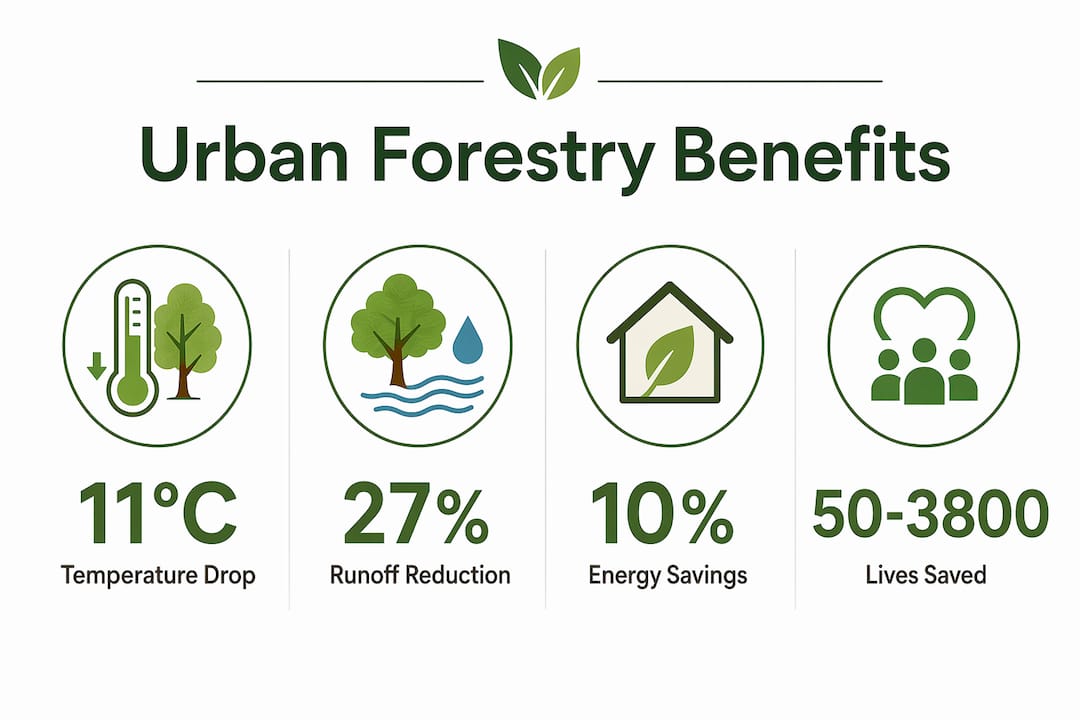
Dense urban tree canopy lowers temperatures by up to 11°C compared to unshaded surfaces. That cooling comes from two mechanisms: shading, which blocks solar radiation from hitting pavement and rooftops, and evapotranspiration, which is the process by which trees release water vapor and cool the surrounding air. Cities with high canopy coverage see measurably lower peak summer temperatures than those without. This is not a marginal effect. It is the difference between a livable street and a heat trap.
Managing stormwater at scale
Urban trees reduce stormwater runoff by 15–27% annually. Increasing canopy cover further can boost water retention by 30%. That matters because stormwater runoff carries pollutants directly into waterways and overwhelms municipal drainage systems during heavy rain events. Every tree planted in a parking lot or along a street acts as a distributed retention system. No pipe or concrete channel does the same job for free.
Reducing energy demand
Green infrastructure reduces building energy demand for cooling by about 10%. That reduction comes from shading walls and rooftops, which cuts the load on air conditioning systems. Lower energy demand means fewer greenhouse gas emissions from power plants. For cities working toward carbon reduction targets, urban tree canopy is one of the fastest and most cost-effective tools available.
Key environmental benefits at a glance:
- Temperature reduction of up to 11°C through shading and evapotranspiration
- Stormwater runoff reduction of 15–27% annually
- Up to 30% improvement in water retention with increased canopy
- Approximately 10% reduction in building cooling energy demand
- Carbon sequestration through active tree growth and biomass storage
Understanding the costs and benefits of planting trees helps planners make the case for canopy investment in budget negotiations.
How does urban forestry enhance social well-being and community health?
The social benefits of urban tree management are as well-documented as the environmental ones. Trees reduce heat-related illness, improve mental health outcomes, and create safer, more connected neighborhoods.
Heat, health, and lives saved
A 10% increase in canopy cover in cities like Salt Lake City and New York City is linked to saving between 50 and 3,800 lives annually from heat-related causes. That range reflects city size and baseline canopy levels, but the direction is consistent. More trees mean fewer heat deaths. This is a public health intervention that doubles as a climate adaptation strategy.
Mental health and community safety
Green spaces reduce stress, lower blood pressure, and improve attention span. Neighborhoods with mature tree canopy report higher rates of outdoor physical activity and stronger social cohesion. Trees also reduce noise and light pollution, creating environments where people actually want to spend time. The impact of green spaces on community well-being is well-established in urban planning research.
The equity problem in urban canopy
Lower socioeconomic neighborhoods often have less tree canopy, which compounds existing environmental justice issues around heat exposure and air quality. A resident in a low-income neighborhood may face summer temperatures several degrees higher than a resident in a wealthier area with mature street trees. Addressing that gap is not just an environmental goal. It is a health equity imperative.
Pro Tip: When advocating for new tree planting programs, lead with heat mortality data tied to specific neighborhoods. Decision-makers respond faster to lives-at-risk framing than to general environmental arguments.
- Canopy inequity correlates directly with socioeconomic status
- Heat-related deaths drop measurably with modest canopy increases
- Green spaces improve mental health, physical activity, and social connection
- Trees reduce noise and light pollution in dense urban areas
What are the key challenges in managing urban forests?
Urban forest management fails more often from governance and funding gaps than from lack of knowledge. Planners and advocates need to understand these barriers before designing programs.
Funding and regulatory barriers
The greatest barrier to canopy expansion is inadequate funding combined with regulations that prioritize short-term development over tree health. Most city budgets treat tree planting as a one-time capital expense rather than an ongoing infrastructure investment. That framing guarantees failure. Trees planted without maintenance budgets die within a decade, and the city loses both the investment and the canopy.
The right tree, right place principle
- Match species to site conditions. Selecting the right species for soil type, light availability, and proximity to infrastructure is the single most important planting decision. A tree that outgrows its space or fails in compacted soil wastes money and creates liability.
- Design for maturity, not installation. Long-term planning requires adequate soil volume, water infiltration capacity, and space for root systems to develop. Most urban tree failures trace back to inadequate soil conditions at planting.
- Diversify species and age classes. Planting a diversity of species and ages creates resilient urban forests that spread maintenance costs over time and reduce catastrophic loss risk from pests like Emerald Ash Borer.
- Break down organizational silos. Unified urban forest management plans that coordinate parks, public works, and planning departments produce far better outcomes than fragmented department-level programs.
- Budget for the full life cycle. Planting numbers are a vanity metric. Canopy coverage at maturity is the real measure of success.
Pro Tip: Request a soil volume analysis before any urban tree planting project. Inadequate soil volume is the leading cause of early tree mortality in paved urban environments, and it is almost always avoidable.
Understanding urban tree care regulations in your jurisdiction prevents costly compliance failures during planting and maintenance phases.
How can urban forestry be integrated into city planning and policy?
Effective urban forestry does not happen through planting events alone. It requires governance structures, cross-department coordination, and sustained community engagement.
Governance tools that work
Zoning codes, civil design standards, and tree ordinances are the three most effective policy levers for expanding urban canopy. Tree ordinances set minimum canopy requirements for new development. Design codes specify species lists and planting standards. Zoning can require green space ratios that force developers to account for trees in site plans. Cities that use all three tools consistently outperform those that rely on voluntary programs.
Federal funding and technical support
The USDA Urban and Community Forestry Program provides funding and technical assistance for urban forestry implementation. The program supports challenge cost-share grants that help municipalities build capacity. For planners working with constrained budgets, federal programs represent a meaningful source of both money and expertise.
Community engagement in forestry
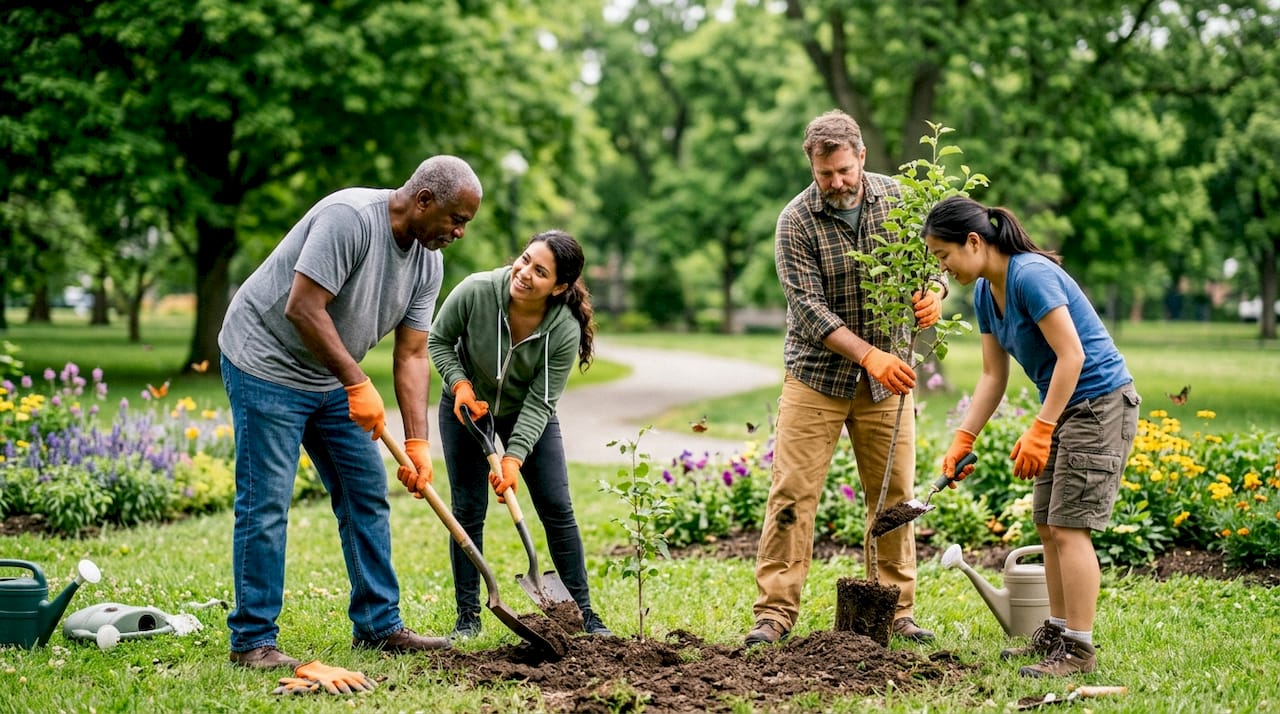
Public engagement turns urban forestry from a government program into a community asset. Residents who help select species, participate in planting days, and understand the value of their street trees are far more likely to report damage, water new plantings, and advocate for maintenance budgets. Community engagement in forestry also surfaces local knowledge about site conditions that planners often miss.
Urban forestry policy integration: key tools
| Policy Tool | Primary Function |
|---|---|
| Tree ordinances | Set canopy minimums for new development and protect existing trees |
| Zoning codes | Require green space ratios and tree preservation in site plans |
| Civil design standards | Specify species lists, soil volumes, and planting specifications |
| Unified management plans | Coordinate parks, public works, and planning for consistent tree care |
| Federal grants (USDA UCF) | Fund planting, maintenance, and capacity building at the municipal level |
- Zoning and design codes create durable canopy requirements that survive budget cycles
- Cross-department coordination through unified plans prevents duplicated effort and gaps
- Community advocates accelerate policy adoption and improve program accountability
- Federal programs like USDA Urban and Community Forestry provide both funding and technical expertise
Tree canopy restoration techniques give planners a practical framework for setting realistic canopy targets in master plans.
Key Takeaways
Urban forestry succeeds when cities treat trees as long-term infrastructure, fund full life-cycle management, and distribute canopy equitably across all neighborhoods.
| Point | Details |
|---|---|
| Environmental returns are measurable | Trees cut cooling energy demand by 10% and reduce stormwater runoff by 15–27% annually. |
| Heat mortality drops with canopy | A 10% canopy increase saves between 50 and 3,800 lives per year in major cities. |
| Equity gaps require targeted action | Low-income neighborhoods consistently have less canopy, compounding heat and air quality burdens. |
| Governance determines outcomes | Zoning codes, tree ordinances, and unified management plans outperform voluntary planting programs. |
| Long-term survival beats planting counts | Soil volume, species selection, and maintenance budgets determine whether trees reach maturity. |
Why cities keep getting urban forestry wrong
The uncomfortable truth about urban forestry is that most cities measure the wrong thing. They count trees planted. They should count trees that survive to canopy maturity. A city that plants 10,000 trees and loses 7,000 within a decade has not expanded its canopy. It has spent money on a temporary illusion of progress.
Political leaders need to treat urban trees as critical infrastructure, comparable to roads and water pipes. That framing changes budget conversations. Nobody defunds road maintenance because it is expensive. The same logic should apply to tree care. When a city lets its urban forest decline, it is making a choice to increase cooling costs, worsen air quality, and raise heat mortality risk for its residents.
The equity dimension is where I think the field has the most urgent work to do. Canopy inequity is not accidental. It reflects decades of disinvestment in specific neighborhoods. Addressing it requires targeted planting programs, not citywide averages. A city can hit a 30% canopy target while leaving its lowest-income neighborhoods at 5%. That is not success. Planners and advocates need to push for neighborhood-level canopy goals, not just city-level headline numbers.
The good news is that the tools exist. Federal funding through the USDA Urban and Community Forestry Program, proven governance frameworks, and a growing body of research on species selection and soil management give cities everything they need. The gap is political will and long-term budget commitment, not knowledge.
— Results
Professional tree care as a foundation for urban forestry goals
Urban forestry initiatives depend on the health of individual trees. A city’s canopy is only as strong as the trees within it, and those trees need consistent, professional care to reach maturity and deliver the benefits planners are counting on.
Mcculloughtreeservice works with residential and commercial property owners across Orlando and Central Florida to keep urban trees healthy, structurally sound, and properly maintained. From professional tree trimming that supports long-term canopy growth to safe tree removal when a tree poses a risk, Mcculloughtreeservice’s certified arborists bring the expertise that urban forestry goals require at the property level. Healthy individual trees build healthy urban forests. Contact Mcculloughtreeservice to schedule an assessment and keep your trees contributing to the canopy your community depends on.
FAQ
What is the role of urban forestry in cities?
Urban forestry manages trees and forests in urban environments to improve air quality, reduce heat, control stormwater, and support public health. It functions as green infrastructure that delivers measurable ecosystem services alongside built systems.
How much can urban trees reduce temperatures?
Dense urban tree canopy can lower local temperatures by up to 11°C through shading and evapotranspiration. That cooling effect directly reduces heat-related illness and death in cities.
Why is canopy equity important in urban forestry?
Lower-income neighborhoods consistently have less tree canopy, which means residents face higher heat exposure and worse air quality than those in wealthier areas. Targeted planting programs in underserved neighborhoods address both environmental and public health disparities.
What is the biggest barrier to expanding urban tree canopy?
Inadequate funding and regulations that prioritize short-term development over tree health are the primary barriers. Cities that treat tree planting as a one-time expense rather than an ongoing infrastructure investment consistently see high early tree mortality.
How does the USDA support urban forestry programs?
The USDA Urban and Community Forestry Program provides funding and technical assistance to municipalities through challenge cost-share grants. These resources help cities build the capacity to plan, plant, and maintain urban forests at scale.
Recommended
- Role of Arborists: Transforming Urban Florida Development
- Urban Tree Care Explained: Health, Safety, and Law
- The Role of Local Tree Ordinances in Florida
- Urban Tree Planting Steps for Better Cities