By: Shelby McCullough| Published: July 19, 2026
TL;DR:
- Palm tree pruning in Florida should only remove fully dead fronds and dried flower stalks as needed. Trimming is best done in late winter to early spring, with limited summer pruning for hazards only; over-pruning weakens trees and increases storm damage risk. Proper pruning protects palms’ health, avoids common mistakes, and reduces costs by emphasizing nutrient management over excessive trimming efforts.
Palm tree pruning in Florida is defined by one core rule: remove only what is dead, and let the tree tell you when. Knowing when to trim palm trees in Florida saves you money, protects your trees from disease, and prevents the most common mistake homeowners make, which is cutting too much too soon. Florida’s climate allows year-round trimming on an as-needed basis, but timing and technique still matter. This guide covers the right windows, the right cuts, and the signals your palms send when they actually need attention.
When to trim palm trees in Florida: timing and frequency
The best time to trim palm trees in Florida is whenever a frond is fully dead, not on a fixed calendar schedule. University of Florida/IFAS guidelines confirm that palms do not require a rigid seasonal pruning schedule and can be trimmed on an as-needed basis throughout the year. That flexibility is good news for property managers juggling multiple sites.
That said, late winter to early spring is the preferred window for any major cleanup. Trimming in february or march removes accumulated dead fronds and old flower stalks before the spring growth flush begins. Your palms recover faster and enter their most active growing period without carrying unnecessary dead weight.
Summer pruning carries real risk. Florida’s rainy season brings high humidity and increased fungal pathogen activity, which slows wound healing and raises infection risk. Heavy pruning between june and september is best avoided unless a frond poses a safety hazard.
Here is a practical palm tree trimming schedule to follow:
- Dead fronds: Remove as soon as they are fully brown, any time of year.
- Flower and fruit stalks: Remove when they appear if fruit drop is a concern, or after they dry completely.
- Major cleanup: Target late winter to early spring, ideally february through march.
- Summer: Limit pruning to hazard removal only. Avoid elective cuts during peak humidity.
- After a storm: Inspect immediately and remove only broken or genuinely hazardous fronds.
Pro Tip: If your palms need trimming more than once or twice a year, the problem is usually a nutrient deficiency, not a pruning schedule issue. Address the soil before reaching for the saw.
Which fronds should you remove, and which should you never cut?
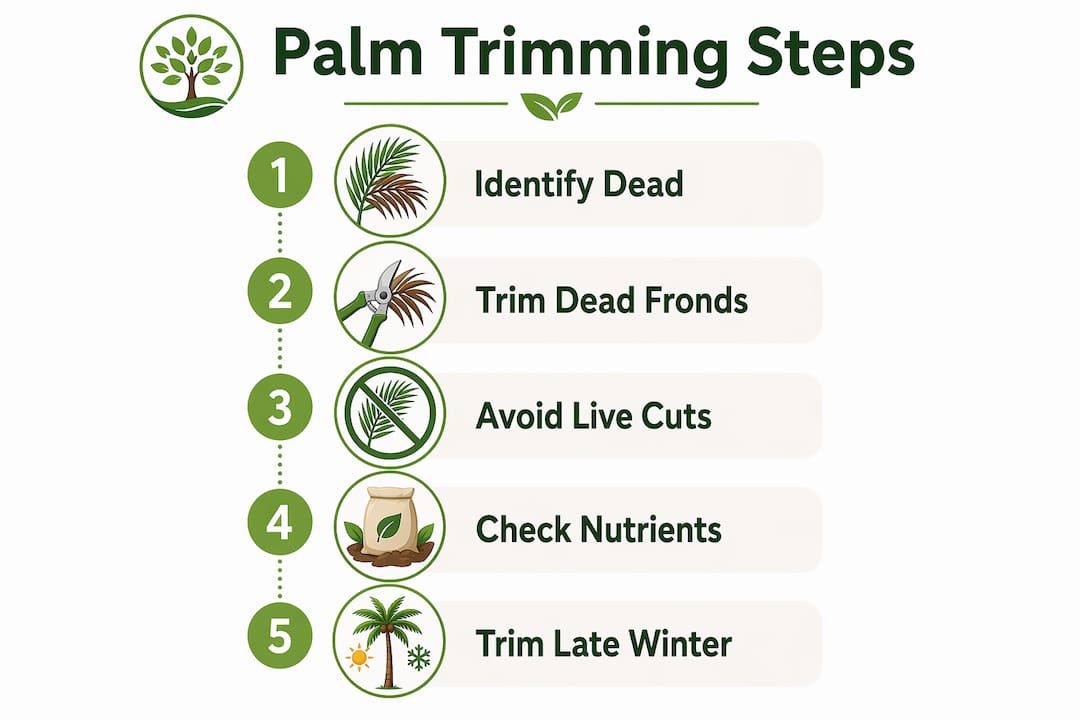
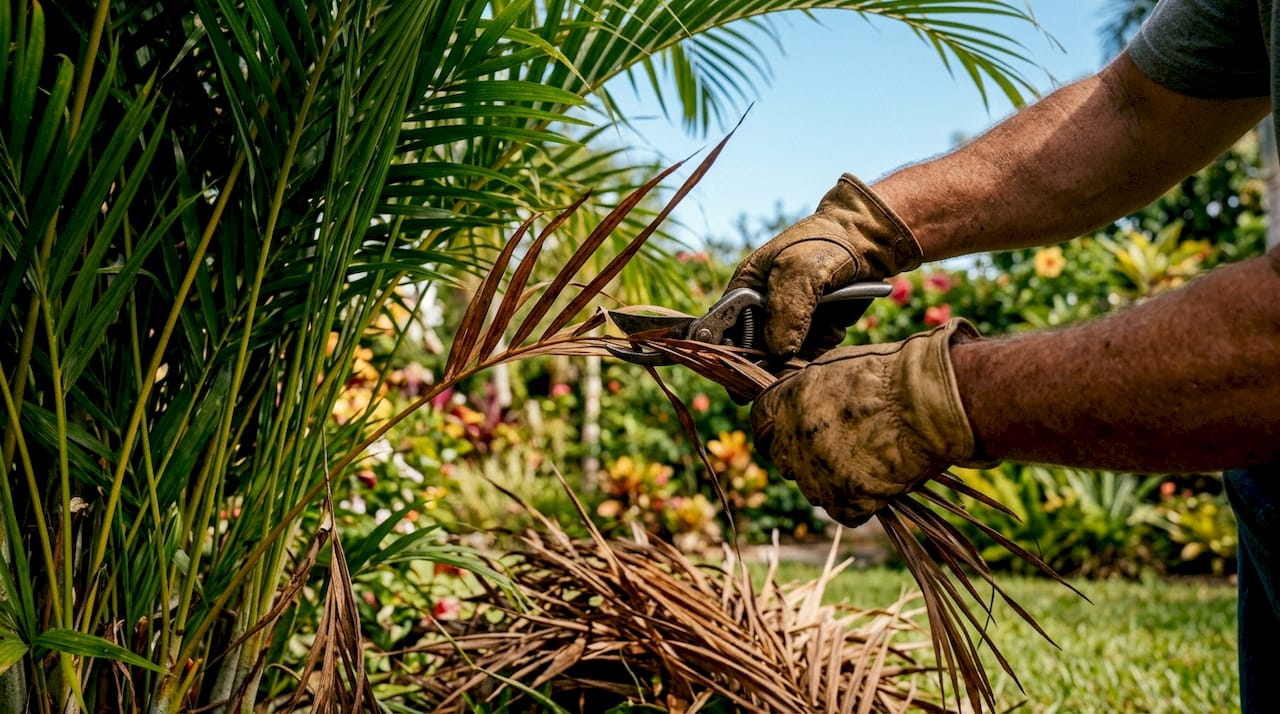
Only fully brown, dead fronds and dried flower or fruit stalks belong on your cut list. Horticultural experts advise that cutting green or yellowing fronds actively harms the tree. Green fronds are working fronds. They photosynthesize, store potassium and magnesium, and transfer those nutrients back into the trunk as they age. Cut them early and you rob the tree of reserves it cannot replace quickly.
Yellowing fronds are often misread as waste material. A yellow frond is still transferring nutrients downward. Removing it before it turns fully brown interrupts that process and forces the palm to pull from its core reserves instead. In Florida’s sandy, nutrient-poor soils, that loss compounds fast.
Removing green or partly yellow leaves robs the palm of food and weakens its defense against pests and diseases. That vulnerability shows up as slower growth, thinner canopy, and greater susceptibility to weevils and fungal infections.
The fronds to leave alone:
- Any frond that is fully or partially green
- Fronds that are yellowing but still attached and upright
- Fronds at or above the 9 o’clock to 3 o’clock horizontal plane
- Any frond that would require removing more than one year’s growth to reach
The fronds to remove:
- Fronds that are completely brown and dry
- Fronds hanging downward below the horizontal plane
- Dried flower stalks and fruit clusters
- Fronds broken by wind or storm damage
Pro Tip: Stand back and look at your palm from a distance before cutting anything. If the canopy still looks full and green, the tree probably does not need trimming yet. Let the fronds do their job.
How to trim palm trees safely and effectively
Safe palm pruning starts with the right tools and the right approach to the trunk. Climbing spikes create permanent trunk wounds that do not seal, leaving open entry points for disease and insects. Any professional or DIY trimmer who uses spikes on a palm is causing lasting damage, regardless of how clean the cut looks.
Follow these steps for safe, effective pruning:
- Sterilize your tools before you start. Use a 10% bleach solution or a commercial disinfectant on pruning saws and loppers. Repeat between every tree to prevent pathogen transfer.
- Use a ladder or lift instead of climbing spikes. Rope systems and aerial lifts protect the trunk and keep the climber stable.
- Cut fronds close to the trunk. Leave a small stub rather than cutting flush into the bark. Cutting into the trunk base damages the vascular tissue and creates infection sites.
- Work from the bottom up. Remove the lowest dead fronds first and work upward. Stop at the horizontal plane.
- Never cut above the 9 to 3 o’clock line. Arborists advise against removing fronds above the horizontal plane and never pruning more than one year’s worth of growth in a single session.
- Dispose of cuttings away from the tree. Dead fronds can harbor pests. Do not leave them piled at the base.
“Data after the 2004 and 2005 hurricane seasons showed palms with ‘hurricane cuts’ had crowns more frequently snapped by hurricane-force winds than lightly pruned palms. A full canopy is not a liability in a storm. It is a structural asset.”
The “hurricane cut,” which strips a palm down to a thin spike of fronds at the top, is one of the most damaging practices in Florida landscaping. It removes the support structure for young emerging leaves, strips nutrient reserves, and leaves the tree more vulnerable to both wind and cold. Aggressive pruning before hurricane season does not improve palm resilience. It undermines it. For more on preparing your trees safely before storm season, Mcculloughtreeservice has detailed guidance on hurricane season tree preparation.
How to read your palm’s health signals before you cut
A palm that looks rough does not always need trimming. Reading the signals correctly saves you unnecessary cuts and protects the tree’s long-term health.
| Signal | What it means | Action |
|---|---|---|
| Fully brown, drooping fronds | Dead fronds ready for removal | Trim as needed |
| Yellow fronds with green tips | Nutrient deficiency, likely potassium | Fertilize; do not cut yet |
| Uniform yellowing across canopy | Possible magnesium or iron deficiency | Soil test and fertilize |
| New growth emerging slowly | Stress from over-pruning or drought | Withhold pruning; water and feed |
| Fronds browning after a cold snap | Cold damage; fronds may recover | Wait 60–90 days before cutting |
Nutrient deficiencies are the most misread signal in Florida palm care. Yellowing that spreads from older fronds upward usually points to potassium deficiency, which is common in Florida’s sandy soils. Cutting those fronds accelerates the problem because the palm loses its remaining nutrient reservoir. A palm-specific fertilizer with an 8-2-12-4 ratio, applied seasonally, helps keep fronds healthy longer and reduces how often pruning is actually needed.
Cold damage deserves special patience. After a freeze, fronds may look dead but the growing point at the crown may still be alive. Cutting too soon removes fronds that could recover and strips the crown of insulation it needs during any follow-up cold event. Wait at least 60 days before making any cuts after a frost.
The 9 and 3 pruning rule is a hard limit, not a target. Many homeowners treat it as a goal and cut right up to the horizontal line every session. The rule exists to prevent over-removal, not to define how much you should take. If only two fronds are fully dead, remove two fronds and stop.
Proper fertilization is the most effective tool for maintaining greener fronds longer. A well-fed palm in Florida’s climate holds its fronds longer, drops them more cleanly, and requires far less intervention than a nutrient-stressed tree.
Key Takeaways
The most effective palm tree trimming schedule in Florida removes only fully dead fronds on an as-needed basis, with late winter to early spring as the preferred window for major cleanup.
| Point | Details |
|---|---|
| Trim on condition, not calendar | Remove fronds only when fully brown; year-round trimming is allowed but not required. |
| Protect green and yellow fronds | Green and yellowing fronds store nutrients; cutting them weakens the tree and invites pests. |
| Respect the 9-to-3 rule | Never remove fronds above the horizontal plane or more than one year’s growth at once. |
| Avoid the hurricane cut | Stripping palms before storm season increases wind damage risk, not decreases it. |
| Fertilize to reduce pruning | A palm-specific fertilizer applied seasonally keeps fronds healthy and extends intervals between cuts. |
The pruning myth that costs Florida homeowners the most
The most expensive mistake I see in Florida palm care is not neglect. It is enthusiasm. Homeowners want clean, tall, symmetrical palms, and they associate a tight, stripped canopy with a well-maintained property. The biology says the opposite.
A palm with a full, layered canopy of green fronds is a healthy palm. A palm trimmed to a tight ball at the top is a stressed palm that will cost more in fertilizer, pest control, and eventual replacement. The “clean look” that drives over-pruning is actually a sign of nutrient depletion in progress.
The other myth worth addressing directly is the idea that heavy pruning before hurricane season protects your trees. Post-hurricane research from the 2004 and 2005 seasons showed the reverse. Palms with full canopies fared better than stripped ones. The canopy distributes wind load. Remove it and you concentrate stress at the crown, which is exactly where you cannot afford a failure.
My practical advice: fertilize on a consistent schedule, trim only what is dead, and call a certified arborist when you are unsure. The health and safety reasons to trim palms are real, but they are narrow. Most palms in Florida need less cutting than they get, not more.
— Results
Professional palm trimming services from Mcculloughtreeservice
Mccullough Tree Service provides professional palm tree trimming for residential and commercial properties across Orlando and Central Florida. Every job follows UF/IFAS horticultural standards, with sterilized tools, no climbing spikes, and cuts that protect the trunk and nutrient reserves.

Beyond trimming, Mcculloughtreeservice offers fertilization assessments, storm preparation services, and certified arborist consultations to keep your palms healthy between pruning sessions. If your palms show signs of stress, discoloration, or hazardous frond accumulation, the team can assess the situation and recommend the right course of action. Contact Mcculloughtreeservice for a free estimate and get your palms on a care plan that works with their biology, not against it.
FAQ
When is the best time to trim palm trees in Florida?
The best time is whenever fronds are fully dead, which can happen any time of year. Late winter to early spring, roughly february through march, is the preferred window for major cleanup before the spring growth season begins.
How often should palm trees be trimmed?
Most healthy palms in Florida need trimming once or twice a year at most. If your palms require more frequent cuts, a nutrient deficiency is likely the underlying cause.
Can you trim palm trees in the summer in Florida?
Summer trimming is not recommended for elective pruning due to high humidity and increased fungal activity during Florida’s rainy season. Limit summer cuts to hazardous or broken fronds only.
What happens if you over-prune a palm tree?
Over-pruning removes green fronds that store potassium and magnesium, weakening the tree’s defenses against pests and disease. It also increases vulnerability to wind damage and slows overall growth.
Should you trim palm trees before hurricane season?
No. Research from the 2004 and 2005 hurricane seasons showed that heavily pruned palms, particularly those given “hurricane cuts,” suffered more crown damage than lightly pruned trees. A full canopy distributes wind load more effectively than a stripped one.
Recommended
- Tree Trimming in Florida: DIY Tips & Tricks
- Why You Should Consider Palm Tree Trimming in Longwood | McCullough
- What to Expect: Tree Trimming Costs in Florida
- Why Trim Palm Trees: Health, Safety, and Legal Impact