By: | Published: July 20, 2026
Healthy soil is the single biggest factor determining whether your trees thrive or slowly decline. It delivers water, oxygen, and nutrients to roots, hosts billions of microorganisms that regulate nutrient cycling, and provides the physical structure roots need to anchor and expand. When soil fails, trees follow. Poor belowground conditions, including compaction and nutrient unavailability, account for a large majority of tree decline cases documented in arboricultural research.
Here is what healthy soil does for your trees:
- Supplies nitrogen, phosphorus, potassium, and trace minerals through active microbial cycling
- Retains moisture between rain events so roots stay hydrated during dry spells
- Maintains pore space for oxygen, which roots need as much as water
- Hosts mycorrhizal fungi and beneficial bacteria that extend root reach and suppress pathogens
- Provides physical resistance against wind throw and erosion through stable aggregate structure
What soil health really means and why it matters for trees
Soil health is defined as the continued capacity of soil to function as a vital living ecosystem that sustains plants, animals, and humans. That definition, from the USDA Natural Resources Conservation Service (USDA NRCS), reframes soil as something alive rather than just dirt. For trees, that distinction is everything.
The USDA NRCS identifies four core principles that govern soil health:
- Minimize disturbance — limit tillage, heavy foot traffic, and compaction events
- Maximize soil cover — keep the surface protected with mulch, leaf litter, or ground cover
- Maintain living roots — keep something growing year-round to feed soil biology
- Maximize biodiversity — vary plant species and organic inputs to diversify the microbial community
“A healthy soil has good water infiltration and retention. The biological activity within the soil increases soil fertility and helps build good soil structure. These things reduce the need for expensive inputs and increase plant resilience to drought, pests, and intense rains.” — USDA National Agroforestry Center
For trees specifically, these principles translate into reduced drought stress, stronger pest resistance, and more efficient uptake of the nutrients already present in the ground. Healthy soils reduce the need for synthetic inputs by improving nutrient cycling and water retention, increasing tree resilience to both drought and heavy rainfall.
Key components of healthy soil that support thriving trees
Soil health operates across three dimensions: physical, chemical, and biological. All three must function together for trees to grow well.
“Soil isn’t an inert growing medium, but rather is the home of billions of bacteria, fungi, and other organisms that together create an intricate symbiotic ecosystem.” — USDA NRCS Principles for High Functioning Soils
Physical structure determines how easily roots penetrate, how water moves, and how much oxygen reaches the root zone. Well-aggregated soil with stable clumps creates pore spaces that hold both air and water. Compacted soil collapses those pores, cutting off oxygen and forcing roots to grow shallow.
Organic matter is the engine of the whole system. It feeds soil microbes, holds nutrients against leaching, and improves water retention. Even modest increases in organic matter content measurably improve a soil’s ability to support tree roots.
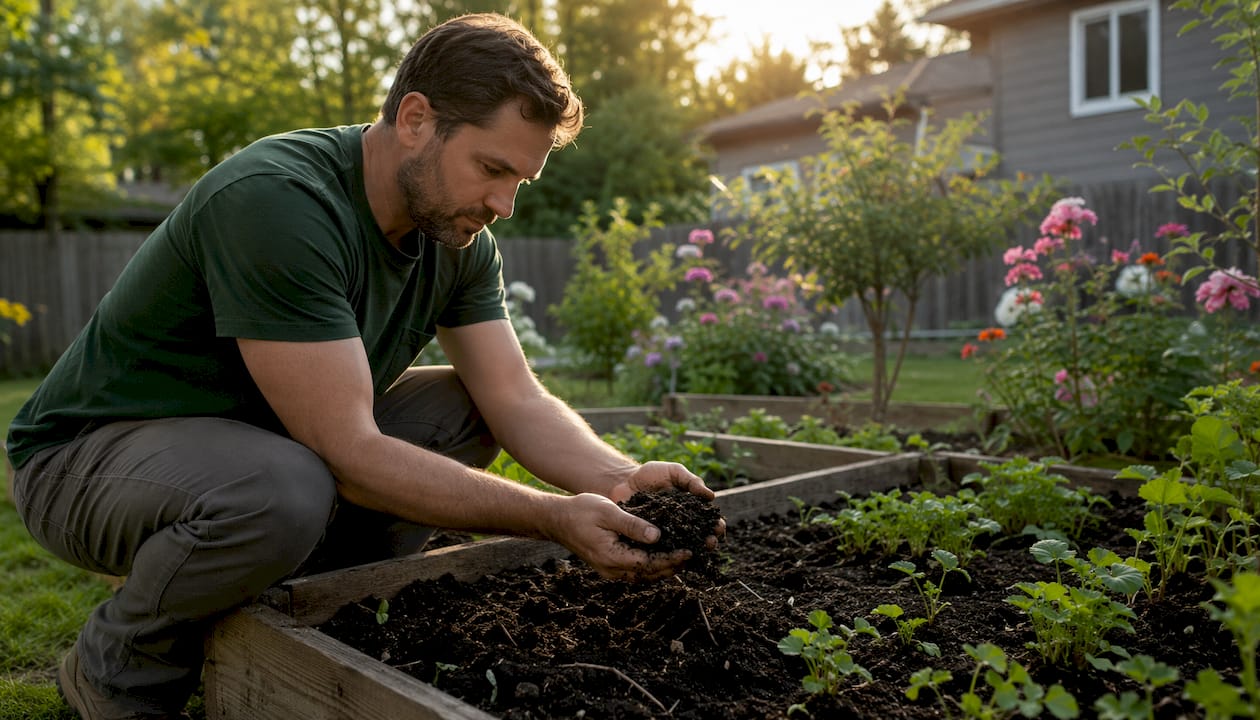
Soil pH controls which nutrients trees can actually absorb. Most trees thrive in a pH range of 6.0 to 7.0. Outside that window, nutrients like iron, manganese, and phosphorus become chemically locked and unavailable, even when they are physically present in the soil.
| Soil Component | Optimal Condition | Effect on Trees |
|---|---|---|
| pH | 6.0–7.0 | Controls nutrient availability and microbial activity |
| Organic matter | 3–5% by weight | Feeds microbes, retains moisture, buffers pH |
| Soil structure | Stable aggregates, good pore space | Supports root penetration and oxygen delivery |
| Microbial diversity | High bacterial and fungal diversity | Drives nutrient cycling and disease suppression |
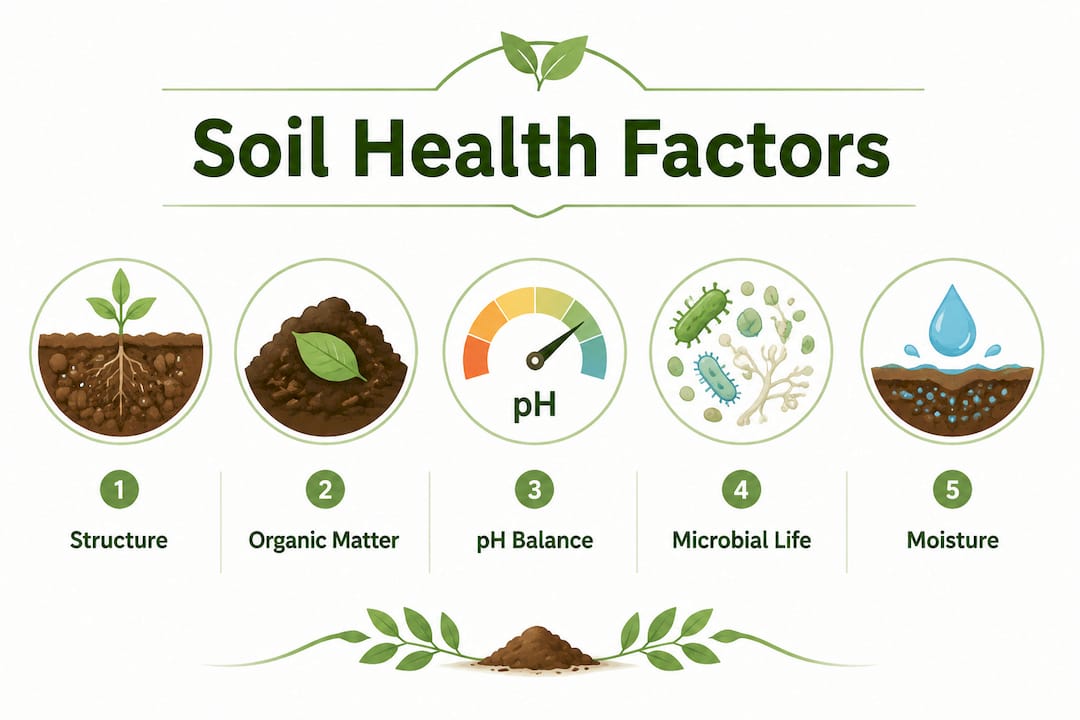
Beneficial microbes complete the picture. Bacteria in the rhizosphere enhance nutrient availability through nitrogen fixation, phosphorus solubilization, and hormone modulation, directly improving tree stress tolerance and disease resistance.
How to improve and maintain soil health to support tree growth
Improving soil is not complicated, but it does require consistency. These steps, applied in order, produce the most reliable results.
- Test before you treat. Collect soil samples from the top 4–6 inches below the dripline at multiple points around the tree. Test for pH, nutrient levels, and organic matter. Retest every 2–3 years to track progress and catch problems early.
- Add organic matter. Compost, aged wood chips, and leaf mulch all feed soil biology and improve structure over time. Spread 2–3 inches of organic mulch across the root zone, keeping it away from the trunk.
- Aerate compacted areas. Core aeration physically opens pore space and restores oxygen flow to roots. Do this before adding amendments so they penetrate rather than sit on the surface.
- Reduce soil disturbance. Avoid tilling or digging in the root zone. Roots in the top 6–24 inches of soil are easily severed by routine garden work.
- Keep the soil covered year-round. Bare soil loses organic matter, compacts faster under rain impact, and heats up in summer. Ground cover plants or a consistent mulch layer protect the surface.
Common mistakes to avoid:
- Excessive fertilizer harms soil structure and microbial health, causing salinity and nutrient imbalances that inhibit tree growth
- Volcano mulching, where mulch is piled against the trunk, traps moisture and promotes fungal pathogens; maintain a mulch-free zone of 3–6 inches around the trunk
- Planting grass or flowers directly over a tree’s root zone creates competition that stresses the tree
Pro Tip: Apply a 2–3 inch layer of arborist wood chips (not dyed bark mulch) starting 6 inches from the trunk and extending to the dripline. This single practice feeds soil biology, retains moisture, and moderates soil temperature simultaneously. You can explore garden design tips that incorporate mulching and soil care into broader landscape planning.
Recognizing signs of unhealthy soil and its impact on trees
Unhealthy soil rarely announces itself. By the time a tree shows visible symptoms, the soil problem has usually been building for years. Knowing what to look for above and below ground gives you a head start.
Above-ground warning signs:
- Yellowing leaves outside of seasonal change (often a pH or nutrient lock-up issue)
- Stunted new growth or smaller-than-normal leaves
- Premature leaf drop in summer
- Dieback starting at branch tips and moving inward
- Increased pest and disease pressure year after year
Below-ground indicators:
- Soil that cracks and pulls away from the trunk in dry weather (compaction and low organic matter)
- Water pooling on the surface after rain instead of absorbing (poor infiltration)
- Shallow, circling roots visible at the soil surface (roots avoiding compacted deeper layers)
- Foul smell from waterlogged soil (anaerobic conditions killing beneficial microbes)
Ignoring these signals leads to a predictable outcome. Once a root system is severely compromised, recovery is difficult and removal often becomes the only option. A tree health assessment from a certified arborist can catch soil-related decline early, before it reaches that point.
Expert guidance on soil assessment and long-term monitoring
Soil testing is where guesswork ends. Collect samples from the top 4–6 inches below the dripline at multiple points, and test for pH, organic matter content, and key nutrients. Retest every 2–3 years to track whether your amendments are working.
“Soil health management is a long-term investment critical for tree resilience and ecosystem stability, not a quick fix.” — Colorado State University Extension
Certified arborists bring a layer of interpretation that a lab report alone cannot provide. They connect soil data to tree physiology, identify whether yellowing leaves reflect a pH problem, a compaction issue, or a pathogen, and design an amendment plan that addresses the actual cause. For urban tree care in Central Florida, where sandy soils drain fast and organic matter depletes quickly, that expertise matters.
| Assessment Metric | Optimal Range | Action if Outside Range |
|---|---|---|
| Soil pH | 6.0–7.0 | Apply sulfur to lower, lime to raise |
| Organic matter | 3–5% | Add compost or wood chip mulch annually |
| Soil compaction | — | Core aeration, organic matter addition |
| Moisture retention | Soil holds ball shape under light pressure | Increase organic matter, reduce compaction |
Pro Tip: When interpreting soil test results, always cross-reference pH with nutrient levels. A soil with adequate iron but a pH above 7.5 will still show iron deficiency symptoms in trees because the nutrient is chemically unavailable at that pH.
Urban soil management practices combining organic matter addition with structural rehabilitation significantly improve soil bulk density and increase tree growth and ecosystem services, according to a 2026 review published in the ISA Arborist Journal.
How soil microorganisms and tree roots work together
The relationship between tree roots and soil microbes is genuinely two-directional. Roots release sugars, amino acids, and organic acids into the surrounding soil, a zone called the rhizosphere, and those compounds attract and feed specific microbial communities. In return, those microbes unlock nutrients, suppress pathogens, and produce hormones that stimulate root growth.
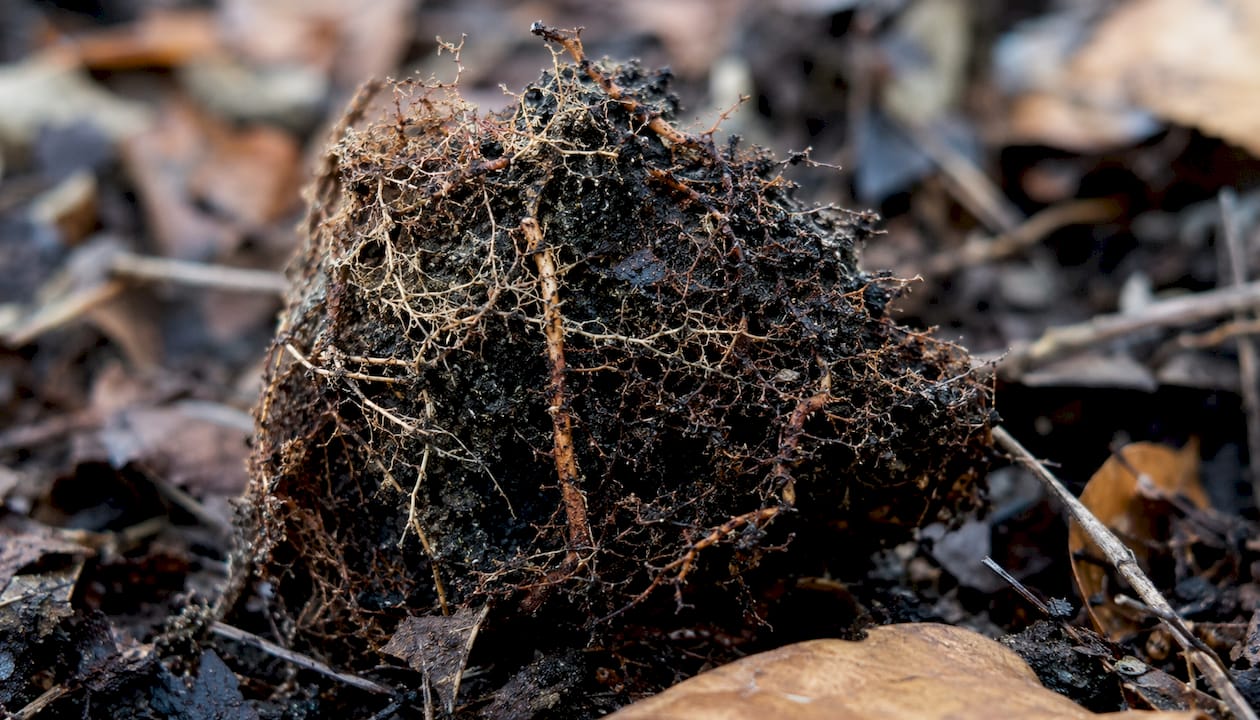
Mycorrhizal fungi form direct physical connections with root cells, extending the effective reach of a root system far beyond what the tree could achieve alone. Nitrogen-fixing bacteria convert atmospheric nitrogen into forms roots can absorb. Phosphorus-solubilizing bacteria break down mineral-bound phosphorus that would otherwise stay locked in the soil. Trees and their microbial communities actively shape each other over time, with trees selecting for microbes that optimize nutrient cycling and stress adaptation.
This relationship is why belowground microbiota are described in peer-reviewed research as decisive to the fitness, development, and productivity of trees. Disrupting the rhizosphere through compaction, synthetic chemical overuse, or soil removal breaks this partnership and leaves trees nutritionally isolated even in otherwise adequate soil.
How soil compaction damages tree root development
Compaction is the most common and most underestimated soil problem on residential and commercial properties. When soil particles are pressed together by foot traffic, vehicles, or construction equipment, the large air-containing pores collapse. Roots need those pores for oxygen, and without oxygen, root cells die.
Soil compaction causes oxygen starvation of roots, producing symptoms that look identical to nutrient deficiency: yellowing leaves, stunted growth, and general decline. The critical mistake is treating those symptoms with fertilizer. Fertilizer cannot fix oxygen starvation, and in compacted soil it often makes things worse by increasing salt levels around already-stressed roots.
Most tree roots grow in the top 6–24 inches of soil. Compaction in that zone forces roots to stay shallow and spread laterally rather than establishing a deep, stable system. Trees with shallow root systems are more vulnerable to drought, wind throw, and disease. Adding even 4–6 inches of soil over an existing root zone drastically reduces the oxygen and water available to roots, which is why construction grading near mature trees so often kills them within a few years. Core aeration, followed by organic matter addition, is the correct sequence for remediation.
Key Takeaways
Soil health is the foundation of tree vitality: without adequate structure, organic matter, pH balance, and microbial activity, trees cannot access the nutrients and oxygen they need to grow and resist stress.
| Point | Details |
|---|---|
| Soil drives tree decline | Poor belowground conditions account for 80% of tree decline, making soil the priority in any tree care plan. |
| pH controls nutrient access | Most trees need a soil pH of 6.0–7.0; outside that range, nutrients become chemically unavailable even when physically present. |
| Compaction mimics deficiency | Compacted soil starves roots of oxygen, producing yellowing and stunted growth that fertilizer cannot fix — aeration comes first. |
| Organic matter is the foundation | Regular addition of compost or wood chip mulch feeds soil biology, retains moisture, and improves structure over time. |
| Test every 2–3 years | Sampling from the top 4–6 inches below the dripline on a regular cycle is the only reliable way to track soil health progress. |
When your trees show signs of stress, the answer is almost always underground. Mcculloughtreeservice’s certified arborists evaluate soil conditions, root health, and tree physiology together, giving you a diagnosis grounded in what is actually happening below the surface, not just what is visible in the canopy.

Whether your property needs a soil-informed tree trimming plan to reduce canopy stress, or a full assessment to diagnose declining trees, Mcculloughtreeservice brings the expertise to match the right solution to your specific soil conditions. Contact us to schedule a consultation.
Recommended
- What Is Tree Health Management: A Property Owner’s Guide
- Why trees need regular care: preserve health and value
- Signs of Unhealthy Trees: What Every Florida Owner Should Know