By: Shelby McCullough| Published: December 23, 2025
After a major storm, many Central Florida homeowners face unexpected risks from fallen branches or weakened trees. Proper tree care requires more than quick fixes—certified professionals follow strict American industry standards that protect both your property and local environment. With over 35,000 certified arborists recognized nationwide, the difference is clear: hiring the right expert keeps your landscape thriving while avoiding legal and safety problems common with non-certified services.
Table of Contents
- Defining Arborist Certification and Core Standards
- Types of Arborist Certifications Explained
- How Certified Arborists Protect Tree Health
- Legal and Safety Benefits for Florida Homeowners
- Comparing Certified Versus Non-Certified Tree Services
Key Takeaways
| Point | Details |
|---|---|
| Certified Arborists Ensure Expertise | Arborist certification guarantees a professional’s deep understanding of tree care practices and ongoing education. |
| Legal and Safety Benefits | Hiring certified arborists reduces liability risks and ensures compliance with industry regulations. |
| Continuous Improvement in Skills | Certified professionals commit to continuous education, keeping them updated with the latest research and practices in tree care. |
| Clear Differences in Services | Certified arborists offer superior knowledge and safety standards compared to non-certified services, ensuring better tree health outcomes. |
Defining Arborist Certification and Core Standards
Arborist certification represents a professional commitment to mastering tree care expertise and maintaining the highest industry standards. At its core, certification through the International Society of Arboriculture (ISA) signifies a professional’s comprehensive understanding of tree management practices, establishing critical benchmarks for tree health and maintenance in regions like Central Florida.
The certification process involves rigorous training and examination across multiple critical domains. Professionals must demonstrate advanced knowledge in tree biology, diagnostics, pruning techniques, risk assessment, and sustainable landscape management. ANSI A300 standards provide the foundational guidelines for professional tree care practices, ensuring that certified arborists follow consistent, scientifically-validated approaches to tree maintenance and preservation.
Certified arborists undergo continuous education to maintain their credentials, which means property owners benefit from professionals who stay current with the latest research, technological advances, and environmental considerations. This ongoing commitment distinguishes certified professionals from general landscapers by requiring documented expertise, practical experience, and adherence to strict ethical standards that protect both trees and the surrounding ecosystem.
Pro Tip: Research an arborist’s current certification status before hiring by verifying their credentials directly with the International Society of Arboriculture to ensure you’re working with a genuinely qualified professional.
Types of Arborist Certifications Explained
The International Society of Arboriculture (ISA) offers a comprehensive range of professional certifications that cater to specialized areas within arboriculture. These certifications are designed to validate expertise, ensure professional competence, and provide property owners with confidence in their tree care professionals.
Specialized certifications cover diverse professional domains, each addressing unique aspects of tree management and care. Key certification types include:
- Certified Arborist: The foundational credential demonstrating comprehensive knowledge of tree care, maintenance, and diagnostic skills
- Utility Specialist: Focused on managing trees near power lines and utility infrastructure
- Municipal Specialist: Designed for professionals working in urban forestry and city landscape management
- Tree Worker Climber Specialist: Emphasizing advanced climbing techniques and safety protocols
- Board Certified Master Arborist: The highest level of professional achievement, representing extensive expertise and advanced technical knowledge
Each certification requires rigorous training, practical experience, and ongoing education, ensuring that professionals remain current with emerging research, technological innovations, and environmental best practices in tree care.
Here is a summary of ISA arborist certification types and their primary application areas:
| Certification Type | Core Focus Area | Typical Work Environment |
|---|---|---|
| Certified Arborist | General tree care and diagnostics | Residential, Commercial |
| Utility Specialist | Trees near utility infrastructure | Utility Companies, Roadways |
| Municipal Specialist | Urban forestry and city trees | Cities, Parks, Municipalities |
| Tree Worker Climber Specialist | Advanced climbing and safety | On-site Tree Operations |
| Board Certified Master Arborist | Advanced expertise, leadership | Consulting, Complex Projects |
Pro Tip: Always verify an arborist’s current certification status by requesting their official credentials and checking their standing with the International Society of Arboriculture before engaging their services.
How Certified Arborists Protect Tree Health
Certified arborists play a critical role in preserving and protecting tree health through comprehensive understanding of tree biology and advanced diagnostic techniques. Their specialized training enables them to identify potential health risks, diagnose complex tree conditions, and implement targeted interventions that prevent long-term damage to trees in challenging Central Florida environments.
These professionals employ a systematic approach to tree care that goes far beyond simple maintenance. By examining detailed aspects of soil management, pruning techniques, and environmental interactions, certified arborists can:
- Detect early signs of disease or pest infestation
- Recommend precise nutritional interventions
- Develop customized care plans for different tree species
- Assess potential structural risks
- Implement sustainable management practices
In Central Florida’s unique climate, where extreme weather conditions and diverse ecosystems pose significant challenges, certified arborists provide essential expertise. They understand how local environmental factors like humidity, hurricane risks, and soil composition impact tree health, allowing them to develop targeted strategies that promote tree resilience and longevity.
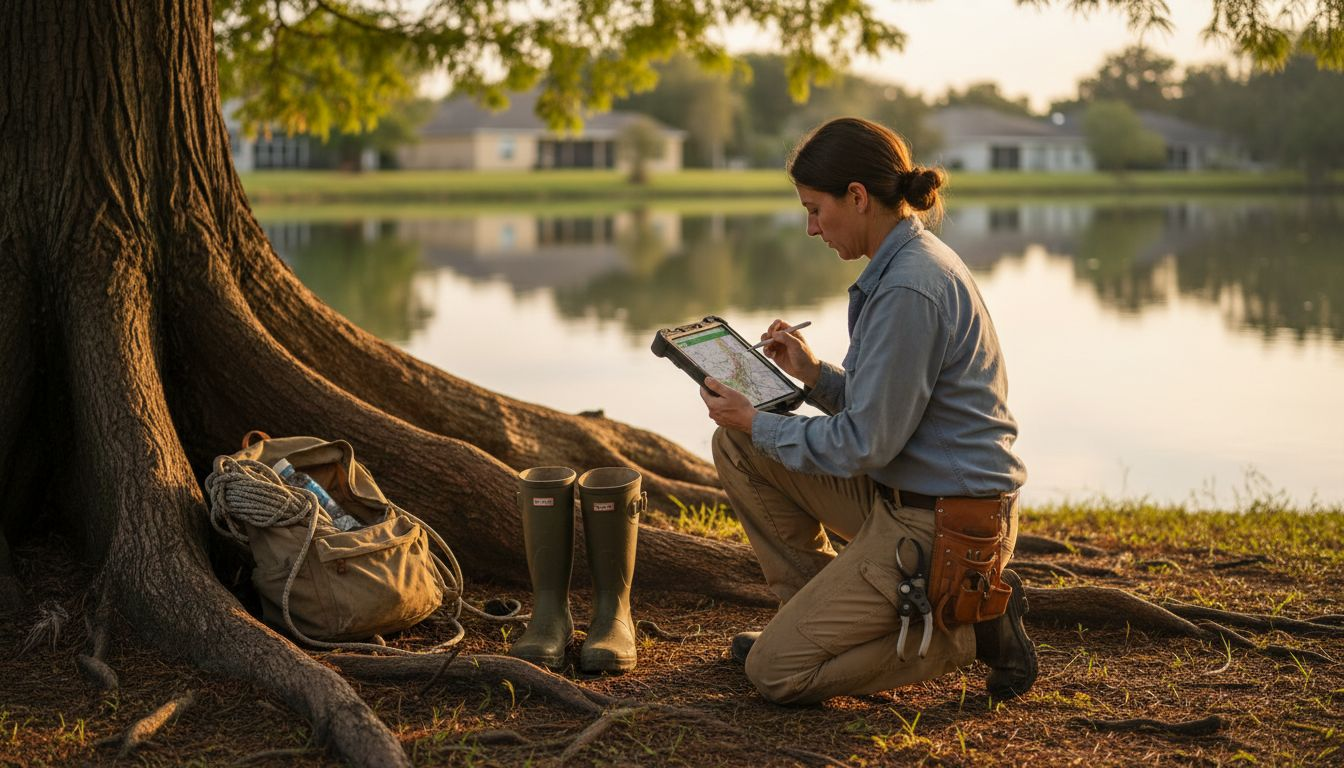
Pro Tip: Request a comprehensive tree health assessment from a certified arborist annually, especially after severe weather events, to proactively identify and address potential tree health issues before they become critical problems.
Legal and Safety Benefits for Florida Homeowners
Certified arborists provide critical legal protections and safety assurances that go far beyond typical tree maintenance services. By adhering to established industry standards, they significantly reduce liability risks for homeowners, particularly in regions like Central Florida with complex environmental challenges.
The legal benefits of working with a certified professional include:
- Documented compliance with local and state tree management regulations
- Professionally assessed and mitigated potential property damage risks
- Legally defensible documentation of tree health and maintenance
- Reduced personal liability in case of tree-related accidents or property damage
- Expert testimony and professional assessment capabilities
Professional risk assessment and safe work practices are fundamental to protecting homeowners from potential legal complications. In Central Florida, where hurricane risks and complex landscaping regulations intersect, certified arborists provide an essential layer of professional protection. Their comprehensive understanding of local environmental conditions, combined with rigorous safety protocols, ensures that tree management meets both legal standards and property owners’ safety requirements.
Pro Tip: Always request and retain official documentation from your certified arborist, including detailed assessments, maintenance records, and risk evaluations, to protect yourself legally and financially in potential future disputes.
Comparing Certified Versus Non-Certified Tree Services
The distinction between certified and non-certified tree services is stark, with significant differences in professional knowledge, skill level, and adherence to industry standards. Certified arborists undergo rigorous training and examination that demonstrates a comprehensive understanding of tree care far beyond basic maintenance techniques.
Key differences between certified and non-certified services include:
- Professional Knowledge: Certified arborists complete extensive scientific training
- Technical Skills: Comprehensive understanding of tree biology and complex diagnostic techniques
- Safety Protocols: Standardized work practices that minimize risk
- Ongoing Education: Continuous learning and skill updates
- Legal Compliance: Adherence to industry and regulatory requirements
The comprehensive examination process ensures that certified professionals maintain a higher standard of service and expertise. Non-certified providers often lack the depth of knowledge required to address complex tree health issues, particularly in challenging environments like Central Florida’s unique climate. Certified arborists bring scientific precision to tree care, understanding intricate details about tree biology, soil conditions, and environmental interactions that untrained services might overlook.
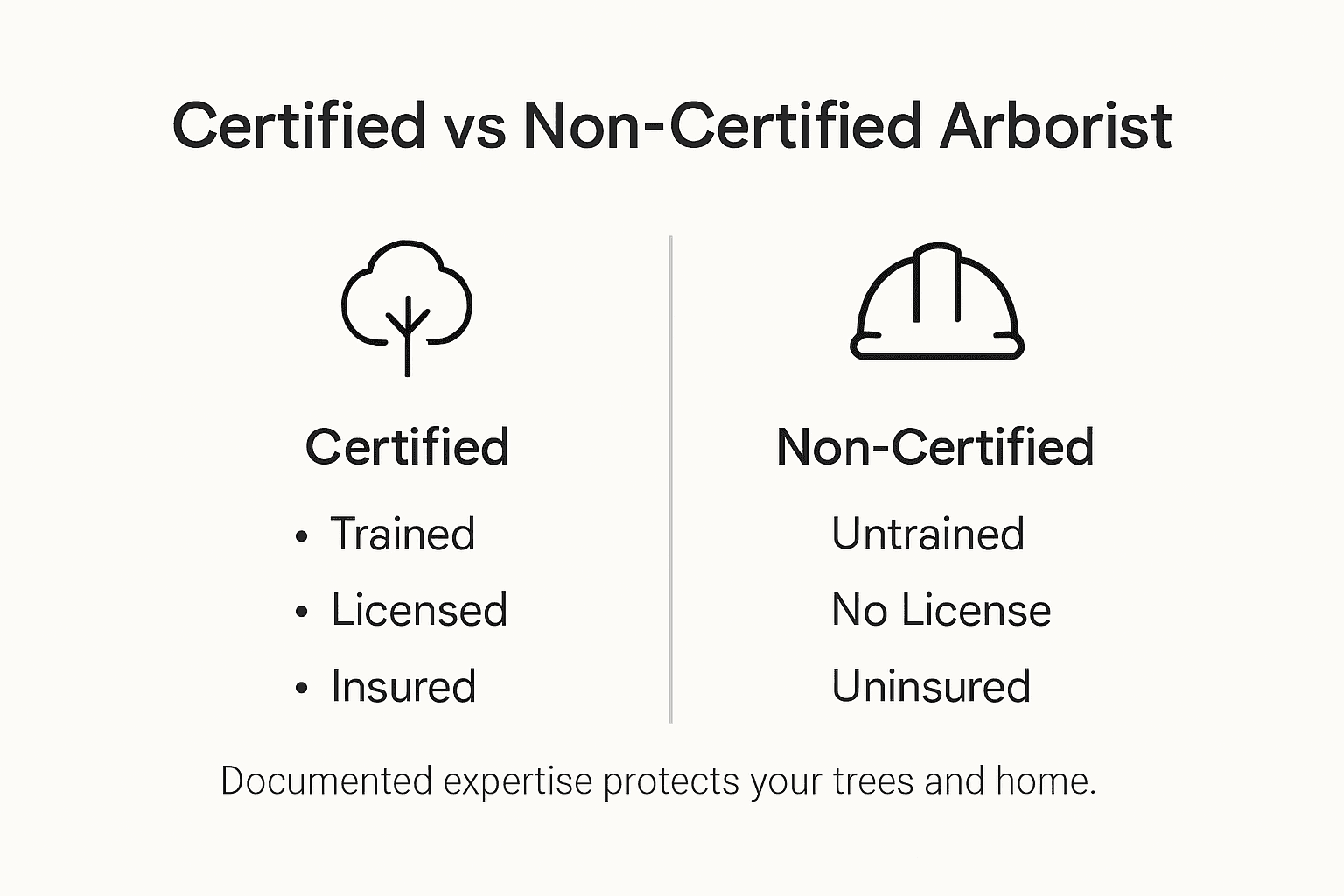
To further help homeowners make informed decisions, here is a quick comparison between certified and non-certified tree services:
| Aspect | Certified Arborist | Non-Certified Service |
|---|---|---|
| Training | Rigorous, science-based | Limited, informal |
| Compliance | Adheres to industry/legal standards | May not meet requirements |
| Risk Assessment | Comprehensive and documented | Basic or unverified evaluation |
| Continuing Education | Required ongoing learning | Rarely participates |
Pro Tip: Request certification documentation and verify credentials before hiring any tree service, ensuring you receive professional, scientifically-informed tree care that protects your landscape investment.
Ensure Your Trees Thrive with Certified Care from McCullough Tree Service
The article highlights the vital role of arborist certification in safeguarding tree health and reducing legal risks in Central Florida. Protecting your property from tree-related hazards requires expertise in diagnostics, pruning, and risk assessment. At McCullough Tree Service, we understand these challenges and provide trusted solutions backed by certified arborists who follow industry standards and ongoing education to keep your landscape safe and beautiful.
Choose McCullough Tree Service for professional tree trimming, removal, storm cleanup, and health assessments delivered with unmatched skill and care. Don’t wait until the next storm or pest issue threatens your trees. Contact us today at McCullough Tree Service to schedule your expert consultation. Discover how our certified arborists bring peace of mind and lasting tree health to your Central Florida property.
Frequently Asked Questions
What is arborist certification?
Arborist certification is a professional credential that demonstrates an individual’s knowledge and expertise in tree care, maintenance, and management, typically awarded by organizations like the International Society of Arboriculture (ISA).
Why is it important to hire a certified arborist?
Hiring a certified arborist ensures that you are working with a professional who has undergone extensive training and examination, adheres to industry standards, and is knowledgeable about the latest tree care practices, which helps protect and preserve your trees effectively.
How does the certification process for arborists work?
The certification process for arborists involves rigorous training and examination across key areas such as tree biology, pruning techniques, and risk assessment. Additionally, certified arborists must participate in ongoing education to maintain their credentials.
What are the benefits of certified arborists for homeowners?
Certified arborists offer legal protections and safety assurances, document compliance with tree management regulations, and provide expert assessments that reduce liability risks and ensure the health and longevity of trees on your property.
Recommended
- Certified Arborist in Orlando & Central Florida
- Tree Removal Maitland FL
- Tree Removal Orlando FL
- Tree Service DeBary FL