By: Shelby McCullough| Published: May 5, 2026
TL;DR:
- Many homeowners underestimate the complexity of professional tree work, risking costly insurance disputes and property damage. Certified arborists understand safety standards, risk assessment, and species-specific pruning, providing legal and insurance protections. Proper documentation, especially after storms, is essential for legal defense, insurance claims, and effective property management in Metro West.
Most Florida property owners assume that trimming a tree or clearing storm debris is straightforward work anyone with a chainsaw can handle. That assumption costs people thousands of dollars in insurance disputes, property damage, and utility violations every year. In Metro West and across Central Florida, trees grow fast, storms hit hard, and the rules around power line clearance and hazardous tree removal are more complex than most homeowners realize. Knowing what certified arborist-led service actually involves, and why it matters for your specific property, is the first step toward smarter, safer decisions.
Table of Contents
- Certified arborists: Why expertise matters in Metro West FL
- Navigating emergency tree removal and storm cleanup
- Safe tree trimming near power lines: Rules and responsibilities
- How arborists assess hazardous trees: Risk frameworks and practical tips
- The overlooked truth about Metro West tree service: Documentation and neighbor impact
- Connect with certified arborists for safer, smarter Metro West tree care
- Frequently asked questions
Key Takeaways
| Point | Details |
|---|---|
| Certified arborists matter | ISA-certified tree services offer safer, compliant, and expert care for Metro West properties. |
| Emergency response workflow | Professional teams follow structured hazard assessment, site securing, removal, and cleanup processes. |
| Power line trimming rules | Utilities manage municipal vegetation, but homeowners must seek certified help for private property trimming near lines. |
| Risk assessment frameworks | Certified arborists apply recognized frameworks for evaluating tree hazards and compliance. |
| Documentation protects you | Proper records and photos during storm cleanup safeguard insurance claims and neighborhood relationships. |
Certified arborists: Why expertise matters in Metro West FL
When you hire someone to work on your trees, you’re trusting them with your property, your family’s safety, and your insurance coverage. Not all tree service companies offer the same level of accountability. That’s where ISA certification becomes critical.
ISA stands for the International Society of Arboriculture. An ISA-certified arborist (a tree care professional who has passed a rigorous exam and maintains ongoing education) has demonstrated knowledge in tree biology, risk assessment, pruning standards, and safe removal practices. For Metro West homeowners, this certification is your clearest signal that the person evaluating your oak or cypress actually knows what they’re looking at.
Why certification changes the outcome:
- Certified teams follow ANSI A300 standards, the industry benchmark for tree care practices
- They understand OSHA safety requirements that protect both workers and your property
- They carry appropriate insurance and can provide documentation your homeowner’s policy may require
- They identify structural defects, disease, and root problems that untrained eyes miss
ISA-certified arborists oversee service and ensure ANSI/OSHA safety compliance, which is especially important when work involves large canopy trees common throughout Orange County. Similarly, certified arborists and high safety standards are applied for trimming and removals that involve complex site conditions.
Understanding the certified arborist role helps you ask the right questions before signing any contract. When you review a Metro West tree trimming guide, you’ll notice that proper pruning cuts, timing, and species-specific knowledge all factor into healthy outcomes.
Pro Tip: Before hiring any tree service in Metro West, ask to see their ISA certification number. You can verify it directly on the ISA website in seconds. If they can’t provide one, that’s a red flag worth taking seriously.
Here’s a quick comparison of what you get with certified versus non-certified tree services:
| Feature | Certified arborist-led service | Non-certified service |
|---|---|---|
| ANSI A300 compliance | Yes | Rarely |
| OSHA safety protocols | Yes | Inconsistent |
| Insurance documentation | Provided on request | Often unavailable |
| Hazard assessment report | Standard practice | Uncommon |
| Species-specific expertise | Yes | Variable |
| Liability coverage | Verified | Unconfirmed |
The difference isn’t just about credentials on paper. It’s about what happens when something goes wrong. A comprehensive tree service backed by certified arborists gives you legal and financial protection that unlicensed crews simply cannot offer.
Navigating emergency tree removal and storm cleanup
Central Florida’s storm season is no joke. When a hurricane or severe thunderstorm drops a 60-foot oak across your driveway at midnight, you need a team that knows exactly what to do, in the right order, without cutting corners.
Certified emergency tree removal follows a defined workflow. Here’s what a professional crew should do:
- Hazard evaluation: Assess the tree’s position, structural integrity, and proximity to structures or utilities before any cutting begins
- Site security: Establish a safety perimeter, warn neighbors if necessary, and ensure no one enters the work zone
- Controlled dismantling: Use sectional removal techniques to bring down the tree in manageable pieces, reducing impact on surrounding structures
- Debris cleanup: Remove all material from the site, including smaller branches and wood chips, leaving the property clean
Emergency methodology includes hazard evaluation, secure site setup, controlled removal, and thorough cleanup as the professional standard. Cutting corners on any of these steps can turn a bad situation into a catastrophic one.
“After a storm, the most dangerous trees are often the ones that look fine from the street. Root damage, internal decay, and split branch unions can all be invisible until a crew does a proper hands-on evaluation.” This is why calling a certified team before attempting any DIY cleanup is always the safer call.
For Metro West property managers overseeing multiple units or commercial spaces, response time matters enormously. 24/7 ISA-certified crews and rapid response are what separate a manageable incident from a liability nightmare.
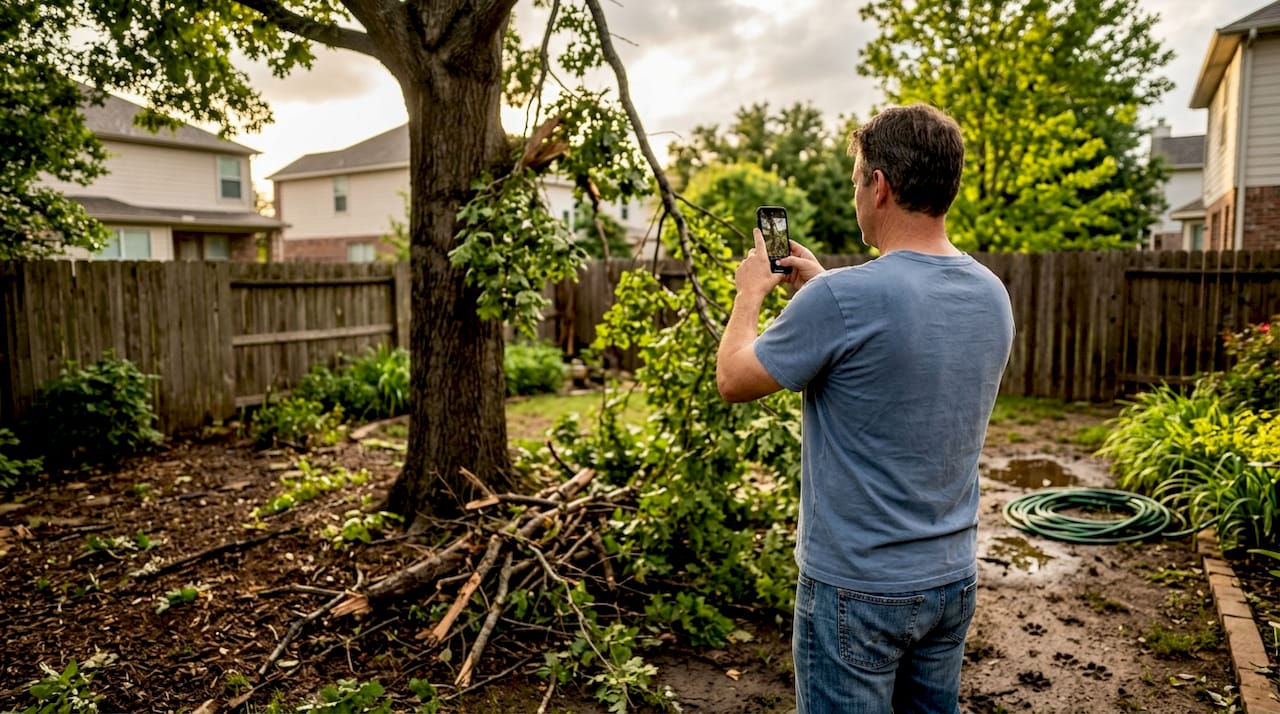
Pro Tip: After any storm event, photograph every affected tree before the crew arrives. These photos, combined with the arborist’s written report, create a complete record that your insurance adjuster will need. Ask your tree service to provide their own documentation as well.
Here’s what to expect from Metro West emergency providers:
| Provider type | Response time | Certifications | After-hours service | Documentation provided |
|---|---|---|---|---|
| ISA-certified local arborist | 2 to 4 hours | ISA, OSHA | Yes | Full written report |
| General landscaper | 12 to 24 hours | None standard | Rarely | Minimal |
| National franchise crew | 4 to 8 hours | Varies | Sometimes | Basic invoice |
| Utility contractor | Priority-based | Utility-specific | Yes | Limited to utility scope |
Explore storm cleanup solutions designed specifically for Central Florida conditions, and review the tree removal guide to understand what the full process involves before you need it in an emergency.
Safe tree trimming near power lines: Rules and responsibilities
This is where many Metro West homeowners get into serious trouble. The rules around power line clearance are not intuitive, and the consequences of getting them wrong range from power outages to fatal accidents.
Here’s how the responsibility is divided:
- Utility company territory: Trees growing on municipal easements or making contact with primary distribution lines are the utility’s responsibility to manage
- Your private property: Trees on your lot that grow toward or into secondary service lines (the lines running from the pole to your home) are your responsibility
- The gray zone: Trees that straddle property lines or grow across easement boundaries require coordination between you, your neighbor, and the utility
DIY trimming near power lines is strongly discouraged by utility cooperatives, which use trained crews applying arborist cuts and proper pruning techniques to maintain safe clearance. The reason is simple: energized lines can arc to wet wood or metal tools from several feet away.
Utility trimming responsibilities differ based on property type, and homeowners must manage private vegetation but should contact both the utility and a certified arborist for any line-clearing work. Don’t assume the utility will handle it just because the line is nearby.
When it comes to the actual pruning cuts made near utility infrastructure, clearance pruning governed by ANSI A300 standards for utilities requires avoiding structural imbalance and stubs, which can create long-term hazards if done incorrectly.
What to do when you have a tree near a power line:
- Contact your utility provider first to clarify which lines are their responsibility
- Hire a certified arborist to assess the tree’s structure and growth trajectory
- Never attempt to trim branches within 10 feet of any energized line yourself
- Request that your tree service confirm whether they coordinate directly with the local utility for clearance work
Pro Tip: Always confirm whether the tree service you hire coordinates directly with Duke Energy or OUC (the local utilities in Metro West) before they begin any work near lines. Some crews will stop at the property line and leave the most critical cuts undone. That’s not a complete job.
For a tailored assessment of your specific situation, request a tree service Metro West estimate from a certified team who knows the local utility infrastructure.
How arborists assess hazardous trees: Risk frameworks and practical tips
Not every leaning tree is dangerous. Not every healthy-looking tree is safe. A certified arborist uses a structured risk assessment framework to tell the difference, and that framework is what separates a professional opinion from a guess.
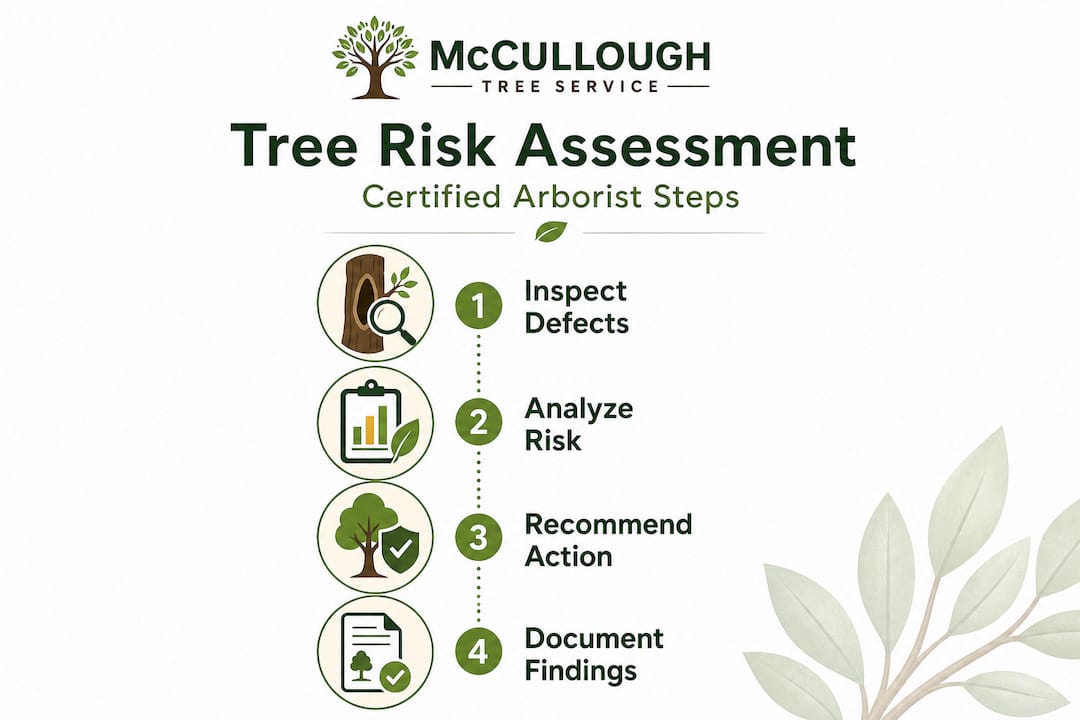
The ISA’s approach to tree risk assessment involves three core steps:
- Defect identification: The arborist physically inspects the tree for cracks, cavities, dead wood, root damage, fungal growth, and structural weaknesses. This often includes probing the trunk and checking below the soil line.
- Likelihood analysis: Based on the defects found, the arborist estimates the probability that the tree or a major branch will fail. Factors include species, age, recent weather stress, and proximity to targets.
- Consequence evaluation: If the tree does fail, what gets hit? A tree falling into an empty field is low consequence. The same tree falling toward a school bus stop is extreme consequence.
ISA risk assessment involves identifying hazards, analyzing likelihood, and evaluating consequences as the professional standard for certified arborists across Florida.
What you receive after a professional hazard assessment:
- A written report detailing each defect observed and its severity rating
- A risk rating (low, moderate, high, or extreme) for the tree overall
- Recommended actions, ranging from monitoring to immediate removal
- Photos documenting the findings, which become part of your property record
Pro Tip: In storm or drought stress cases, ask specifically for an itemized written report rather than a verbal summary. Insurance adjusters and HOA boards respond to documentation, not recollections of what the arborist said during a walkthrough.
According to industry data, trees in urban environments like Metro West are subject to significantly higher stress than rural trees due to compacted soils, heat island effects, and root zone restrictions from pavement and structures. This means that even trees that appear healthy may have compromised root systems that a certified arborist can detect through a proper hazard evaluation guide.
The overlooked truth about Metro West tree service: Documentation and neighbor impact
Here’s something most tree service articles won’t tell you: the work itself is rarely where things go wrong. It’s the paperwork, or the lack of it, that creates lasting problems for Metro West property owners and managers.
We’ve seen it repeatedly. A storm drops a large branch onto a neighboring fence. The homeowner hires a crew to clean it up quickly, no report, no photos, no arborist sign-off. Three months later, the neighbor files a claim saying the tree was visibly dead and the homeowner was negligent. Without documentation, there’s no defense.
Certified arborist reports change this dynamic entirely. When you have a pre-work assessment on file showing the tree’s condition before the storm, and a post-work report showing what was removed and why, you have a paper trail that protects you legally and financially. Your insurance carrier can process claims faster. Your HOA can verify compliance. Your neighbor has no ambiguity to exploit.
The same logic applies to routine maintenance. If you’re trimming mature oaks near a shared property line, a brief written record from your arborist documenting the work scope and condition of the trees is worth far more than a handshake agreement.
Storm events amplify this urgency. Rapid storm cleanup best practices paired with detailed records don’t just help you recover faster. They prevent the secondary wave of disputes, insurance delays, and code violation notices that often follow major weather events in densely populated neighborhoods like Metro West.
The certified arborist expertise behind proper documentation is what separates a reactive cleanup from a proactive property management strategy. If you’re managing multiple properties or a commercial complex, this distinction is worth building into your standard operating procedures before the next storm season arrives.
Connect with certified arborists for safer, smarter Metro West tree care
The education matters, but at some point you need a team on the ground who can actually do the work safely and correctly.
McCullough Tree Service provides certified arborist-led care across Metro West and Central Florida, covering everything from routine maintenance to urgent storm response. Whether you need professional tree trimming to keep your canopy healthy and compliant, or safe tree removal for a hazardous situation that can’t wait, our teams bring the credentials, documentation, and local knowledge your property deserves. Explore our full range of certified arborist services and request a free estimate tailored to your specific property conditions in Metro West. Don’t wait for the next storm to find out whether your trees are ready for it.
Frequently asked questions
Why should I hire an ISA-certified arborist for tree service in Metro West FL?
ISA-certified arborist-led teams ensure ANSI A300 and OSHA standards are met, which reduces your liability, protects your insurance coverage, and guarantees that the work is done correctly the first time.
What’s the proper procedure for emergency tree removal after a storm?
The recommended steps are hazard assessment, site securing, controlled sectional dismantling, and thorough cleanup, and emergency work standards require all four steps to be performed by certified professionals to ensure safety and compliance.
Who is responsible for trimming trees near power lines in Metro West?
Utilities handle trees on municipal easements, while homeowners must manage private property vegetation, and utility vs homeowner responsibilities for line-adjacent trees require coordination with both the utility company and a certified arborist.
How are hazardous trees assessed for removal?
Certified arborists use a structured framework that includes identifying structural defects, analyzing the likelihood of failure, and evaluating potential consequences, following ISA risk assessment best practices recognized across Florida.
Is professional documentation important for storm cleanup?
Yes, absolutely. Expert cleanup documentation including itemized reports and photos is essential for supporting insurance claims and protecting against neighbor disputes or code violation notices after a storm event.
Recommended
- tree service windmere fl – Resources – McCullough Tree Service
- Tree Care Service for Homeowners in Eustis, FL
- Best Tree Service in Metro West, FL | Estimate & Financing
- Best Tree Trimming Service in Metro West, FL | Call Today!