By: Shelby McCullough| Published: December 31, 2025
Commercial property managers in Orlando face increasing safety and image demands, with estimates showing that well maintained trees can raise property value by up to 14 percent. Balancing the lush beauty Orlando is known for with strict american safety standards means choosing licensed tree trimming services is never just about appearances. This guide gives you practical steps to reduce risk, meet local regulations, and create landscapes that attract and retain tenants.
Table of Contents
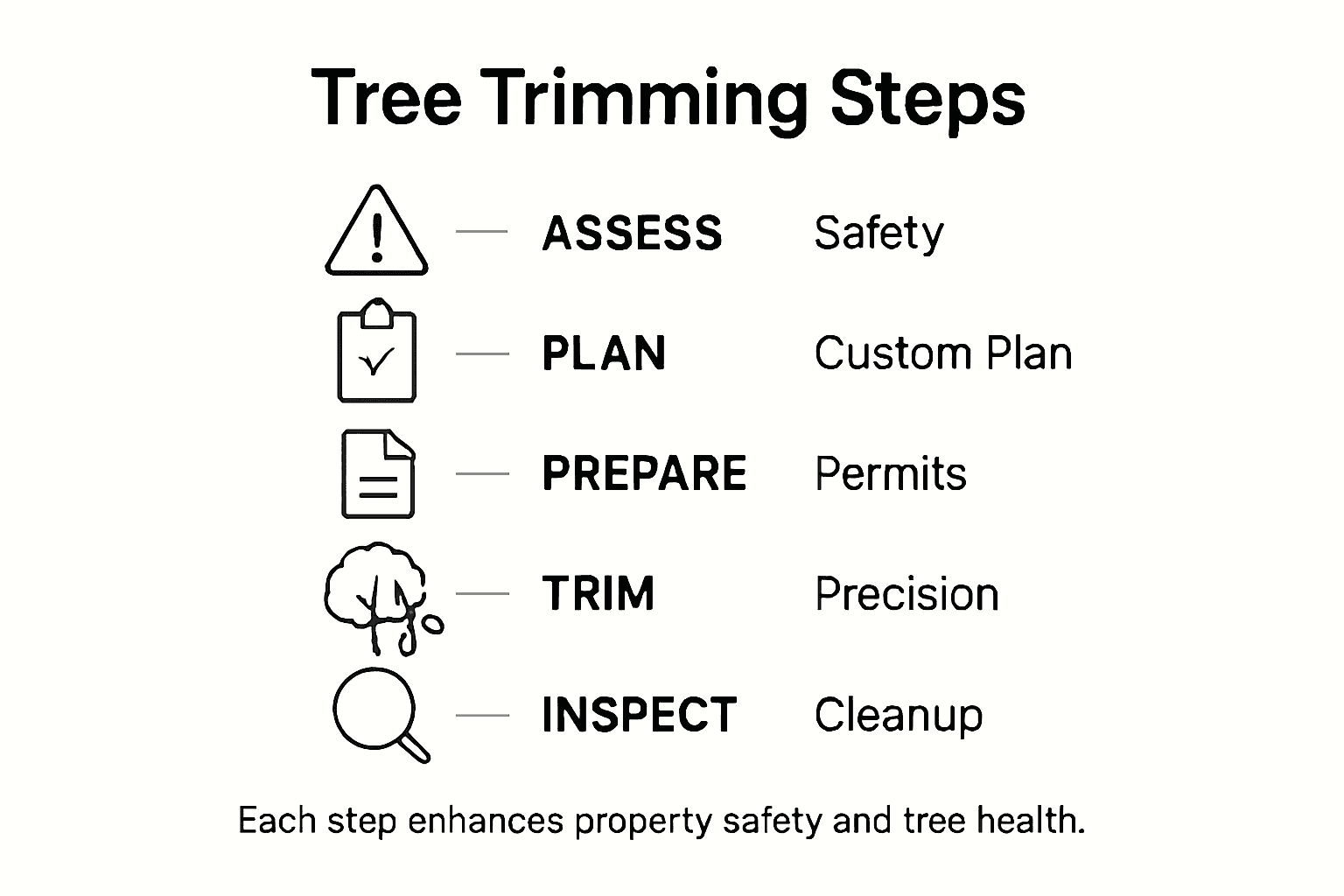
- Step 1: Assess Property Needs And Safety Hazards
- Step 2: Develop A Customized Trimming Plan
- Step 3: Prepare Site And Secure Necessary Permits
- Step 4: Execute Precise Tree Trimming Techniques
- Step 5: Verify Quality And Remove Debris
Quick Summary
| Key Point | Explanation |
|---|---|
| 1. Regularly assess tree safety | Conduct visual inspections to identify hazards like leaning trees or dead branches, especially in high traffic areas. |
| 2. Create a tailored trimming plan | Document specific objectives for each tree, focusing on health, safety, and aesthetics for professional arborists. |
| 3. Prepare for permits and site safety | Verify local regulations for tree trimming and implement protection measures to avoid damage and ensure compliance. |
| 4. Use precise cutting techniques | Follow best practices with clean cuts and strategic pruning to maintain tree health and prevent unnecessary damage. |
| 5. Conduct quality assessment and cleanup | After trimming, inspect trees and clear debris to ensure professional standards and enhance property appearance. |
Step 1: Assess Property Needs and Safety Hazards
Before launching into any commercial tree trimming project, you need a comprehensive property assessment that identifies potential risks and specific tree care requirements. This crucial initial step helps prevent accidents and ensures your landscaping intervention meets both safety standards and aesthetic goals.
Begin by conducting a thorough visual inspection of your entire property. Look for trees with structural weaknesses such as split trunks, dead branches, leaning positions, or proximity to power lines and buildings. Property owners have a significant responsibility to inspect trees for unsafe conditions regularly, especially in commercial settings where liability is a critical concern. Pay special attention to trees near parking areas, walkways, building foundations, and high traffic zones.
Identify specific hazards that might require immediate professional intervention. This includes trees with signs of disease, pest infestation, root damage, or those positioned precariously near electrical infrastructure. Understanding potential tree trimming accidents like electrocution, falls, and environmental risks is essential for developing a comprehensive safety strategy. Recommended actions might include selective pruning, complete removal, or targeted treatment depending on the specific condition of each tree.
Here is a summary of common tree hazards and their business impacts:
| Hazard Type | Example Scenario | Business Impact |
|---|---|---|
| Structural Weakness | Split trunk or leaning tree | Increased liability, higher risk of litigation |
| Disease or Infestation | Fungal infection, insect pests | Costly removal, potential property damage |
| Proximity to Infrastructure | Branches near power lines | Service interruptions, expensive repairs |
| Root Damage | Roots lifting pavement | Trip hazard, ADA compliance issues |
Pro tip: Schedule a professional arborist assessment at least twice annually to catch potential issues before they become expensive or dangerous problems.
Step 2: Develop a Customized Trimming Plan
Creating a precise tree trimming strategy is essential for maintaining the health and safety of your commercial property’s landscape. Your customized plan will serve as a comprehensive roadmap that guides professional arborists in executing targeted and effective tree maintenance.
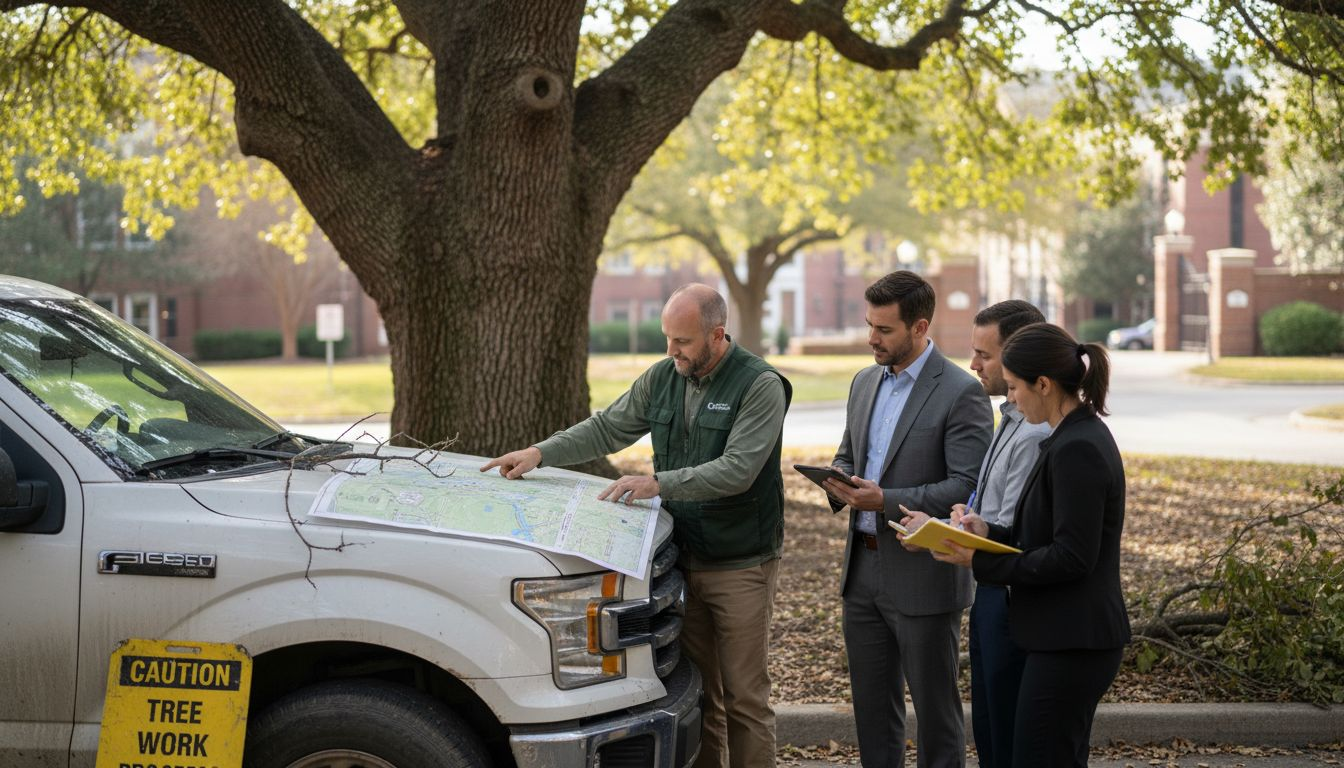
Professional tree care standards recommend developing a specialized pruning approach that considers each tree’s unique characteristics. Begin by documenting specific objectives for each tree on your property. These might include improving tree structure, removing potential safety hazards, enhancing aesthetic appeal, or managing tree growth near buildings and infrastructure. Pruning plans should carefully identify objectives such as crown lifting, reducing potential risks, and improving overall tree health.
Evaluate each tree individually to determine the most appropriate trimming technique. Consider factors like tree species, age, current health condition, growth pattern, and environmental stressors. Your plan should outline precise pruning methods tailored to each tree’s specific needs including selective branch removal, crown thinning, or strategic shaping to maintain optimal tree structure and property safety.
This table outlines trimming techniques and when to use them:
| Technique | Best Used For | Key Benefit |
|---|---|---|
| Crown Thinning | Dense canopies | Improves light and airflow |
| Selective Pruning | Hazardous branches | Reduces risk of accidents |
| Crown Lifting | Low-hanging branches | Increases clearance for people and vehicles |
| Strategic Shaping | Overgrown or misshaped trees | Enhances visual appeal |
Pro tip: Always consult a certified arborist to validate your trimming plan and ensure you’re following best practices for tree care and preservation.
Step 3: Prepare Site and Secure Necessary Permits
Before any commercial tree trimming project begins, you must carefully prepare the site and navigate the legal landscape of local regulations. This critical step ensures your project proceeds smoothly, legally, and with minimal potential for unexpected complications or costly penalties.
Protecting trees during site preparation requires involving certified professionals and establishing clear protection zones. Start by contacting your local municipal offices to determine specific permit requirements for tree trimming. Different jurisdictions have varying regulations regarding tree maintenance, especially for commercial properties. You will likely need to submit detailed documentation including site plans, specific trimming objectives, and proof of professional arborist involvement.
Urban forest management guidelines emphasize establishing comprehensive tree protection measures before any construction or trimming activities. Conduct a thorough site survey to identify potential obstacles, mark protection zones, and ensure all equipment and personnel can safely access the work area. This preparation minimizes potential damage to surrounding landscape features, underground utilities, and adjacent property structures.
Pro tip: Request a pre-project site inspection from your local urban forestry department to confirm all permit requirements and avoid potential regulatory issues.
Step 4: Execute Precise Tree Trimming Techniques
Precise tree trimming requires a strategic approach that balances tree health, safety, and aesthetic considerations. Your goal is to implement carefully planned cuts that support the tree’s long term structural integrity while addressing specific property maintenance objectives.
Understanding structural forces and potential defects is crucial before making any trimming cuts. Begin by using clean, sharp professional grade tools specifically designed for tree trimming. Focus on making strategic cuts that follow natural branch collars without leaving stubs or causing unnecessary damage. This means cutting just outside the branch bark ridge at a slight angle that allows proper healing and prevents water accumulation.
Each cut should serve a specific purpose whether it involves removing dead or diseased branches, reducing branch weight, improving tree shape, or clearing space around structures. Prioritize cuts that enhance tree health by maintaining the tree’s natural growth pattern and structural strength. Work methodically from the bottom up, ensuring each cut is deliberate and thoughtful. Pay close attention to branch size and location to minimize potential stress or damage to the tree’s overall system.
Pro tip: Always disinfect trimming tools between trees to prevent potential disease transmission and ensure each cut is made with precision and care.
Step 5: Verify Quality and Remove Debris
After completing tree trimming operations, your final responsibility is to conduct a thorough quality assessment and comprehensive site cleanup. This critical step ensures the work meets professional standards and leaves your property looking pristine and well maintained.
Professional tree trimming specifications require a systematic approach to final site inspection and debris removal. Begin by carefully examining each trimmed tree from multiple angles to confirm all cuts align with your original trimming plan. Check for clean cuts that promote proper healing, evaluate overall tree shape, and verify that no unnecessary damage has occurred during the trimming process. Look closely for any remaining dead branches, uneven cuts, or potential structural issues that might compromise the tree’s long term health.
Complete the process with a comprehensive site cleanup. Gather all trimmed branches, leaves, and organic debris systematically. Use appropriate equipment like rakes, tarps, and chipper trucks to efficiently collect and remove materials from the property. Ensure the area is completely cleared, paying special attention to walkways, parking areas, and landscaped zones. A thorough cleanup not only improves the property’s appearance but also prevents potential safety hazards from scattered tree debris.
Pro tip: Consider having a second team member perform a final independent review to catch any quality details that might have been overlooked during the initial inspection.
Ensure Safe and Healthy Trees with Expert Commercial Tree Trimming
Managing complex tree hazards like structural weaknesses, disease, and proximity to infrastructure demands experienced professionals who understand precise trimming techniques and local regulations. This article highlights the challenges of assessing tree risks, developing custom pruning plans, obtaining permits, and executing clean, strategic cuts — all critical steps for protecting your commercial property and preventing costly liabilities.
McCullough Tree Service combines certified arborist expertise with comprehensive commercial tree care solutions tailored to Orlando and Central Florida properties. From thorough safety assessments and customized trimming strategies to meticulous site preparation and debris removal, their licensed team ensures your trees remain healthy, visually appealing, and compliant with municipal codes. Discover how their storm cleanup, tree health evaluations, and expert pruning services address the exact concerns outlined in this guide.
Ready to protect your commercial landscape with reliable, certified tree care? Visit McCullough Tree Service now to schedule your professional tree health assessment, or learn how their licensed arborists deliver expert trimming solutions designed for your property’s unique needs. Don’t wait until hazards turn into emergencies – secure your property’s safety today.
Frequently Asked Questions
What are the first steps in the commercial tree trimming process?
Before starting any commercial tree trimming project, conduct a thorough property assessment to identify safety hazards and specific tree care needs. Begin by inspecting trees for weaknesses, diseases, or proximity to infrastructure, and document any potential risks that may require professional intervention.
How should I develop a customized tree trimming plan for my property?
To create a customized tree trimming plan, evaluate each tree’s characteristics and layout specific objectives for trimming. Consider factors like tree species and health, and choose appropriate techniques like crown lifting or selective pruning to ensure the health and safety of your landscape.
What permits are needed before tree trimming on a commercial property?
You need to obtain the necessary permits by contacting local municipal offices regarding specific regulations for tree trimming. Prepare documentation such as site plans and trimming objectives, and ensure all required permits are secured before initiating the project.
How can I ensure quality and safety during the tree trimming process?
Ensure quality by using clean, sharp tools and making precise cuts that follow natural branch collars. After the trimming, perform a detailed inspection of each tree and complete a thorough site cleanup to prevent debris-related safety hazards.
How often should I have my trees assessed for trimming needs?
It is recommended to have a professional arborist assess your trees at least twice a year. Regular assessments help identify potential issues early, reducing the risk of costly damages or hazardous conditions.
What should I do after the tree trimming is completed?
After trimming, conduct a final quality assessment to confirm all cuts are clean and structure is intact. Follow this by removing all branches and debris from the property, ensuring that the area is clear for safe use.
Recommended
- Be smart heading into storm season with Florida trees – McCullough Tree Service
- Tree Removal Maitland FL
- Tree Removal Orlando FL
- Tree Service DeBary FL