By: Shelby McCullough| Published: July 21, 2026
What is a tree health assessment?
A tree health assessment is a systematic diagnostic evaluation by a certified arborist to determine a tree’s biological condition and structural integrity. The goal is catching problems early, before visible damage appears and before repair costs multiply. Arborists follow guidelines established by the International Society of Arboriculture (ISA) to make sure the process is thorough and defensible.
Every complete assessment covers these core elements:
- Foliage and canopy: Leaf color, density, size, and signs of dieback
- Trunk: Cracks, cavities, fungal growth, bark injuries, and oozing
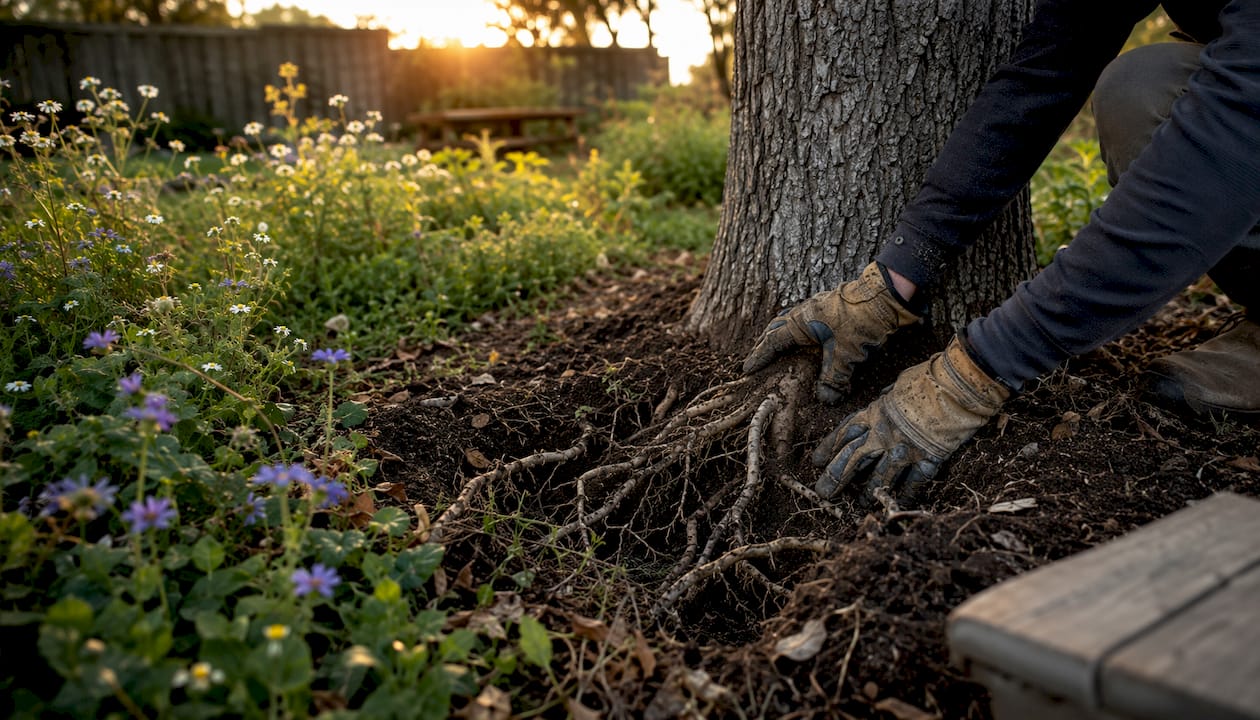
- Root zone: Root flare visibility, soil compaction, and construction damage
- Site conditions: Drainage, nearby structures, chemical use, and sun exposure
- Species traits: Known disease and pest vulnerabilities for that specific tree
Experts recommend inspections every 1–3 years to maintain vitality and catch changes before they become irreversible.
Key signs arborists look for during a tree health evaluation
Foliage tells part of the story, but only part. Yellowing leaves, stunted growth, early leaf drop, and visible spots all signal stress. Canopy dieback, where branches in the upper crown die back progressively, is a particularly reliable indicator that something is wrong below the surface.
“More than 80% of trees that fail during storms have pre-existing defects. Learning to identify tree defects is paramount to proper tree maintenance and risk management.”
— Mississippi State University Extension
Trunk inspection reveals a separate layer of problems. Arborists look for:
- Fungal conks or mushrooms at the base, which signal advanced internal rot
- Vertical cracks or multiple trunks with weak unions
- Frass (sawdust-like insect waste) near the base
- Peeling or discolored bark indicating disease or physical injury
Root zone checks are just as critical as what you can see above ground. Roots buried under compacted soil, damaged during construction, or circling the trunk base can destabilize a tree that looks perfectly healthy from the street. Foliage color alone cannot confirm stability; a tree may appear lush while harboring lethal root or trunk decay underneath.
For a closer look at warning signs, Mcculloughtreeservice covers unhealthy tree indicators in detail.
How arborists conduct a tree condition assessment
The process follows a clear sequence, not a quick glance. Here is how a professional tree condition assessment typically unfolds:
- Site walkthrough: The arborist circles the tree completely, noting the surrounding environment, soil cover, nearby structures, and any recent construction.
- Canopy inspection: Leaf health, branch structure, dieback percentage, and growth patterns from prior years are all examined.
- Trunk evaluation: Visual and tactile checks for cracks, cavities, fungal bodies, bark injuries, and signs of insect activity.
- Root zone probing: Systematic inspection includes root flare exposure and probing to test tissue soundness beneath the surface.
- Diagnostic testing: When needed, soil samples or pest identification tests add precision to the findings.
- Written report: The arborist documents all findings and delivers actionable recommendations, from pruning to soil management to removal.
This is a paid diagnostic service, not a free estimate. A free estimate covers immediate pruning or removal tasks. An assessment digs deeper and produces a formal report you can act on.
Pro Tip: Always share your property’s construction and chemical history with the arborist before the inspection. Recent grading, new sidewalks, or herbicide use near the root zone can explain symptoms that would otherwise look mysterious.
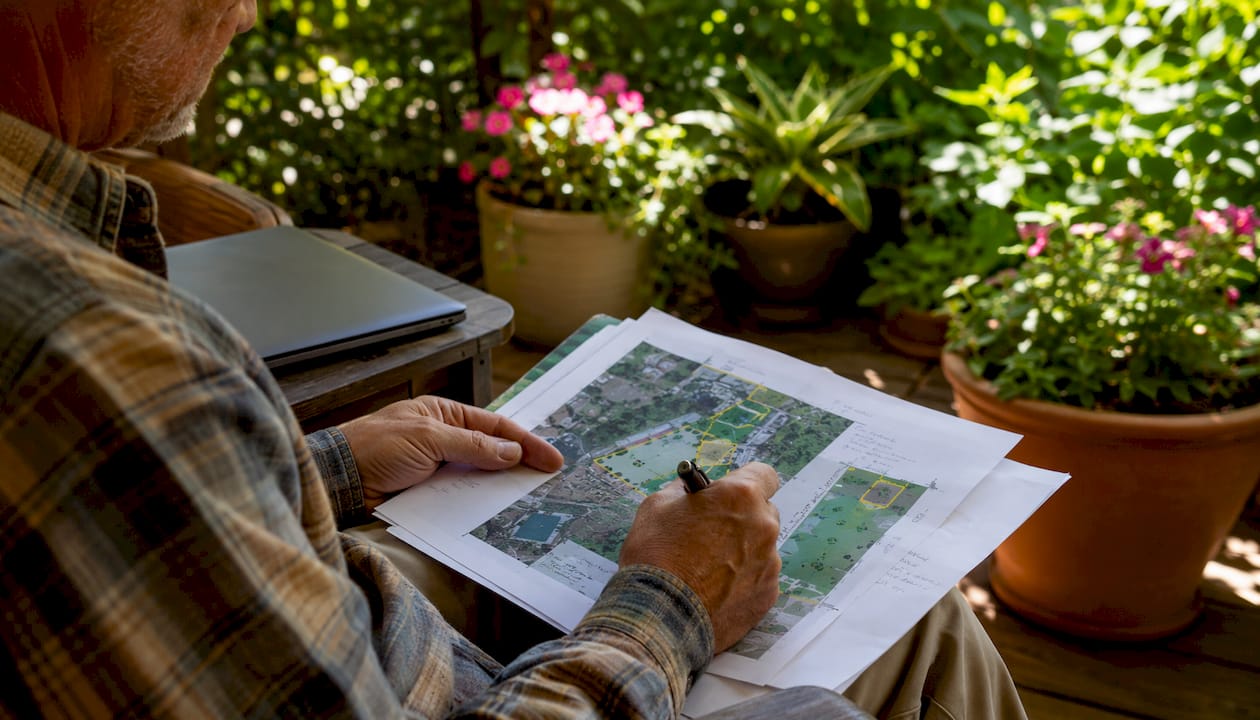
Timing matters too. Arborists generally recommend annual inspections for mature trees, with urgent evaluations triggered by storm damage, sudden dieback, or visible fungal growth.
How tree health assessments differ from tree risk assessments
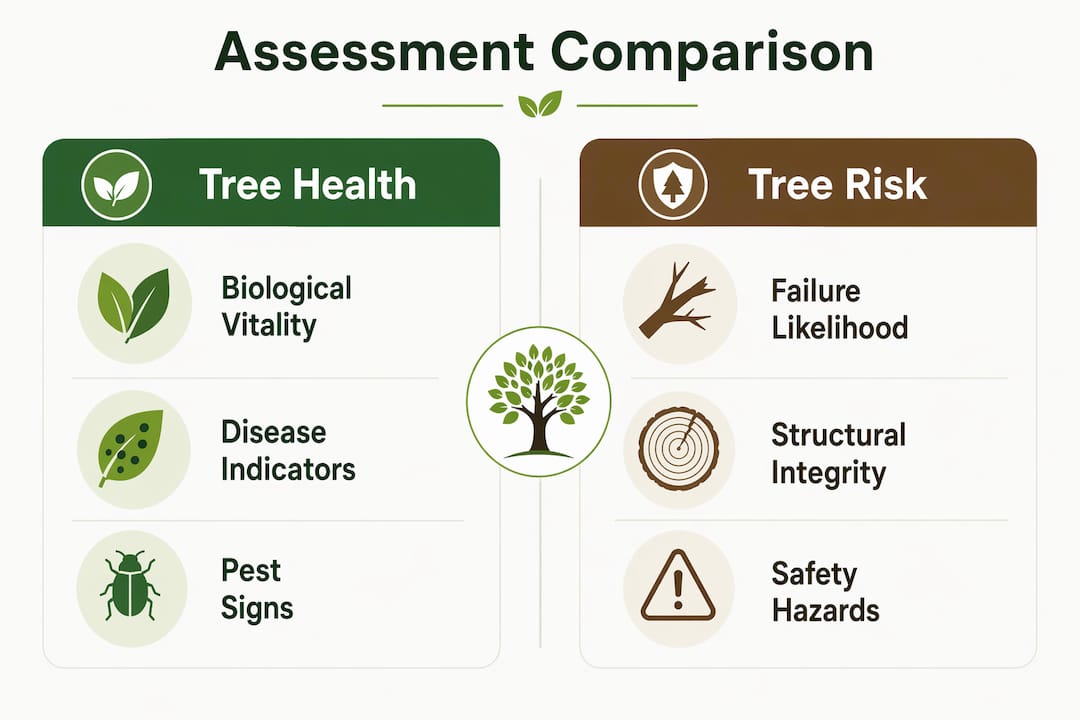
These two evaluations serve different purposes, and confusing them leads to gaps in tree care.
A tree health assessment focuses on biological condition: Is the tree physiologically sound? What diseases, pests, or stressors are present?
A tree risk assessment asks a different question: What is the likelihood this tree or limb fails, and what are the consequences? ISA’s three-factor framework evaluates failure likelihood, impact likelihood, and consequence severity, producing a risk rating of Low, Moderate, High, or Extreme.
| Feature | Tree health assessment | Tree risk assessment |
|---|---|---|
| Primary focus | Biological vitality | Likelihood and consequence of failure |
| Key questions | Is the tree healthy? | Could it fall? Who or what is at risk? |
| Output | Treatment and care plan | Risk rating and mitigation options |
| Standard used | ISA guidelines | ISA three-factor matrix, 4-point scale |
| Triggers overlap | Yes, defects found in health checks inform risk ratings | Yes, risk assessments reference health findings |
In practice, the two often complement each other, especially near high-value targets like homes, power lines, or pedestrian areas. Learn more about how risk assessment protects property at Mcculloughtreeservice.
Why regular tree health assessments protect your property
The ISA Tree Risk Assessment Qualification (TRAQ) sets the industry standard for certified arborists, training them to use standardized evaluation matrices that produce defensible, science-based guidance for property owners.
Regular assessments deliver concrete benefits:
- Early disease detection before infections spread to neighboring trees
- Reduced liability by documenting tree condition and mitigation steps
- Longer tree lifespan through timely pruning, fertilization, and soil care
- Lower long-term costs by catching manageable problems before they require removal
- Informed decisions when selling, insuring, or developing a property
Homeowners who wait for visible symptoms often face far more expensive interventions. Preventative tree health evaluations consistently cost less than emergency removal or storm damage repair.
When is the best season to schedule a tree health assessment?
No single season is universally best, but timing affects what an arborist can see. Late winter or early spring, before leaves emerge, gives the clearest view of branch structure, cracks, and trunk defects. Summer assessments catch active pest infestations and foliage problems at their most visible. Fall is ideal for spotting fungal growth and evaluating how well a tree recovered from summer stress. After any major storm, an urgent assessment is warranted regardless of season, since storm damage frequently exposes or worsens pre-existing structural weaknesses.
How you can do a preliminary tree health check yourself
You do not need credentials to spot early warning signs. Walk completely around the tree and work from the ground up.
Start at the base: look for mushrooms, soft or sunken bark, and any roots circling the trunk. Move to the trunk: check for cracks, holes, peeling bark, and sawdust-like material at the base. Then look up: scan for dead branches, sparse foliage, or leaves that are smaller or paler than normal. Note anything that looks out of place compared to the same tree last year. A good property maintenance checklist can help you build this into a regular routine alongside other exterior home care.
Your observations are valuable input for a certified arborist, but they are not a substitute for a professional evaluation, especially for trees near your home or high-traffic areas.
What to do after receiving your assessment results
A written assessment report typically categorizes findings by urgency. Address high-priority items first: structural defects, active pest infestations, or root decay near structures. Medium-priority recommendations, like soil aeration or targeted fertilization, can follow a scheduled timeline. Low-priority notes are usually monitoring items to watch at the next inspection.
If the report recommends removal, act promptly. Delaying removal of a structurally compromised tree increases the risk of failure during the next storm. Mccullough Tree Service offers professional tree trimming and tree removal services to carry out exactly these post-assessment steps for Central Florida property owners.
Key Takeaways
A tree health assessment by a certified arborist, following ISA guidelines, is the most reliable way to detect tree problems early and prevent costly failures.
| Point | Details |
|---|---|
| Assessment frequency | Experts recommend regular inspections every few years for most trees. |
| Storm failure link | Over 80% of trees that fail in storms have pre-existing detectable defects. |
| Health vs. risk | Health assessments evaluate biological condition; risk assessments rate failure likelihood on a 4-point scale. |
| Root zone priority | Root and soil inspection is as critical as canopy evaluation for accurate diagnosis. |
| Act on findings | High-priority defects should be addressed promptly to prevent escalating damage and liability. |
Recommended
- Tree Health Assessment Guide for Central Florida Owners
- Tree Health Assessment: Protecting Orlando Landscapes
- Why tree health assessments protect your property