By: Shelby McCullough| Published: August 14, 2026
Disease-resistant trees are species or cultivars that, because of their genetics, can tolerate or limit the impact of common pathogens well enough to stay healthy under normal growing conditions. The key word is tolerate. As a peer-reviewed overview confirms, no tree is 100% disease-proof: resistance is a phenotype, and environmental stressors can override even strong genetic defenses. What you are really choosing when you pick a “resistant” tree is a species that stacks the odds in your favor, not one that eliminates risk entirely.
For most U.S. yards, the short list of reliably resistant ornamental trees includes:
- Kousa dogwood (Cornus kousa) — largely immune to dogwood anthracnose that devastates native flowering dogwoods
- Ginkgo (Ginkgo biloba) — virtually no serious pest or disease problems recorded in cultivation
- Southern magnolia (Magnolia grandiflora) — tough, rarely troubled by pathogens in its native range
- Paperbark maple (Acer griseum) — far less susceptible to verticillium wilt and anthracnose than many maples
- Persian parrotia (Parrotia persica) — outstanding disease and pest resistance with minimal maintenance
- Chinese fringe tree (Chionanthus retusus) — cleaner health record than its American cousin
Your immediate action checklist before buying anything:
- Inspect your site: drainage, sun exposure, soil type, overhead utilities, and root zone space
- Contact your local university extension office or a certified ISA arborist for region-specific species advice
- Match the tree to the site first, then filter by disease resistance
- Plan for at least three years of establishment care after planting
Key Takeaways
Disease-resistant trees reduce pathogen impact through polygenic genetics, but site conditions and establishment care determine whether that resistance is ever fully expressed.
| Point | Details |
|---|---|
| Resistance is not immunity | No tree is 100% disease-proof; environmental stress can override even strong genetic resistance. |
| Right tree, right place | Matching species to site conditions is the single most effective disease prevention step available. |
| Inspect annually | Check leaves, branches, trunk, and root zone each year; early detection preserves far more management options. |
| Establish for three years | Consistent watering, correct mulching, and avoiding trunk damage are critical during the first three growing seasons. |
| Mcculloughtreeservice | Certified arborist inspections, structural pruning, and removal services are available across Central Florida. |
Table of Contents
- 1. Which disease-resistant trees belong in your yard?
- 2. What actually makes a tree disease-resistant?
- 3. How to inspect your trees and tell signs from symptoms
- 4. What to do when you suspect your tree has a disease
- 5. How to choose and plant the right tree for your site
- 6. Common tree diseases every homeowner should recognize
- 7. When you need a certified arborist, not a YouTube tutorial
- 8. A local arborist’s perspective on what actually matters
- Mcculloughtreeservice can help you protect your trees
- Sources
1. Which disease-resistant trees belong in your yard?
The ten species below represent the strongest performers for U.S. home landscapes. Each entry covers USDA hardiness zones, mature size, what it resists, and where it fits best.
A few cultivar notes worth knowing. Kousa dogwood has several named cultivars, including ‘Milky Way’ and ‘Satomi,’ that hold up well in the Southeast. For ginkgo, always plant a male cultivar such as ‘Autumn Gold’ or ‘Princeton Sentry’ to avoid the notoriously foul-smelling fruit of female trees. Golden rain tree is considered invasive in parts of the mid-Atlantic and Southeast, so confirm its status with your state extension office before planting.
Japanese maple earns its place on this list with a caveat: it tolerates most leaf diseases well, but it is sensitive to verticillium wilt in poorly drained soils. Pair it with excellent drainage and it performs beautifully. Maples as a group span a wide range of resistance, with paperbark maple at the top and silver maple (Acer saccharinum) at the bottom in terms of disease susceptibility.
2. What actually makes a tree disease-resistant?
Resistance is not a simple on/off switch. It is an observable outcome, a phenotype, shaped by the interaction of a tree’s genetics and its growing environment.
Most tree resistance is polygenic, meaning it is controlled by many genes, each contributing a small effect. This is different from the single major-gene resistance you might read about in annual crops. Research in resistance breeding confirms that polygenic resistance tends to be more durable over time because pathogens cannot easily overcome many small genetic barriers at once. A single major-gene resistance, by contrast, can collapse when a new pathogen strain evolves to bypass it.
The practical consequence is what plant scientists call the genotype × environment interaction (G×E). A tree that performs as resistant in one region may behave quite differently in another, because temperature, humidity, soil chemistry, and local pathogen populations all influence whether the genetic resistance is actually expressed. A Kousa dogwood planted in a shaded, poorly drained spot in the humid Southeast faces different pressure than one in a sunny, well-drained Connecticut yard, even though both trees carry the same genetics.
Genomic research in forest trees is advancing the tools breeders use to identify resistant genotypes, including genome-wide association studies (GWAS) and genomic selection. But even with those tools, breeders still rely on multi-site field trials to confirm that resistance holds across different environments, because lab results do not always translate to the backyard.
Key takeaways for homeowners:
- Prefer species with a long track record of resistance in your specific region, not just in general
- A “resistant” label on a nursery tag is a starting point, not a guarantee
- Site conditions can suppress genetic resistance; a stressed tree in the wrong spot will underperform even the best genetics
- Fast-growing varieties often allocate fewer resources to defense, so expect higher maintenance from them even when marketed as resistant
Pro Tip: Ask your local cooperative extension office for a list of trees with demonstrated regional performance in your county. A species that thrives in the Pacific Northwest may struggle in Central Florida’s heat and humidity, even if both climates are labeled “Zone 8.”
3. How to inspect your trees and tell signs from symptoms
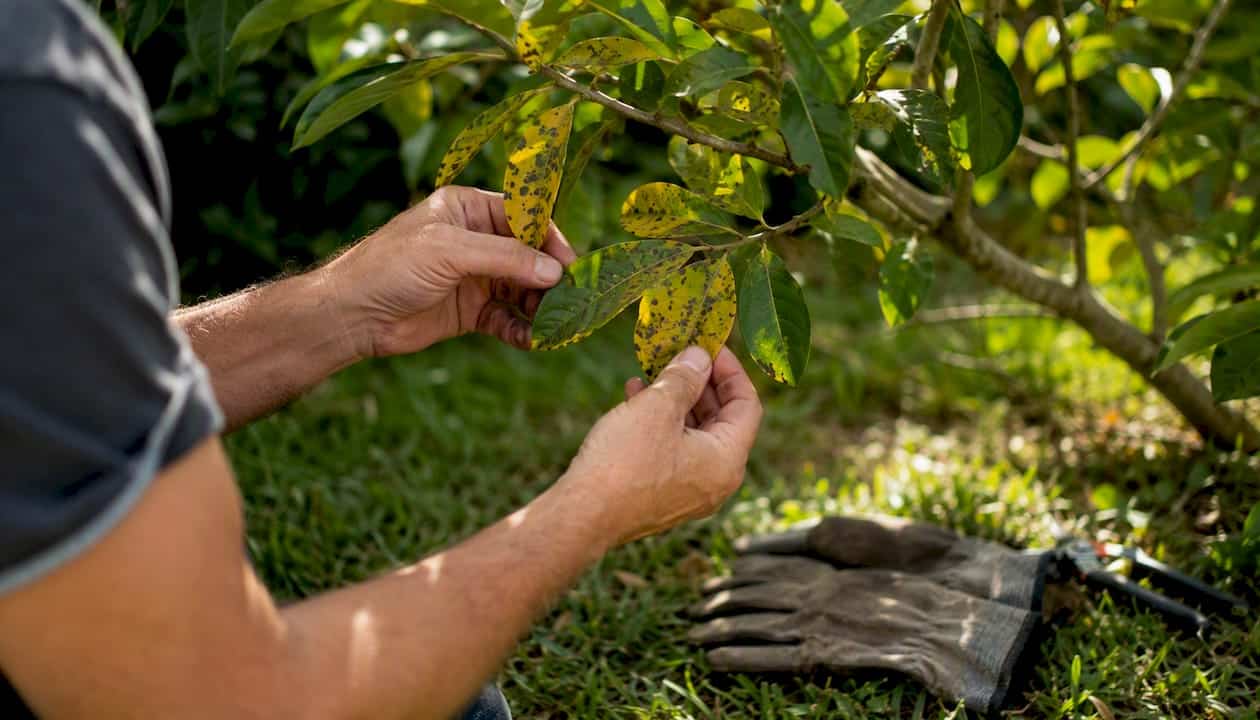
Inspect your trees at least once a year, ideally in late spring when growth patterns are clear, and learn to distinguish signs (direct evidence of a pathogen) from symptoms (the tree’s reaction to stress or infection). That distinction matters because Iowa State Extension research shows that abiotic stress, things like drought, compacted soil, or poor drainage, is frequently the primary cause of decline. Treating a fungal disease when the real problem is root compaction wastes money and misses the actual fix.
| Zone | Typical signs (pathogen evidence) | Typical symptoms (tree response) | What it usually indicates |
|---|---|---|---|
| Leaves | Fungal spores, powdery coating, rust pustules, insect frass | Yellowing, spots, scorch, early drop, distortion | Fungal disease, insect feeding, or drought stress |
| Branches | Cankers, oozing sap, galls, boring holes | Dieback, wilting, dead tips, water sprouts | Canker disease, borer infestation, or mechanical damage |
| Trunk | Conks (shelf fungi), slime flux, bark cracks, beetle galleries | Swelling, sunken areas, discoloration under bark | Advanced decay, vascular disease, or physical injury |
| Root zone | White mycelium, mushrooms at base, root discoloration | Stunted growth, wilting despite irrigation, leaning | Root rot, Armillaria, or soil compaction |
Annual inspection checklist:
- Walk the full perimeter and look up into the canopy for thinning, dead branches, or unusual color
- Check leaves for spots, powdery coatings, premature yellowing, or abnormal size
- Examine branch unions for cracks, cankers, or oozing
- Inspect the trunk base for mushrooms, conks, slime, or bark damage
- Probe the root zone: look for heaving soil, surface roots, or signs of compaction
- Note the surrounding environment: recent construction, grade changes, new pavement, or chemical applications
The Indiana DNR homeowner guide recommends catching problems early because early detection preserves far more management options than waiting until decline is advanced. For a more detailed look at what to watch for, the unhealthy tree indicators guide from Mcculloughtreeservice covers the most common warning signs with practical diagnostic tips.
When you find something concerning, photograph it from multiple angles: the whole tree, the affected zone close up, and any fungal structures or insect evidence. Bring those photos, plus a sample of affected tissue in a sealed bag, to your local extension diagnostic lab or a certified arborist. Virginia Cooperative Extension recommends noting the species, trunk diameter, percentage of dead limbs, and any recent site changes when you bring in a sample.
4. What to do when you suspect your tree has a disease
Diagnose before you treat. Applying a fungicide to a tree suffering from root compaction does nothing useful and can mask the real problem long enough for serious structural damage to develop.
Step-by-step response:
- Document. Photograph the full tree and the affected areas. Record when you first noticed the problem, any recent weather extremes, and any site work done nearby in the past two years.
- Identify the cause. Submit photos and a tissue sample to your local extension diagnostic lab or a certified arborist before purchasing any product. Many labs offer low-cost or free diagnoses.
- Contain spread. Stop moving soil, mulch, or plant material from the affected area to other parts of the yard. If the disease is soil-borne (like Phytophthora root rot), this step is critical.
- Prune with sanitation. Remove dead or infected branches by cutting back to healthy wood. UMD Extension guidance notes that winter pruning is often best for reducing disease spread, and that oak wilt and fire blight-susceptible species should not be pruned during active transmission periods. Disinfect tools between every cut with a 10% bleach solution or 70% isopropyl alcohol.
- Consider targeted chemical controls. Fungicides and bactericides are appropriate only for confirmed infectious diseases and only when applied at the right timing. Copper-based fungicides work for some bacterial diseases; systemic fungicides like propiconazole are used for certain vascular diseases. Read labels carefully and follow all safety directions.
- Monitor and record. Check the tree monthly after treatment. Note whether symptoms stabilize, improve, or worsen, and keep a written log. This record is invaluable if you eventually need a professional assessment.
Pro Tip: Never top a tree as a disease response. Topping bypasses the tree’s natural compartmentalization process, leaves massive wounds that invite fungal decay, and creates a structurally weak regrowth that is harder to manage long-term. Structural pruning by a certified arborist is the correct alternative, as the UC ANR arborist hiring guide confirms.
Call a professional immediately if you see:
- Mushrooms or shelf fungi (conks) growing from the trunk or root flare
- Major structural cracks in the trunk or primary scaffold branches
- Rapid canopy dieback affecting more than 30% of the crown in a single season
- A noticeable lean that appeared suddenly
- Roots lifting or the tree rocking at the base
These are not DIY situations. They indicate advanced decay or structural failure risk that requires a hazard assessment.
5. How to choose and plant the right tree for your site
“Right tree, right place” is not a slogan. It is the single most effective disease prevention step available to any homeowner, and Clemson’s Home & Garden Information Center makes the case plainly: environmental stress, more than pathogens alone, determines whether a tree succumbs. A genetically resistant tree planted in the wrong conditions will underperform a less resistant species planted correctly.
Site checklist before you buy:
- Drainage: Dig a hole 12 inches deep, fill it with water, and time how long it takes to drain. More than an hour suggests poor drainage that favors root rot.
- Space: Measure the available root zone and overhead clearance. A tree’s mature canopy spread should fit the space without requiring constant pruning to stay clear of structures or utilities.
- Sun and shade: Match the species’ light requirements to actual conditions, not what you hope the site will provide.
- Soil type: Sandy soils drain fast and dry out; clay soils hold moisture and compact easily. Most ornamental trees prefer well-drained loam, but some species tolerate extremes.
- Utility conflicts: Check for overhead lines and underground utilities before digging. Call 811 (the national dig-safe line) before any planting hole goes deeper than 12 inches.
Planting and establishment:
Plant in fall or early spring when temperatures are mild and root establishment is easier. Dig the hole two to three times the width of the root ball but no deeper than the root flare. Setting a tree too deep is one of the most common planting errors and a leading cause of long-term decline.
Apply a 2–4 inch layer of organic mulch over the root zone, keeping it several inches away from the trunk. Clemson Extension specifically warns against “mulch volcanoes,” the piled-up mulch against the trunk that traps moisture and invites fungal rot. Extend the mulch ring as far as the drip line if possible.
Water deeply and infrequently during the first three years. A newly planted tree needs roughly 10 gallons per inch of trunk diameter per week during dry periods. Taper irrigation as the tree establishes, but do not abandon it entirely until the tree shows vigorous seasonal growth.
For Central Florida homeowners, the preventative tree care guide from Mcculloughtreeservice covers region-specific timing and soil considerations that apply directly to establishment in sandy Florida soils.
Pro Tip: Stake only if the tree cannot stand upright on its own. Stakes left in place beyond the first growing season restrict trunk movement, which weakens the wood and delays the development of taper strength. Remove them after 12 months.
One more trade-off worth knowing: trees selected for fast growth often allocate fewer resources to chemical defenses, as resistance breeding research notes. If you choose a fast-growing species for quick shade, budget for more frequent monitoring and maintenance, even if the nursery tag says “resistant.”
6. Common tree diseases every homeowner should recognize
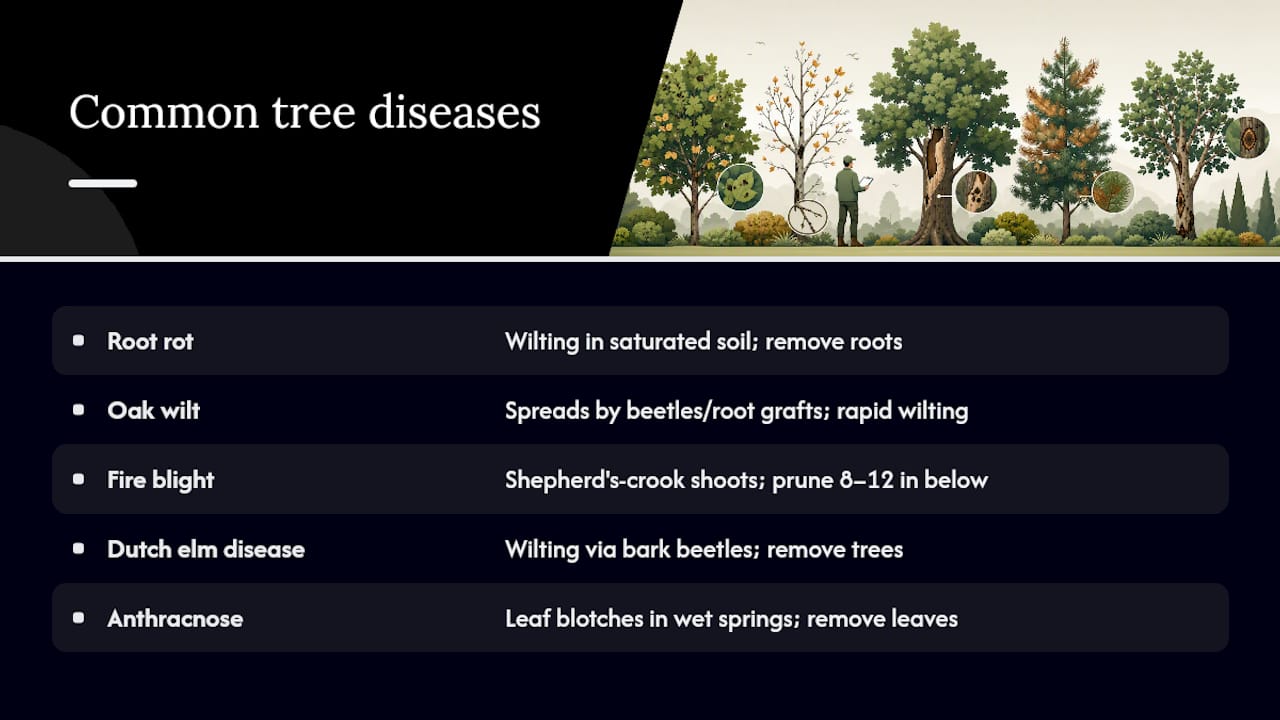
Knowing what you are looking at is half the battle. These five diseases account for a large share of serious tree losses in U.S. home landscapes.
Root rot (Phytophthora spp. and Armillaria spp.)
Root rot is caused by water mold pathogens that thrive in saturated or poorly drained soils. Symptoms include wilting despite adequate irrigation, yellowing leaves, and stunted growth. Armillaria root rot produces clusters of honey-colored mushrooms at the base in fall. Virtually all tree species are susceptible under the right (wrong) conditions. There is no chemical cure once established; the fix is improving drainage and removing infected root material. Dispose of infected wood in sealed bags, not the compost pile.
Oak wilt (Bretziella fagacearum)
Oak wilt is a vascular disease spread by sap beetles and through root grafts between neighboring oaks. Red oaks can die within weeks of infection; white oaks are more tolerant and may survive years with the disease. The primary sign is rapid wilting and browning of leaves from the top of the canopy downward, often with a distinct pattern. Do not prune oaks from April through July in the Midwest and South, when beetle activity peaks. Infected trees and their stumps should be chipped, burned, or buried to prevent spread.
Fire blight (Erwinia amylovora)
Fire blight is a bacterial disease that primarily affects members of the rose family, including crabapples, pears, and hawthorns. Infected shoots wilt and turn brown or black, bending into a characteristic “shepherd’s crook.” Prune infected wood at least 8–12 inches below visible symptoms, and sterilize tools between every cut. Copper-based sprays applied at bloom can reduce infection. Avoid high-nitrogen fertilization, which produces the succulent growth fire blight loves.
Dutch elm disease (Ophiostoma ulmi and O. novo-ulmi)
Dutch elm disease wiped out most American elms in the 20th century and remains active. It spreads through elm bark beetles and root grafts. Symptoms include wilting, yellowing, and browning of leaves on individual branches, progressing through the canopy. Resistant cultivars like ‘Valley Forge’ and ‘Princeton’ American elms are available and recommended for new plantings. Infected trees should be removed promptly and the wood disposed of carefully to limit beetle breeding sites.
Anthracnose (various fungal genera)
Anthracnose is a catch-all term for a group of fungal diseases that cause irregular brown spots, blotches, or dead areas on leaves and young shoots. Sycamores, oaks, dogwoods, and maples are frequent hosts. It rarely kills established trees outright but can cause significant defoliation in wet springs. Raking and disposing of fallen leaves breaks the disease cycle. Kousa dogwood is notably more resistant to dogwood anthracnose than the native flowering dogwood (Cornus florida).
Regional note: Root rot and anthracnose are more prevalent in wet, humid climates and heavy clay soils. Oak wilt is most severe in the upper Midwest and Texas. Fire blight pressure is highest in the mid-Atlantic and Midwest during warm, wet springs. In Central Florida, Phytophthora root rot and various fungal leaf diseases are the most common threats, driven by the combination of sandy soils, heavy summer rainfall, and high humidity. The Central Florida disease prevention guide from Mcculloughtreeservice addresses local pathogen pressure in more detail.
7. When you need a certified arborist, not a YouTube tutorial
Some tree problems are genuinely beyond what a homeowner should handle alone. Call an ISA Certified Arborist when you observe any of the following:
- Mushrooms, conks, or white mycelium at the trunk base or root flare
- Major cracks in the trunk or primary scaffold branches
- Rapid dieback of more than 25–30% of the canopy in a single season
- A sudden lean or visible root lifting
- Suspected vascular disease (oak wilt, Dutch elm disease) where removal timing and disposal matter legally in some states
- Any tree within striking distance of a structure, power line, or occupied space that shows structural decline
An ISA Certified Arborist will evaluate both signs and symptoms, review the site history, assess structural hazard risk, and give you a written recommendation. That report is worth having before you spend money on treatments that may not address the actual problem. As the UC ANR arborist hiring guide notes, complex diagnoses involving advanced symptoms are exactly the situations where professional evaluation preserves the most options.
How to prepare for the visit:
- Gather photos taken over time, not just the day of the visit
- Write down when you first noticed symptoms and how they have progressed
- Note any recent site work: grading, paving, trenching, chemical applications, or construction within the root zone
- Confirm access to the tree and any relevant property boundaries
- Ask in advance whether the arborist will provide a written report or just a verbal assessment
A good arborist will not push you toward removal if the tree can be saved. But they will tell you plainly when it cannot.
8. A local arborist’s perspective on what actually matters
The single rule that separates good tree care from expensive tree repair: never top a tree. Topping is still the most common mistake homeowners make when they want to “reduce” a large tree, and it creates exactly the problems they are trying to avoid. Every large cut bypasses the tree’s compartmentalization response, leaving wounds that decay from the inside out and invite fungal colonization. The regrowth that follows is fast, weakly attached, and structurally unpredictable. Structural pruning, removing specific branches to improve architecture and light penetration, achieves the same size goals without the long-term damage.
The second thing worth saying plainly: most disease calls we see in Central Florida are actually stress calls in disguise. The tree has a fungal problem, yes, but the fungal problem exists because the tree was planted too deep, mulched against the trunk, or watered on a lawn irrigation schedule that keeps the root zone perpetually saturated. Fix the site problem first, and the tree’s own defenses often handle the rest.
Pro Tip: The best time to have a tree assessed in Central Florida is late winter or early spring, before the rainy season begins. Problems caught in March are far easier to manage than the same problems discovered in August when heat stress and storm risk compound everything.
Mcculloughtreeservice can help you protect your trees
Choosing a disease-resistant species is the right first step. Keeping it healthy through establishment and beyond is where professional support pays off.
Mccullough Tree Service serves residential and commercial property owners across Orlando and Central Florida with certified arborist inspections, targeted structural pruning, disease assessment, and professional tree trimming that follows ISA best practices for sanitation and timing. When a tree is beyond recovery, the team handles safe removal and stump grinding so the site is ready for a healthier replacement. Every service starts with an honest assessment, not a sales pitch.
To schedule a site visit, contact Mcculloughtreeservice online or by phone. The team will walk your property, identify any current concerns, and give you a clear picture of what your trees need, whether that is a minor pruning adjustment or a full hazard assessment. No guesswork, no unnecessary treatments.
Sources
These resources were used in preparing this article and are worth bookmarking for ongoing reference:
- Tree Guide for Homeowners (Indiana DNR forestry homeowner guide)
- Hiring an arborist: what to know to make informed tree-care decisions (UC ANR blog)
- How to diagnose problems with trees in the landscape (Iowa State Extension)
- Review on tree resistance and the limits of ‘immune’ trees (peer-reviewed overview)
For region-specific advice, contact your local cooperative extension office. Most states offer free or low-cost plant diagnostic services through their land-grant university system, and a local diagnosis is always more reliable than a general one.
Recommended
- Tree Disease Prevention Guide for Central Florida
- Identify a Dangerous Tree: Signs & Solutions
- Tree Planting Guide Central Florida for Homeowners