By: Shelby McCullough| Published: June 17, 2026
TL;DR:
- Sustainable landscaping conserves water, supports ecosystems, and reduces long-term maintenance. Native plants, rain gardens, permeable hardscapes, and soil health are key elements that promote resilience and biodiversity. Success relies on patience, gradual expansion, and proper water management for a thriving, eco-friendly yard.
Sustainable landscaping, known in professional practice as regenerative or ecological landscape design, is the practice of creating outdoor spaces that conserve water, support local ecosystems, and reduce long-term maintenance. The best examples of sustainable landscaping include native plant gardens, rain gardens, xeriscaping, permeable hardscapes, and pollinator beds. These approaches deliver real results: water use reductions of 30–50% are achievable through thoughtful plant selection and site design alone. For homeowners in Central Florida and across the U.S., these methods also mean lower water bills, less yard work, and a healthier outdoor space year after year.
1. Examples of sustainable landscaping with native plants
Native plants are the single most effective starting point for any eco-friendly yard. They evolved alongside local soils, rainfall patterns, and wildlife, so they need far less water and fertilizer than non-native species once established. In Florida, native plants like Firebush (Hamelia patens), Muhly Grass (Muhlenbergia capillaris), and Saw Palmetto (Serenoa repens) thrive with minimal intervention. The National Wildlife Federation has certified over 300,000 residential habitats using native plants, with certifications requiring varied plant heights and bloom times to support pollinators year-round.
Native plant gardens also create habitat. Layered plantings with ground covers, shrubs, and canopy trees mimic natural ecosystems and attract birds, butterflies, and beneficial insects. You can find native trees for Florida yards that anchor these layered designs beautifully.
Benefits of native plants in sustainable garden design:
- Require little to no supplemental irrigation after establishment
- Support local pollinators including bees, butterflies, and hummingbirds
- Resist local pests and diseases without chemical treatment
- Improve soil health through deep root systems
- Reduce fertilizer and pesticide runoff into waterways
Pro Tip: Use the USDA Plant Hardiness Zone Map to identify your zone before selecting native species. Florida spans zones 8–11, so plant choices vary significantly from Tallahassee to Miami.
2. Rain gardens and water management features
A rain garden is a shallow, planted depression that captures stormwater runoff from roofs, driveways, and lawns, then allows it to slowly infiltrate the soil. Site-specific water management using topography through swales and vegetated spillways reduces irrigation dependency and improves soil health at the same time. Rain gardens placed at the base of a downspout or at a low point in the yard can handle significant rainfall events without flooding.
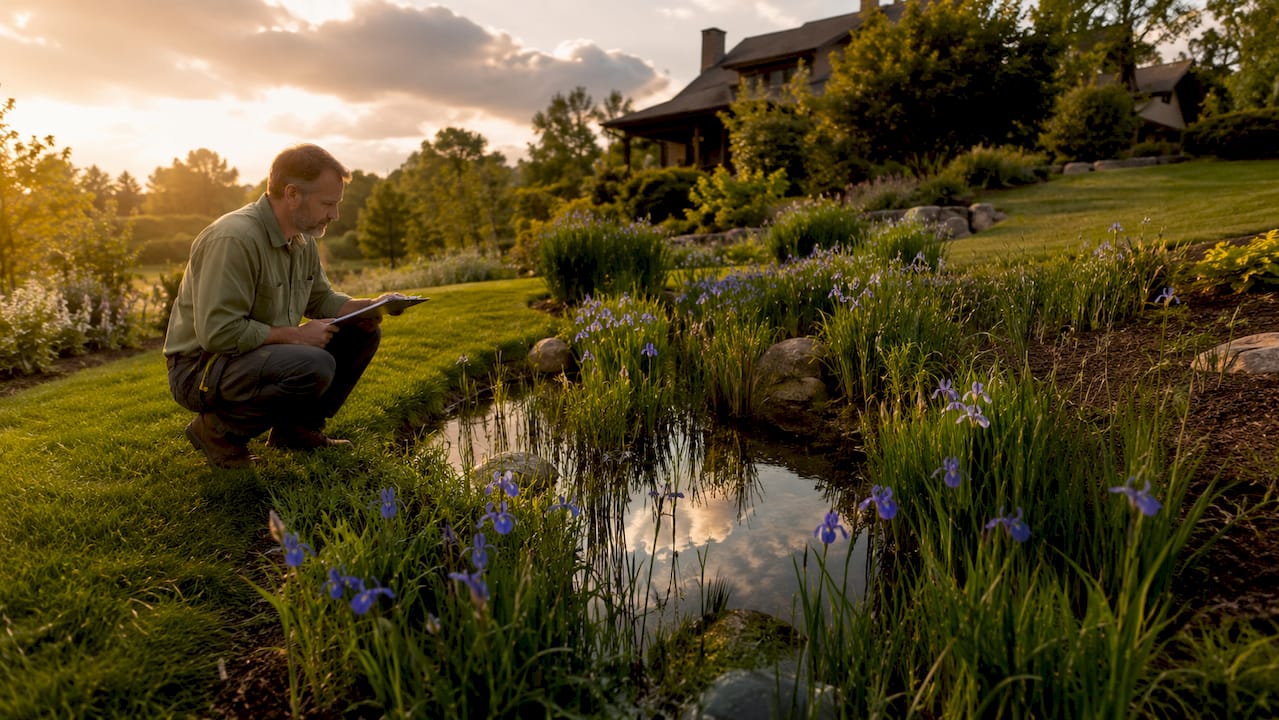
The design of a rain garden depends on three factors: placement, soil type, and plant selection. Sandy soils drain faster and need plants tolerant of both wet and dry conditions. Clay soils drain slowly and may need amendment with compost or gravel. Smart water management practices like these reduce runoff, replenish groundwater, and cut the need for supplemental irrigation.
| Feature | Rain garden | Traditional drainage | Bioswale |
|---|---|---|---|
| Stormwater capture | High | Low | High |
| Groundwater recharge | Yes | No | Partial |
| Plant habitat created | Yes | No | Yes |
| Maintenance level | Low | Very low | Low to medium |
| Cost to install | Moderate | Low | Moderate to high |
Pro Tip: Plant the center of your rain garden with water-tolerant species like Blue Flag Iris or Cardinal Flower, and use drought-tolerant natives on the outer edges where soil dries out faster between rain events.
3. Permeable hardscapes and recycled materials
Permeable hardscaping replaces solid concrete or asphalt with surfaces that allow rainwater to pass through into the soil below. Gravel paths, permeable pavers, decomposed granite, and flagstone set in sand all qualify. Reclaimed stone and broken concrete paths significantly lower embodied carbon while providing durable hardscape solutions that last decades.
Recycled materials extend beyond stone. Reclaimed wood works well for raised beds and garden edging. Broken brick from demolition projects becomes attractive pathway material. Old roof tiles can line garden borders. Sourcing these materials locally cuts transportation emissions and often costs less than buying new.
Pros and cons of permeable hardscaping:
- Pro: Reduces surface runoff and flooding risk
- Pro: Lowers heat island effect compared to solid concrete
- Pro: Supports groundwater recharge on your property
- Con: Requires occasional clearing of debris from surface pores
- Con: Some permeable pavers cost more upfront than standard concrete
Pro Tip: Contact local salvage yards, Habitat for Humanity ReStores, or demolition contractors to source reclaimed stone and brick. You often get quality materials at a fraction of retail cost while keeping them out of landfills.
4. Reducing lawn area with xeriscaping
Xeriscaping is a water-wise landscaping method that replaces traditional turf grass with drought-tolerant plants, mulch, and permeable ground covers. Replacing lawn with native perennials cuts water, fertilizer, and pesticide needs dramatically after just one to two growing seasons. Even reducing your lawn by 10–20% and replacing it with native beds produces measurable savings on your water bill.
Traditional turf grass is one of the most resource-intensive plants in any American yard. It demands frequent mowing, regular fertilizing, and consistent irrigation to stay green. Xeriscape designs use plants like Agave, Lantana, Blanket Flower (Gaillardia), and Liriope that look full and attractive while surviving on rainfall alone in most seasons.
| Resource | Traditional lawn | Xeriscape design |
|---|---|---|
| Weekly water needs | High | Very low to none |
| Fertilizer applications | 4–6 per year | 0–1 per year |
| Mowing frequency | Weekly | Rarely or never |
| Pesticide use | Moderate to high | Minimal |
| Establishment time | Immediate | 1–2 seasons |
Low-water, low-maintenance plants for Florida and the Southeast:
- Lantana (Lantana camara)
- Blanket Flower (Gaillardia pulchella)
- Coontie (Zamia integrifolia)
- Muhly Grass (Muhlenbergia capillaris)
- Porterweed (Stachytarpheta jamaicensis)
5. Pollinator gardens and biodiversity-supporting features
A pollinator garden is a planted area designed specifically to feed and shelter bees, butterflies, moths, and other beneficial insects throughout the growing season. Over 300,000 residential habitats certified by the National Wildlife Federation demonstrate that home gardens play a real role in regional biodiversity. The key is planting a mix of species with overlapping bloom times so something is always flowering from early spring through late fall.
Biodiversity in your yard goes beyond flowers. Leaving a small log pile, a patch of bare soil, or a section of leaf litter provides nesting habitat for solitary bees and overwintering insects. Upcycled materials and natural messy areas support solitary bees that do not use hive structures. These features cost nothing and require no maintenance.
Plants and features that build biodiversity:
- Milkweed (Asclepias tuberosa) for Monarch butterflies
- Coneflower (Echinacea purpurea) for native bees
- Goldenrod (Solidago spp.) for late-season pollinators
- Bare soil patches for ground-nesting bees
- Small brush or log piles for beetles and overwintering insects
- Shallow water dishes for butterflies and birds
Pro Tip: Group plants in clusters of three or more of the same species rather than scattering single plants. Pollinators locate food sources more efficiently when blooms are concentrated, which means more visits and better pollination for your garden.
6. Composting and soil health as a foundation
Healthy soil is the foundation of every sustainable garden. Composting kitchen scraps and yard waste returns nutrients to the soil without synthetic fertilizers. Creating a regenerative landscape that closes the loop through composting and soil building is a key to long-term sustainability. Compost improves soil structure, increases water retention, and feeds the microbial life that makes nutrients available to plant roots.
Mulching is composting’s close partner. A 2–3 inch layer of organic mulch over planting beds suppresses weeds, retains moisture, and breaks down slowly to feed the soil. Wood chip mulch from tree trimming operations is one of the most effective and affordable options available. It also keeps soil temperatures stable during Florida’s hot summers and cool winters.
Soil health practices reduce the need for irrigation and fertilizer simultaneously. That combination is what makes well-planned sustainable landscapes largely self-managing once established, according to experts at Ground Studio. You invest effort upfront and the garden pays you back with years of low-maintenance beauty.
7. Cohesive design that balances beauty and function
Sustainable garden design does not mean sacrificing aesthetics. Sustainable landscape design balances appeal and function using cohesive color palettes and structural evergreens to create gardens that look intentional and attractive year-round. The trick is treating ecological function as a design constraint, not an obstacle. When you choose plants for bloom color, texture, and height alongside their ecological role, the result is a yard that looks curated and supports wildlife at the same time.
Structural evergreens like Wax Myrtle (Morella cerifera) or Yaupon Holly (Ilex vomitoria) anchor a planting bed through every season. Seasonal color comes from native perennials layered in front. A curb appeal approach that combines structural plants with cohesive color palettes keeps the yard looking polished without constant replanting. You can also explore native trees for Central Florida to add canopy structure that ties the whole design together.
Good design also means right plant, right place. Placing sun-loving plants in shade or moisture-loving plants on a dry slope creates maintenance problems that undermine sustainability. Match each plant to its ideal conditions and the garden largely takes care of itself.
Key takeaways
Sustainable landscaping works best when native plants, water management, and healthy soil form the core of your design from the start.
| Point | Details |
|---|---|
| Native plants reduce inputs | Native species cut water and fertilizer needs after just one to two seasons of establishment. |
| Rain gardens manage runoff | A well-placed rain garden captures stormwater and recharges groundwater without irrigation. |
| Lawn reduction saves resources | Replacing even 10–20% of turf with native perennials cuts water, mowing, and chemical use significantly. |
| Biodiversity needs habitat features | Bare soil, log piles, and clustered native blooms support pollinators beyond just planting flowers. |
| Soil health drives long-term success | Composting and mulching reduce irrigation and fertilizer needs while making the garden more self-sustaining. |
What I’ve learned from watching yards transform over time
The homeowners who struggle most with sustainable landscaping are the ones who try to do everything at once. They rip out the entire lawn, plant fifty new species, and install a rain garden in the same weekend. Then they spend the next two seasons fighting weeds and wondering why their plants look stressed. Garden ecosystems stabilize over one to two growing seasons with supplemental watering and weeding in the early phase. That establishment period is not a sign of failure. It is the garden building its foundation.
The homeowners who succeed start with one bed, one rain garden, or one section of lawn replaced with native groundcover. They watch what works, adjust, and expand. By season two, that first planting is thriving with almost no input. That success builds confidence and momentum.
Water management is the piece most people underestimate. You can plant the most beautiful native garden in the world, but if water pools in the wrong places or drains too fast, plants suffer. Spend time observing how rain moves across your yard before you plant anything. That observation is worth more than any plant catalog.
The other thing I want you to know is that sustainable gardens become easier over time, not harder. The myth that eco-friendly gardening means constant work is simply wrong. After establishment, a well-designed native garden requires a fraction of the time a traditional lawn demands. You get your weekends back.
— Mcculloughtreeservice
How Mcculloughtreeservice supports your sustainable yard
Trees are the backbone of any sustainable landscape. Healthy, well-maintained trees provide shade that cuts cooling costs, support wildlife, and anchor the ecological design of your yard. Mcculloughtreeservice helps Orlando and Central Florida homeowners keep their trees in top condition through professional tree trimming services that promote healthy growth and reduce storm risk. Certified arborists also assess tree health, remove hazardous trees safely, and grind stumps to free up space for native plantings. If you are building a sustainable yard from the ground up, proper tree care is the right place to start.
Contact Mcculloughtreeservice for a free estimate and let a certified arborist help you build a yard that works with nature, not against it.
FAQ
What are the easiest examples of sustainable landscaping to start with?
Native plant beds and rain gardens are the most accessible starting points. Both reduce water use and maintenance after one to two seasons of establishment.
How much water can sustainable landscaping save?
Water-wise landscape transformations achieve 30–50% reductions in outdoor water use. Replacing turf with native perennials drives the largest share of those savings.
Do sustainable gardens require more maintenance than traditional lawns?
No. Sustainable gardens require less maintenance once established. The first one to two seasons involve more attention, but after that, native plantings largely manage themselves.
What native plants work best for Florida sustainable landscaping?
Firebush, Muhly Grass, Coontie, Saw Palmetto, and Wax Myrtle all perform well across Central Florida. They tolerate heat, humidity, and seasonal drought without supplemental care.
Is xeriscaping the same as sustainable landscaping?
Xeriscaping is one method within sustainable landscaping, focused specifically on drought tolerance and water conservation. Sustainable landscaping is broader and includes biodiversity, soil health, and material choices as well.
Recommended
- Landscaping Tips for Homeowners: Practical 2026 Guide
- Commercial Landscaping Improvements: Real Examples That Work
- 4 Shade Trees for Small Yards | McCullough Tree Service
- 6 Outstanding Examples of Native Trees for Florida Yards