By: Shelby McCullough| Published: May 3, 2026
TL;DR:
- Confusing trimming and pruning can damage trees, increase storm risks, and cost property owners more in the long run.
- Hiring local, certified arborists familiar with Florida’s unique trees and storm conditions ensures safer, more effective tree care.
Most property owners in Hunters Creek use “trimming” and “pruning” as if they mean the same thing. They don’t, and confusing the two can quietly damage your trees, raise your storm risk, and cost you far more than a professional service call ever would. Understanding the real difference, and knowing when each technique applies, is the foundation of smart tree care for any home or commercial property in Central Florida.
Table of Contents
- Understanding tree service needs in Hunters Creek, FL
- Trimming vs. pruning: What every property owner should know
- Best practices for storm preparation and ongoing tree maintenance
- Choosing the right tree service provider in Hunters Creek
- Why local expertise matters more than ever
- Connect with certified tree care specialists in Hunters Creek
- Frequently asked questions
Key Takeaways
| Point | Details |
|---|---|
| Trim and prune with purpose | Trimming and pruning serve distinct but equally vital roles for safety and health. |
| Certified arborists are essential | Expert-led services use proper cut-types and storm prep techniques for lasting results. |
| Avoid heading cuts | Improper cutting leads to weak branches and increases storm risks in Florida’s climate. |
| Annual maintenance is key | Scheduling yearly professional care keeps your trees strong and your property safer. |
| Local knowledge matters | Only providers with Hunters Creek experience can offer tailored, storm-resilient tree care. |
Understanding tree service needs in Hunters Creek, FL
Hunters Creek sits squarely in Orange County, where subtropical heat, frequent afternoon thunderstorms, and the looming threat of hurricane season make tree care a year-round responsibility. Trees here grow fast, which sounds like a benefit until you realize that rapid growth often means weaker wood structure, crowded canopies, and branches that have not had time to develop strong attachments to the trunk.
The risks are real and measurable. Poorly maintained trees are among the leading causes of property damage during Florida storms. Overhanging limbs can crash through roofs, fences, and vehicles. Root systems weakened by disease or improper cuts can cause entire trees to fall without warning. For commercial property managers, a single fallen tree can mean liability claims, business interruption, and costly emergency cleanup.
Here is what makes Hunters Creek properties particularly vulnerable:
- Fast-growing species like laurel oak and water oak are common here and prone to internal decay that is invisible from the outside
- Shallow root systems in Florida’s sandy soil make many trees susceptible to uprooting during high winds
- Urban canopy pressure means trees often grow toward light sources at odd angles, creating structural imbalances
- Irrigation and fertilization near turf areas can encourage excessive top growth without proportional root development
“Professional storm preparation pruning focuses on eliminating deadwood, co-dominant stems, and structural issues, not drastic topping.” Florida Tree Authority explains pruning techniques
Working with tree service in Hunters Creek professionals who understand these local conditions is not a luxury. It is a practical safety decision. Local tree trimming experts bring knowledge of which species are most at risk, which growth patterns signal trouble, and how to schedule work around Florida’s storm calendar.
DIY approaches often miss the most critical risks. A homeowner might remove a few low-hanging branches and consider the job done, while a certified arborist would spot a co-dominant stem (two main trunks competing for dominance) that could split the tree apart in a 60 mph wind. The difference between those two outcomes can be tens of thousands of dollars in property damage.
Trimming vs. pruning: What every property owner should know
These two terms describe fundamentally different operations, even though both involve cutting branches. Knowing the distinction helps you ask the right questions when hiring a service and helps you understand what work is actually being done on your property.
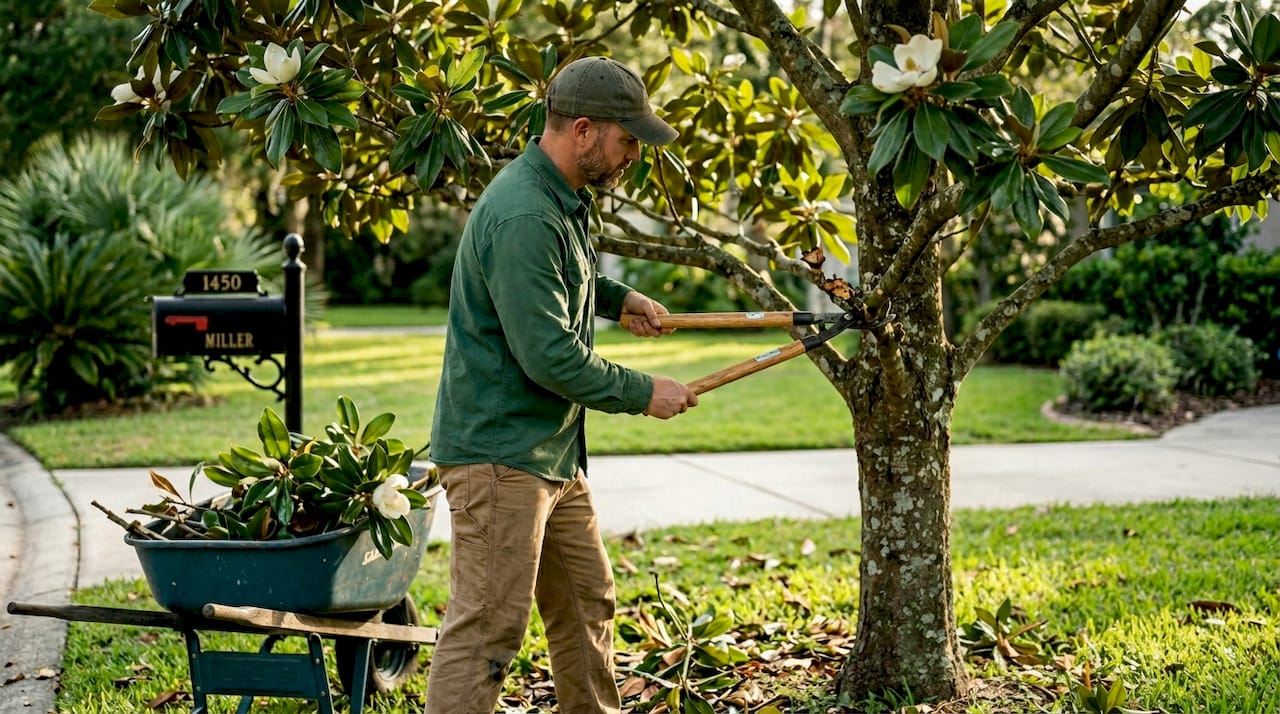
Tree trimming is primarily about aesthetics and clearance. It means cutting back overgrown branches to improve the shape of a tree, allow more light into a yard, or keep limbs away from structures, power lines, and walkways. Trimming is typically done on a schedule based on visual appearance and growth rate.
Tree pruning is a health and structure-focused practice. It involves removing specific branches to improve airflow, eliminate disease, correct structural weaknesses, or guide the tree’s growth pattern. Pruning requires a deeper understanding of tree biology and is guided by the type of cut used, not just where the cut is made.
| Feature | Trimming | Pruning |
|---|---|---|
| Primary goal | Aesthetics and clearance | Health and structural integrity |
| Timing | Based on growth and appearance | Based on tree health and season |
| Tools used | Hedge shears, hand trimmers | Pruning saws, loppers, pole saws |
| Skill level required | Moderate | High, often requires certification |
| Impact on tree health | Indirect | Direct and significant |
| Storm preparation value | Low to moderate | High |
The type of cut matters enormously in pruning. Thinning cuts remove a branch back to its point of origin, preserving the tree’s natural structure. Reduction cuts shorten a branch back to a lateral that can take over as the new leader. Both of these are considered best practices for Florida trees.
Heading cuts, by contrast, remove a branch mid-shaft with no regard for where the new growth will emerge. Heading cuts are discouraged for mature shade trees because they weaken structure and can trigger unwanted shoots called epicormic growth, which are weakly attached and break easily in storms.
Pro Tip: If a tree service company quotes you on “topping” your large shade trees to reduce their size, walk away. Topping is one of the most harmful practices in the industry and dramatically increases storm damage risk.
Improper cuts also create entry points for pathogens. Florida’s warm, humid climate is ideal for fungal infections and bacterial diseases that enter through poorly made cuts. A certified arborist knows how to make clean cuts at the correct angle to encourage natural wound closure.
Best practices for storm preparation and ongoing tree maintenance
Hurricane season in Florida runs from June through November, but preparation should start well before the first named storm appears on radar. The window between February and May is the ideal time to schedule structural pruning, deadwood removal, and a full tree health assessment.
Here is a prioritized approach for Hunters Creek property owners:
- Schedule a professional tree assessment in late winter or early spring to identify dead, diseased, or structurally compromised trees before storm season begins
- Remove all deadwood from the canopy, since dead branches become projectiles in high winds and add unnecessary weight to the canopy
- Address co-dominant stems on large trees, especially oaks and maples, by working with an arborist to reduce or remove the competing leader while the tree is young enough to recover well
- Thin the canopy on dense trees to allow wind to pass through rather than push against a solid wall of foliage
- Inspect root zones for signs of decay, fungal growth, or soil heaving, which can indicate root rot or structural instability below ground
- Document your trees with photos each year so you can track changes in canopy density, lean, or bark condition over time
Pre-hurricane pruning removes deadwood, corrects co-dominant stems, and addresses structural weaknesses, not drastic canopy reductions. This distinction is critical because many property owners assume that cutting a tree back hard before a storm makes it safer. In reality, aggressive topping removes the tree’s natural wind-resistance architecture and creates dozens of weak regrowth points.
| Maintenance task | Recommended frequency | Best timing in Florida |
|---|---|---|
| Full tree assessment | Annually | February to March |
| Structural pruning | Every 2 to 3 years | Late winter to early spring |
| Deadwood removal | Annually or after storms | Year-round as needed |
| Stump grinding | After removal | Any time |
| Emergency storm cleanup | As needed | Post-storm |
Following urban tree care tips designed for Central Florida’s specific conditions gives property owners a real advantage. Generic maintenance schedules from national sources often miss the nuances of Florida’s climate, soil, and species mix.
Pro Tip: After any major storm, have a certified arborist inspect your trees even if they look fine. Hidden cracks, root damage, and partial failures often show no visible signs until the next wind event finishes the job.
Reviewing storm safety best practices and the municipal tree maintenance guide for Central Florida can also help commercial property managers develop a proactive maintenance calendar that reduces liability and keeps landscapes looking their best year-round.
Choosing the right tree service provider in Hunters Creek
Not all tree companies are equal, and in Florida, the gap between a qualified arborist and an unlicensed crew with a chainsaw can mean the difference between a healthy landscape and a liability nightmare. Here is what to look for when evaluating providers:
- ISA Certified Arborist credential: The International Society of Arboriculture (ISA) certification requires passing a rigorous exam and ongoing education. This is the gold standard for tree care professionals.
- Florida-specific experience: Local knowledge of species like live oak, laurel oak, sabal palm, and slash pine is essential. These trees have very different structural characteristics and maintenance needs.
- Storm preparation expertise: Ask specifically whether the company has experience with pre-hurricane structural pruning. A vague answer is a red flag.
- Proof of insurance: General liability and workers’ compensation coverage protect you if something goes wrong on your property. Always ask for a current certificate of insurance before work begins.
- Written estimates and scope of work: Reputable companies provide detailed written quotes that specify exactly what work will be done, which trees are included, and how debris will be handled.
- References from local clients: Ask for references from Hunters Creek or nearby communities. Local clients can speak to how the company handles Florida-specific challenges.
Professional services follow recommended cut types and hurricane preparation practices detailed by arborist authorities, which separates them from companies that simply cut what looks overgrown without understanding the structural consequences.
Reviewing tree trimming DIY tips can help you understand what small-scale maintenance you can safely handle yourself, while essential tree care tips give you a broader framework for keeping your landscape healthy between professional visits.
One often overlooked factor is communication. A good arborist explains what they are doing and why. If a company cannot clearly explain why they are making a specific cut or removing a particular branch, that is a problem. You should always understand the rationale behind work being done on your property.
Why local expertise matters more than ever
Here is something most generic tree care articles will not tell you: following national or even statewide tree care guidelines without local adaptation can actually make your trees more vulnerable, not less.
We have seen this play out repeatedly in Hunters Creek. A property owner reads general advice about “reducing canopy weight before a hurricane” and hires the cheapest crew available to top their large oaks. The result looks tidy in June. By September, those same trees have pushed out dozens of weakly attached water sprouts from every cut point, and the canopy is now denser and structurally weaker than it was before. The next storm causes far more damage than the original canopy would have.
Florida authorities emphasize local structural pruning and avoidance of topping in hurricane zones, making generic tree care advice riskier than no advice at all in some cases. The species that grow in Hunters Creek, the soil conditions, the typical storm patterns, and the urban density of the neighborhood all create a specific set of challenges that require specific solutions.
Local certified arborists also understand the regulatory environment. Orange County has tree protection ordinances that govern what can be removed, when, and under what conditions. Violating these rules, even unintentionally, can result in fines and required mitigation planting. A company with genuine local experience navigates these requirements as a matter of routine.
Investing in tree preservation for Florida landscapes is not just about keeping trees alive. It is about protecting property values, maintaining shade and cooling benefits, and ensuring that the mature trees on your property are assets rather than liabilities. A well-maintained live oak can add thousands of dollars to a home’s appraised value. A neglected one can become a lawsuit waiting to happen.
Connect with certified tree care specialists in Hunters Creek
Your trees are one of your property’s most valuable and most vulnerable assets. Understanding the difference between trimming and pruning, following evidence-based storm preparation practices, and choosing a certified local arborist gives you the best possible protection for your landscape and your investment.
McCullough Tree Service brings certified arborist expertise, deep local knowledge, and a full range of services to Hunters Creek homeowners and commercial property managers. From tree removal and trimming to emergency storm response and structural pruning, every job is handled by professionals who understand Florida’s unique tree care demands. Contact us today for a free estimate and let us build a maintenance plan that keeps your property safe through every storm season.
Frequently asked questions
What is the difference between tree trimming and pruning?
Trimming generally improves aesthetics and clearance by cutting back overgrown growth, while pruning targets structural health and safety using specific thinning and reduction cuts recommended for Florida trees. Heading cuts are discouraged for mature shade trees because they weaken structure and promote weak regrowth.
How often should trees be professionally serviced in Hunters Creek?
Annual inspections combined with structural maintenance every 12 to 18 months help reduce storm risk and support healthy growth. Pre-hurricane pruning should focus on removing deadwood and correcting structural weaknesses rather than drastic canopy reductions.
Are certain tree trimming practices risky before hurricane season?
Yes. Topping or heading cuts on mature shade trees can weaken structure and significantly increase storm damage vulnerability. Only structural pruning and deadwood removal are advised, focusing on thinning, reduction cuts, and correcting co-dominant stems for genuine storm resilience.
How can property owners choose a reliable tree service in Hunters Creek?
Look for an ISA Certified Arborist with demonstrated local experience, verify current liability and workers’ compensation insurance, and ask for references from nearby clients who can speak to Florida-specific work quality and professionalism.
Recommended
- tree service windmere fl – Resources – McCullough Tree Service
- Role of Arborists in Landscaping Success for Florida
- Tree Service in Hunters Creek, FL | Estimate & Financing
- Top Tree Trimming Service in Hunters Creek | Free Estimates
- Creating a UNIQUE Neighbor Friendly Phoenix Landscape – Unique Companies