By: Shelby McCullough| Published: July 17, 2026
TL;DR:
- Proper storm response planning involves completing all major preparations before June 1 in Central Florida. Maintaining year-round tree health through structural pruning and pest monitoring reduces damage and liability during hurricanes. Early scheduling of inspections and equipment setup ensures readiness and minimizes chaos during storm emergencies.
Emergency storm response planning is the process of preparing your property, supplies, and safety protocols before severe weather strikes. Central Florida sits squarely in one of the most active hurricane corridors in the United States, making disaster response planning a year-round responsibility rather than a seasonal afterthought. A solid storm response strategy covers everything from your emergency kit to the trees in your yard. Mcculloughtreeservice works with homeowners and property managers across Orlando and Central Florida to address one of the most overlooked parts of that plan: tree care.
How to plan emergency storm response: the foundation
The first step in any storm response strategy is understanding what you are actually preparing for. Hurricane season runs from june 1 through november 30, and the window to complete major preparations is shorter than most property owners realize. All major tree pruning, roof inspections, and shutter installations should be finished before june 1 to avoid contractor shortages and insurance timing problems. That deadline is not arbitrary. Once a named storm enters the forecast, contractors book out within hours and supply stores run dry.

The industry term for this process is “pre-event mitigation.” It covers structural, landscape, and logistical preparation taken before a storm is forecast. Pairing pre-event mitigation with a written response plan gives you a clear path to follow when conditions deteriorate fast. Property managers especially benefit from written plans because they create a documented record of action, which matters for liability.
What essential supplies and documentation should be prepared before storm season?
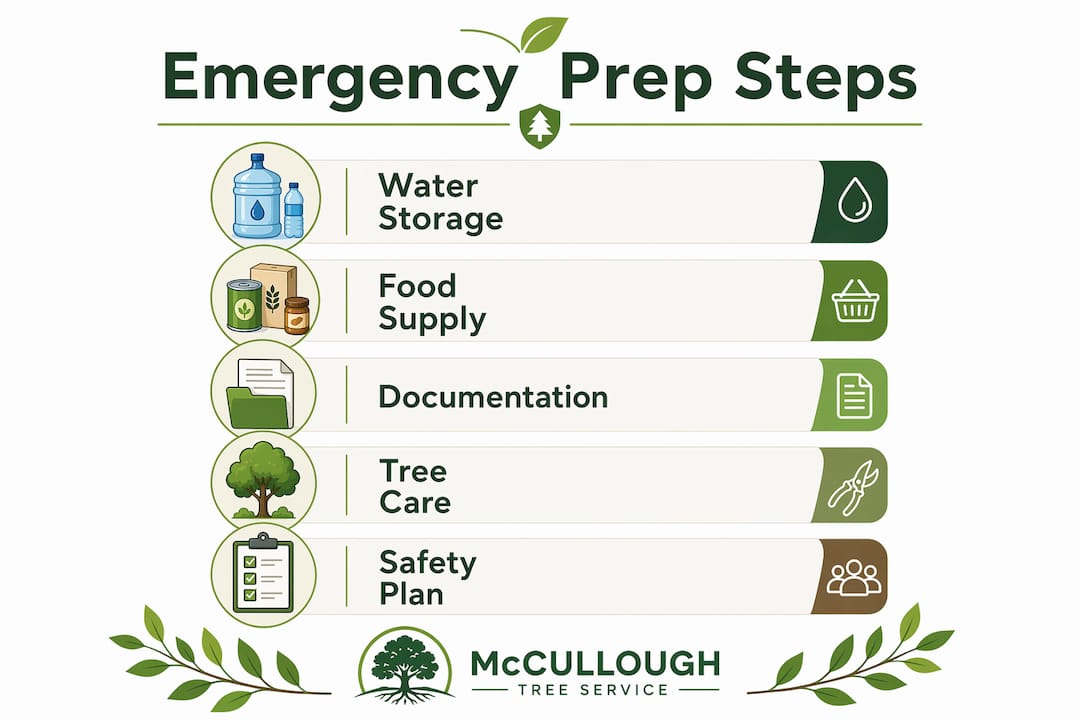
Florida emergency management recommends at least 7 days’ worth of essential supplies, including one gallon of water per person per day. That standard accounts for extended power outages and supply chain disruptions that routinely follow major storms in Central Florida. Creating an emergency kit before june 1 means you buy at normal prices and avoid the panic-buying shortages that hit every season.
Core emergency kit supplies
- Water: one gallon per person per day for at least 7 days
- Non-perishable food for 7 days (canned goods, protein bars, dried fruit)
- Prescription medications with at least a 30-day supply
- Flashlights and extra batteries
- Battery-powered or hand-crank radio for National Hurricane Center updates
- Cash in small bills (ATMs and card readers fail during outages)
- First aid kit
- Pet food, carriers, and vaccination records if you have animals
- Portable phone chargers and backup power banks
Documentation is equally critical. Store copies of your insurance policies, government-issued IDs, property deeds, and vehicle titles in a waterproof, fireproof container. Documenting your home with photos and video before the storm season starts speeds up insurance claims significantly. Photograph every room, closet, exterior wall, and landscaping feature. Upload copies to a secure cloud account so they are accessible even if your physical documents are destroyed.
| Category | Items to Prepare |
|---|---|
| Water and food | 7-day supply; one gallon water per person per day |
| Medications | 30-day supply; copies of prescriptions |
| Documents | Insurance policies, IDs, property records in waterproof container |
| Power and communication | Flashlights, batteries, battery radio, phone chargers |
| Evacuation needs | Cash, pet supplies, go-bag with 3-day essentials |
When should property and tree care preparations be scheduled?
The answer is earlier than you think. A wind mitigation inspection is required for Florida homeowners to qualify for hurricane-related insurance premium discounts. Inspectors fill their schedules quickly once the season approaches, so scheduling in march or april gives you the best availability and the most time to act on findings.
Tree care follows the same logic. Maintaining tree health through structural pruning, pest monitoring, and soil management improves resilience to tropical storm winds. Healthy trees are far less likely to fail during a storm, which directly reduces property damage and liability. Alyssa Vinson of UF/IFAS Extension confirms that proactive tree care produces significantly better storm outcomes than reactive treatment after damage occurs.
Here is a practical scheduling sequence for Central Florida property owners:
- January through February: Audit your property for dead, diseased, or structurally weak trees. Note any branches overhanging the roof, driveway, or utility lines.
- March: Schedule an ISA-certified arborist for a full tree health assessment and structural pruning. Book early because spring slots fill fast.
- April: Complete wind mitigation inspection. Address any structural vulnerabilities identified in the report.
- May: Finish shutter installation, generator testing, and final landscape cleanup. Confirm your emergency kit is fully stocked.
- By june 1: All pre-event mitigation work should be complete.
Pro Tip: Schedule your certified arborist appointment before april. Late-season availability drops sharply, and rushed pruning done too close to a storm can actually increase risk if cuts are not given time to seal properly.
What actions should be taken when a storm is forecasted?
When the National Hurricane Center issues a watch or warning for Central Florida, your preparation window shrinks to 24–72 hours. The goal at this stage is execution, not planning. Every action you take now should follow a plan you already made.
- Bring all outdoor furniture, potted plants, grills, and decorations inside or into a garage.
- Top off fuel in vehicles, generators, and any gas-powered equipment.
- Refill prescriptions and pick up any supplies missing from your emergency kit.
- Charge all devices, power banks, and battery-operated radios.
- Review your evacuation route and confirm your destination if you plan to leave.
- Park vehicles in a garage or away from trees and flood-prone areas.
- Unplug non-essential electronics to protect against power surges when electricity is restored.
- Fill bathtubs with water as a backup supply for flushing and cleaning.
- Check in with elderly neighbors or tenants who may need assistance.
- Monitor the National Hurricane Center at nhc.noaa.gov for the latest track and intensity updates.
Property managers should send written notifications to all residents at this stage. Written communication creates a documented record of your response, which protects you legally if disputes arise after the storm.
How should homeowners and property managers respond immediately after a storm?
Safety is the first and only priority in the immediate aftermath. Do not exit your home until official sources confirm the storm has passed and conditions are safe.
Electrical hazard warning: Treat every downed power line as energized. Do not approach, drive over, or attempt to move downed wires under any circumstances. Call 911 immediately and keep others away from the area until utility crews confirm the lines are de-energized.
Once it is safe to go outside, follow these post-storm actions in order:
- Call 911 for any downed power lines, gas leaks, or structural collapses.
- Walk your property and photograph all damage before touching or moving anything.
- Check for hanging limbs, leaning trees, and any tree-on-structure contact.
- Document damage to fences, vehicles, outbuildings, and landscaping.
- Contact your insurance carrier to open a claim as soon as possible.
Emergency tree work priorities are trees on structures, blocked emergency access routes, and hanging limbs that threaten safety. These three categories require immediate attention. All other debris removal can wait for a qualified crew. ISA-certified arborists are the correct professionals to hire for this work. They follow strict safety protocols, carry proper insurance, and produce documentation that supports your insurance claim.
Property managers carry an additional responsibility. Responding promptly to resident tree safety complaints and scheduling ISA-certified arborist inspections within 30 days is the primary legal defense against liability for tree-related hazards. Document every complaint, every response, and every inspection in writing.
What common mistakes happen during storm planning, and how do you avoid them?
The most costly mistake Central Florida property owners make is waiting until a storm is named to start preparing. Contractors and supplies run out rapidly once a storm enters the forecast. By the time most people start calling arborists or buying generators, the options are gone. The solution is simple: treat your preparation as a fixed annual task completed by may 31, regardless of whether any storms are forecast.
- Hiring unqualified tree workers: After a storm, unlicensed crews flood the area offering fast, cheap service. These workers often lack insurance, use improper cuts that damage tree health, and cannot produce documentation for your insurance claim. Always verify ISA certification before hiring.
- Skipping flood insurance: Standard homeowner policies do not cover flood damage. The National Flood Insurance Program (NFIP) requires a 30-day waiting period before coverage takes effect. Buying flood insurance after a storm is named provides no protection.
- Neglecting written records: Property managers who handle verbal complaints without written follow-up create serious liability exposure. Every tree-related concern should be logged, acknowledged in writing, and resolved with documented action.
- Ignoring year-round tree maintenance: One pre-season pruning is not enough. Trees need ongoing structural care, pest monitoring, and soil health management to stay resilient.
Pro Tip: Set a calendar reminder every january to review your emergency kit, update your insurance documents, and schedule your arborist. Year-round preparation costs far less than emergency repairs.
Key Takeaways
Effective emergency storm response in Central Florida requires completing all major preparations before june 1, maintaining tree health year-round, and following a written plan from supply assembly through post-storm recovery.
| Point | Details |
|---|---|
| Complete prep before june 1 | Contractors and supplies run out once a named storm is forecast; finish all work by may 31. |
| Build a 7-day emergency kit | Stock water, food, medications, and documents per Florida emergency management standards. |
| Hire ISA-certified arborists | Certified professionals protect your safety, support insurance claims, and follow proper protocols. |
| Document everything | Photograph your property before and after storms to speed up insurance claims and reduce liability. |
| Maintain trees year-round | Structural pruning, pest monitoring, and soil care improve storm resilience far more than one-time prep. |
What I have learned after years of Central Florida storm seasons
The homeowners who recover fastest are never the ones who prepared the most in the 48 hours before landfall. They are the ones who treated storm readiness as a standing habit, not a crisis response. The tree in your backyard that looks fine in april can become a roof-penetrating projectile in august if it has hidden decay or a weak branch union. Most homeowners cannot see that risk. A certified arborist can.
The other thing I have observed is how badly the “I’ll handle it after” mindset costs people. Post-storm contractor markets in Central Florida are chaotic. Prices spike, unlicensed crews appear overnight, and the legitimate professionals are booked for weeks. The property owners who called their arborist in march are the ones getting service calls returned in september.
One misconception worth addressing directly: pruning trees before a storm does not make them weaker. Proper structural pruning removes the branches most likely to fail under wind load. It reduces the tree’s wind resistance and improves its ability to flex without breaking. That is not intuition. It is the science behind why hurricane season tree preparation matters so much in a region like Central Florida.
The uncomfortable truth about emergency preparedness is that most of the work happens on a calm Tuesday in march, not during a storm watch. Build the habit. The season will test it.
— Results
Mcculloughtreeservice: storm-ready tree care for Central Florida
Mccullough Tree Service provides certified arborist services across Orlando and Central Florida, with a specific focus on storm preparation and post-storm recovery. Their team handles professional tree trimming and structural pruning designed to reduce wind load and improve tree resilience before hurricane season begins. For properties that have already sustained damage, Mcculloughtreeservice offers emergency storm cleanup with ISA-certified crews who document their work to support insurance claims.
Scheduling early in the spring gives you the best availability and the most time to address any tree health issues before june 1. Mcculloughtreeservice also provides certified arborist evaluations that satisfy insurance and property management documentation requirements. Contact their team at mcculloughtreeservice.com to schedule a pre-season assessment and get your property ready before the season starts.
FAQ
What is the deadline for storm prep in Central Florida?
All major tree pruning, roof inspections, and shutter installations should be completed before june 1. Contractors and supplies are typically unavailable once a named storm enters the forecast.
How much water should I store for a hurricane?
Florida emergency management recommends one gallon of water per person per day for at least 7 days. A family of four needs a minimum of 28 gallons stored before storm season.
Why do I need an ISA-certified arborist after a storm?
ISA-certified arborists follow strict safety protocols, carry proper insurance, and produce documentation that supports insurance claims. Unlicensed crews cannot provide the same legal and safety protections.
Does homeowner insurance cover flood damage from storms?
Standard homeowner policies do not cover flood damage. The NFIP requires a 30-day waiting period, so flood coverage must be purchased well before any storm is forecast.
How often should trees be pruned for storm resilience?
Trees benefit from structural pruning at least once per year, combined with ongoing pest monitoring and soil management. One pre-season pruning alone is not sufficient for long-term storm resilience.
Recommended
- How to Plan Storm Cleanup: A Central Florida Guide
- Storm Cleanup Guide 2025: Central Florida Homeowners
- Storm Damage Cleanup Workflow for Central Florida
- Expert storm prep tips for Central Florida trees