By: Shelby McCullough| Published: January 14, 2026
Most American homeowners in Central Florida are surprised to learn that improper tree trimming can reduce a tree’s lifespan by up to 20 percent. Trees shape the beauty of your property and protect your investment, but healthy growth depends on more than guesswork with a saw. With weather swings, native diseases, and strict city ordinances, making informed choices keeps your trees strong and your yard looking its best year round.
Table of Contents
- Step 1: Assess Tree Health And Identify Branches
- Step 2: Gather Tools And Prepare The Area
- Step 3: Make Proper Cuts For Healthy Growth
- Step 4: Dispose Of Debris And Clean Up
- Step 5: Inspect Results And Monitor Tree Recovery
Quick Overview
| Essential Insight | Explanation |
|---|---|
| 1. Assess Tree Health First | Evaluate tree condition and branch health before starting to prune to ensure optimal growth and prevent damage. |
| 2. Use Proper Pruning Techniques | Make precise cuts just outside the branch collar to promote healing and limit disease transmission. |
| 3. Prepare Your Tools and Area | Gather clean, sharp tools and clear the work area of obstacles to ensure a safe and effective trimming process. |
| 4. Dispose of Debris Properly | Sort and manage tree debris to prevent pest spread and maintain a tidy environment post-pruning. |
| 5. Monitor Recovery After Trimming | Regularly check the tree’s healing process and growth patterns to identify any issues early on and seek professional help if needed. |
Step 1: Assess Tree Health and Identify Branches
Before trimming any tree, understanding its overall health is crucial. You want to carefully evaluate the condition of each branch and identify which ones require strategic pruning for optimal tree growth. Tree health assessment involves a systematic approach that helps prevent unnecessary damage and promotes long-term tree vitality.
Start by visually inspecting your tree from multiple angles. Look for signs of disease or stress such as discolored leaves, dead branches, unusual bark patterns, or fungal growth. Pay special attention to branch structure checking for cracks, splits, or areas where branches are rubbing against each other. Branches growing at weak angles or showing signs of decay should be carefully evaluated for potential removal. Healthy branches will appear strong, have smooth bark, and connect solidly to the trunk without visible damage.
Here’s a quick guide to recognizing common tree health issues and what they might indicate:
| Symptom | Possible Cause | Suggested Action |
|---|---|---|
| Discolored leaves | Nutrient deficiency or disease | Test soil, inspect for pests |
| Dead branches | Disease, age, or damage | Prune affected branches |
| Unusual bark patterns | Fungal infection or insect damage | Consult arborist for diagnosis |
| Fungal growth | Rot or decaying wood | Remove affected limbs promptly |
| Cracks or splits | Structural weakness | Consider removal for safety |
Identifying problematic branches requires careful observation. Branches that are dead, diseased, or growing in awkward directions can compromise the tree’s overall health and structural integrity. Focus on removing branches that cross or rub against each other, those showing signs of disease, and any limbs that appear weakened or damaged. By systematically assessing each branch, you can make informed decisions that support the tree’s long-term growth and stability.
Pro Tip: Use clean, sharp pruning tools and make cuts just outside the branch collar to promote faster healing and reduce the risk of disease transmission.
Step 2: Gather Tools and Prepare the Area
Preparing for tree trimming requires careful selection of tools and creating a safe work environment. Proper tool selection is critical for achieving clean cuts and protecting both your equipment and the tree’s health.
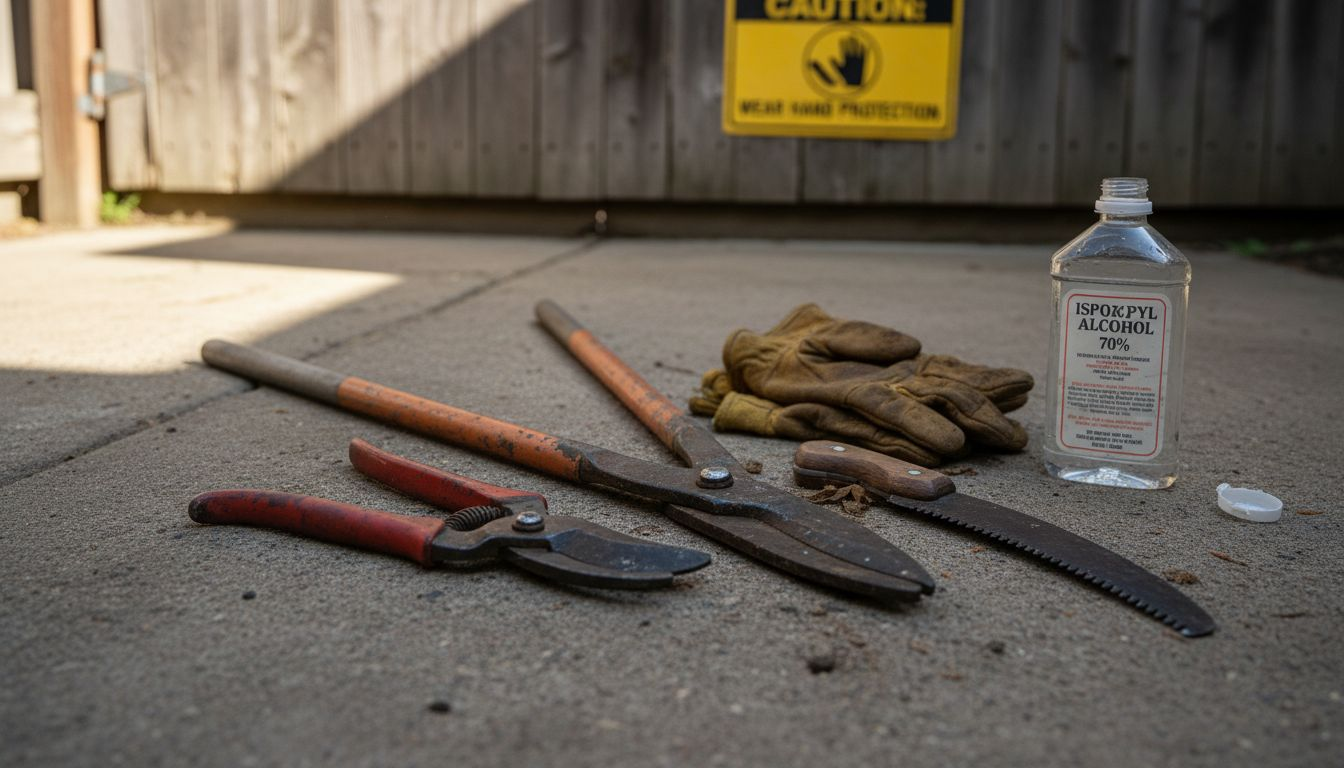
Begin by assembling the right tools for the job. You will need pruning shears for smaller branches, loppers for medium sized limbs, and a pruning saw for larger branches. Ensure all cutting tools are clean, sharp, and in excellent working condition. Wear protective gear including safety glasses, sturdy gloves, a hard hat, and closed toe shoes. Clear the area around the tree of any obstacles like lawn furniture, vehicles, or decorative items that could be damaged during pruning. Check the ground for uneven terrain or potential tripping hazards that might compromise your stability while working.
Before making any cuts, carefully assess the work zone and create a safe perimeter. Consider wind conditions, proximity to power lines, and potential falling branch trajectories. If you are working with large trees or branches near structures, you might want to create a drop zone where branches can fall safely without causing damage. Always have a clear escape route and ensure no people or pets are in the immediate work area during tree trimming.
Pro Tip: Sanitize your cutting tools with rubbing alcohol between trees to prevent potential disease transmission and keep your equipment in top condition.
Step 3: Make Proper Cuts for Healthy Growth
Making precise pruning cuts is essential for maintaining tree health and promoting strong, sustainable growth. Pruning techniques require careful consideration to minimize damage and support the tree’s natural healing process.
Understand the three primary types of pruning cuts: removal cuts, reduction cuts, and heading cuts. For removal cuts, always cut just outside the branch collar the slightly swollen area where the branch connects to the trunk or larger branch. This technique helps the tree heal faster and prevents potential decay. When making cuts, use clean and sharp tools at a slight angle that allows water to run off the wound. Aim to keep cut diameters under two inches whenever possible, as smaller wounds heal more quickly and reduce stress on the tree.
This chart highlights key pruning cut types and their primary functions:
| Cut Type | Main Purpose | Effect on Tree |
|---|---|---|
| Removal Cut | Eliminate entire branch | Improves structure, limits disease |
| Reduction Cut | Shorten branch length | Controls size, encourages new growth |
| Heading Cut | Remove branch tip | Stimulates dense regrowth |
Pay close attention to branch placement and growth patterns when making your cuts. Remove branches that are crossing, rubbing against each other, or growing in directions that could compromise the tree’s overall structure. Make clean, precise cuts without leaving stubs or tearing bark. Your goal is to create cuts that support the tree’s natural growth while eliminating potential sources of disease or structural weakness.
Pro Tip: Always sterilize your cutting tools between trees using rubbing alcohol to prevent potential disease transmission and maintain equipment effectiveness.
Step 4: Dispose of Debris and Clean Up
Once you have completed trimming your trees, managing the resulting debris becomes crucial for maintaining a clean and safe environment. Proper debris disposal not only keeps your property tidy but also prevents potential pest and disease spread.

Sort your tree debris based on size and type. Smaller branches and twigs can be chipped into mulch for garden beds or landscaping. Larger branches might require cutting into manageable sections for hauling or professional removal. Check local municipal guidelines for yard waste disposal or consider composting suitable materials. If you have substantial amounts of debris, contact your local waste management service or a tree removal professional who can handle large volume cleanup efficiently.
Beyond physical removal, take time to thoroughly clean your work area. Sweep up smaller wood chips, leaves, and sawdust. Inspect the ground around the trimmed tree for any remaining branches or sharp debris that could pose a safety hazard. Sanitize your tools after use and store them properly to maintain their condition and prevent potential disease transmission between trees.
Pro Tip: Rent a wood chipper or contact local landscaping services to transform tree debris into valuable mulch for your garden beds.
Step 5: Inspect Results and Monitor Tree Recovery
After completing your tree trimming, understanding how to monitor the tree’s recovery is essential for ensuring long-term health and identifying potential issues early. Post pruning monitoring helps you track the tree’s healing process and detect any signs of stress or disease.
Begin your inspection by carefully examining the pruned areas within one to two weeks after trimming. Look for clean wound healing around the cut sites, checking that the bark is smooth and there are no signs of excessive sap leakage or discoloration. Pay special attention to the branch collar area, ensuring no signs of decay or fungal growth have developed. Note the tree’s overall appearance check for consistent leaf color, branch stability, and absence of wilting or unusual branch drooping.
Continue monitoring your tree throughout the growing season. Seasonal changes can reveal how well the tree is recovering from pruning. During spring and summer, observe new growth patterns and leaf development. Healthy trees will show vigorous new branch growth and uniform leaf coloration. If you notice persistent issues such as dead branches, unusual bark patterns, or stunted growth, consider consulting a professional arborist for a more detailed assessment and potential treatment.
Pro Tip: Take periodic photographs of your pruned tree from multiple angles to track its recovery and create a visual record of its healing process.
Ensure Safe and Healthy Tree Growth with Expert Care from McCullough Tree Service
Trimming trees safely requires more than just the right tools and techniques. As the article highlights, understanding tree health assessment, proper pruning cuts, and debris disposal are essential to prevent disease and promote vigorous growth. Common challenges include identifying diseased or damaged branches, making precise cuts near the branch collar, and monitoring recovery to avoid long-term problems. Trying to handle these complex tasks alone can lead to stress and unintended damage to your trees or property.
McCullough Tree Service offers certified arborist expertise to manage these exact pain points with confidence. From professional tree health assessments and carefully executed trimming to comprehensive cleanup services, we help protect and enhance your trees’ natural beauty while ensuring safety. Hundreds of satisfied residential and commercial clients in Orlando and Central Florida trust us for licensed, reliable, and compliant tree care solutions.
Ready to give your trees the care they deserve without the worry or hassle? Take the first step today.

Contact McCullough Tree Service now to schedule your professional tree trimming or health evaluation. Visit https://mcculloughtreeservice.com to request a free estimate and experience expert care that supports your trees’ long-term health and beauty.
Frequently Asked Questions
How do I assess the health of my tree before trimming?
To assess the health of your tree, visually inspect it for signs of disease, such as discolored leaves or dead branches. Examine branch structure for cracks, splits, or rubbing areas, and identify branches that may need removal to maintain tree vitality.
What tools do I need for safe tree trimming?
You will need pruning shears for small branches, loppers for medium limbs, and a pruning saw for larger branches. Ensure all tools are clean, sharp, and in good condition to avoid damaging the tree during trimming.
What are the best techniques for making proper pruning cuts?
Use removal cuts just outside the branch collar to promote quick healing, reduction cuts to manage branch length, and heading cuts to stimulate regrowth. Always make cuts at a slight angle to allow water drainage and avoid leaving stubs.
How should I dispose of tree debris after trimming?
Sort tree debris by size and type, with smaller branches suitable for chipping into mulch and larger limbs cut into manageable sections for disposal. Check local guidelines for yard waste disposal or consider composting where appropriate.
How can I monitor my tree’s recovery after pruning?
Inspect the tree within one to two weeks for signs of healthy healing at the cut sites. Continue to monitor throughout the growing season, looking for new growth and consistent leaf coloration to ensure your tree is recovering well.
What should I do if I notice issues with my tree after pruning?
If you observe signs such as dead branches or unusual bark patterns, consider contacting a professional arborist for a detailed assessment. Taking action quickly can prevent further damage and ensure the tree’s long-term health.
Recommended
- Tree Trimming Safety Protocols to Remember
- Expert Tips: When Your Tree Needs Trimming
- The Environmental Impact of Tree Trimming
- The Comprehensive Benefits of Tree Trimming
- Tree Removal Altamonte Springs FL
- Tree Service Altamonte Springs FL