By: Shelby McCullough| Published: August 27, 2026
A healthy laurel oak typically lives 50 to 70 years, but that number comes with a catch homeowners need to hear upfront: many of these trees start hollowing from internal decay well before they hit the 50-year mark. Site conditions, storm exposure, and maintenance history all push individual trees toward either end of that range, and toward either end of the risk spectrum.
TL;DR:
- Laurel oaks typically live 50 to 70 years, but many develop internal decay early, especially if growing in wet soil or exposed to storms.
- Fast growth in laurel oak results in looser wood fibers, which increases vulnerability to decay and reduces the tree’s natural ability to compartmentalize wounds.
- Visible signs of internal decay are unreliable, so inspection tools like sonic tomography are recommended for trees over 40 years old near structures.
- Early structural pruning, proper site care, and routine maintenance are essential to prolong the tree’s safe lifespan and minimize hazard risks.
- Removal is often necessary when large cavities, repeated limb failures, or mushrooms indicate advanced internal decay, with professional assessment crucial for decision-making.
Table of Contents
- Laurel Oak Lifespan Range and Why the Numbers Vary
- Why Laurel Oaks Decline Faster Than Other Oaks
- Spotting Internal Decay Before It Becomes a Problem
- Pruning and Site Care That Actually Extend Usable Life
- When Removal Beats Maintenance
- What an Inspection and Removal Actually Look Like
- Our Take: Stop Treating Laurel Oak Like a Live Oak
- Sources
Laurel Oak Lifespan Range and Why the Numbers Vary
The 50 to 70 year range for laurel oak comes from the University of Florida’s IFAS Extension, and it’s the number every arborist in the Southeast works from. But averages hide a lot of variation, and that variation matters more for laurel oak than for most other yard trees.
A laurel oak growing on a dry, well-drained upland lot tends to grow slower and build denser, stronger wood, according to UF/IFAS growth data. The same species planted near a retention pond or in low, soggy soil grows faster but weaker, and often reaches structural trouble sooner. Urban stress compounds this: compacted soil, root damage from construction, and repeated storm exposure all shorten the practical, safe lifespan even when the tree technically keeps growing.
The variables that matter most for any individual tree include:
- Soil moisture: drier sites generally produce tougher wood; wet sites produce faster, weaker growth.
- Wound history: old pruning cuts, lawn equipment damage, and storm breaks all create decay entry points.
- Growth rate: faster early growth trades off against long-term wood density.
- Storm exposure: repeated wind loading accelerates internal cracking over decades.
Why Laurel Oaks Decline Faster Than Other Oaks
Laurel oak grows fast, and that speed is the root of its shorter working life. Fast growth means looser wood fibers and less resistance to invading fungi. When a branch tears off or a lawn crew nicks the trunk, the tree can’t wall off the injury the way slower-growing species do.
That failure to compartmentalize is the real story. Live oaks and many other hardwoods respond to a wound by sealing it into a contained pocket. Laurel oaks often can’t, according to UF/IFAS, which found that laurel and water oaks fell more often in hurricanes for exactly this reason. Decay spreads upward and downward through the trunk instead of stopping at the wound site.
A Tampa street-tree study published in Arboriculture & Urban Forestry found that 67.4% of large-diameter laurel oaks tested showed detectable internal trunk decay, a rate far above what researchers measured in live oaks in the same sample.
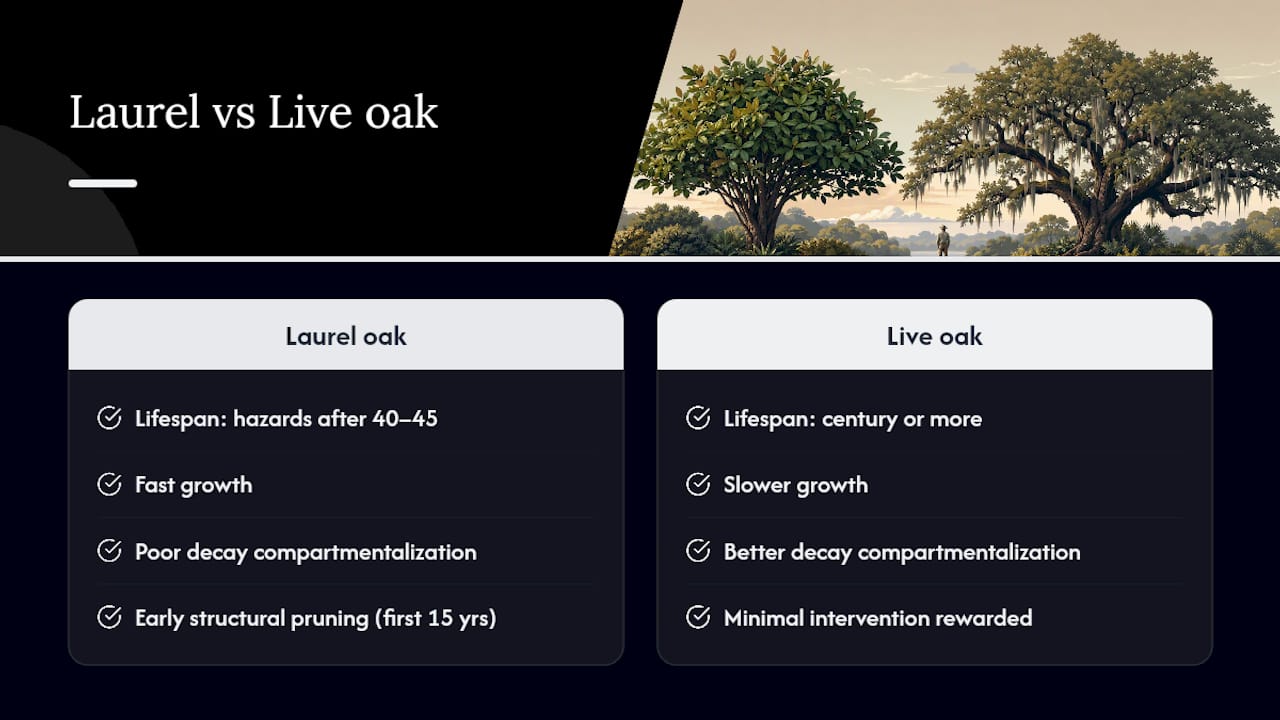
That single figure explains why so many mature laurel oaks look fine from the curb while carrying a hollow core. It also explains why arborists treat laurel oak differently from live oak when writing risk assessments. Southern live oak (Quercus virginiana) can live for centuries and resist decay far better, largely because it grows slower and compartmentalizes wounds effectively. Laurel oak was never built for that kind of longevity, and pretending otherwise leads to bad landscaping decisions.
Spotting Internal Decay Before It Becomes a Problem
A laurel oak can hold a full, green canopy right up until the week a major limb comes down, because outward appearance is a poor guide to what’s happening inside the trunk. Visible fungal fruiting bodies, cavities, and cracks are strong predictors of internal decay, but plenty of decayed trees show none of these signs until decay is advanced.
Watch for these warning signs during a seasonal walk-around:
- Fungal conks or mushrooms growing from the trunk or root flare, even small ones.
- Visible cavities or open cracks, especially where old limbs were removed.
- A canopy that’s thinning unevenly, with dieback concentrated on one side.
- Epicormic shoots (thin, whip-like sprouts along the trunk or major limbs), which often signal the tree is under stress.
- A trunk that sounds hollow when tapped, though this alone isn’t reliable enough to act on.
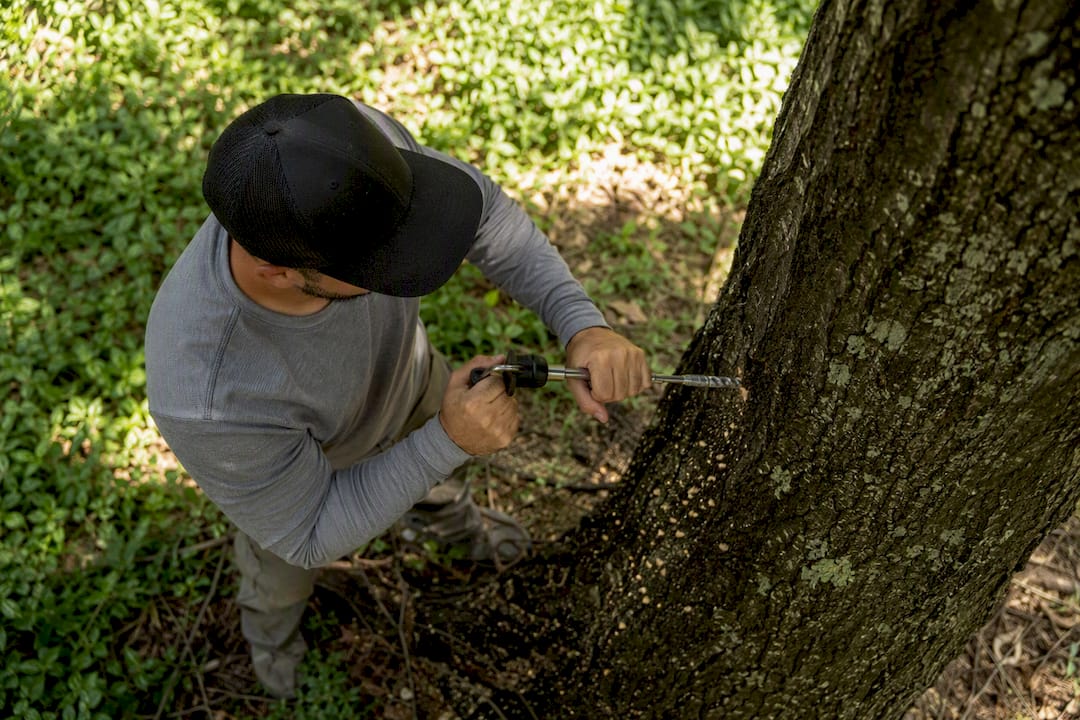
Because visual checks miss a lot, arborists use a resistance-recording drill or sonic tomography to map decay columns inside the trunk without cutting the tree open. These tools are worth requesting on any laurel oak over 40 to 50 years old near a house, driveway, or property line.
Pro Tip: If a laurel oak on your property is older than 40 years and sits within falling distance of a structure, don’t wait for visible symptoms. Schedule a diagnostic inspection now, since a decay column found early is a much easier conversation than one found after a storm.
Pruning and Site Care That Actually Extend Usable Life
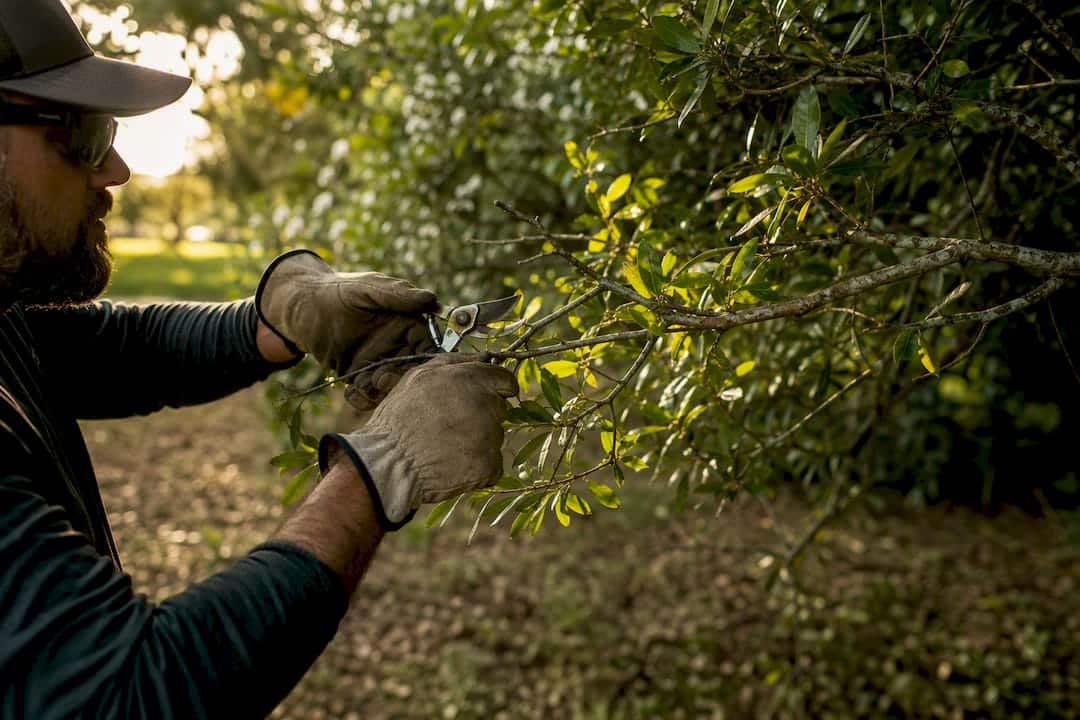
The single most effective thing you can do for a young laurel oak is prune it correctly before it needs any large cuts at all. UF/IFAS recommends training the tree to one dominant central trunk early, with major branches spaced 2 to 3 feet apart along the trunk and kept under half the trunk’s diameter. That structure spreads wind load and dramatically reduces the odds of the tree needing a large, wound-prone cut later in life.
For established trees, stick to a maintenance rhythm rather than reactive trimming:
- Remove deadwood and crossing branches on a routine cycle, not just after storms.
- Never top a laurel oak; topping creates massive wounds the tree cannot seal.
- Avoid large-diameter limb removals unless the branch is already failing.
- Keep mulch a few inches deep out to the drip line, but away from the trunk itself.
- Protect roots from soil compaction, trenching, and grade changes, all of which stress the root system and accelerate decline.
- Water consistently during drought, but avoid chronically saturated soil around the root crown.
Pro Tip: Storm prep and structural pruning are the same job done at different times. A pre-storm trimming plan that reduces wind-catching deadwood every year is cheaper than emergency cleanup after a hurricane, and it’s the maintenance habit that most extends a laurel oak’s safe working life.
Good pruning helps most when it starts early and continues consistently. Once a tree already carries a large decay column, no amount of trimming reverses that. At that point, the conversation shifts from maintenance to risk management.
When Removal Beats Maintenance
Some laurel oaks are past the point where pruning helps, and recognizing that line early protects both people and property. The clearest removal triggers include:
- Large trunk cavities or a hollow sound across a wide section of trunk.
- Repeated limb failures, especially without a major storm event.
- A significant or worsening lean, particularly after heavy rain saturates the root zone.
- Fruiting bodies (mushrooms or conks) on the trunk or major roots.
- Major canopy loss that isn’t tied to seasonal shedding.
A qualified arborist’s inspection typically includes a visual hazard assessment, diagnostic drilling or tomography where warranted, and a written report describing the decay pattern and recommended action. If removal is the call, next steps usually involve securing the area from foot traffic, confirming any local permit requirements, and scheduling cleanup, including stump grinding, so the site is usable again quickly.
What an Inspection and Removal Actually Look Like
McCullough Tree Service handles this exact call across Central Florida, where laurel oak decay and hurricane exposure overlap constantly. A typical inspection starts with a visual hazard assessment, moves to resistance-drill testing when decay is suspected, and ends with a documented report the homeowner can use to decide between staged pruning and full removal.
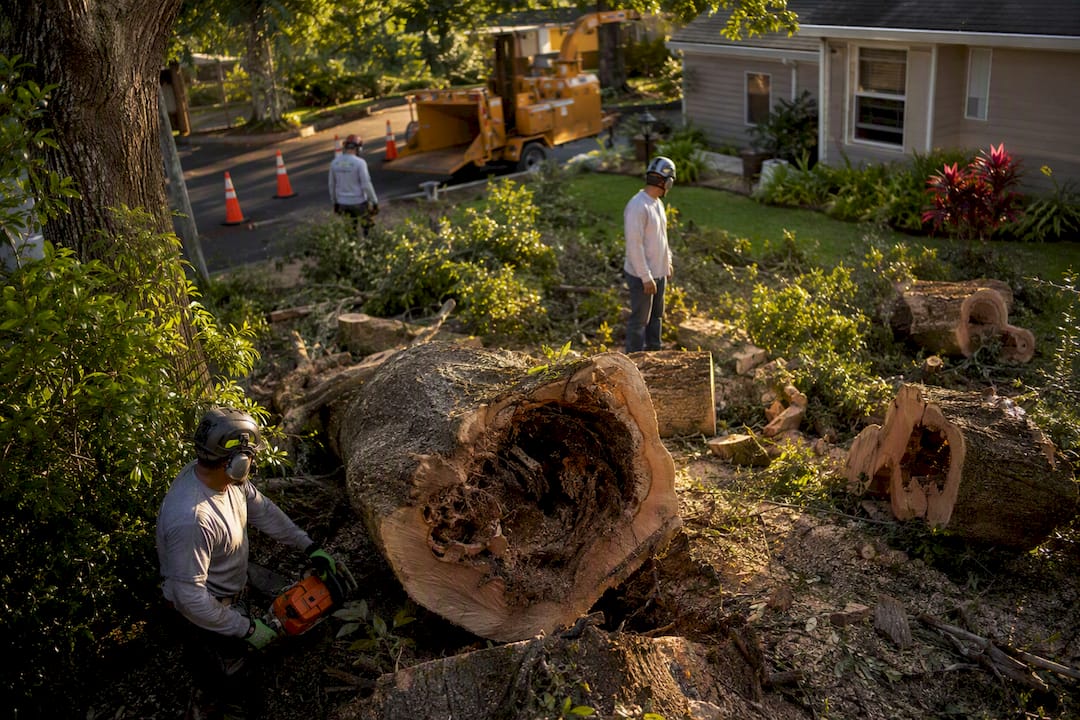
From there, outcomes vary by tree: a structural pruning plan to reduce wind load, targeted hazard-limb removal, or a full tree removal followed by stump grinding and site cleanup. Homeowners can review real hazardous laurel oak removals to see what a decayed trunk actually looks like once it’s down, which is often the moment a “healthy-looking” tree reveals just how hollow it had become.
Our Take: Stop Treating Laurel Oak Like a Live Oak
The biggest mistake we see homeowners and even some landscapers make is applying live-oak expectations to a laurel oak. They’re not the same investment. Live oak rewards patience and minimal intervention over a century or more. Laurel oak rewards early, deliberate structural work in its first 15 years and close monitoring after 40.
Conventional yard advice tends to treat all oaks as low-maintenance, plant-it-and-forget-it trees. That advice fails laurel oak owners specifically, because the species’ fast growth and poor decay compartmentalization mean neglect compounds faster than it does in slower species. The tree that looked fine at 35 can carry a serious hazard by 45, with almost no outward warning.
If you take one thing from this guide, prioritize early pruning structure over everything else. It’s the cheapest, most effective lever you have, and it’s the one homeowners skip most often because a young tree doesn’t look like it needs the attention yet. By the time decay is visible, you’re managing risk, not extending lifespan.
— Results
Prune early, watch closely after 40 years, and when a laurel oak starts showing cavities or repeated limb failure, get a professional trimming assessment or removal quote before the next storm makes the decision for you.
Sources
- ENH-707/ST549: Quercus laurifolia: Laurel Oak – Ask IFAS
- Frequency, Severity, and Detectability of Internal Trunk Decay of Street Tree Quercus spp. in Tampa, Florida, U.S. | Arboriculture & Urban Forestry
- Laurel oak decay – Maintenance – Landscape plants – Edward F. Gilman – UF/IFAS
Recommended
- Hazardous Laurel Oaks Tree Removal
- Check Out Our Videos – McCullough Tree Service
- Laurel Oak Tree Removal in Winter Springs, FL
- Dangerous Oak Tree Removal in Orlando, FL