By: Shelby McCullough| Published: August 30, 2026
Match your privacy planting to your USDA zone and sun/salt exposure, and you’ll avoid the most expensive mistake homeowners make with screening. For most Florida lots, a mix of sweet viburnum, podocarpus, clusia, wax myrtle, and clumping bamboo covers the range from fast filler to permanent structure. Coastal properties need salt-tolerant picks like Simpson’s stopper and wax myrtle; north Florida needs hardier stock rated to zone 8b or 9a. Complex sightlines, especially second-story windows, respond better to a layered buffer than a single row of shrubs.
TL;DR:
- Fast-growing plants like viburnum or wax myrtle can provide quick privacy but require frequent replacement if used as the only barrier.
- North Florida homeowners must prioritize hardy plants such as yaupon holly for winter resilience, as tropical options often fail in colder zones.
- Layered buffer designs handle complex sightlines better and prevent gaps if individual plants die, unlike single-row hedges that are more vulnerable to losses.
- Proper planting timing, soil preparation, and ongoing watering are critical for establishing a privacy screen within the first year.
- Avoid invasive plants like running bamboo near property limits and always verify utility setbacks before planting to prevent future disputes.
Table of Contents
- Privacy Trees for Florida: The Shortlist by Zone and Exposure
- How to Choose the Right Privacy Tree or Hedge for Your Yard
- Planting and First-Year Care for a Florida Privacy Screen
- Layered Buffers vs. Single-Row Hedges: Which Design Wins
- Certified Arborist Field Notes on Florida Privacy Plantings
- What Florida Homeowners Get Wrong About Privacy Screening
- Get Your Privacy Screen Installed and Established Right
- Sources
Privacy Trees for Florida: The Shortlist by Zone and Exposure
Florida doesn’t have one climate. It has three, roughly, and picking privacy trees for Florida yards means matching the plant to your slice of the state before anything else. Zone guidance for Florida property lines puts most of central and south Florida in zones 9a through 11, while the panhandle and north central counties sit closer to 8b or 9a, which rules out some of the tropical options homeowners see recommended online.
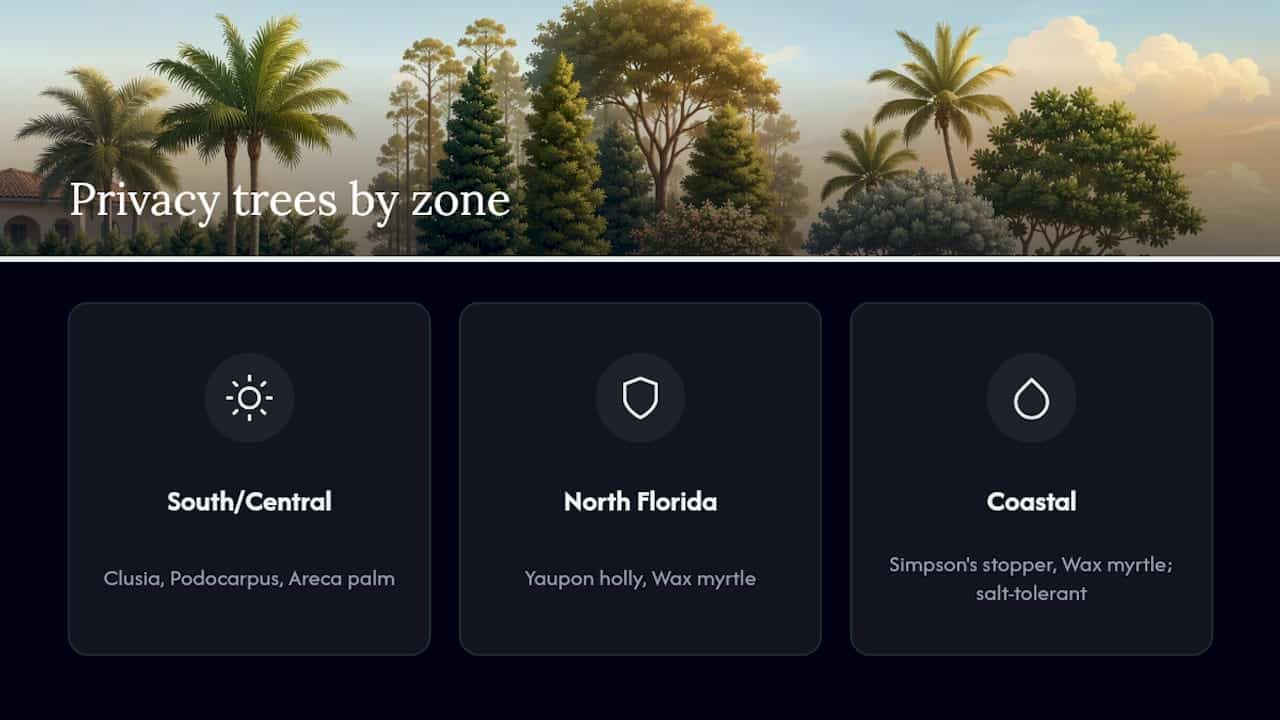
South and Central Florida (zones 9b–11). Clusia (Clusia rosea) grows into a dense wall with thick, leathery leaves that shrug off wind and salt, though it is slow to close gaps, often requiring multiple growing seasons. Podocarpus (Podocarpus macrophyllus) reaches significant height, takes shearing well for a formal hedge, and handles both sun and light shade. Areca palm (Dypsis lutescens) clusters into a soft, tropical screen but freezes badly at lower temperatures, so it is best suited for southern Florida.
North Florida (zones 8b–9a). Yaupon holly (Ilex vomitoria) is the workhorse here: cold hardy to zone 7, tolerant of poor soil, and dense enough to block sightlines at typical hedge heights. Wax myrtle (Myrica cerifera) pairs well with it, growing fast to 15 feet and tolerating both drought and occasional flooding.
Coastal exposure. Simpson’s stopper (Myrcianthes fragrans) and wax myrtle both handle salt spray without scorching, and Cultivating Flora’s coastal planting guidance recommends siting them behind a dune line or fence rather than directly in the spray zone.
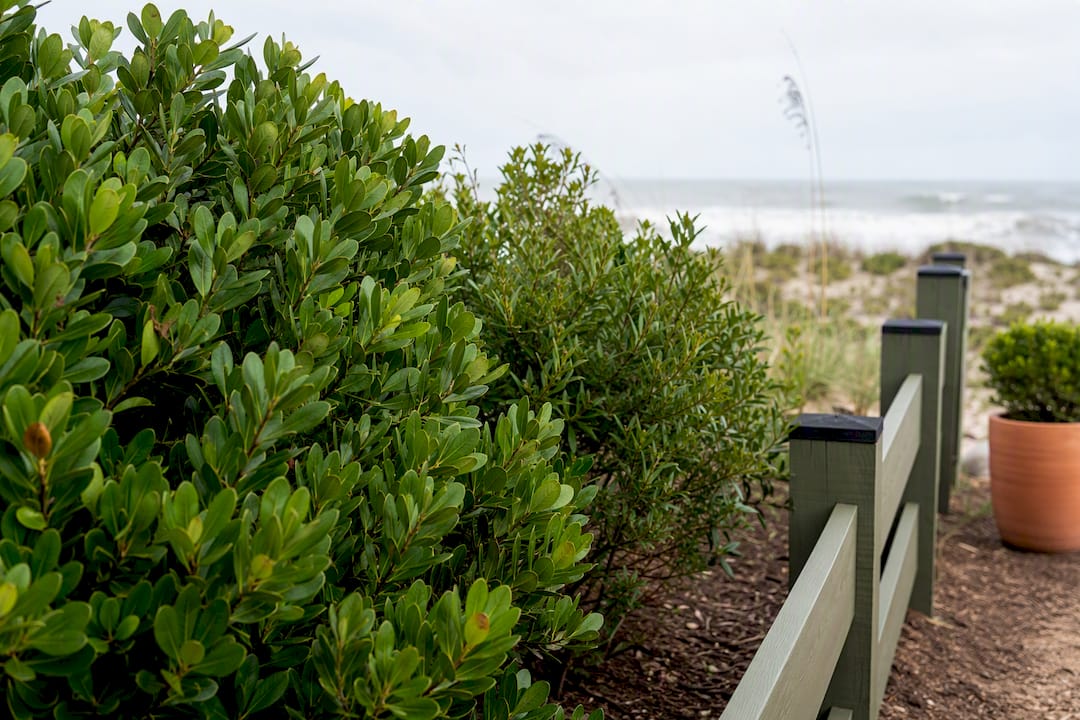
Fastest fillers. Sweet viburnum (Viburnum odoratissimum) is a fast screen plant that can often reach a usable height within a couple of years. Clumping bamboo (Bambusa species, non-running types only) can rapidly grow to tall heights in warm, irrigated conditions.
Narrow side yards. Oleander (Nerium oleander) columnar varieties fit tight spaces but every part of the plant is toxic, a real concern with kids or pets nearby. Container-grown podocarpus or clusia also work well where in-ground root space is limited.
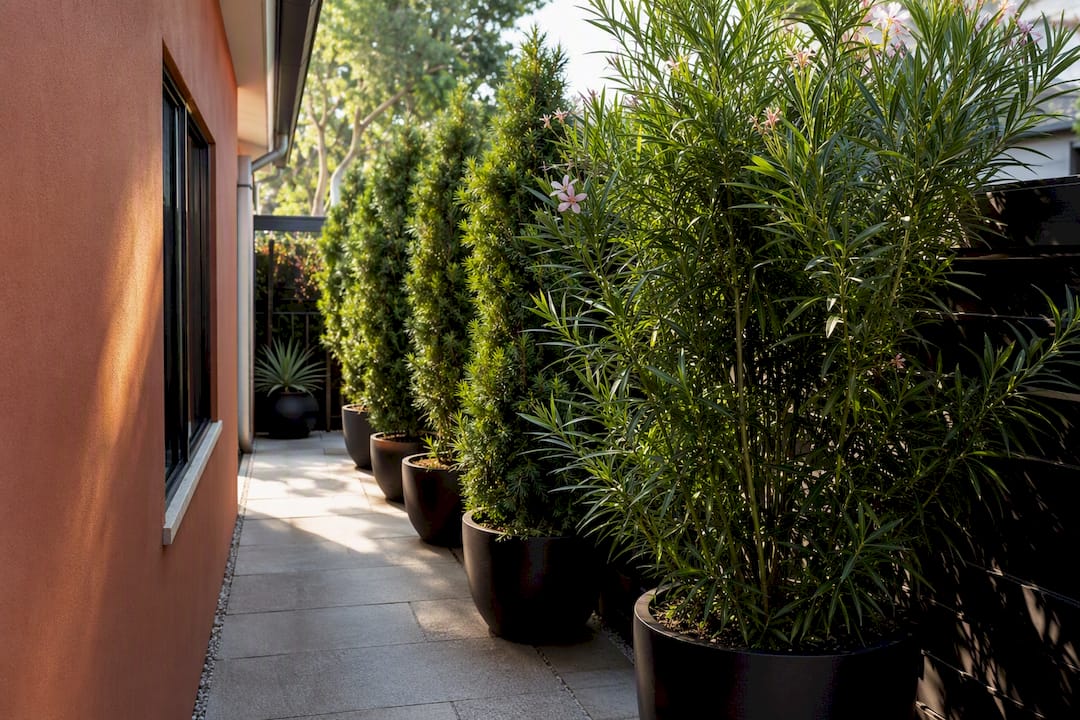
Buy larger nursery stock when you can; larger plants close gaps faster and shorten the wait for privacy.
How to Choose the Right Privacy Tree or Hedge for Your Yard
Before you buy a single plant, walk your property with a tape measure and a notepad.
- Map the actual sightline. Stand where you want privacy (patio, pool, kitchen window) and note exactly what needs blocking, including any second-story views from a neighbor’s house.
- Check your zone and exposure. Confirm your USDA zone and whether the site gets direct salt spray, full sun, or afternoon shade. Planting windows differ by region: north Florida from February through April and October through November, central Florida October through March, south Florida October through February.
- Decide fast versus permanent. Mixing quick fillers like viburnum or wax myrtle with slower structural plants like podocarpus or clusia gives you privacy sooner while the long-term hedge fills in behind it.
- Set your spacing. Medium shrubs need 3 to 6 feet between plants; larger species need 6 to 10 feet. Plant the row 3 to 5 feet inside your property line to leave room for mature branch spread and future pruning access.
- Screen out the red flags. Skip running bamboo entirely (it spreads underground and is nearly impossible to contain without a physical barrier), check your county’s invasive species list, and think twice about oleander near a play area.
Pro Tip: Take a phone photo of your sightline from the exact spot you’ll be sitting most, at eye level. It’s the single best tool for judging mature height needs before you plant anything.
Planting and First-Year Care for a Florida Privacy Screen
Timing and soil prep decide whether your screen fills in on schedule or stalls out. Plant during the cooler months for your region, since roots establish faster when the plant isn’t also fighting summer heat stress.
- Dig a 12 inch test hole and fill it with water to check drainage; if it drains too fast (common in Florida’s sandy soil), work 2 to 3 inches of compost across the entire planting bed, not just the hole.
- Dig planting holes twice as wide as the root ball but no deeper, so the plant doesn’t settle below grade.
- Water deeply two to three times a week for the first month, then taper to once or twice weekly through the first growing season.
- Apply 2 to 3 inches of mulch, keeping it a few inches back from the trunk to prevent rot.
- Stake taller specimens loosely for the first six months in windy or open sites, and remove stakes once the root system anchors.
- After named storms, do a light pruning pass to remove broken branches; in north Florida, keep frost cloth on hand for young, tender species during hard freezes.
Cultivating Flora’s establishment data puts first-year loss rates at 5 to 10 percent even with good care, so budget a few extra plants when you order.
Layered Buffers vs. Single-Row Hedges: Which Design Wins
A single row of shrubs along the property line is the fastest thing to install, but it’s also the least forgiving design. Lose one plant to disease or a hard freeze and you’ve got a gap that shows immediately.
- Single-row hedges work well for straightforward, flat sightlines and wide-open property lines where speed matters more than resilience. They’re cheaper up front and quicker to plant.
- Layered buffers, staggering shrubs, small trees, and palms at different depths, handle complex sightlines far better, according to Pennate’s privacy design guidance, and they tolerate losing a plant without leaving an obvious hole.
- Second-story sightlines rarely get solved by a taller property-line hedge. Near-home layering with a canopy tree or an architectural screen closer to the patio does more for less height.
- Narrow side yards do better with columnar plants or trellised vines than with anything that needs lateral room to spread.
- Wide property lines can go either way: staggered two-row plantings of fast growers give redundancy without the full footprint of a true layered buffer.
Whatever you choose, plan for formative pruning in years one through three and budget a small reserve for replacing the inevitable loss.
Certified Arborist Field Notes on Florida Privacy Plantings
Certified arborists at Mcculloughtreeservice see the same mistakes repeat across Central Florida yards. Check utility lines and setback requirements before digging, since a fast-growing hedge planted too close to a fence line or easement becomes a dispute later. Buy the largest container size your budget allows. It shortens the wait for real privacy by a full season or more.
Formative prune in years one through three to build a dense structure. Don’t shear a hedge into a thin, twiggy shell year after year. It looks tidy but weakens the plant’s interior growth long term.
Running bamboo without a root barrier is one of the most common regret calls we get. Once it’s established under a fence line, removing it becomes a much bigger job than planting it ever was.
Pro Tip: If your lot has drainage issues, root conflicts with existing trees, or sits in a storm-exposed coastal zone, an arborist site visit before planting saves more money than it costs.
What Florida Homeowners Get Wrong About Privacy Screening
Most advice on privacy trees for Florida treats it as a shopping list problem: pick the fastest grower, plant it, done. That’s backwards. The research consistently frames privacy as a design problem first and a plant selection problem second, and homeowners who skip the design step end up ripping out expensive mistakes within a few years.
The biggest gap I see between advice and reality is speed obsession. Everyone wants the fastest-growing option, but the fastest growers (viburnum, wax myrtle, running bamboo) are rarely the plants you want holding the line permanently. The smarter approach treats fast growers as temporary scaffolding around slower, sturdier plants like podocarpus and clusia, then thins the fillers once the real structure takes over.
North Florida homeowners also underestimate freeze risk, borrowing plant lists built for Miami and Tampa. A hardy yaupon holly beats a gorgeous but freeze-tender palm every single winter that dips below 25°F.
— Results
Get Your Privacy Screen Installed and Established Right
Picking the right species is half the job. Getting it into the ground correctly, at the right depth, with the right soil prep, and with a watering plan that survives Florida’s dry spells, is the half that actually determines whether your screen fills in on schedule. Mcculloughtreeservice handles both halves for Central Florida properties that want a working privacy screen without the trial-and-error of a DIY planting attempt.
A typical engagement starts with a site visit where a certified arborist checks your soil, drainage, sun exposure, and any utility or root conflicts before recommending species. From there, our team handles the planting and installation itself, including proper hole depth, staking for windy sites, and mulch application, then follows up with establishment checks through the critical first year. If storm season hits while your screen is still young, our storm prep guidance covers what to do before wind and rain test unestablished root systems. Ready to get a species recommendation for your specific yard? Request a site visit and estimate through our planting services page.
Sources
For deeper species detail, see Cultivating Flora’s property line guide and Pennate’s layered design strategy.
- What to Plant Along Florida Property Lines for Privacy – Cultivating Flora
- Privacy planting strategies | Pennate
Recommended
- Top 5 Trees to Plant in Florida
- Tree Species Selection Explained for Central Florida
- Tree Planting Guide Central Florida for Homeowners
- 6 Outstanding Examples of Native Trees for Florida Yards