By: Shelby McCullough| Published: June 18, 2026
TL;DR:
- Effective municipal storm cleanup depends on pre-storm planning, including staging site identification and contract negotiations. During recovery, following a strict sequence of damage assessment, debris categorization, and contractor deployment ensures efficiency and FEMA compliance. Securing independent debris monitoring, appropriate funding, and resident education are critical for timely, cost-effective disaster response.
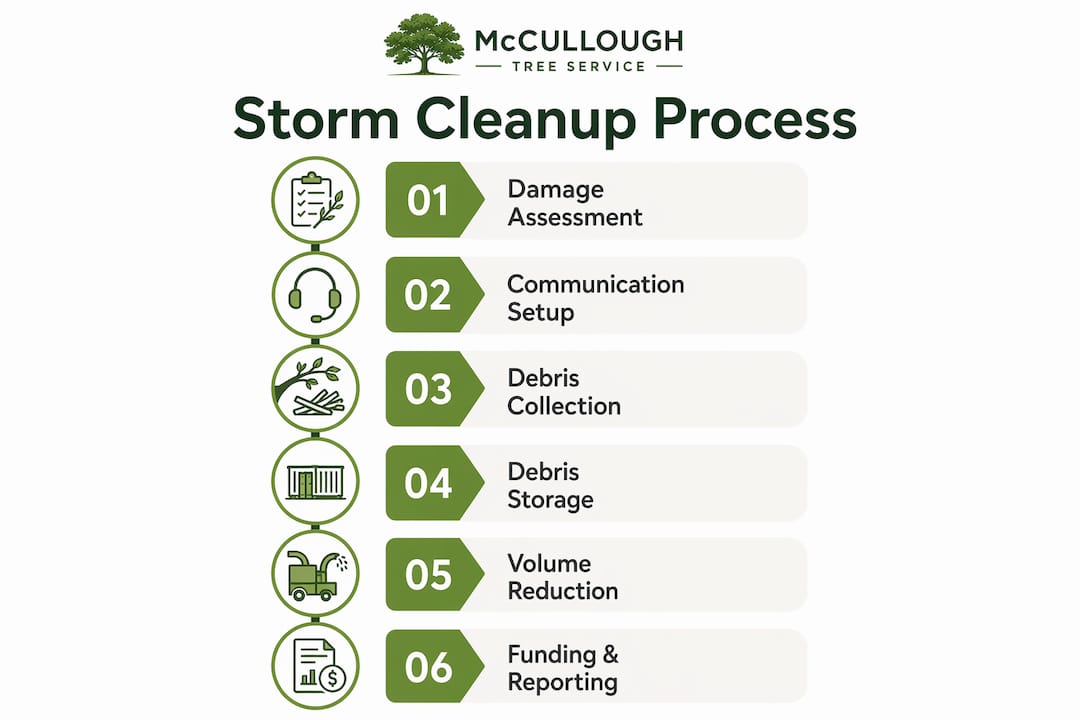
The storm cleanup process for municipalities is a coordinated, multi-phase operation covering rapid damage assessment, debris categorization, temporary storage logistics, and federal reimbursement compliance. Most municipal officials treat it as a reactive event. The most effective teams treat it as a system built long before the storm arrives. FEMA, state procurement laws, and debris monitoring firms all shape whether your recovery takes weeks or years. What you do before the storm determines what you can claim after it.
What are the prerequisite preparations for effective municipal storm cleanup?
Pre-disaster preparation is the single greatest predictor of how fast a municipality recovers. Teams that wait until after the storm to identify staging areas, negotiate contracts, or educate residents face delays that cost both money and public trust.
The core preparatory steps every municipality should complete before storm season include:
- Identify temporary debris staging sites. Sites require a minimum of 10–15 acres and must sit at least 200 feet from water sources and flood zones to meet regulatory standards. Pre-negotiated site agreements allow immediate activation post-disaster and satisfy FEMA documentation requirements from day one.
- Pre-negotiate debris removal contracts. As of 2026, state procurement rules require competitively bid formal agreements for FEMA reimbursement eligibility. Emergency contracts are permitted initially but must transition to formal bids quickly or risk losing federal funding.
- Establish emergency funding sources. The federal government covers 75% of storm disaster recovery costs, but reimbursements can take years. Mississippi’s Local Government Disaster Recovery Emergency Loan Program offers revolving loans at 3% interest to cover upfront contractor payments while awaiting federal funds.
- Run annual public education on debris sorting. Residents who mix vegetative debris with construction waste or household hazardous materials slow down your entire operation. Annual debris sorting education improves both cleanup speed and FEMA reimbursement eligibility.
Pro Tip: Map your staging sites in your emergency operations plan and get environmental pre-clearance before storm season. Waiting for post-storm permitting adds weeks to your timeline.
How does the municipal storm cleanup process execute post-disaster steps effectively?
The emergency storm cleanup process follows a strict sequence. Skipping steps or reordering priorities creates bottlenecks that delay emergency services and jeopardize federal funding.
- Conduct rapid damage assessment. Deploy crews within 24 hours to survey affected areas, estimate debris volumes by category, and identify road blockages. Accurate early estimates drive contractor mobilization and resource allocation.
- Clear emergency access corridors first. Prioritize hospital corridors, utility infrastructure, and emergency routes before any residential street cleanup. Failing this hierarchy delays ambulances, fire trucks, and power restoration crews.
- Categorize debris at the curbside. Residents place debris in separate piles: vegetative material, construction and demolition waste, household hazardous waste, and white goods such as appliances. Mixed piles require hand-sorting, which multiplies labor costs and slows contractor passes.
- Deploy municipal crews and contractors in defined zones. Municipal crews handle priority corridors and public property. Contractors, operating under pre-negotiated agreements, cover residential streets. Formal zone assignments prevent duplication and support documentation.
- Engage debris monitoring firms immediately. Independent monitoring firms document load tickets, GPS coordinates, and debris volumes at every stage. This documentation is the foundation of your FEMA reimbursement claim and withstands federal audits far better than self-reported data.
- Transition to infrastructure restoration. Once debris is cleared, shift resources to road repair, utility restoration, and public facility assessment. Coordinate with state DOT and utility providers using the damage survey data from step one.
Pro Tip: Assign a single point of contact for each debris monitoring firm. Fragmented communication between your public works director, emergency manager, and contractor leads to documentation gaps that FEMA auditors will find.
For a detailed breakdown of each recovery phase, the storm cleanup workflow guide at Mcculloughtreeservice covers step-by-step protocols that align with FEMA compliance standards.

What are best practices for temporary debris storage and volume reduction sites?
Temporary debris management sites, known in the industry as TDMS or temporary debris staging and reduction areas (TDSRAs), are the operational backbone of post-storm debris removal. Poor site selection inflates costs and creates regulatory exposure.
Site selection criteria
| Factor | Requirement |
|---|---|
| Minimum acreage | 10–15 acres for moderate municipalities |
| Distance from water | At least 200 feet from water sources and flood zones |
| Access | Wide entry points for heavy equipment and loaded trucks |
| Soil condition | Stable, non-saturated ground to support equipment weight |
| Community proximity | Sufficient buffer to manage noise and air quality concerns |
Proper site planning reduces cleanup costs by 30–40% through volume reduction techniques like grinding and chipping. That reduction directly lowers the total debris tonnage you pay contractors to haul to final disposal.
Volume reduction methods
- Grinding and chipping: Converts vegetative debris into mulch, reducing volume by up to 75%. Mulch can often be redistributed to parks or residents, eliminating disposal fees.
- Air curtain burning: Permitted in many states for vegetative debris when air quality standards allow. Reduces volume rapidly but requires state environmental permits and community notification.
- Compaction: Used for construction and demolition waste to maximize load efficiency before final haul.
Every volume reduction activity requires documentation: permits, load tickets, and reduction ratios. FEMA auditors will request this data to verify that reimbursement claims reflect actual debris quantities, not inflated estimates.
How to manage funding, contracts, and documentation to maximize federal reimbursement?
Federal cost-sharing is the financial engine of municipal storm recovery. Understanding how it works, and where it breaks down, determines whether your municipality recovers financially or carries debt for years.
The standard FEMA cost split is 75% federal and 25% split between state and local governments. That 25% local share is manageable. The problem is timing. FEMA reimbursements can take years, and contractors expect payment on 30-day billing cycles. That gap forces municipalities to borrow or draw on reserves.
Key financial and procurement practices for 2026:
- Secure bridge financing before storm season. Mississippi’s $125 million loan pool at 3% interest is one model. Your state may offer similar programs. Identify them now, not after the storm.
- Replace emergency contracts with formal agreements quickly. Emergency contracts are legally permitted for immediate mobilization, but state-regulated procurement rules require competitive bidding for FEMA reimbursement eligibility. The longer you operate under emergency contracts, the greater your audit risk.
- Hire independent debris monitoring firms. Independent monitoring firms reduce political and administrative burdens while producing the precise load ticket documentation FEMA auditors require. Self-monitoring creates conflicts of interest that federal reviewers flag.
- Track debris volumes by category from day one. Vegetative debris, construction waste, and hazardous materials each have different reimbursement rates and eligibility rules. Commingled tracking is the most common reason municipalities lose reimbursement dollars.
“The cash-flow gap between contractor billing cycles and federal reimbursement is the most underestimated financial risk in municipal storm recovery. Municipalities that enter storm season without a bridge loan strategy or reserve fund routinely face contractor disputes and delayed recovery timelines.”
For guidance on filing storm damage claims and understanding cost distribution, the resource on filing storm damage claims at Roofing & Exterior Pros provides a practical framework that complements municipal procurement processes.
What common challenges and troubleshooting tips improve municipal storm cleanup outcomes?
Even well-prepared municipalities hit operational walls during recovery. The most common problems are predictable and preventable.
Improper debris sorting by residents is the top operational bottleneck. When residents mix categories, contractors must hand-sort or reject loads entirely. Public education on debris separation before and immediately after a storm is the most cost-effective investment a municipality can make. Use reverse-911 systems, social media, and door hangers to communicate sorting rules within 24 hours of a storm.
Lack of pre-approved staging areas forces municipalities to spend critical post-storm hours negotiating site access instead of moving debris. This delay cascades into contractor mobilization delays, which push back the entire recovery timeline.
Documentation gaps are the primary cause of FEMA reimbursement denials. Common gaps include missing load tickets, unverified debris origins, and undocumented volume reduction activities. Assign a dedicated documentation coordinator, separate from your operations lead, to manage this function from day one.
Additional troubleshooting practices that improve outcomes:
- Conduct tabletop exercises with your debris monitoring firm before storm season to identify documentation workflow gaps.
- Establish a public hotline for residents to report uncollected debris or sorting questions. This reduces field crew interruptions and improves community cooperation.
- Coordinate with your state emergency management agency to confirm current FEMA eligibility rules before finalizing contracts. Rules change between disaster declarations.
Pro Tip: Keep a pre-loaded documentation kit in your emergency operations center: blank load ticket templates, site maps, contractor contact sheets, and your FEMA Public Assistance applicant handbook. When the storm hits, your team grabs the kit and starts documenting immediately.
For cost-effective approaches to tree debris removal that support municipal operations, the debris removal solutions resource at Mcculloughtreeservice covers contractor coordination and compliance considerations.
Key takeaways
The most effective municipal storm recovery begins before the storm, with pre-negotiated contracts, identified staging sites, and secured bridge financing already in place.
| Point | Details |
|---|---|
| Pre-storm preparation is non-negotiable | Identify staging sites, pre-negotiate contracts, and secure bridge financing before storm season begins. |
| Priority clearance sequence matters | Clear emergency corridors and hospital routes before residential streets to protect life safety and political support. |
| Independent monitoring protects funding | Hire debris monitoring firms from day one to produce FEMA-compliant documentation and reduce audit risk. |
| Bridge financing covers the cash-flow gap | FEMA reimbursements take years; secure revolving loans or reserves to pay contractors on 30-day cycles. |
| Resident education cuts labor costs | Annual debris sorting education reduces hand-sorting labor and improves FEMA reimbursement eligibility. |
What I’ve learned watching municipalities get this wrong
After working alongside municipal crews and emergency teams through multiple storm seasons in Central Florida, one pattern stands out. The municipalities that struggle most are not the ones hit hardest. They are the ones that treated storm recovery as something to figure out after the storm.
The procurement piece is where I see the most preventable damage. A municipality mobilizes a contractor on an emergency agreement, runs cleanup operations for six weeks, and then discovers the agreement does not meet state competitive bidding requirements. The result is a reimbursement denial on work that was done correctly in the field but documented incorrectly on paper. That is a painful and entirely avoidable outcome.
Resident education is the other area where I consistently see underinvestment. Officials assume residents know how to sort debris. They do not. A single mailer before hurricane season, combined with a post-storm social media push, changes sorting compliance dramatically. The labor savings alone justify the communication budget.
The municipalities that recover fastest share three traits: they prepared contracts and staging sites before the storm, they hired independent monitors on day one, and they had a cash-flow plan that did not depend on FEMA moving quickly. Build those three elements into your emergency operations plan now, and your next recovery will look very different.
— Mcculloughtreeservice
How Mcculloughtreeservice supports municipal storm cleanup efforts
When a storm hits Central Florida, tree debris is typically the largest volume category municipalities face. Mcculloughtreeservice provides certified arborist services for hazardous tree removal and emergency debris hauling that align with municipal contractor requirements and FEMA documentation standards.

From storm-damaged tree removal to pre-storm tree trimming programs that reduce debris volume before a storm arrives, Mcculloughtreeservice works with municipal and commercial clients across Orlando and Central Florida. Contact Mcculloughtreeservice for a consultation on emergency response readiness and compliant debris removal services.
FAQ
What is the first step in the municipal storm cleanup process?
The first step is a rapid damage assessment conducted within 24 hours of the storm. Crews survey affected areas, estimate debris volumes by category, and identify blocked emergency routes to prioritize clearance.
How does FEMA reimbursement work for storm debris removal?
FEMA typically covers 75% of eligible storm cleanup costs, with the remaining 25% split between state and local governments. Reimbursements can take years, so municipalities need bridge financing or reserve funds to pay contractors during the gap.
Why do municipalities need independent debris monitoring firms?
Independent monitoring firms produce the load ticket documentation and volume verification that FEMA audits require. Self-monitoring creates conflicts of interest that federal reviewers flag and can result in reimbursement denials.
What debris categories must residents separate for curbside collection?
Residents must separate vegetative debris, construction and demolition waste, household hazardous waste, and white goods such as appliances. Mixed piles require hand-sorting by contractors, which increases labor costs and slows the entire operation.
How large does a temporary debris staging site need to be?
Temporary debris staging sites require a minimum of 10–15 acres and must be located at least 200 feet from water sources and flood zones to meet regulatory standards and qualify for FEMA cost reimbursement.
Recommended
- Storm Cleanup Workflow: A Step-by-Step Recovery Guide
- Storm Clean Up – McCullough Tree Service
- Responsibilities in Storm Cleanup: Essential Guide
- Quick and Effective Storm Cleanup Strategies