By: Shelby McCullough| Published: March 15, 2026
You’ve just had a tree removed from your Central Florida property, and now you’re staring at an unsightly stump. Many property owners assume stump removal and stump grinding are the same thing, leading to confusion about costs, processes, and results. Understanding the stump grinding process helps you make informed decisions about your landscape. This guide breaks down exactly what stump grinding involves, typical costs in Central Florida, and how to prepare your property for service.
Table of Contents
- Understanding The Stump Grinding Process
- Cost Factors And Benefits Of Stump Grinding In Central Florida
- Comparing Stump Grinding And Stump Removal: Which Is Right For Your Property?
- Preparing For And Maintaining Your Property After Stump Grinding
- Professional Stump Grinding Services In Central Florida
- Frequently Asked Questions
Key takeaways
| Point | Details |
|---|---|
| Process definition | Stump grinding uses specialized machines to reduce stumps to 4-12 inches below ground level |
| Cost range | Typical Central Florida stump grinding costs between $100 and $400 per stump |
| Cost effectiveness | Grinding is more affordable than complete stump removal |
| Primary benefits | Improves safety, enhances aesthetics, and allows immediate replanting |
| Best applications | Ideal for residential properties needing quick landscape restoration |
Understanding the stump grinding process
Stump grinding involves using a specialized machine with a rotating cutting disk to reduce a tree stump to below ground level, typically 4 to 12 inches deep. Unlike complete stump removal, which extracts the entire root system, grinding focuses on eliminating the visible stump and surface roots.
The equipment consists of a powerful machine mounted on wheels or tracks, featuring a rotating cutting disk with carbide teeth. These teeth chip away at the wood in a controlled pattern, reducing the stump to mulch-like wood chips. Professional operators maneuver the machine back and forth across the stump surface, gradually lowering the cutting disk to reach the desired depth.
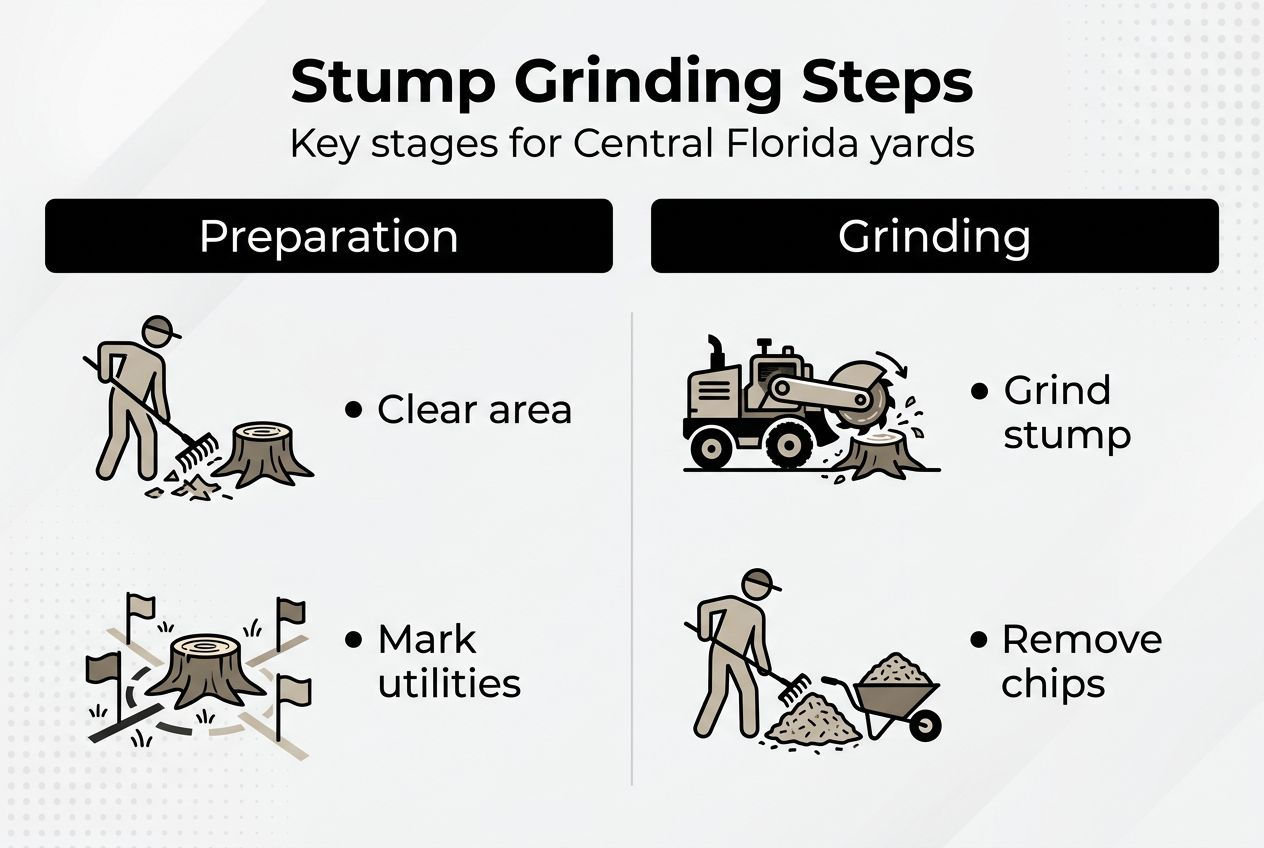
The grinding process follows a systematic approach:
- Clear the area around the stump of rocks, debris, and obstacles
- Position the grinding machine for optimal access and safety
- Begin grinding the stump surface, working from top to bottom
- Extend grinding to surface roots radiating from the main stump
- Lower the cutting disk to reach 4-12 inches below soil level
- Collect or redistribute wood chips as mulch
Operators adjust grinding depth based on your purpose of stump grinding and future plans for the area. Shallow grinding works for areas where you’ll add topsoil and grass seed. Deeper grinding suits locations where you plan to plant new trees or install hardscaping.
Pro Tip: Request grinding at least 8 inches below soil level if you plan to replant in the same spot. This depth prevents interference with new root development and ensures adequate soil depth for healthy growth.
Safety measures during grinding include wearing protective equipment, establishing a safety perimeter, and checking for underground utilities before starting. Professional services mark utility lines and adjust their approach to avoid damaging water pipes, electrical lines, or irrigation systems near the stump.
Cost factors and benefits of stump grinding in Central Florida
Cost of stump grinding typically ranges from $100 to $400 per stump, depending on size, location, and accessibility. Central Florida property owners face specific pricing considerations based on local soil conditions, tree species common to the region, and competitive service rates.
Several factors influence your final stump grinding pricing:
- Stump diameter: Larger stumps require more grinding time and equipment wear
- Location accessibility: Stumps in tight spaces or backyard areas cost more due to equipment challenges
- Root system complexity: Hardwood trees with extensive surface roots increase labor time
- Soil conditions: Rocky or clay-heavy Central Florida soil affects grinding difficulty
- Number of stumps: Multiple stumps on one property often qualify for volume discounts
The benefits of stump grinding in Central Florida extend beyond simple aesthetics. Removing stumps eliminates trip hazards that pose liability risks, especially important for properties with children, elderly residents, or frequent visitors. Ground-level stumps hidden by grass create dangerous obstacles for lawn mowers and can cause ankle injuries.
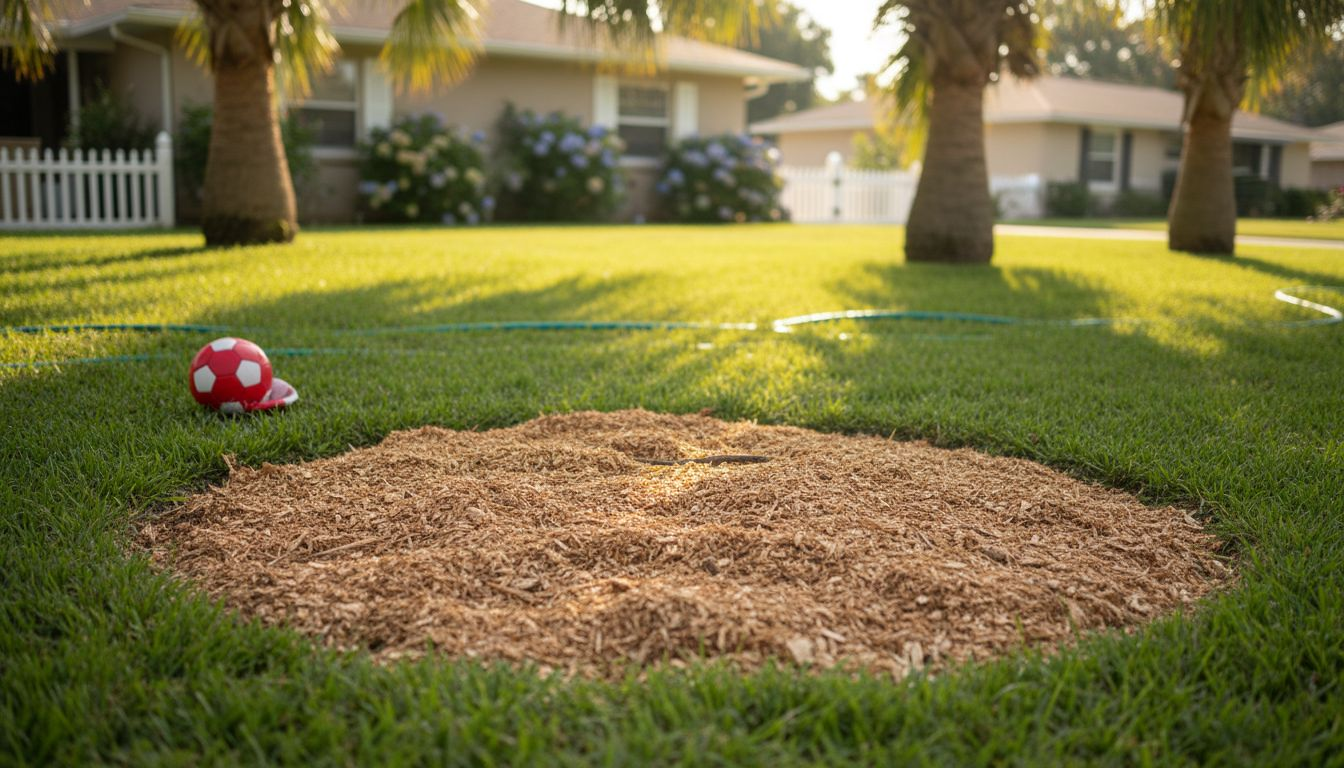
Your landscape aesthetics improve dramatically once stumps disappear. Unsightly remnants detract from curb appeal and make yard maintenance challenging. Grinding opens up usable space for gardens, patios, or simply cleaner lawn areas that enhance property value.
Pro Tip: Use the wood chips generated during grinding as natural mulch around flower beds or trees. This free byproduct retains soil moisture and suppresses weeds while decomposing to enrich your soil over time.
Health improvements for your property include reduced pest attraction and disease prevention. Decaying stumps attract termites, carpenter ants, and wood-boring beetles that may migrate to your home or healthy trees. Fungal growth on old stumps can spread pathogens to nearby plants, compromising your landscape’s overall health.
| Aspect | Stump Grinding | Complete Removal |
|---|---|---|
| Average cost | $100-$400 | $300-$800 |
| Time required | 1-3 hours | 4-8 hours |
| Property disruption | Minimal | Extensive |
| Root system | Remains underground | Fully extracted |
| Replanting timeline | Immediate | Immediate |
| Equipment size | Compact grinder | Excavator/backhoe |
Comparing stump grinding and stump removal: Which is right for your property?
Stump grinding is generally more cost-effective than complete stump removal. The fundamental difference lies in scope: grinding addresses the visible stump and surface roots, while removal extracts the entire root ball from the ground.
Stump removal involves heavy machinery like excavators or backhoes that dig around the stump, sever major roots, and pull the entire mass from the earth. This process leaves a significant hole requiring backfill and creates substantial property disruption. The extracted stump and root ball need disposal, adding to overall costs.
Grinding offers several advantages for residential properties. The process completes faster, typically within a few hours versus a full day for removal. Your yard experiences minimal disruption since grinding equipment has a smaller footprint than excavation machinery. The wood chips left behind provide immediate ground cover, and you can replant or landscape the area within days.
However, grinding leaves the root system underground. For most situations, this poses no problem since roots decompose naturally over several years. Some property owners prefer knowing roots remain, as decomposition enriches soil and prevents erosion on slopes.
Complete removal makes sense in specific scenarios. If you’re installing a foundation, pool, or underground structure where the stump stood, extraction eliminates any future settling issues. Properties with disease-infected stumps benefit from removal to prevent pathogen spread through remaining roots.
Consider these factors when deciding between grinding and stump removal benefits:
- Budget constraints and timeline for completing landscape projects
- Future plans for the specific area where the stump exists
- Proximity to structures, utilities, or other trees that limit equipment access
- Soil stability needs and erosion control requirements
- Presence of disease or pest infestation in the stump
Central Florida’s sandy soil composition actually favors grinding over removal. The loose soil structure means roots decompose relatively quickly compared to clay-heavy regions. Sandy conditions also make grinding easier and faster, translating to lower costs for property owners.
Most residential situations benefit from grinding’s speed, affordability, and minimal disruption. Commercial properties or those undergoing major construction may justify removal’s higher investment. When you compare stump grinding and removal options, match the method to your specific property goals and budget realities.
| Consideration | Choose Grinding | Choose Removal |
|---|---|---|
| Budget priority | Cost-conscious projects | Comprehensive solutions |
| Timeline | Quick turnaround needed | Extended project schedule |
| Future use | Landscaping or grass | Building foundation |
| Property disruption | Minimize yard damage | Major renovation underway |
| Root concerns | Decomposition acceptable | Complete extraction required |
Preparing for and maintaining your property after stump grinding
Proper preparation ensures efficient grinding and protects your property from damage. Start by clearing a 10-foot radius around the stump of furniture, decorations, toys, and any movable obstacles. This space allows the operator to maneuver equipment safely and position the machine for optimal grinding angles.
Mark underground utilities before the service date. Contact Florida 811 at least two business days before grinding to have lines marked. Even if you know where major utilities run, hidden irrigation lines, low-voltage lighting, or cable connections may exist near the stump.
Remove rocks, metal stakes, or debris embedded in or around the stump. Grinding blades hitting metal or stone cause damage and increase service costs. Walk the area and pick up anything that could interfere with the cutting disk.
Stump grinding affects soil and surrounding plants; safety protocols protect your property during service. Keep children and pets indoors during grinding operations. The machine generates flying wood chips and loud noise that pose risks to bystanders. Professional operators establish safety perimeters, but your cooperation ensures everyone’s wellbeing.
Post-grinding care determines how quickly your landscape recovers. The grinding process leaves a depression filled with wood chips. You have several options for this area:
- Leave chips in place as natural mulch that decomposes over 1-2 years
- Remove chips and fill the depression with topsoil for immediate planting
- Mix chips with topsoil to improve drainage and organic content
- Redistribute chips to other garden areas and level the ground
For grass restoration, remove most chips and add 4-6 inches of quality topsoil. Level the area slightly higher than surrounding ground to account for settling. Seed or sod the spot, water regularly, and expect the area to blend with your lawn within 6-8 weeks.
Replanting trees in the same location requires deeper grinding and more thorough chip removal. Dig out chips to at least 12 inches deep, add fresh topsoil, and wait 2-3 weeks before planting. This settling period prevents air pockets that could affect new root development.
Pro Tip: Schedule stump grinding during Central Florida’s dry season from November through April. Drier soil conditions make grinding easier and reduce mud and mess. You’ll also have optimal weather for immediate replanting or seeding after service.
Stump grinding promotes ecological health by eliminating decay that attracts pests and disease. The wood chips decompose gradually, returning nutrients to your soil. This natural process improves soil structure and supports beneficial microorganisms that enhance plant health.
Monitor the ground area for settling over the first few months. Add topsoil as needed to maintain level grade. Watch for mushroom growth, which indicates normal decomposition of underground roots. These fungi pose no threat to surrounding plants and disappear once roots fully decompose.
Communicate with your service provider about your timeline and plans for the area. Professional grinders adjust their approach based on whether you need immediate replanting access or prefer leaving chips as mulch. Clear communication about stump grinding safety measures and your property goals ensures results that match your expectations.
Consider the environmental impact of stump grinding as part of your overall landscape management. Grinding produces no chemical byproducts and generates reusable organic material. This eco-friendly approach aligns with sustainable property care practices while delivering practical benefits.
Professional stump grinding services in Central Florida
McCullough Tree Service brings decades of experience to stump grinding services in Central Florida, combining certified expertise with state-of-the-art equipment. Our team understands the unique challenges Central Florida properties face, from sandy soil conditions to the specific tree species common in Orlando and surrounding areas.

We offer comprehensive tree care solutions that extend beyond stump grinding. Our professional tree removal services handle hazardous trees safely, while our expert tree trimming maintains healthy growth and aesthetic appeal. This integrated approach means one trusted provider manages all your tree care needs, ensuring consistency and quality across every service.
Our certified arborists assess your property’s specific needs and recommend the most cost-effective solutions. Whether you need a single stump ground or complete landscape restoration after storm damage, we tailor our services to your timeline and budget. Contact us today for a free consultation and discover how professional stump grinding transforms your Central Florida property.
Frequently asked questions
How long does stump grinding take?
Most residential stump grinding completes within 1-3 hours depending on stump size and accessibility. Small stumps under 12 inches diameter may take just 30-45 minutes, while large oak or pine stumps over 36 inches can require 2-3 hours. Multiple stumps on one property benefit from scheduling a half-day service appointment.
Can I grind a stump myself?
Rental stump grinders are available, but professional service is safer and more efficient. Operating grinding equipment requires training to avoid injury and property damage. Professionals complete the job faster with commercial-grade machines and handle disposal or redistribution of wood chips as part of service.
Will stump grinding damage my lawn?
Professional grinding causes minimal lawn damage when performed correctly. Operators use plywood or protective mats to access stumps in tight spaces, and modern grinders have compact footprints. Any minor turf disturbance from equipment wheels recovers quickly with proper watering and care.
How deep should stump grinding go?
Standard grinding depth ranges from 6-8 inches below soil level for most residential applications. Request 10-12 inch depth if you plan to plant trees in the same spot. Shallow 4-6 inch grinding works for areas where you’ll add significant topsoil or install hardscaping.
What happens to the roots after grinding?
Roots left underground decompose naturally over 3-7 years depending on tree species and soil conditions. This gradual breakdown enriches your soil and poses no threat to nearby structures or plants. Central Florida’s warm, moist climate accelerates decomposition compared to northern regions.
Does stump grinding attract termites?
Fresh wood chips from grinding do not attract termites more than natural yard debris. Termites prefer moist, decaying wood in contact with soil. Properly distributed chips dry quickly in Central Florida sun and pose minimal pest risk. Remove chips if you have existing termite concerns near your home’s foundation.
Recommended
- Stump Grinding in Orlando & Central Florida
- Purpose of Stump Grinding
- What Is Stump Removal and Its Key Benefits
- Why Remove Stumps – Protecting Your Orlando Property