By: Shelby McCullough| Published: July 15, 2026
TL;DR:
- Proper mulching involves applying 2 to 3 inches of organic material in a doughnut shape around the tree’s root zone to improve health and prevent damage. Incorrect application, such as piling mulch against the trunk or using too much, can cause decay, insect infestations, and root girdling. Regularly replenishing organic mulch and maintaining the correct ring size support ongoing tree vitality and soil health.
Mulching is the practice of applying a protective layer of organic or inorganic material around a tree’s base to improve health, conserve moisture, and prevent damage. The role of mulching in tree care goes far beyond aesthetics. Done correctly, it regulates soil temperature, suppresses weeds, feeds the soil, and shields bark from lawn equipment. Done wrong, it kills trees slowly. This guide covers the benefits, the right techniques, the most common mistakes, and how to maintain mulched areas so your trees stay healthy year after year.
What are the main benefits of mulching trees?
Mulching delivers several measurable advantages that directly affect tree survival and growth. Each benefit compounds over time, making mulch one of the highest-return investments you can make in your yard.
- Moisture conservation. Bare soil can exceed 100°F in summer heat. Mulch acts as an insulating blanket, slowing evaporation and reducing how often you need to water. Trees in mulched beds require less irrigation than those in bare soil, which matters during Central Florida’s dry season.
- Temperature regulation. Mulch keeps roots cooler in summer and warmer in winter. That buffer protects the root zone from temperature swings that stress trees and slow growth.
- Weed suppression. A proper mulch layer blocks sunlight from reaching weed seeds. Fewer weeds mean less competition for water and nutrients in the root zone.
- Protection from mechanical damage. Mulch creates a buffer zone that keeps lawn mowers and string trimmers away from the trunk. Bark stripping from equipment is one of the leading causes of preventable tree decline.
- Soil enrichment. Organic mulch decomposition improves soil structure, aeration, fertility, and water-holding capacity. As wood chips or bark break down, they feed the soil biology that trees depend on.
Pro Tip: Apply mulch in a ring that extends to the tree’s drip line, which is the outer edge of the canopy. The wider the ring, the more root zone you protect.
How should homeowners apply mulch correctly around trees?
Correct application is what separates mulching that helps from mulching that harms. The technique is simple, but the details matter.
- Choose the right depth. Apply mulch 2–3 inches deep around the tree. Shallower than 2 inches provides little benefit. Deeper than 3 inches restricts oxygen to roots and traps excess moisture against the trunk.
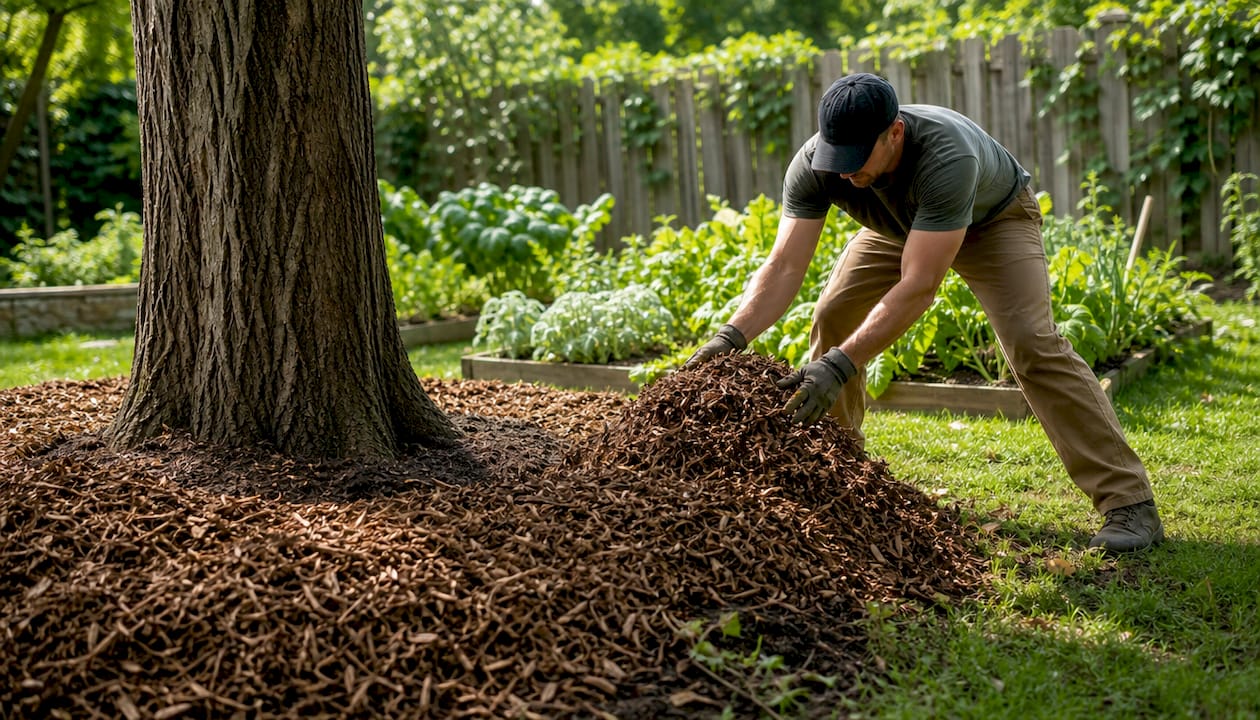
- Create a doughnut shape, not a mound. Pull mulch back 3–6 inches from the trunk. The ring should look like a doughnut with the tree in the hole, not a volcano with the tree buried in the center. The trunk needs air circulation and dry conditions at the base.
- Extend the ring outward. The mulch ring should reach the drip line of the tree. For new plantings, a minimum 3-foot radius is the standard recommendation. Larger, established trees benefit from wider coverage.
- Use organic materials. Wood chips, shredded bark, and pine needles are the best mulch for trees. They decompose slowly, feed the soil, and maintain a stable layer. Avoid dyed mulches with unknown additives near trees you care about.
- Replenish on schedule. Replenish mulch every 1–2 years as organic material decomposes and integrates into the soil. Skipping replenishment lets the layer thin out and lose its protective function.
Pro Tip: Before adding fresh mulch, rake back the existing layer and check the depth. If you still have 2 inches in place, you may only need to top it off rather than start over.
Proper mulching also supports young tree establishment. A moisture-holding doughnut ring around the root ball, kept away from the trunk, gives newly planted trees the consistent moisture and temperature stability they need to develop strong root systems in their first few years.
What common mulching mistakes harm trees?
Most tree damage from mulching comes from one of three errors: piling mulch against the trunk, applying too thick a layer, or choosing the wrong material. Each mistake is preventable.
- Mulch volcanoes. Piling mulch against the trunk is the most damaging mistake in residential tree care. Mulch volcanoes cause bark decay, insect infestations, and girdling roots that can kill trees over several years. The problem is widespread because landscapers often pile mulch for visual effect without understanding the consequences.
- Excessive depth. Layers deeper than 4 inches cut off oxygen to roots and create anaerobic conditions in the soil. Roots may grow upward into the mulch layer searching for air, which leads to structural instability.
- Inorganic mulches. Gravel and rubber mulch increase soil temperature and provide no fertility or aeration benefit. They also create long-term maintenance problems as they mix into the soil over time.
- Ignoring the root collar. The root collar is where the trunk meets the soil. Burying it under mulch traps moisture and invites fungal disease. Check that the root flare is visible above the mulch line.
“Mulch volcanoes are a horticultural horror that is entirely preventable with proper technique. The damage they cause accumulates silently for years before homeowners notice the decline.” — Ohio State University Extension
Correcting a mulch volcano requires pulling the material back from the trunk and exposing the root collar. In severe cases, an air spade is the professional tool of choice. It uses compressed air to loosen soil and mulch without injuring roots or nearby hardscape. Root collar excavation performed this way can assess root health and reverse years of damage. If you notice signs of trunk decay or unusual root growth near the surface, those can also be signs your tree needs removal rather than just correction.
What types of mulch materials are best for tree care?
The best mulch for trees is organic. Inorganic options have their place in landscaping, but around trees, the biological benefits of organic materials are difficult to replace.
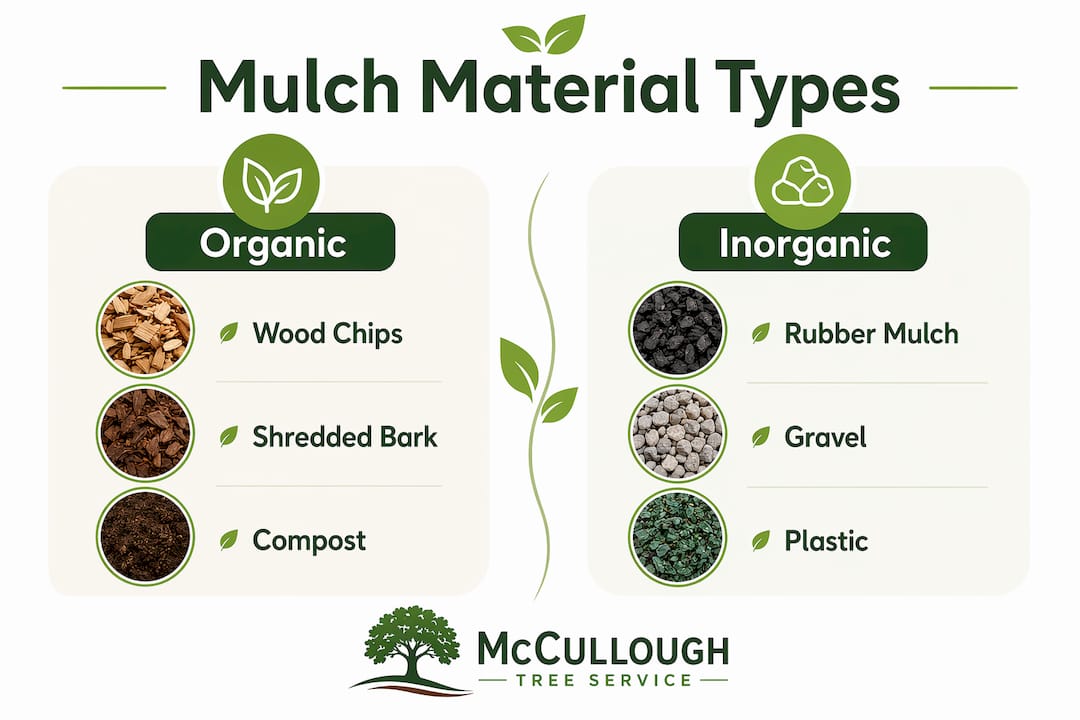
Fine, shredded organic mulches decompose faster and improve soil organic matter quickly, but they need more frequent replacement. Coarser wood chips last longer and break down more slowly, making them a lower-maintenance choice for established trees. The right selection depends on how much time you want to spend on upkeep.
| Mulch type | Pros | Cons | Suitability for trees |
|---|---|---|---|
| Wood chips | Long-lasting, improves soil, affordable | Slower decomposition | Excellent |
| Shredded bark | Attractive, good moisture retention | Decomposes faster | Very good |
| Pine needles | Lightweight, good drainage | Can acidify soil over time | Good for acid-loving trees |
| Gravel | Permanent, low maintenance | Heats soil, no nutrients | Poor |
| Rubber mulch | Very long-lasting | Heats soil, no biological benefit | Not recommended |
Organic mulches feed the soil food web as they break down. Earthworms, fungi, and beneficial bacteria thrive in mulched beds, and those organisms directly support root health. Gravel and rubber skip that process entirely. They look tidy but leave the soil biology unchanged or worse.
How to maintain mulched areas for ongoing tree health
Mulch is not a one-time application. It requires periodic inspection and replenishment to keep working.
- Inspect depth twice a year. Check mulch depth in spring and fall. If the layer has dropped below 2 inches, add fresh material to bring it back to the 2–3 inch range.
- Watch for matting. Fine mulches can compact into a crust that repels water rather than absorbing it. Break up any matted areas with a rake before adding new material.
- Monitor the root flare. The base of the trunk should always be visible. If mulch has crept up the trunk, pull it back immediately.
- Pair mulching with proper watering. Mulch reduces water needs but does not eliminate them. Deep, infrequent watering encourages roots to grow downward rather than toward the surface.
- Coordinate with pruning. Mulching and tree trimming work together as part of a complete tree maintenance plan. Pruning reduces canopy stress while mulching supports root health below ground.
Pro Tip: If you can see the root flare clearly and the mulch sits level at 2–3 inches with a clean gap around the trunk, your mulching is correct. That visual check takes 30 seconds and tells you everything.
Coarser wood chips are the better long-term choice for homeowners who want to replenish less often. Fine shredded mulch improves soil faster but breaks down within a single season in warm climates like Central Florida.
Key Takeaways
Proper mulching, applied 2–3 inches deep in a doughnut ring away from the trunk, is the single most effective low-cost practice for protecting tree health and reducing maintenance demands.
| Point | Details |
|---|---|
| Correct depth matters | Apply 2–3 inches of mulch; deeper layers restrict oxygen and cause root problems. |
| Doughnut shape, not volcano | Keep mulch 3–6 inches from the trunk to prevent bark decay and girdling roots. |
| Organic mulch wins | Wood chips and shredded bark feed the soil as they decompose; gravel and rubber do not. |
| Replenish regularly | Refresh organic mulch every 1–2 years to maintain moisture retention and weed suppression. |
| Inspect the root flare | The base of the trunk must stay visible above the mulch line at all times. |
What I’ve learned from watching homeowners mulch their trees
The most common mistake I see is not the mulch volcano, though that is everywhere. The real problem is that homeowners treat mulching as a one-time cosmetic task. They lay it down once, it looks good for a season, and then they forget about it. Two years later, the layer has thinned to nothing or compacted into a mat, and the tree is back to competing with weeds and fighting temperature stress.
The second thing I notice is that people underestimate the ring size. A 2-foot ring around a mature oak does almost nothing. The root zone of a large tree extends well beyond the canopy. The bigger the ring, the more roots you protect and the more soil biology you support.
Mulch quality also varies more than most homeowners realize. Fresh wood chips from a certified arborist or municipal program are often free and excellent for trees. Dyed bagged mulch from a big-box store may look uniform, but it can contain treated wood or additives that do not benefit soil health. When in doubt, ask where the material came from.
The last thing worth saying: mulching is not a substitute for professional care. If a tree is already stressed, declining, or showing structural problems, mulch will not fix those issues. It supports healthy trees and helps struggling ones stabilize, but a certified arborist needs to assess anything beyond routine maintenance.
— Mcculloughtreeservice
Tree care support from Mcculloughtreeservice
Mulching is one piece of a complete tree care plan. Mcculloughtreeservice provides certified arborist services across Orlando and Central Florida, including tree health assessments, professional tree trimming, and guidance on mulching placement and material selection for your specific trees and soil conditions.

Whether you have a newly planted sapling or a mature shade tree that needs attention, the team at Mccullough Tree Service can evaluate your property and recommend a maintenance plan that covers mulching, pruning, and long-term tree health. Contact Mcculloughtreeservice for a free estimate and get expert eyes on your trees before small problems become expensive ones.
FAQ
What is the correct mulch depth for trees?
Apply mulch 2–3 inches deep around trees. Shallower layers lose their protective benefit quickly, while layers deeper than 4 inches restrict oxygen to roots.
How far from the trunk should mulch be placed?
Keep mulch 3–6 inches away from the trunk. Direct contact traps moisture against the bark, which leads to decay, fungal disease, and insect damage over time.
What is a mulch volcano and why is it harmful?
A mulch volcano is a mound of mulch piled against the tree trunk. It causes bark decay, girdling roots, and insect infestations that can kill the tree over several years.
How often should I replenish mulch around trees?
Replenish organic mulch every 1–2 years as it decomposes into the soil. Regular replenishment maintains moisture retention, weed suppression, and temperature regulation.
Is organic or inorganic mulch better for trees?
Organic mulches like wood chips and shredded bark are better for trees. They improve soil structure and fertility as they decompose, while inorganic options like gravel and rubber provide no biological benefit.
Recommended
- Tree Care 101: Trimming vs. Pruning Guide
- What Is Tree Health Management: A Property Owner’s Guide
- A homeowner’s guide to planting trees in Central Florida
- Urban Tree Selection Explained: A Property Owner’s Guide