By: Shelby McCullough| Published: July 12, 2026
TL;DR:
- Urban trees are vital infrastructure that deliver ecological, social, and economic benefits in cities. They reduce urban heat, improve air quality, manage stormwater, and support biodiversity, especially when prioritized in underserved neighborhoods. Proper planning, species selection, and ongoing maintenance are essential for maximizing these benefits and ensuring long-term urban canopy health.
Urban trees are defined as essential infrastructure in sustainable city planning, delivering measurable ecological, social, and economic returns that no built system can replicate at the same cost. The role of trees in urban planning extends well beyond aesthetics. Trees reduce heat, filter air pollutants, absorb stormwater, support biodiversity, and strengthen community wellbeing. Urban forestry, the recognized industry term for this field, provides planners and landscape architects with a science-backed framework to integrate green infrastructure into city design. The evidence is clear: cities that invest in tree canopy outperform those that do not on nearly every livability metric.
How do trees mitigate urban heat and improve climate resilience?
Urban trees cut the urban heat island effect by a measurable margin. Current tree canopy coverage mitigates 41–49% of the maximum potential urban heat island effect globally. That figure means a well-canopied city can cut peak surface temperatures significantly before any other intervention is applied.
Two mechanisms drive this cooling. Shading blocks solar radiation from reaching pavement and building surfaces. Evapotranspiration releases water vapor that cools surrounding air. Together, these processes lower ambient temperatures in ways that reduce heat illness risk and cut energy demand for cooling buildings.
That cooling capacity has limits. Physiological and spatial constraints mean trees cannot eliminate heat islands on their own. Planners must set realistic goals and pair canopy expansion with complementary solutions such as reflective surfaces and green roofs. Treating trees as the sole climate solution leads to underperformance against stated targets.
Equity shapes where canopy expansion delivers the most value. Tree canopy expansion in low-income urban areas is now prioritized in leading urban forestry strategies because these neighborhoods carry the highest heat burden and the lowest existing canopy coverage. Directing investment there maximizes both climate resilience and social equity.
Key heat mitigation strategies include:
- Prioritize dense canopy in high-heat corridors such as commercial strips and transit hubs where pavement coverage is greatest.
- Select species with high leaf area index to maximize shading per tree planted.
- Combine canopy with permeable paving to address both heat and stormwater simultaneously.
- Target low-income neighborhoods first to address the equity gap in heat exposure.
Pro Tip: Map surface temperature data against existing canopy coverage before drafting a planting plan. The hottest blocks with the least shade are your highest-priority sites.
What ecosystem services do trees provide in stormwater and air quality management?
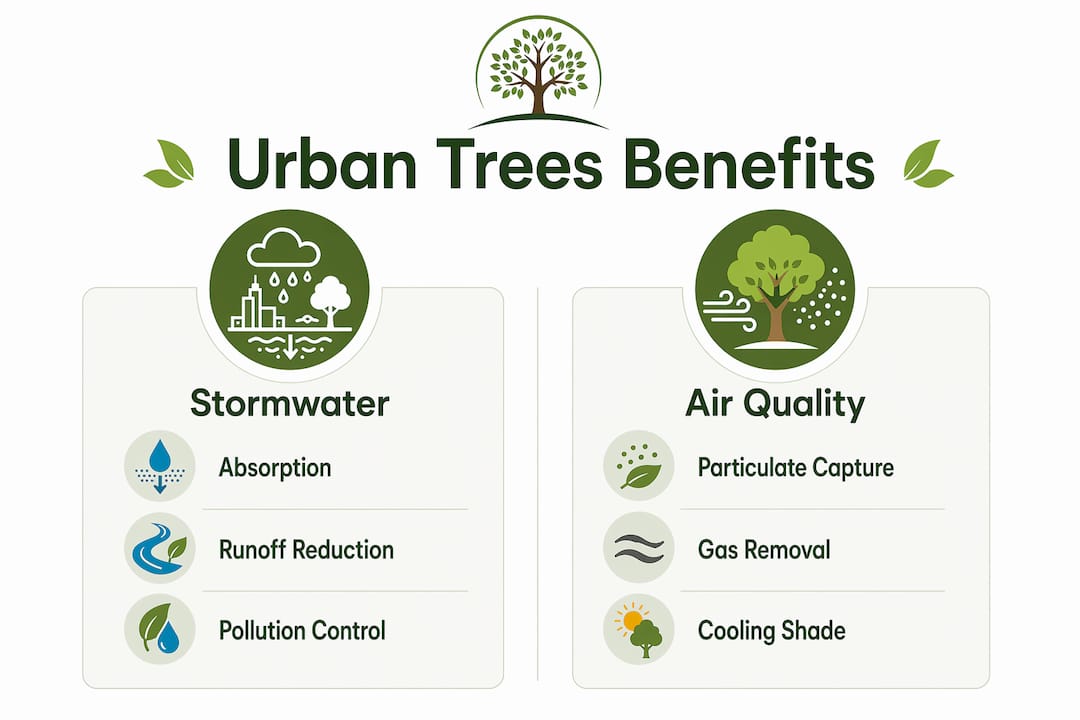
Urban trees absorb 15–27% of annual rainfall, reducing stormwater runoff and the pollution it carries into waterways. That absorption happens through leaves intercepting rain, roots drawing water into soil, and bark slowing surface flow. Each mechanism reduces the volume and velocity of runoff that overwhelms municipal drainage systems during storm events.
Air quality benefits follow a similar pattern of direct physical removal. Tree canopies capture particulate matter, nitrogen oxides, and sulfur dioxide through leaf surfaces and bark. These are the same pollutants linked to respiratory disease and cardiovascular stress in urban populations. Removing them passively, at no operating cost, gives trees a cost-effectiveness advantage over mechanical filtration systems.
Cooler urban microclimates created by tree cover also reduce energy demand for building cooling by up to 10%. Lower energy use means fewer emissions from power generation, which compounds the air quality benefit beyond what direct pollutant capture alone achieves.
Additional co-benefits worth quantifying in planning documents include:
- Noise reduction: Canopy and vegetation buffers absorb and deflect traffic and industrial noise, lowering decibel levels in residential zones.
- Increased pedestrian safety: Tree-lined streets slow vehicle speeds and improve sightlines at crossings, reducing pedestrian injury rates.
- Reduced urban glare: Canopy diffuses direct sunlight, improving visual comfort for pedestrians and cyclists.
- Groundwater recharge: Soil infiltration under tree canopy replenishes aquifers that supply municipal water systems.
| Ecosystem service | Primary mechanism | Planning benefit |
|---|---|---|
| Stormwater absorption | Leaf interception, root uptake | Reduced drainage infrastructure cost |
| Air pollutant removal | Leaf surface capture | Lower public health expenditure |
| Building energy reduction | Shading of walls and roofs | Reduced grid demand and emissions |
| Noise buffering | Canopy and stem absorption | Improved residential livability |
Planners integrating trees into urban tree planting steps should document these services in project proposals. Quantifying co-benefits strengthens the case for funding and helps justify higher upfront planting costs to budget committees.
How do trees contribute to urban biodiversity and social wellbeing?
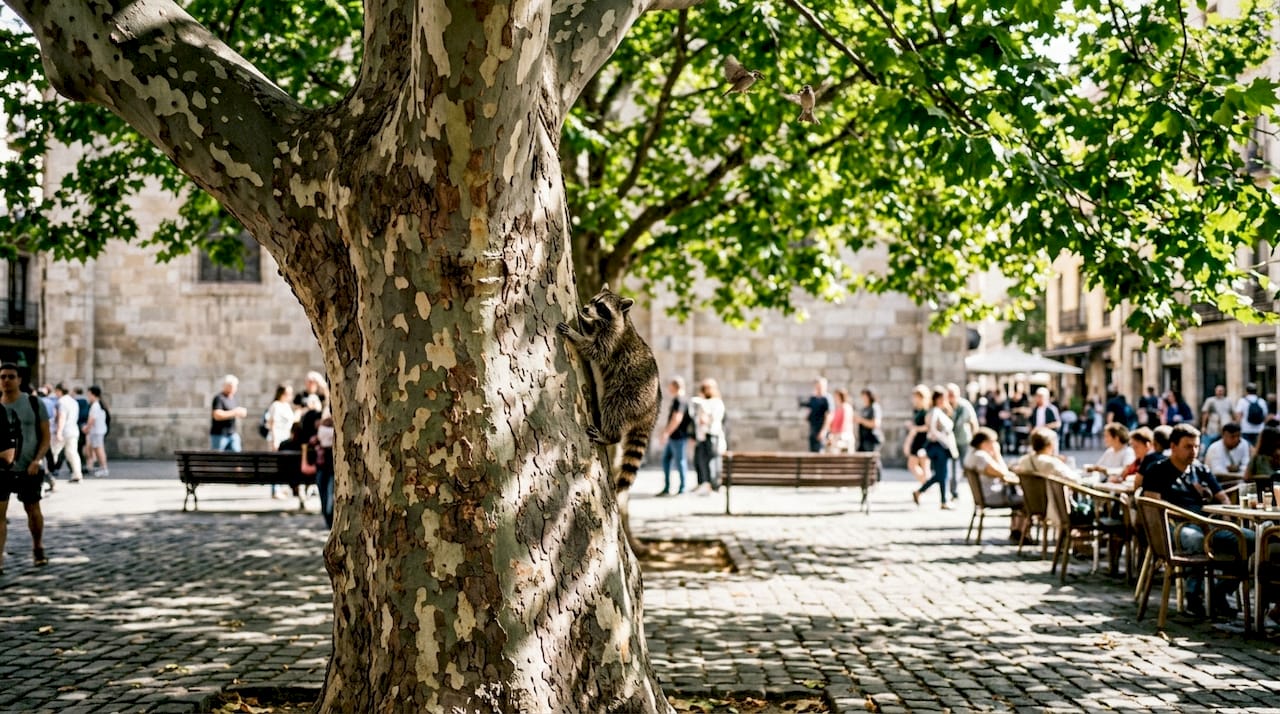
Mature habitat trees are irreplaceable ecological assets. Large, old individuals support biodiversity and microhabitats that new plantings cannot replicate for decades. Hollow limbs, rough bark, and dead wood within living trees provide nesting sites for cavity-dwelling birds, roosting bats, and invertebrate communities. Removing these trees to plant young stock is an ecological step backward, not a renewal.
Structural and age diversity across the urban forest prevents what ecologists call functional extinction. When a city’s canopy consists entirely of young, uniform trees, entire ecological roles disappear even if total tree count rises. Maintaining age diversity in urban forests is now recognized as a core principle in ecological arboriculture.
Social wellbeing benefits are equally well documented. Trees deliver cultural ecosystem services including sensory comfort, place identity, and the conditions that promote social interaction. A shaded plaza draws people together. A tree-lined street signals neighborhood investment. These effects are measurable in foot traffic, property values, and community satisfaction surveys.
“Urban planning frameworks that reduce trees to carbon sinks or stormwater tools miss the deeper value that communities assign to green spaces. Sensory comfort, memory, and belonging are ecosystem services too. Frameworks that ignore them produce plans that communities resist and politicians defund.”
The equity dimension of canopy distribution matters here as well. Low-income neighborhoods with sparse canopy report higher rates of heat illness, lower outdoor activity, and weaker social cohesion. Planners who treat canopy as a luxury amenity rather than public health infrastructure make those disparities worse.
What are the economic considerations and best practices for integrating trees in urban planning?
Proactive urban tree planting yields benefit-cost ratios of 1.26–1.47, with returns reaching $1.50 per $1 invested over a 30-year horizon. That return comes from accumulated ecosystem services: stormwater management savings, energy cost reductions, air quality improvements, and property value increases. The economic case for urban trees is no longer a question of whether to invest. It is a question of how to invest for maximum equitable return.
Long-term benefits materialize over decades, which creates a political challenge. Budget cycles favor short-term expenditures, while tree benefits compound slowly. Planners who frame urban forestry as infrastructure investment rather than landscaping expenditure are more successful at securing sustained funding. Trees boost property value in measurable ways that support this framing in conversations with finance departments and elected officials.
Maintenance costs and infrastructure conflicts are the most common reasons urban tree programs underperform. Root systems damage sidewalks, utilities, and drainage infrastructure when species selection and placement are poorly matched to site conditions. Ecosystem disservices such as allergen production, limb failure, and leaf litter management add operational costs that are rarely budgeted at program inception.
Successful urban forestry requires coordinated programs across public works, parks, and utilities with clear management responsibilities assigned to each department. Without that coordination, trees fall through administrative gaps: planted by parks, damaged by utilities, and left unmaintained by public works.
| Planning approach | Strength | Limitation |
|---|---|---|
| Reactive maintenance only | Lower upfront cost | Higher long-term failure rate |
| Proactive planting with management plan | Strong 30-year ROI | Requires sustained budget commitment |
| Equity-targeted canopy expansion | Addresses heat and health disparities | Needs community engagement to succeed |
| Species diversity programs | Reduces disease and pest risk | Requires specialist knowledge at planting |
Pro Tip: Build a municipal tree maintenance checklist into every planting contract. Trees planted without a documented care schedule for the first five years have significantly higher mortality rates, which erases the projected benefit-cost ratio.
Reviewing urban tree care best practices before finalizing a planting program helps planners avoid the most common species selection and placement errors. Pairing an energy-efficient building envelope with canopy shading, as outlined in resources on energy-efficient building design, compounds the cooling benefit and strengthens the economic case further.
Key Takeaways
Urban trees deliver their strongest returns when planners treat them as long-term infrastructure, prioritize mature tree preservation, and target canopy expansion in underserved neighborhoods with the highest heat and health burdens.
| Point | Details |
|---|---|
| Heat mitigation is real but finite | Trees reduce urban heat island effect by 41–49%, but cannot replace complementary climate solutions. |
| Stormwater and air quality gains are quantifiable | Trees absorb 15–27% of annual rainfall and passively remove PM, NOx, and SO2 at no operating cost. |
| Mature trees are irreplaceable | Old habitat trees support biodiversity that young plantings cannot replicate for decades. |
| Economic returns favor proactive investment | Benefit-cost ratios of 1.26–1.47 over 30 years make the case for sustained funding, not one-time planting. |
| Equity must drive canopy placement | Low-income neighborhoods carry the highest heat burden and need prioritized canopy investment. |
What practitioners get wrong about urban tree planning
The most persistent mistake I see in urban tree planning is treating planting as the finish line. A tree in the ground is not a delivered ecosystem service. It is a liability until it reaches canopy maturity, and that only happens with consistent care, correct species selection, and protection from infrastructure conflicts.
The second mistake is valuing trees purely by carbon sequestration or stormwater metrics. Those numbers matter for grant applications, but communities experience trees through shade, beauty, and the feeling that their street is cared for. Urban forestry in sustainable cities works best when planners hold both the ecological data and the human experience in mind simultaneously.
The third mistake is ignoring mature trees in favor of new planting programs. Removing a 60-year-old oak to plant 10 saplings is not a net gain. It is a net loss that will not recover within most planning horizons. Ecological arboriculture, which recognizes habitat trees as unique and irreplaceable, needs to become standard practice in every municipal tree management plan.
The economic analyses are shifting in the right direction. The question is no longer whether urban trees pay off. The question is how to structure investments for equitable, climate-resilient outcomes. That shift in framing is the most important development in urban forestry practice right now.
— Results
Professional tree care as the foundation of urban canopy health
Urban tree planning delivers results only when the trees in the ground stay healthy, structurally sound, and properly maintained over their full lifespan. A planting program without a maintenance program is a slow-motion failure.
Mcculloughtreeservice works with property managers, municipalities, and landscape architects across Orlando and Central Florida to keep urban canopies performing at their best. From professional tree trimming that preserves structural integrity to species-specific care that maximizes ecosystem service delivery, the team brings certified arborist expertise to every project. Ongoing maintenance, not one-time planting, is what turns a tree canopy plan into a functioning urban asset. Contact Mcculloughtreeservice to discuss a maintenance program built around your planning goals.
FAQ
What is the urban heat island effect and how do trees reduce it?
The urban heat island effect is the measurable temperature increase in cities compared to surrounding rural areas, caused by heat-absorbing surfaces and reduced vegetation. Urban trees reduce it through shading and evapotranspiration, currently mitigating 41–49% of the maximum potential effect.
How much stormwater do urban trees absorb?
Urban trees absorb 15–27% of annual rainfall, reducing runoff volume, slowing flow rates, and lowering the pollutant load entering municipal drainage systems and waterways.
Why are mature trees more valuable than new plantings for biodiversity?
Mature habitat trees provide hollow limbs, rough bark, and dead wood that support cavity-nesting birds, bats, and invertebrates. New plantings cannot replicate these microhabitats for decades, making preservation of existing old trees a higher ecological priority than replacement planting.
What return on investment do urban tree programs generate?
Proactive urban tree planting generates benefit-cost ratios of 1.26–1.47, returning up to $1.50 per $1 invested over a 30-year period through stormwater savings, energy reductions, air quality improvements, and property value gains.
How should planners prioritize where to plant urban trees?
Planners should map surface temperature data against existing canopy coverage and direct investment first to low-income neighborhoods with the highest heat exposure and lowest canopy density, maximizing both climate resilience and social equity outcomes.
Recommended
- Urban Tree Planting Steps for Better Cities
- Urban Tree Selection Explained: A Property Owner’s Guide
- The Role of Urban Forestry in Sustainable Cities
- Role of Arborists: Transforming Urban Florida Development