By: Shelby McCullough| Published: July 24, 2026
What does your tree bark damage actually tell you?
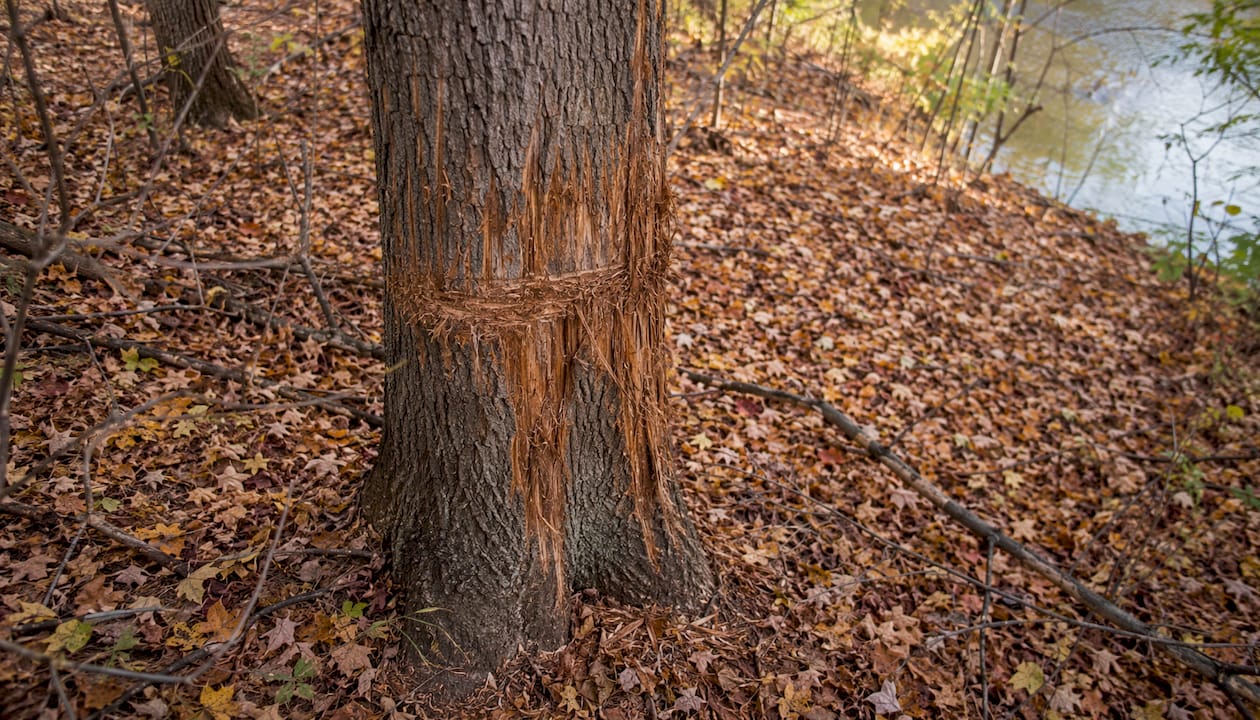
Bark damage falls into four primary categories: mechanical, environmental, biotic/pest, and pathological types. Knowing which one you are dealing with changes everything about how you respond. A frost crack needs no treatment. A canker spreading under loose bark might cost you the tree if you wait.
Here is a quick-reference breakdown of each category:
- Mechanical: Scrapes, gouges, or stripped bark from lawn equipment, vehicles, or construction. Wounds are usually localized, with clean or torn edges at a consistent height.
- Environmental: Sunscald, frost cracks, drought stress, or lightning strikes. Often appear on specific sides of the trunk or as vertical splits.
- Biotic/pest: Insect galleries, woodpecker holes, rodent gnawing, or deer rubs. Look for frass, exit holes, or a pattern tied to trunk height.
- Pathological/disease: Cankers, fungal fruiting bodies, discolored or sunken bark. Often spreads and may be accompanied by oozing sap or a foul odor.
| Category | Key Visual Signs | Typical Location |
|---|---|---|
| Mechanical | Torn or scraped bark, exposed wood | Base of trunk, consistent height |
| Environmental | Vertical cracks, peeling on one side | South/southwest side, lower trunk |
| Biotic/pest | Holes, frass, stripped strips | Variable by animal or insect |
| Pathological | Sunken cankers, fungal bodies, ooze | Anywhere; often spreads outward |
Before you diagnose anything, check the tissue under the bark. Species like sycamore, birch, and shagbark hickory naturally shed bark as a normal growth process. If the exposed inner bark is green, cream, or light tan and the tree looks healthy, you are likely watching normal exfoliation, not damage.
Table of Contents
- How wildlife and mammals damage tree bark
- Mechanical and environmental causes you need to distinguish
- How to assess tree health after bark damage
- Basic care and monitoring after bark damage
- How bark damage looks different across seasons
- Identifying disease-related bark damage
- Diagnostic tools and technologies for bark damage assessment
- How bark damage affects tree growth and ecosystem health
- Mcculloughtreeservice: professional bark damage assessment in Central Florida
- Key Takeaways
How wildlife and mammals damage tree bark
Deer rubs, rodent gnawing, and woodpecker pecking are among the most common wildlife causes of bark damage in residential settings. Each leaves a distinctive pattern.
- Deer rubs: Bucks scrape antlers on small trees in fall, typically between September and November. Damage appears as shredded, vertically stripped bark from about 18 inches to 4 feet above ground. Young trees with thin, smooth bark are most vulnerable.
- Rodent gnawing: Rabbits, voles, and mice gnaw bark near the base, often under snow cover in winter. The damage is smooth and low, sometimes completely girdling a young tree by spring.
- Beaver: Cuts at a sharp angle near the base, leaving large wood chips and a pointed trunk stub. Usually found on trees within 100 feet of water.
- Porcupine: Strips bark in patches from upper branches and the main trunk, often leaving tooth marks. Active year-round but most visible in winter.
- Woodpeckers: Drill rows of small, evenly spaced holes (sapsuckers) or larger irregular cavities (pileated woodpeckers). Woodpecker feeding on a tree is often a secondary sign, indicating the tree already has a boring insect infestation underneath.
| Animal | Damage Pattern | Height on Trunk | Season |
|---|---|---|---|
| Deer | Shredded vertical strips | 1.5–4 ft | Fall |
| Rabbit/vole | Smooth gnawing at base | 0–1 ft | Winter |
| Beaver | Angled cuts, wood chips | Base | Year-round |
| Porcupine | Patchy stripping, tooth marks | Variable | Winter |
| Woodpecker | Rows of holes or large cavities | Mid-trunk | Year-round |
Mechanical and environmental causes you need to distinguish
Lawn mower and string trimmer contact is the leading cause of bark injury in residential yards. The wounds are usually at a consistent height around the base of the trunk, with ragged or bruised edges. Left untreated, repeated strikes create cankers and slow the tree’s ability to seal the wound.
- Lawn equipment: Repeated impacts at base level; bark is scraped or crushed rather than cut cleanly.
- Construction and vehicle damage: Larger gouges or compression injuries, sometimes with soil compaction around roots. Environmental stresses like soil disruption weaken tree defenses and invite secondary infestations.
- Stake and tie damage: Ties left too long cut into expanding bark, leaving a constricted groove around the trunk.
- Sunscald: Peeling or cracked bark on the south or southwest side of the trunk, most common on young fruit trees, red maples, and lindens. The damaged bark comes off down to the wood.
- Frost cracks: Vertical splits in the lower trunk that open in cold weather and close as temperatures rise. They tend to reopen each winter and can become entry points for decay fungi.
- Lightning strikes: Long vertical strips of bark blown or loosened from the trunk, often spiraling. Any tree struck by lightning should be evaluated by a certified arborist, since internal damage may not be visible from outside.
Pro Tip: When diagnosing bark damage, note which side of the trunk is affected. Sunscald almost always appears on the south or southwest face. Frost cracks favor the lower bole. Mechanical damage clusters at a uniform height. Location alone often narrows the cause before you even touch the tree.
How to assess tree health after bark damage
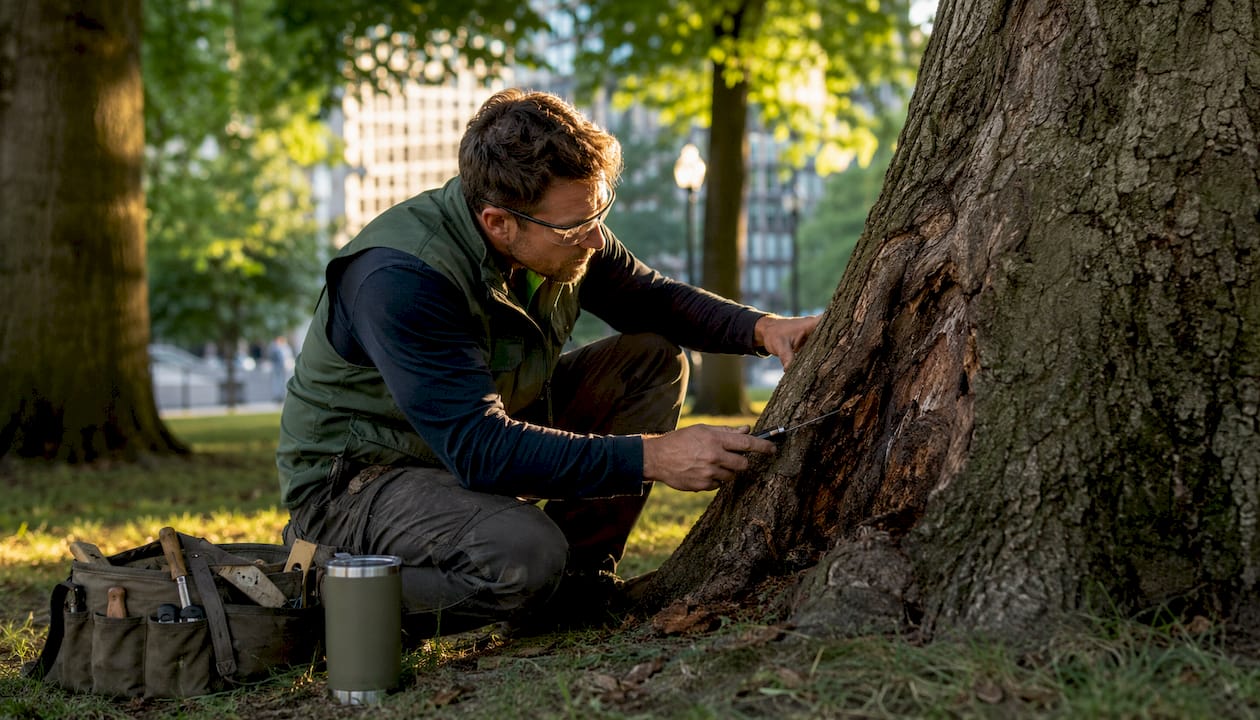
The single most useful field test is the scratch test. Lightly scrape a small area of bark with a knife or your fingernail. Living cambium tissue appears green or creamy white. Brown or black tissue indicates death in that zone.
- Map the damage. Walk the full circumference of the trunk and note where bark is missing, loose, or discolored. The critical threshold: if more than 25% of the trunk circumference is affected, water and nutrient transport is severely disrupted and tree survival is at risk.
- Check for frass and exit holes. Fine sawdust or pellet-like frass in bark crevices signals boring insects. Exit holes confirm active or past infestation.
- Look for fungal fruiting bodies. Mushrooms at the base or shelf fungi on the trunk indicate internal decay that cannot be reversed.
- Examine the canopy. Dieback in the upper branches, sparse foliage, or wilting on one side often reflects damage below. A healthy canopy is the best sign a tree can still recover.
- Check for signs of a dying tree such as large bark plates peeling away, which often signal fatal disease or insect infestation rather than surface damage.
| Warning Sign | Likely Implication |
|---|---|
| >25% circumference bare | High risk of tree loss |
| Brown cambium on scratch test | Dead tissue in that zone |
| Fungal bodies at base | Internal decay present |
| Large bark plates sloughing | Advanced disease or infestation |
| Full canopy dieback | Systemic or fatal damage |
Basic care and monitoring after bark damage
Young trees show strong recovery potential after bark damage when the central leader is intact and care starts promptly. The steps below apply to most residential situations.
- Remove loose or ragged bark edges with a clean, sharp knife, cutting back to tight, healthy bark. Shape the wound like a vertical oval if possible.
- Water the tree during dry periods and apply 2–4 inches of mulch around the base, keeping it away from the trunk.
- Prune any broken or dead limbs cleanly, cutting just outside the branch collar without leaving stubs.
- Skip the wound paint. Tree wound dressings are discouraged because they impede natural compartmentalization and can seal in moisture that encourages decay.
- Monitor the wound edge each growing season. You should see callus tissue rolling inward from the edges within one to two years if the tree is recovering.
Pro Tip: For a fresh, large wound, some research supports covering the exposed area with black plastic sealed just past the wound edge using small staples. This maintains moisture for the parenchyma cells that drive compartmentalization. Leave it in place for about 12 months, then remove carefully and assess.
Engage a certified arborist whenever damage exceeds 25% of the trunk circumference, when structural integrity is uncertain, or when the tree is large enough to pose a safety risk during any work.
How bark damage looks different across seasons
Bark damage does not always look the same in January as it does in July. Frost cracks open visibly in winter and close again as temperatures rise in spring, so a tree that looks fine in summer may show a prominent split by December. Sunscald damage often goes unnoticed until late winter or early spring, when the dead bark finally separates and falls away from the wood beneath.
Wildlife damage follows its own calendar. Deer rubs peak in fall. Rodent gnawing at the base is most severe under winter snow cover, sometimes revealing complete girdling only after the snow melts in March or April. Woodpecker activity tends to increase in late winter when insects are still dormant and easy to locate under the bark.
Drought stress in summer can loosen bark that does not shed until fall or winter, making the timing of bark loss misleading. When you find peeling bark in November, the actual injury may have occurred months earlier during a dry stretch in August.
Identifying disease-related bark damage
Disease damage tends to look different from mechanical or animal injury because it spreads. A canker, which is a sunken, discolored, or dead area of bark caused by fungal or bacterial pathogens, typically expands outward over successive growing seasons. The bark around the margin is often cracked, discolored, or oozing.
Dutch elm disease is a well-known example where bark loss is a late symptom of a systemic vascular infection, not the primary problem. Treating it as a surface issue delays the response and reduces recovery chances. Fire blight on apple and pear trees produces a water-soaked, then darkened, sunken bark that looks scorched. Cytospora canker on spruce and other conifers causes resinous, discolored bark with white pitch tubes.
Smooth patch fungi, caused by species like Aleurodiscus oakesii, produce light gray, smooth areas on oaks and elms that look alarming but cause no known harm. Distinguishing these from genuinely destructive cankers requires checking whether the underlying wood is sound. For guidance on identifying tree diseases before they advance, a certified arborist can confirm the pathogen and recommend treatment.
Diagnostic tools and technologies for bark damage assessment
A sharp knife and good eyes handle most field diagnoses. For deeper assessment, arborists use a few specific tools. A resistograph or similar micro-drill resistance tool detects internal decay by measuring how easily a thin drill bit penetrates the wood. Sound areas resist the drill; decayed wood does not. This is particularly useful for large, mature trees where external signs are ambiguous.
Sonic tomography uses sound waves to map internal wood density, producing a cross-sectional image of the trunk. It is non-destructive and gives a clearer picture of decay extent than probing alone. For pest identification, sticky traps and pheromone lures help confirm which boring insects are active before bark removal confirms galleries.
At the homeowner level, the i-Tree suite of tools from the USDA Forest Service helps document and track tree condition over time, useful for monitoring a damaged tree across multiple seasons. Smartphone apps like iNaturalist can help identify fungal fruiting bodies or insect damage patterns when a field guide is not at hand.
How bark damage affects tree growth and ecosystem health
Bark is not just a protective shell. It contains the phloem, the tissue that moves sugars produced by leaves down to the roots. When bark is stripped or killed, that transport stops in the affected zone. A tree girdled completely around its trunk will die, regardless of how healthy its canopy looks at the time of injury.
Partial damage slows growth, reduces the tree’s ability to fight off secondary pests, and creates entry points for wood decay fungi. Over years, a tree with repeated mechanical wounds at the base often develops internal decay that is invisible from outside until a storm exposes it. Beyond the individual tree, bark damage in a forest or urban canopy affects cavity-nesting birds, insects that depend on specific bark microhabitats, and the overall carbon storage capacity of the stand. A single large, mature tree stores far more carbon and provides far more canopy cover than several young replacements, which is why protecting existing trees from preventable mechanical damage has real ecological value.
Mcculloughtreeservice: professional bark damage assessment in Central Florida
When bark damage goes beyond what a homeowner can safely evaluate or address, Mcculloughtreeservice brings certified arborist expertise directly to your property in Orlando and Central Florida.

Mccullough Tree Service handles the full range of bark damage outcomes: from professional tree trimming of damaged limbs to safe removal of hazardous trees that have passed the point of recovery. Their certified arborists assess damage extent, confirm whether a tree can be saved, and carry out the work safely without guesswork. For Central Florida property owners dealing with storm damage, wildlife injury, or disease spread, the next step is a professional assessment. Contact Mcculloughtreeservice to schedule an evaluation and get a clear answer on what your tree actually needs.
Key Takeaways
Bark damage that covers a large portion of a trunk’s circumference severely disrupts water and nutrient transport, making professional assessment the right call before the tree declines further.
| Point | Details |
|---|---|
| Damage exceeding a significant portion of trunk circumference severely risks tree survival and warrants expert evaluation. | |
| Skip wound paint | Tree wound dressings impede natural compartmentalization; clean edges and proper pruning are the better approach. |
| Location identifies cause | Sunscald appears on the south/southwest side; frost cracks favor the lower trunk; mechanical damage clusters at a uniform height. |
| Scratch test for cambium | Green or cream tissue means the tree is alive in that zone; brown or black means the cambium is dead. |
| Mcculloughtreeservice | Certified arborists in Orlando assess bark damage severity and handle trimming, removal, or treatment safely. |
Recommended
- Unhealthy Tree Indicators: Expert Tips for Diagnosis
- Common Tree Pests List: Identification and Control Guide
- Check Out Our Videos – McCullough Tree Service
- Identify a Dangerous Tree: Signs & Solutions