By: Shelby McCullough| Published: January 19, 2026
Planting trees in Central Florida can feel overwhelming when balancing your landscape dreams with the region’s challenging soils, unpredictable weather, and complex local rules. For many homeowners, the secret to a thriving yard is a mix of thoughtful planning and the right advice. This guide unpacks the most effective steps for successful tree selection and placement, offering practical insights to help your trees grow strong and beautiful in Central Florida’s unique environment.
Table of Contents
- Understanding Tree Planting Basics In Florida
- Selecting The Right Tree Species Locally
- Site Assessment And Soil Preparation Methods
- Legal Rules And Local Permit Requirements
- Tree Placement, Spacing, And Safety Risks
- Common Planting Mistakes Homeowners Should Avoid
Key Takeaways
| Point | Details |
|---|---|
| Tree Selection is Crucial | Choose tree species that are well-suited to Central Florida’s subtropical climate, considering factors like heat resilience and soil type. |
| Assess Site Conditions Thoroughly | Conduct a comprehensive site evaluation, including soil tests and utility mapping, to ensure optimal planting conditions. |
| Proper Planting Techniques Matter | Make sure to plant trees at the correct depth and avoid compacting soil around the root ball to promote healthy growth. |
| Understand Legal Requirements | Be aware of local regulations and permit requirements for tree planting to avoid potential legal issues with your landscaping. |
Understanding Tree Planting Basics in Florida
Successful tree planting in Central Florida requires careful planning and strategic execution. Homeowners must consider multiple factors to ensure their trees not only survive but thrive in the region’s unique subtropical environment. Strategic tree selection and placement begins with understanding local soil conditions, climate challenges, and appropriate tree species.
Before breaking ground, homeowners should conduct several critical pre-planting assessments. First, call 811 to identify underground utility lines and prevent potential damage during planting. Next, assess the specific location where the tree will be planted, considering factors like proximity to structures, available sunlight, and potential root spread. The University of Florida Extension recommends maintaining appropriate distances between trees and buildings to prevent future structural complications.
Proper planting technique is equally crucial for tree health. Dig a wide, shallow hole that allows roots to expand easily, ensuring the root flare remains exposed above ground. Avoid compacting soil too tightly around the root ball, which can impede water and nutrient absorption. When positioning the tree, place it slightly higher than the surrounding ground level to promote drainage and prevent root rot in Florida’s humid environment.
Pro tip: Before purchasing a tree, measure the planting area and research the mature size of potential species to guarantee long-term compatibility with your landscape design.
Selecting the Right Tree Species Locally
Selecting the ideal tree species for Central Florida landscapes requires understanding the region’s unique environmental conditions. Florida-friendly tree selection demands careful consideration of multiple factors including soil type, sunlight exposure, moisture requirements, and local climate challenges. Native species typically offer the most resilient and sustainable options for homeowners seeking long-term landscape success.
Central Florida’s diverse ecosystems present specific challenges for tree planting. Homeowners should prioritize trees that can withstand intense summer heat, periodic drought conditions, and occasional frost events. Species like Live Oak, Sabal Palm, Bald Cypress, and Red Maple demonstrate exceptional adaptability to local environmental conditions. These trees not only survive but thrive in the region’s subtropical climate, providing aesthetic value and ecological benefits.
The University of Florida’s IFAS Extension recommends evaluating several critical criteria when selecting tree species. Consider the mature tree size in relation to available planting space, potential root system impact on surrounding structures, and the tree’s specific maintenance requirements. Some native species require minimal intervention, while others might need more specialized care. Factors like salt tolerance, wind resistance, and potential interactions with local wildlife should also influence your selection process.
Pro tip: Consult local nursery experts or certified arborists who can provide personalized recommendations based on your specific microclimate and landscape characteristics.
Here’s a summary comparing key native tree species suitable for Central Florida landscapes:
| Tree Species | Climate Adaptability | Root System Impact | Maintenance Needs |
|---|---|---|---|
| Live Oak | High heat and drought | Can affect structures | Moderate pruning |
| Sabal Palm | Excellent humidity tolerance | Minimal root spread | Low care required |
| Bald Cypress | Thrives in wet areas | Gentle root expansion | Occasional cleanup |
| Red Maple | Handles cold snaps well | May affect sidewalks | Regular watering |
Site Assessment and Soil Preparation Methods
Preparing the right site for tree planting requires meticulous attention to soil conditions and environmental factors unique to Central Florida. Comprehensive site evaluation involves understanding soil composition, drainage patterns, and potential underground obstacles that could impact tree root development. Homeowners must conduct thorough assessments before breaking ground to ensure optimal growing conditions.
Soil analysis represents the cornerstone of successful tree planting. Central Florida’s varied soil types demand specific preparation techniques to support healthy root systems. Sandy soils prevalent in the region often require amendment with organic matter to improve water retention and nutrient availability. Clay-based soils might need additional drainage modifications to prevent root rot and support proper tree establishment. Professional soil testing can reveal critical details about pH levels, nutrient deficiencies, and potential contamination that could impact tree health.
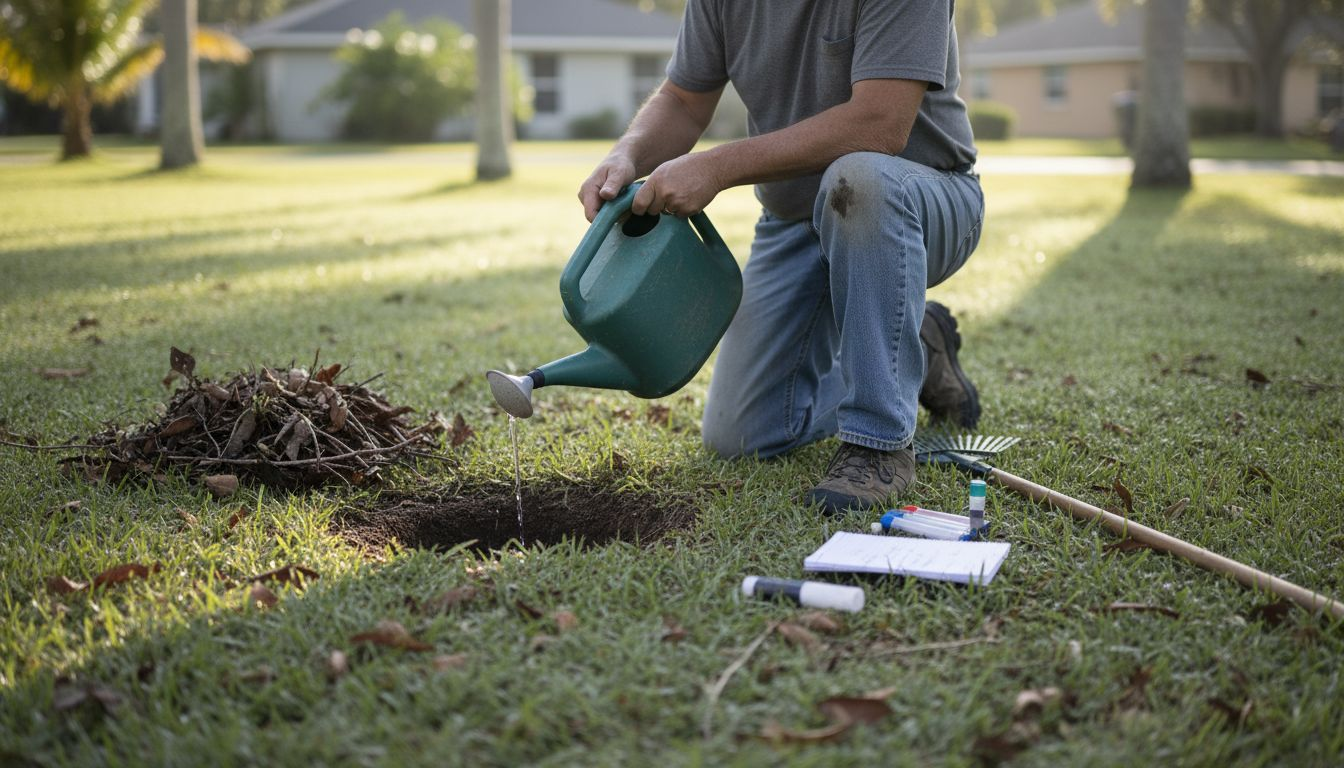
The planting hole itself requires strategic preparation beyond simple digging. Experts recommend creating a wide, shallow excavation that allows roots to spread horizontally rather than vertically. The hole should be approximately three times wider than the root ball, with sloped sides to encourage outward root growth. Avoid compacting the soil too firmly, as this can restrict water and nutrient penetration. Instead, gently backfill with a mixture of native soil and organic amendments to provide an optimal environment for root development.
Pro tip: Conduct a simple percolation test by digging a hole, filling it with water, and observing drainage time to understand your specific soil’s moisture characteristics before planting.
Legal Rules and Local Permit Requirements
Navigating the legal landscape of tree planting in Central Florida requires understanding complex local regulations and potential permit requirements. Recent tree law updates have introduced nuanced protocols that homeowners must carefully consider before initiating any tree planting or removal project. Local municipalities often have specific ordinances governing tree placement, size restrictions, and protective measures for native species.
Permit requirements can vary significantly between different counties and municipalities within Central Florida. Some jurisdictions mandate permits for planting trees near utility lines, in historic districts, or when dealing with protected native species. Homeowners should contact their local planning department to understand specific local requirements, which might include submitting site plans, obtaining approval for tree species selection, and ensuring compliance with setback regulations from property lines and infrastructure.
Legal considerations extend beyond simple permit acquisition. Homeowners bear responsibility for potential damage caused by trees planted too close to utility lines, neighboring properties, or critical infrastructure. Understanding potential liability means assessing tree risk, maintaining proper tree health, and proactively managing growth to prevent potential legal complications. Professional arborist assessments can provide documentation and expert guidance to mitigate potential legal risks associated with tree placement and maintenance.
Pro tip: Always document your tree planting process with photographs and retain copies of permits and professional assessments to protect yourself from potential future legal disputes.
Tree Placement, Spacing, and Safety Risks
Successful tree placement in Central Florida demands strategic planning to prevent potential safety hazards and infrastructure damage. Critical tree spacing guidelines emphasize understanding each tree species’ mature size and growth characteristics before selecting a planting location. Homeowners must consider multiple factors including proximity to buildings, underground utilities, power lines, and potential root system expansion.
Safety risks emerge from improper tree placement that can lead to significant property damage or personal injury. Large trees planted too close to homes risk foundation disruption through aggressive root systems, while trees near power lines create electrical hazards during storms. Recommended minimum distances vary depending on tree species, with most experts suggesting placing large trees at least 20 feet from structures and medium-sized trees 15 feet away. Smaller ornamental trees can be positioned closer but still require careful consideration of potential growth patterns.
Understanding underground infrastructure is equally crucial when planning tree placement. Septic systems, water lines, and underground cables can be severely damaged by invasive root systems. Professional arborists recommend conducting thorough site assessments and utility mapping before planting to prevent costly future repairs. Some tree species with particularly aggressive root systems should be avoided near critical infrastructure, while others offer more compact root development that minimizes potential risks.
Pro tip: Consult local utility companies and request underground line mapping before planting to prevent potentially catastrophic and expensive infrastructure damage.
Common Planting Mistakes Homeowners Should Avoid
Successful tree planting in Central Florida hinges on avoiding critical errors that can compromise long-term tree health and landscape integrity. Common tree planting mistakes often stem from well-intentioned but misguided approaches that can ultimately harm tree development and survival. Understanding these pitfalls is crucial for homeowners seeking to establish healthy, thriving trees on their property.
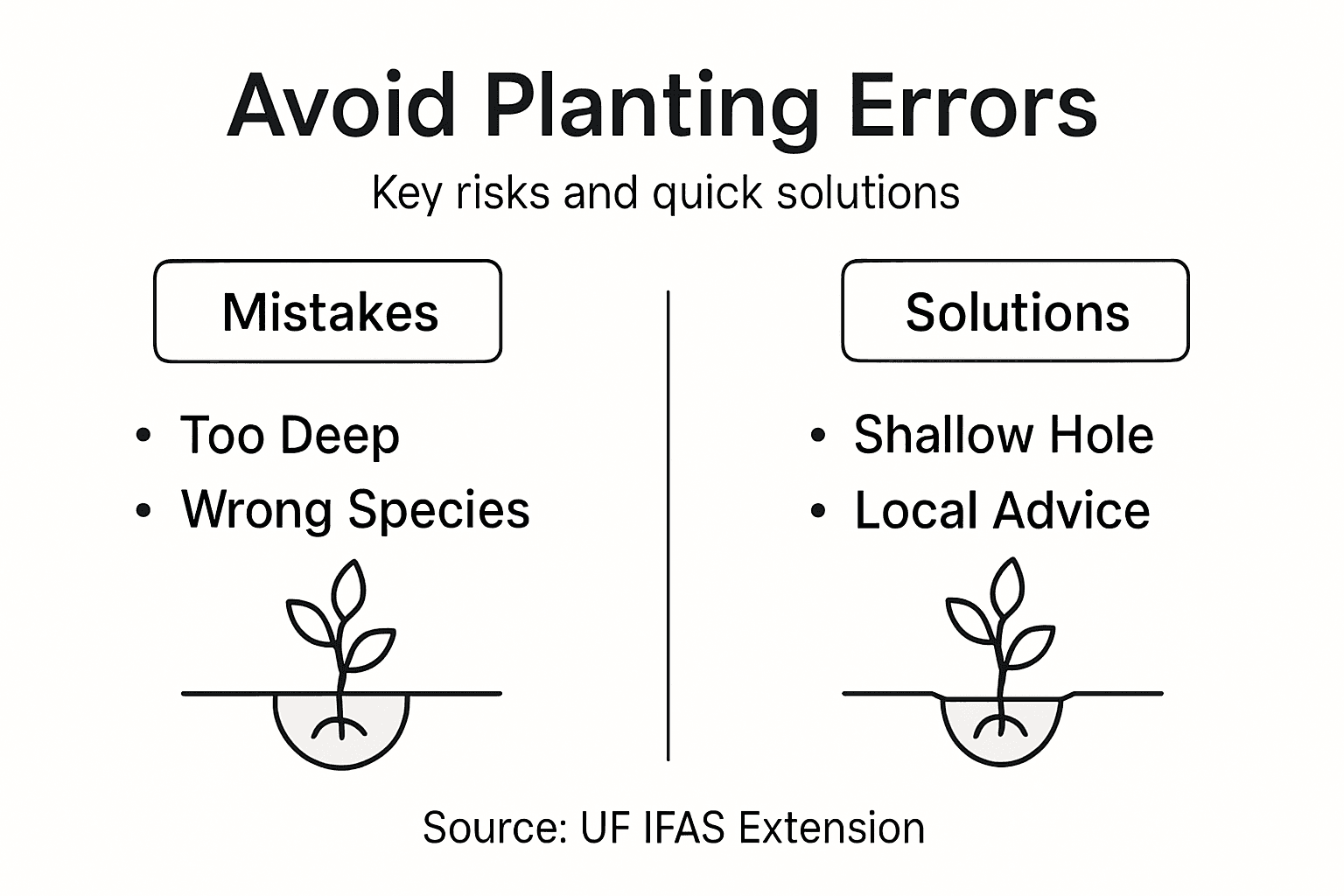
One of the most prevalent mistakes is improper planting depth, which can dramatically impact tree root system development. Many homeowners inadvertently plant trees too deep, burying the critical root flare and preventing proper oxygen exchange and moisture absorption. Experts recommend positioning the tree so that the root flare remains slightly above ground level, allowing roots to breathe and establish naturally. Additionally, overzealous soil amendment can create an artificial environment that discourages roots from expanding into surrounding native soil, potentially leading to stunted growth and decreased tree stability.
Watering practices represent another significant area of potential error. Central Florida’s unique climate demands nuanced approaches to tree hydration. New plantings require consistent moisture, but overwatering can be just as detrimental as underwatering. Homeowners should develop a balanced watering strategy that accounts for soil type, tree species, and seasonal variations. This means providing deep, infrequent watering that encourages robust root development rather than frequent, shallow irrigation that promotes weak surface root systems. Tree species selection also plays a critical role, with many homeowners choosing trees inappropriate for their specific landscape conditions without considering mature size, root characteristics, and local environmental challenges.
Pro tip: Before planting, spend time observing your yard’s specific microclimates and sunlight patterns to select tree species that will naturally thrive in those exact conditions.
The table below highlights common planting mistakes and how to avoid them for healthier trees:
| Mistake | Impact on Tree | Preventative Action |
|---|---|---|
| Planting too deep | Poor root growth | Expose root flare above soil |
| Overwatering | Root rot risk | Deep, infrequent watering |
| Wrong tree selection | Stunted development | Research mature size |
Expert Tree Planting Support for Central Florida Homeowners
Planting a tree in Central Florida involves more than just digging a hole. You need to consider soil conditions, tree species suited to the subtropical climate, proper spacing, and legal requirements to avoid costly mistakes and safety risks. McCullough Tree Service understands these challenges and is here to guide you through every step of the process with expert advice and certified arborist services.
Don’t leave your tree’s health and your property’s safety to chance. Trust our licensed professionals to help with tree selection, soil preparation, planting, and ongoing care. Act now to ensure your trees thrive for years ahead. Visit McCullough Tree Service today to get expert consultation and reliable service you can count on. Experience peace of mind knowing your landscape is in the hands of trusted local arborists committed to your home’s beauty and safety.
Frequently Asked Questions
What should I consider before planting a tree in my yard?
Before planting a tree, consider factors such as local soil conditions, climate challenges, overhead space, and proximity to structures. It’s crucial to conduct pre-planting assessments, including calling 811 to identify underground utilities and determining suitable sunlight exposure for the tree species you choose.
How do I select the right tree species for my landscape?
Selecting the right tree species involves evaluating soil type, moisture requirements, and climate adaptability. Native species are generally the best choice as they are more resilient and sustainable. Consult local resources or nursery experts for species recommendations based on local environmental conditions.
What are common mistakes to avoid when planting trees?
Common mistakes include planting trees too deep, overwatering, and selecting inappropriate tree species for your landscape. Ensure the root flare is above ground level, water deeply but infrequently, and research mature tree sizes to ensure compatibility with your space.
How can I prepare my soil before planting a tree?
Soil preparation involves analyzing soil composition, drainage patterns, and potentially amending sandy or clay-based soils for optimal root growth. Create a wide, shallow hole that allows for lateral root spread, and consider supplementing with organic matter to improve water retention for sandy soils.
Recommended
- What to consider when planting trees on your property – McCullough Tree Service
- How Close Can I Plant Trees to My House? Tree Placement Tips
- Role of Tree Trimming in Central Florida Landscapes
- Top 5 Trees to Plant in Florida – McCullough Tree Service
- Tree Service Orlando FL
- Tree Service Winter Springs FL