By: Shelby McCullough| Published: January 26, 2026
Strong storms and fast-growing trees can turn a peaceful Orlando yard into a risk zone overnight. With hurricane season every year and unique Florida conditions, knowing when and how to remove a tree safely is a must for protecting your property and family. By following step-by-step tree removal guidance, homeowners reduce chances of injury and expensive mistakes while restoring safety and curb appeal to their space.
Table of Contents
- Step 1: Assess Tree Condition And Surroundings
- Step 2: Gather Proper Tools And Safety Gear
- Step 3: Clear Area And Establish Safe Zones
- Step 4: Cut Branches And Section Trunk Safely
- Step 5: Remove Stump And Debris Effectively
- Step 6: Verify Site Safety And Final Clean-Up
Quick Summary
| Key Point | Explanation |
|---|---|
| 1. Assess Tree Condition First | Examine the tree for signs of disease, structural weakness, and its surroundings before deciding on removal or intervention. |
| 2. Gather Necessary Safety Gear | Equip yourself with proper protective equipment and tools, including a hard hat, eye safety gear, and a chainsaw tailored to the job. |
| 3. Create Safe Work Zones | Establish clearly marked drop zones and ensure all people and pets are kept away during tree removal to prevent accidents. |
| 4. Cut Branches Methodically | Remove branches systematically from bottom to top, always being aware of their weight and potential falling direction to maintain safety. |
| 5. Clear Debris and Stump Effectively | Manage debris properly and consider stump removal options to prevent new growth and maintain a safe environment in your yard. |
Step 1: Assess Tree Condition and Surroundings
Before you pick up a saw or call in the professionals, you need to understand what you’re dealing with. This step determines whether removal is actually necessary, how risky the job will be, and what precautions you’ll need to take. In the Orlando area, where hurricane season brings down trees regularly and oak wilt spreads through root systems, assessing your tree properly can save you money and headaches.
Start by examining the tree itself. Look for signs of disease, pest damage, or structural weakness. Dead branches scattered throughout the canopy, large cavities in the trunk, or bark that’s peeling away in sections all indicate problems. Check if the tree leans significantly away from its natural growth direction, which can mean root damage or internal rot compromising structural integrity. Signs of a dying tree become easier to spot once you know what to look for. Is the foliage sparse or discolored? Does the tree produce fewer leaves each spring? These observations help you decide if the tree can recover or if removal is the better choice. You should also note the tree species if possible, since some species are more prone to failure in Florida’s climate than others.
Now shift your attention outward to the surroundings. Walk around the tree and identify everything nearby that could be damaged if branches or the entire tree falls. This includes your house, garage, shed, power lines, fences, neighboring properties, and even parked vehicles. According to tree risk assessment frameworks, understanding proximity to structures and people significantly impacts your removal strategy. Look at the ground around the base too. Is the soil compacted from foot traffic, or has it been disturbed recently? Compacted soil often means shallow roots, making the tree less stable. Check for visible root damage, erosion around the base, or signs that roots have grown into nearby drains or foundations. In Orlando’s sandy soil, root systems can be deceptively shallow even on large trees. Finally, assess the space you’ll have for the tree to fall safely. Do you have a clear drop zone, or will the tree need to be taken down in sections? This dramatically affects whether you can handle it yourself or need professional equipment like cranes or bucket trucks.
Pro tip: _Take photos of the tree from multiple angles and email them to a certified arborist before making your final decision, as professional eyes often catch structural defects that homeowners miss.
Step 2: Gather Proper Tools and Safety Gear
You cannot safely remove a tree without the right equipment and protection. This step separates the people who walk away unharmed from those who end up in an emergency room. Before you touch a chainsaw or put on work gloves, you need to assemble everything you will need and verify that each piece is in proper working condition.
Start with your personal protective equipment because your body is irreplaceable. A hard hat protects your head from falling branches, and in Florida’s heat, make sure it has good ventilation so you do not overheat during the work. Eye protection is non negotiable, especially when debris flies. Chainsaw-rated safety glasses or a full face shield works better than regular sunglasses. Ear protection matters more than most homeowners think, since prolonged chainsaw noise causes permanent hearing damage. Get earmuffs rated for at least 30 decibels of noise reduction. Work gloves specifically designed for chainsaw work provide grip and some protection if your hand slips. Steel toed boots with good ankle support keep your feet stable on uneven ground and protect your toes if you drop a tool. Wear long pants made of heavy fabric or chainsaw chaps that have protective layers. Essential protective clothing significantly reduces injury risk, so do not skip this part or buy cheap versions that will fail when you need them most.
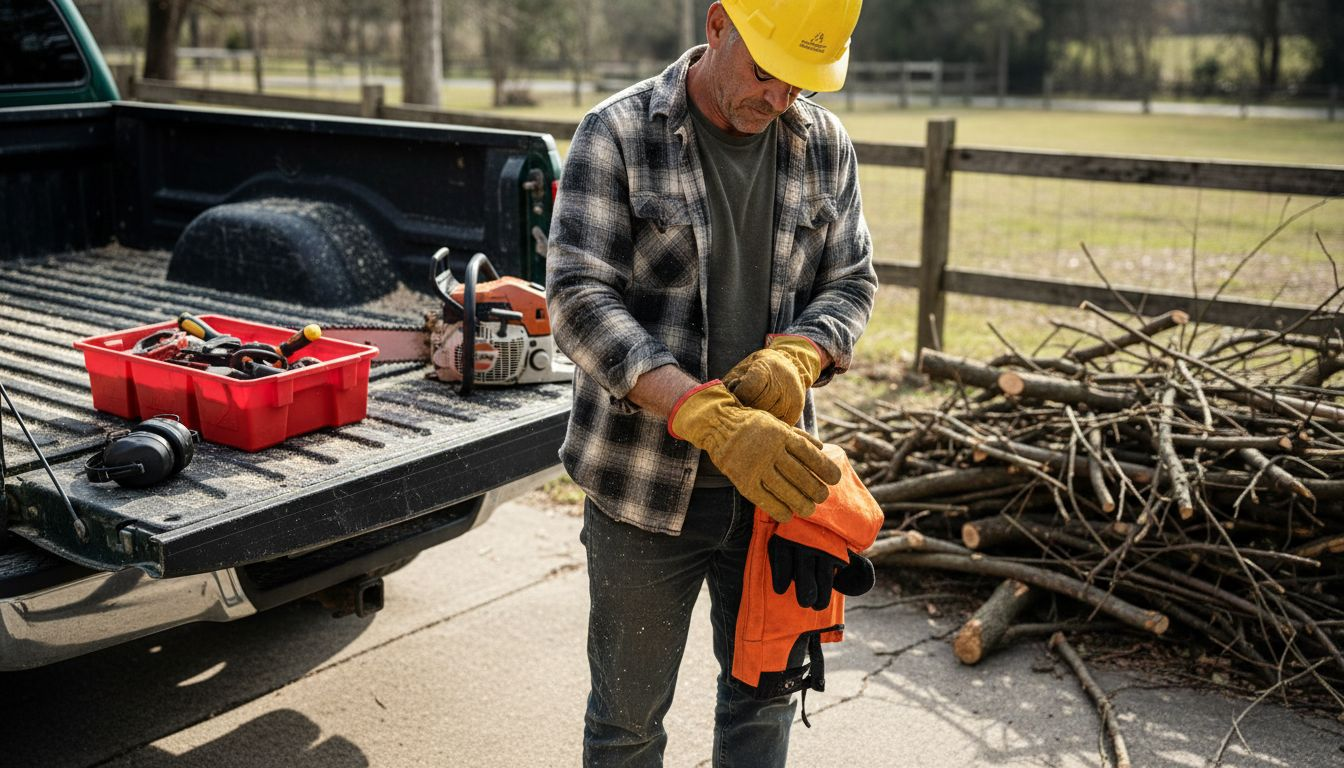
For tools, you will need a quality chainsaw appropriate to the job size. Small trees under 20 feet can be handled with a 40 to 50 cubic centimeter saw, while larger trees need more power. A chainsaw must have proper chain tension, sharp teeth, and fuel mixed correctly. Gather basic hand tools like a handsaw for detailed cutting in tight spaces, pruning shears for smaller branches, and a rope or come along to control branch direction as they fall. A four foot step ladder helps you reach branches safely without overextending. Keep a first aid kit nearby and have a charged phone in case you need to call for help. In the Orlando area, many homeowners underestimate how quickly things go wrong during tree work, so being prepared with medical supplies matters more than you might think.
Pro tip: _Rent commercial-grade equipment from a local tool rental shop rather than buying cheap versions you will use once, and ask the rental staff how to properly maintain and operate each tool before you leave.
Step 3: Clear Area and Establish Safe Zones
This step is about controlling your environment before anything falls. You cannot remove a tree safely if people, pets, or property are in the wrong place when branches or the entire trunk comes down. The goal is to create a protected work zone where only authorized people with proper gear can be present.
Start by identifying your drop zone, which is the area where the tree will fall. The safe minimum distance is two tree lengths in the direction the tree will fall, plus one tree length on either side. If your tree is 60 feet tall, you need roughly 180 feet of clear space in the fall direction. This might sound excessive, but branches break off unpredictably and bounce in directions you did not anticipate. Walk the entire perimeter and remove obstacles like garden furniture, potted plants, toys, and parked vehicles. Mark off the danger zone with brightly colored rope or caution tape tied around trees or stakes at ground level. In Orlando, where residential lots are often tight, you may not have sufficient space for a safe drop zone, which is your signal that professional equipment like cranes becomes necessary. Once you have established the primary work area, identify secondary zones where crew members will stand while cutting. These people should have clear views of the work, solid footing, and quick escape routes if something goes wrong. Establishing safe work zones protects not just your crew but also neighbors and any onlookers who might wander into danger.
Next, notify anyone who might be affected by the work. Talk to neighbors whose property lines are nearby, especially if branches might hang over their houses or fences. Let them know the date and time so they can stay indoors or away from windows. If you are removing a large tree near power lines, contact the utility company first. Some utilities will send a representative to temporarily disable lines or supervise the removal. This step prevents electrocution and unexpected power outages that could affect multiple households. Keep children and pets indoors during the entire removal process, not just during active cutting. Dropped tools, falling debris, and moving equipment create hazards that extend beyond the immediate work zone. Finally, scout your access routes. Make sure you can move equipment in and debris out without damaging your lawn excessively or blocking neighbor driveways. Position a debris pile or chip pile away from foundations and underground utilities.
Pro tip: _Recruit one person to be your safety spotter who stands outside the work zone with a clear view of the entire tree and yells a warning if they see anything about to fail unexpectedly.
Step 4: Cut Branches and Section Trunk Safely
This is where the actual removal happens, and it requires precision and focus. Your job is to systematically remove branches from bottom to top, then section the trunk into manageable pieces that you can safely handle or remove. One mistake here can result in a falling branch that breaks bones or a trunk section that crushes your foot.
Begin by removing the smallest branches first, working your way up and out from the trunk. Always cut branches on the underside first with a shallow cut, then cut from the top. This two step method prevents the branch from peeling bark off the trunk as it falls. Stay aware of the branch weight and how it might swing or drop once the cut is complete. In Florida’s humidity, wet branches are heavier and more unpredictable than dry ones, so account for that added weight. Never stand directly under a branch you are cutting. Position yourself to the side where you have a clear escape route if the branch falls faster than expected. Proper chainsaw cutting techniques significantly reduce the risk of kickback and help you maintain control throughout the process. Keep both hands firmly on the saw and maintain a solid stance with your feet apart. As you remove branches, pile them in your designated debris area, staying mindful of your work zone perimeter so nothing gets left in walking paths.
Once you have removed all major branches, you can begin sectioning the trunk. Start at the top and work downward in sections no longer than four feet. This size is manageable for one or two people to handle without creating a hazard. Make your cuts at angles slightly upward to prevent pinching your saw blade as the weight shifts. Listen for the sound of the cut widening, which tells you the piece is about to separate. Back away immediately when you hear that sound because the section could drop faster than you anticipated. If the trunk is still standing after limbing, you may need to fell it by making a proper cut on the side facing your drop zone. This requires understanding wood grain and lean direction, and controlled cutting procedures help ensure the trunk falls where you intend rather than surprising you. After the trunk is down, section it into firewood length pieces or whatever size works for your disposal plan. Work methodically and take breaks when you feel tired, since fatigue causes mistakes that lead to injuries.
Pro tip: _Always check your chainsaw chain tension before each cutting session and carry a spare chain in case the working one breaks or becomes dull mid project.
Step 5: Remove Stump and Debris Effectively
You are almost finished, but this final step separates a completed job from one that leaves your yard looking like a disaster zone. Removing the stump and clearing debris requires planning and sometimes equipment you might not have available. The good news is you have multiple options depending on your budget, timeline, and physical ability.
Start by dealing with the debris. Branches, smaller wood pieces, and bark chips pile up fast, and if left sitting, they attract termites and other pests that could spread to your house. You have several choices for debris management. If you have a chipper, you can run branches and smaller pieces through it to create mulch for landscaping or garden beds. Many homeowners in Orlando find that mulch is valuable for their yards and can save money on landscape materials. If chipping is not practical, rent a dumpster or arrange for a local tree service to haul away the debris. You can also contact local recycling centers, as many accept tree debris for composting programs. Stack all debris neatly in one location to make removal easier. Remove bark from the cut trunk sections if you plan to split them for firewood, since bark is easier to remove when freshly cut. Once debris is cleared, your site will look dramatically better and your family can safely use the yard again without tripping hazards or sharp edges.
The stump presents a different challenge. You cannot simply leave it there, as it will sprout new growth and occupy valuable space. Mechanical stump removal methods vary in difficulty and equipment requirements. Small stumps under 12 inches in diameter can sometimes be dug out by hand if you remove soil around the roots and pry with a shovel or pry bar, but this is backbreaking work in Orlando’s hard, sandy soil. Larger stumps often require a stump grinder, which you can rent from equipment rental shops. These machines chew through wood and roots, reducing the stump to chips in about an hour depending on size. Stump grinders are loud and require some skill to operate safely, so read the rental instructions carefully. Alternatively, you can use chemical stump removers that accelerate decomposition, though this method takes weeks or months. For most homeowners, the easiest option is hiring a professional stump grinding service, which costs a fraction of total removal and saves you time and frustration. Once the stump is ground or removed, you can fill the hole with topsoil and grass seed to restore your yard to a natural appearance.
Here is a comparison of stump removal methods and their pros and cons:
| Method | Time Required | Equipment Needed | Typical Cost |
|---|---|---|---|
| Manual Digging | Several hours | Shovel, digging bar | Very low, just tools |
| Stump Grinding | 1 hour or less | Rented stump grinder | Moderate rental fee |
| Chemical Removal | Weeks to months | Chemical remover, drill | Low, slow process |
| Professional Service | 1-2 hours | None (service brings tools) | Highest, fast result |
Pro tip: _Take photos of your finished yard and send them to your homeowners insurance company if the tree removal was storm damage related, as documentation helps with any claims you might file.
Step 6: Verify Site Safety and Final Clean-Up
You are at the finish line, but rushing through this step can leave hazards that cause injuries weeks or months later. Take time to thoroughly inspect the entire work area and make sure nothing was missed. This verification process protects your family, neighbors, and anyone else who might use your yard in the future.
Walk the entire perimeter of where the tree stood and look for any remaining debris scattered in grass or landscaping. Small branches get overlooked surprisingly often, especially ones that landed in shrubs or mulch beds. Check underneath nearby plants where branches might have rolled or been hidden by foliage. Look up at remaining trees to ensure no branches were cracked or damaged by the removal process. Broken branches hanging in the canopy can fall on people or property during the next storm, so if you notice any, have them professionally removed. Inspect the ground where the stump was removed or ground. If you filled the hole, make sure the soil is compacted and level so water does not pool there, which would create a muddy mess or attract insects. Rake the area smooth and remove any rocks or debris that could be a tripping hazard. Thorough site assessment after removal prevents accidents and ensures the area is truly safe for regular family use.
Check your equipment and tools. Make sure your chainsaw is cleaned and stored properly with fuel drained if you will not be using it again soon. Return any rented equipment to the rental shop on schedule to avoid extra charges. Sweep patios and decks where sawdust accumulated, as it can make surfaces slippery when wet. If wood chips are scattered across your driveway or walkways, blow them clear or sweep them into your landscape beds. In Florida’s climate, standing wood debris can attract termites, ants, and beetles, so do not leave piles sitting around. Take a final photo of your completed yard from the same angle as your before photos so you can see the transformation. This documentation is useful if you ever need to reference the work for insurance or property sale purposes. Finally, sit back and appreciate the work you accomplished. You took on a challenging, potentially dangerous task and completed it safely. That takes skill and dedication.
The table below summarizes key final clean-up tasks and why each matters:
| Task | Reason It Matters | Risk of Skipping |
|---|---|---|
| Remove hidden debris | Prevents injuries or falls | Hidden tripping hazards |
| Rake and level soil | Avoids water pooling | Muddy areas attract pests |
| Sweep hard surfaces | Prevents slippery conditions | Increased fall risk |
| Inspect nearby trees | Finds storm-damaged limbs | Missed falling hazards |
| Store equipment safely | Extends tool lifespan | Damage or extra costs |
Pro tip: _Wait a few days after completion before landscaping or planting in the area so you can observe how water drains and settle any remaining soil before making permanent changes.
Get Professional Help for Your Tree Removal Needs in Orlando
Removing a tree safely requires careful planning, the right tools, and expert knowledge. If you found yourself overwhelmed by the technical steps in this safe and easy DIY guide, you are not alone. Challenges like assessing tree health, establishing safe zones, and managing heavy equipment can put you and your property at risk. McCullough Tree Service understands these concerns and offers licensed, certified arborist expertise to handle everything from precise tree removal to stump grinding and storm cleanup.
Don’t take chances with your safety or your home’s protection. Trust professionals who know Central Florida’s unique tree conditions and possess the skills to complete your project efficiently and securely. Explore our full range of services and detailed educational resources by visiting McCullough Tree Service. Ready for hassle-free tree care that guarantees peace of mind? Contact us today and get your free estimate to take the next step toward a safer, cleaner property.
Frequently Asked Questions
How do I assess the condition of a tree before removal?
To assess a tree’s condition, look for signs of disease, structural weakness, or dead branches. Check if the tree leans significantly or if its foliage appears sparse or discolored. Document any issues and decide if removal is necessary or if the tree can recover.
What tools and equipment do I need for DIY tree removal?
You will need personal protective gear such as a hard hat, safety glasses, and gloves, along with equipment like a chainsaw, pruning shears, and a ladder. Gather the necessary tools before starting to ensure a safe working environment.
How do I establish a safe work zone for tree removal?
Identify a drop zone that is at least two tree lengths away from structures and mark it with caution tape. Remove any potential obstacles and notify nearby neighbors to keep them safe during the removal process.
What is the best method for cutting down a tree safely?
Begin by removing smaller branches before sectioning the trunk into manageable pieces. Use a two-step cutting technique to prevent peeling and always stand to the side of falling branches to ensure a clear escape route.
How do I remove the stump after cutting down a tree?
You can remove a stump by digging it out by hand for small stumps, using a rented stump grinder for larger ones, or applying chemical removers that enhance decomposition. Choose a method based on your budget and timeline, ensuring to follow proper safety protocols.
What steps should I take for final clean-up after tree removal?
After removal, inspect the area for hidden debris and rake the soil to prevent pooling. Store your tools properly and take photos of your completed yard for documentation to maintain safety and improve appearance.
Recommended
- 7 Essential Tree Trimming Safety Tips for Homeowners
- How to Cut Down a Tree Safely
- Tree Trimming Safety Protocols to Remember
- Identify a Dangerous Tree: Signs & Solutions
- Tree Service Orlando FL
- Tree Service Winter Springs FL