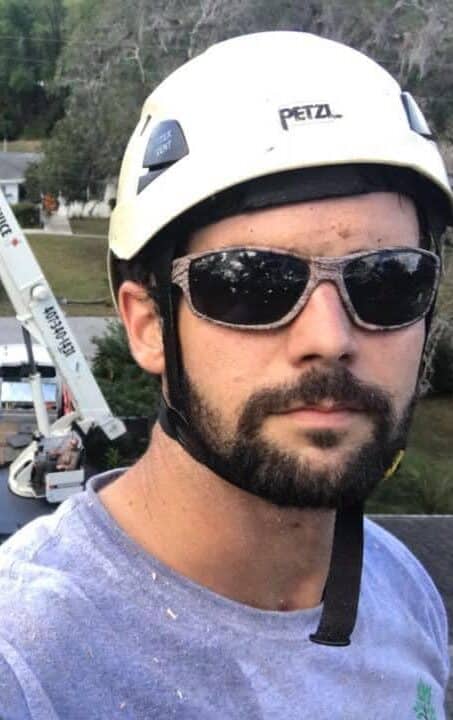
By: Shelby McCullough| Published: October 12, 2026
TL;DR: A tree risk assessment is a systematic, arborist-led evaluation of a tree’s likelihood of failure and the damage it could cause, using ISA-based methodology. In Central Florida, where hurricanes, sandy soils, and dense canopies create year-round hazard potential, a professional assessment helps homeowners document tree condition, reduce liability exposure, and decide what to prune or remove before storm season.
If you own property in Orlando, Union Park, Pine Castle, Conway, or anywhere else in Central Florida, you’ve probably wondered whether that leaning oak or split-trunk pine in your yard is a problem waiting to happen. A tree risk assessment is how a trained professional answers that question with evidence instead of guesswork.
This guide explains what a tree risk assessment actually involves, how arborists perform one, and when Central Florida homeowners, HOAs, and commercial property owners should schedule one.
What Is a Tree Risk Assessment?
A tree risk assessment is a structured evaluation of a tree’s health, structure, and surroundings to determine the likelihood that it (or a part of it) will fail, and what could be damaged if it does.
It trains and qualifies tree care professionals to systematically identify and evaluate tree hazards and recommend risk mitigation actions.
The industry standard comes from the International Society of Arboriculture (ISA), which developed the Tree Risk Assessment Qualification (TRAQ).
The ISA Tree Risk Assessment Qualification is a voluntary qualification program designed to train and assess candidates in a specialized field of arboriculture, and professionals who earn it are recognized as having specialized knowledge in tree risk assessment.
TRAQ-qualified professionals are proficient with the fundamentals of limited-visual and basic tree risk assessment, understand advanced diagnostic techniques, and can make reasoned judgments and recommendations for mitigating identified risk.
In practice, this means an assessor doesn’t just glance at a tree and call it “fine” or “dangerous.” They evaluate specific defects, rate the likelihood and consequences of failure, and document findings in a formal report that can be used for insurance, HOA compliance, or legal purposes.
How a Tree Risk Assessment Works
A certified arborist walks the property and inspects each tree for defects that affect structural integrity. Depending on the findings, this can be a basic visual assessment or require more advanced diagnostic tools like resistance drilling or aerial inspection for larger, high-value trees.
Common red flags an arborist looks for include:
- Codominant stems:
branches that originate from the same point on a tree, which can be particularly vulnerable in strong storms or hurricanes, especially when they form a sharp “V” rather than a wider “U” shape - Decay, cavities, or fungal conks on the trunk or major limbs
- Root problems, including
severed root systems from nearby construction
or shallow, girdling roots - Lean, canopy imbalance, or a high center of gravity, which
makes a tree more vulnerable during storms - Dead or hanging limbs and crown dieback
- Species-specific vulnerability — some species simply hold up worse in Florida’s wind events than others
After inspection, the arborist assigns a risk rating (typically low, moderate, high, or extreme) based on the likelihood of failure, the likely size of the failing part, and the value of what’s in the “target zone” — a house, driveway, power line, or area where people gather. The final report includes mitigation recommendations: pruning, cabling, root zone work, or removal.
Why Tree Risk Assessments Matter in Central Florida
Hurricane Season Is a Real, Recurring Threat
The Atlantic hurricane season runs from June 1 to November 30, with the peak of activity occurring between mid-August and mid-October.
That six-month window puts every tree on your property at risk of wind exposure, and Central Florida communities like Orlando, Winter Park, Conway, and Union Park sit squarely in the path of tropical systems nearly every year.
University of Florida research backs up what local arborists see firsthand.
A UF/IFAS study found that most trees withstand tropical storm winds up to 95 mph in category 1 hurricanes, but experts still urge caution because you’re never completely out of danger during hurricane season.
That same research notes that
risk assessments made by arborists using the ISA’s Tree Risk Assessment Qualification have accurately predicted storm-related tree damage.
UF/IFAS also recommends proactive inspection:
being aware of the health of your trees is an important part of hurricane planning, and you should have a certified arborist assess your existing trees for signs of decay and disease as well as structural defects prior to hurricane season, so that you can remove the vulnerable ones.
Florida’s Sandy Soils and Species Mix Add Risk
Not all trees fail equally in wind.
Trees with a high center of gravity, dense canopy, decayed trunk, multiple trunks, or shallow roots are more vulnerable in storms, and tall, slender pines that were once part of a forest before suburban development are especially susceptible.
Central Florida’s mature oak canopies, remnant pines, and newer plantings on shallow or disturbed soil all carry different risk profiles — which is exactly why a generic checklist isn’t enough. A trained eye needs to evaluate each tree in context.
Florida’s Liability Rules Make Documentation Valuable
Florida’s tree liability law hinges on negligence, not simple ownership.
If a healthy tree falls due to a storm, hurricane, or other natural event, the tree owner is generally not liable for the resulting damage, and the property owner’s own homeowner’s insurance is the primary source of recovery, because Florida follows the common law rule that an act of nature caused the damage.
However, that protection disappears once a hazard was foreseeable.
If the tree was dead, diseased, visibly decaying, or structurally compromised, and the tree owner knew or should have known about the condition, the tree owner may be liable for the damage under a negligence theory.
This is sometimes called the “should have known” standard, and it’s the reason a documented, professional tree risk assessment matters: it creates a paper trail showing you acted on known hazards before a storm, rather than ignoring them.
It’s also worth noting that a 2025 legislative effort to change this framework, the proposed “Fallen Tree Act” (SB 724),
was indefinitely postponed and withdrawn from consideration on May 3, 2025, failing to pass that session
, so the existing negligence-based rule remains in effect for now. That makes proactive risk assessment — not waiting for new legislation — the most reliable way to protect yourself.
Pros and Cons of a Professional Tree Risk Assessment
Pros
- Identifies hazards before they fail, often catching
dead branches or decay that are pretty easy for a professional arborist to spot
but easy for homeowners to miss - Creates documentation that can support insurance claims or demonstrate reasonable care
- Helps prioritize pruning, cabling, or removal budgets instead of guessing which trees need attention
- Supports HOA and commercial property risk management across multiple trees or lots
- Can extend the life of a valuable, mature tree through targeted treatment instead of removal
Cons / Limitations
- An assessment is a snapshot in time — new defects can develop after a storm, growth spurt, or construction nearby
- Basic visual assessments can’t detect all internal decay; advanced diagnostics cost more but aren’t needed for every tree
- No assessment can guarantee a tree will survive a major hurricane —
if you get a big enough storm, nothing is safe - Assessments are only as good as the assessor’s training, which is why the credential (ISA Certified Arborist or TRAQ) matters
When Should You Get a Tree Risk Assessment?
- Before hurricane season (ideally spring, ahead of the June 1 start)
- After buying a property with mature trees in Orlando, Pine Castle, Conway, Union Park, or surrounding neighborhoods
- After construction that disturbed roots or soil near a tree
- When a tree shows visible defects — lean, cracks, fungus, dead limbs, or thinning canopy
- For HOA or commercial properties managing liability across many trees
- Immediately after a storm, to check for hidden structural damage before the next system arrives — see our post-storm tree assessment guide for what that process covers
How McCullough Tree Service Approaches Tree Risk Assessments
McCullough Tree Service has served Orange and Seminole County communities — including Orlando, Union Park, Pine Castle, Conway, Winter Park, and Maitland — for more than 30 years. Our team includes three ISA-Certified Arborists who evaluate tree structure, health, and site conditions using the same standardized approach taught in TRAQ methodology.
If an assessment identifies a hazard, we can handle the next step directly, whether that’s corrective pruning, cabling, or full removal, including crane-assisted removal for large or tightly placed trees. Learn more about our certified arborist consultations or, if a storm has already come through, explore our storm damage tree cleanup services.
The Bottom Line
A tree risk assessment won’t make your trees storm-proof, but it gives you something far more useful than a guess: a documented, professional evaluation of which trees are safe, which need attention, and which should come down before they fail. In a region where hurricane season returns every year and liability hinges on what you knew and when, that documentation is one of the simplest things a Central Florida property owner can do to reduce risk.
Recommended Reads
- What a Post-Storm Tree Assessment Covers and Why You Need One
- McCullough Tree Service in Orlando & Central Florida
- Certified Arborist in Orlando & Central Florida
Sources
- isa-arbor.com
- njaisa.com
- monstertreeservice.com
- gardeningsolutions.ifas.ufl.edu
- gardeningsolutions.ifas.ufl.edu
- blogs.ifas.ufl.edu