By: Shelby McCullough| Published: May 7, 2026
TL;DR:
- Proactive tree care in Dr. Phillips helps prevent costly emergencies caused by storms, pests, and decay. Regular maintenance, including trimming and inspections, enhances safety, property value, and tree health in Florida’s demanding climate. Hiring certified arborists ensures safe, professional services that preserve property and comply with local regulations.
Most property owners in Dr. Phillips, FL, only think about their trees when a branch crashes through a fence or a storm leaves debris across the driveway. That reactive mindset is one of the most expensive mistakes you can make. Trees that receive consistent, professional attention stay healthier longer, look better year-round, and rarely create the kind of emergencies that cost thousands to fix. This article walks you through why proactive tree care matters in this specific corner of Central Florida, what services are available, how to pick the right provider, and exactly when you need to stop waiting and make the call.
Table of Contents
- Why tree care matters in Dr. Phillips, FL
- Types of tree services available
- How to choose the right tree service for your property
- When to call the professionals: signs and scenarios
- Why ongoing tree care is an investment, not an expense
- Discover expert tree services for Dr. Phillips properties
- Frequently asked questions
Key Takeaways
| Point | Details |
|---|---|
| Proactive tree care | Regular maintenance protects your property, boosts safety, and enhances curb appeal. |
| Service options | Dr. Phillips professionals provide trimming, removal, stump grinding, and storm cleanup. |
| Certified experts matter | Choose a certified arborist to ensure knowledgeable, compliant, and effective tree care. |
| Know when to call pros | Call professionals for diseased, leaning, storm-damaged, or hazardous trees. |
| Investment pays off | Quality tree service prevents costly emergencies and adds long-term value. |
Why tree care matters in Dr. Phillips, FL
Dr. Phillips sits in one of the most demanding climates in the country for trees. The combination of intense summer heat, heavy rainfall, and a hurricane season that runs from June through November creates conditions that stress trees in ways most people don’t see until something goes wrong. Spanish moss, fungal growth, root rot, and pest infestations thrive in Florida’s humidity. What looks like a healthy oak from your driveway could be hiding serious structural problems inside the trunk.
The stakes go beyond aesthetics. Unmaintained trees near power lines, rooftops, or walkways become genuine safety hazards. A single falling limb can injure a person, damage a vehicle, or knock out power to your neighborhood. Tree services in Dr. Phillips address these risks before they become emergencies, which is exactly why local homeowners and commercial property managers treat regular tree care as a routine line item, not a one-time fix.
Here’s what’s working against your trees in this area:
- Hurricane and tropical storm activity that can topple weakened trees or strip large branches overnight
- Sandy, fast-draining soils that stress root systems during dry spells
- Aggressive vine and moss growth that adds weight and blocks sunlight from reaching healthy foliage
- Native and non-native species that require different pruning schedules and care approaches
- Local ordinances that regulate which trees can be removed and when, requiring permits in some cases
“Local homeowners require professional tree services to maintain safety and enhance property value.”
Studies consistently show that mature, well-maintained trees can add anywhere from 10 to 20 percent to a home’s appraised value. That’s not a small number in a real estate market like Dr. Phillips, where curb appeal directly influences sale prices and rental rates. Professional arborists who know local species and city regulations give you an advantage that no amount of weekend yard work can replicate.
Types of tree services available
Understanding what’s on the menu helps you ask the right questions and get the right results. Tree care is not a single service. It’s a collection of specialized tasks, each designed to address a specific need on your property.
| Service | Primary benefit | Best timing |
|---|---|---|
| Tree trimming | Shape, safety, and light access | Every 1 to 3 years |
| Tree pruning | Health and structural integrity | Late winter or early spring |
| Tree removal | Eliminate dead or hazardous trees | As needed |
| Stump grinding | Remove trip hazards and improve lawn use | After removal |
| Demossing | Reduce weight and restore foliage health | Annually in Florida |
| Land clearing | Site preparation for construction or landscaping | Before projects begin |
| Storm cleanup | Remove debris and stabilize damaged trees | Immediately after storms |
Tree trimming services are among the most requested in Dr. Phillips. Trimming shapes the canopy, removes dead or crossing branches, and improves airflow through the tree. It’s both a health measure and an aesthetic one. Properly trimmed trees look intentional and well-cared-for, which matters whether you’re maintaining a private residence or managing a commercial property where first impressions count.
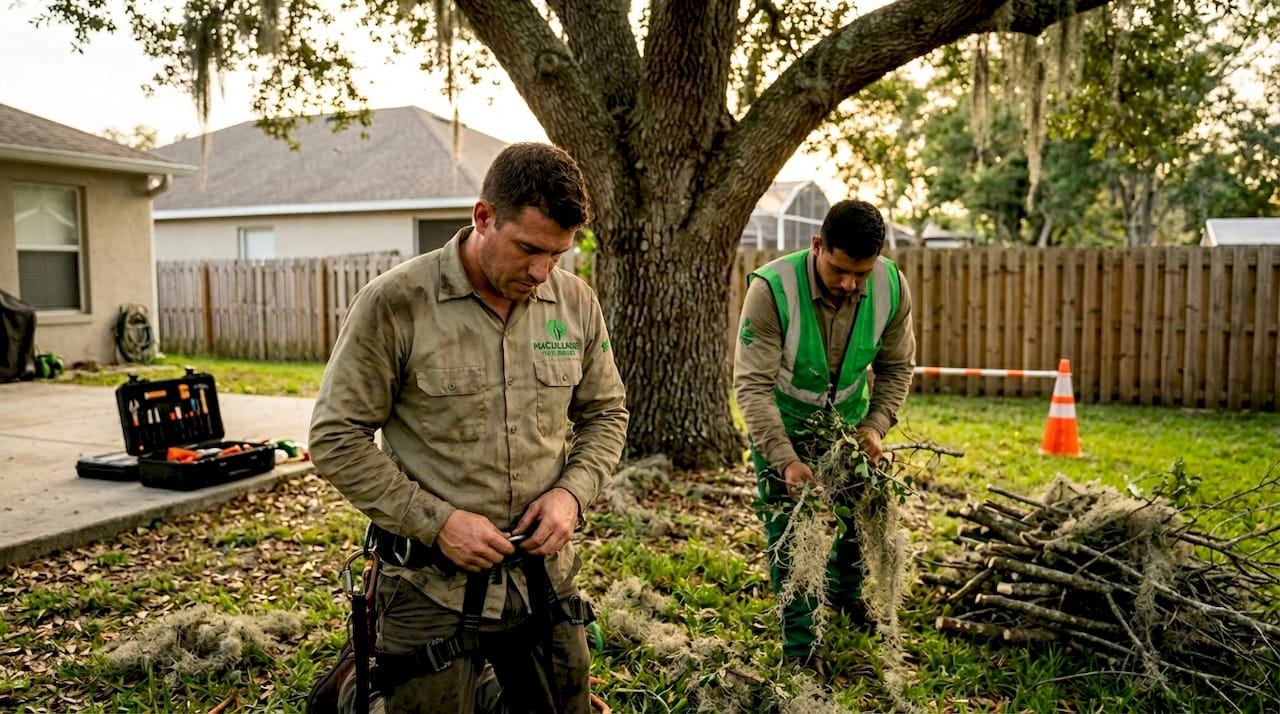
Professional tree removal is a different animal entirely. Removing a large tree safely requires specialized equipment, rigging techniques, and a clear understanding of how the tree will fall. Trying to handle this yourself is one of the leading causes of serious injury on residential properties. Professionals assess the lean, the root system, nearby structures, and utility lines before a single cut is made.
Stump grinding is often overlooked, but it matters more than people realize. A leftover stump is a trip hazard, a magnet for termites and other wood-boring insects, and an obstacle that makes mowing and landscaping frustrating. Grinding the stump below grade eliminates all three problems at once.
Storm cleanup solutions are especially relevant in Dr. Phillips. After a hurricane or severe thunderstorm, downed limbs and uprooted trees need to be cleared quickly. Debris left on the ground creates additional safety risks and can damage turf, irrigation systems, and hardscaping if it sits too long.
Pro Tip: Schedule a tree health assessment before storm season begins in June. Catching weak or diseased trees early gives you time to address them before high winds make them a liability.
According to industry data, homeowners can choose from a variety of tree care solutions including trimming, removal, and stump grinding, making it easier than ever to build a complete maintenance plan rather than reacting to individual problems as they arise.
How to choose the right tree service for your property
Not every tree company operates at the same level. In Florida, where the stakes are high and the tree work is physically demanding, choosing the wrong provider can leave you with a bigger problem than you started with. Here’s a clear process for making the right call.
Step 1: Define your goals. Are you trying to improve curb appeal, address a safety concern, prepare for storm season, or clean up after a weather event? Knowing your primary goal helps you communicate clearly with potential providers and evaluate their proposals accurately.
Step 2: Look for the right credentials. Florida does not require tree service companies to hold a state arborist license, which means the barrier to entry is low. That makes certification from the International Society of Arboriculture (ISA) a meaningful differentiator. Certified arborist services signal that the individual has passed a rigorous exam and commits to ongoing education in tree care science.
Step 3: Verify insurance. Any reputable company should carry general liability insurance and workers’ compensation. Ask for certificates before work begins. If a worker is injured on your property and the company isn’t properly insured, you could be held liable.
Step 4: Read local reviews. Generic five-star ratings mean less than specific, detailed feedback from Dr. Phillips homeowners or property managers who describe the actual work performed. Look for patterns in the reviews, not just the overall score.
Step 5: Get written quotes. A professional company will provide a written estimate that details the scope of work, timeline, and cost. Verbal agreements leave too much room for misunderstanding.
| Quality indicator | Why it matters |
|---|---|
| ISA certification | Confirms technical training and ongoing education |
| Liability insurance | Protects you if property is damaged during work |
| Local experience | Familiarity with Dr. Phillips species and regulations |
| Written estimates | Prevents billing disputes and scope creep |
| Positive local reviews | Validates real-world performance |
It’s important to work with certified arborists and reputable tree service companies because tree work involves real risk. A poorly executed removal can damage your home, injure bystanders, or create new hazards. Certification is your clearest signal that the person making decisions about your trees actually knows what they’re doing.
Pro Tip: Ask any tree service company whether they follow ANSI A300 standards. These are the industry standards for tree care practices in the United States, and a company that follows them is operating at a professional level.
When to call the professionals: signs and scenarios
There’s a wide gap between what a homeowner can safely handle and what requires a trained crew with proper equipment. Knowing where that line falls protects you, your family, and your property.
Here are the clearest signs that you need professional help, not a weekend project:
- Leaning trees that weren’t leaning before, especially after rain or wind, which can indicate root failure
- Cracks or splits in the trunk that run vertically or spiral around the bark
- Dead branches at the top of the canopy, sometimes called “widow makers,” that can fall without warning
- Fungal growth at the base of the tree, which often signals internal decay that isn’t visible from the outside
- Bark that is peeling, discolored, or falling off in large sections
- Large branches hanging over your roof, driveway, or power lines
- Trees that survived a storm but now have visible structural damage
“Professional help is crucial when facing hazardous trees, storm aftermath, or if large limbs are near structures.”
The period just before and just after hurricane season represents the two most critical windows for professional tree assessment in Dr. Phillips. Pre-season inspections let you remove or stabilize vulnerable trees before high winds arrive. Post-storm assessments catch damage that isn’t always obvious from the ground. A tree that looks intact after a storm may have suffered root damage or internal cracking that makes it dangerous for months afterward.
Emergency storm cleanup after a major weather event is not the time to shop around. Having a trusted provider already identified means you can get on their schedule quickly rather than waiting in a long queue of homeowners all calling at the same time. This is one of the strongest arguments for building a relationship with a local tree service company before you need them urgently.
Hazardous tree removal is one area where the cost of hesitation is almost always higher than the cost of action. A tree that falls on your home can cause tens of thousands of dollars in structural damage. A tree that falls on a neighbor’s property can create legal liability. Acting early, when the signs are there, is almost always the smarter financial decision.
Why ongoing tree care is an investment, not an expense
Here’s the perspective that most property owners in Dr. Phillips haven’t fully considered: the trees on your property are living infrastructure. You wouldn’t skip maintenance on your HVAC system or your roof and call it a money-saving decision. Trees are no different.
The conventional wisdom is that you call a tree company when something goes wrong. We’d push back on that pretty hard. The properties we see with the most expensive tree problems are almost always the ones where nothing was done for years because “the trees looked fine.” Trees are slow to show distress, and by the time the signs are obvious, the problem is usually advanced.
Regular trimming and pruning, done on a proper schedule, prevents the kind of overgrowth that makes trees structurally vulnerable. It also keeps the canopy balanced, which reduces wind resistance during storms. A well-maintained tree is simply less likely to fail under pressure than a neglected one.
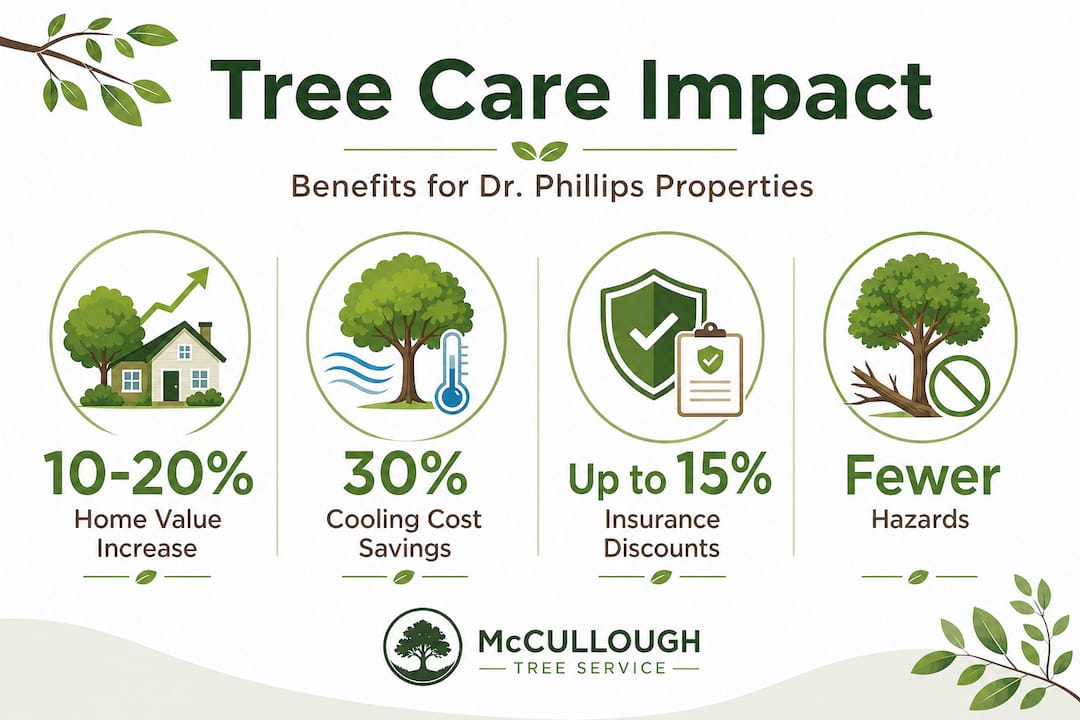
There’s also a financial case that goes beyond avoiding emergencies. Healthy, mature trees reduce cooling costs by shading your home. They improve air quality, reduce stormwater runoff, and create outdoor spaces that people actually want to spend time in. Our tree care and trimming guide breaks down the difference between trimming and pruning in practical terms, which helps property owners understand what they’re paying for and why it matters.
Some insurance companies also offer reduced premiums for properties with documented tree maintenance programs. That’s a direct financial return on what most people still think of as a landscaping cost. Reframing tree care as property infrastructure management changes how you budget for it and how you benefit from it.
Discover expert tree services for Dr. Phillips properties
When you’re ready to act, trusted professionals in Dr. Phillips are prepared to help with everything from routine maintenance to emergency response.
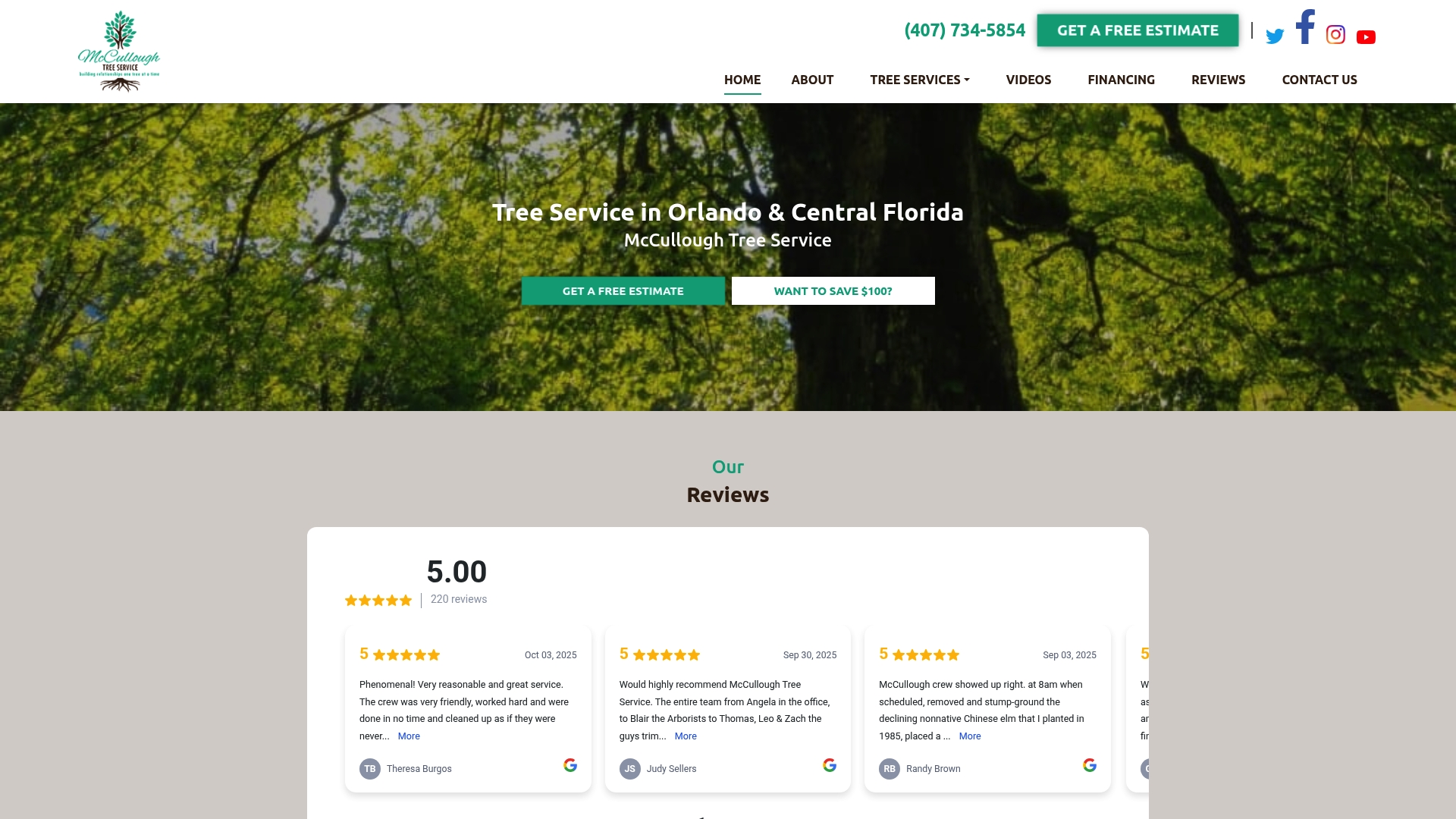
McCullough Tree Service brings certified arborist expertise, local knowledge, and a full range of services to residential and commercial properties throughout Dr. Phillips and the greater Orlando area. Whether you’re looking at professional tree trimming to refresh your property’s appearance, tree removal services for a hazardous or dead tree, or storm cleanup experts to restore order after severe weather, the team is equipped to handle the job safely and efficiently. Getting started is simple. Request a free estimate and get a clear picture of what your property needs and what it will cost.
Frequently asked questions
How often should trees be trimmed in Dr. Phillips, FL?
Most trees benefit from trimming every one to three years, but the right schedule depends on the species, age, and current health of each tree on your property.
Is a permit required for tree removal in Dr. Phillips?
Permit requirements vary by species and location, so it’s best to check with the local city office or consult a certified arborist before scheduling any removal work.
What does hazardous tree removal involve?
Hazardous tree removal uses specialized rigging, cutting techniques, and equipment to safely bring down trees that pose an immediate risk to people, buildings, or utility lines.
Do tree services provide storm cleanup in Dr. Phillips?
Yes, professional tree companies offer emergency storm cleanup to remove fallen debris, stabilize damaged trees, and restore safe conditions after hurricanes or severe weather events.
Why should I hire a certified arborist?
Certified arborists bring specialized training, knowledge of local tree species, and an understanding of Florida regulations that protect your property and ensure the work is done correctly the first time.
Recommended
- tree service dr phillips fl – Resources – McCullough Tree Service
- Comprehensive Guide to Tree Services in Orlando
- Tree service in Oakland, FL: choose the right care
- Best Tree Service in Dr. Phillips, FL | Estimate & Financing