By: Shelby McCullough| Published: August 20, 2026
For most Florida homeowners working with a small yard, eight species consistently make the cut: Red buckeye, fringetree, Chickasaw plum, kousa dogwood, saucer magnolia, loquat, Japanese blueberry, and Simpson’s stopper. Each stays under 20 feet at maturity, tolerates Florida’s heat and irregular rainfall, and works within tight side yards or foundation plantings.
- Simpson’s stopper: 10 to 20 feet
- Japanese blueberry: 15 to 20 feet
- Red buckeye: about 20 feet
- Fringetree: about 20 feet
- Chickasaw plum: 12 to 20 feet
- Loquat: 15 to 20 feet
- Kousa dogwood: 15 to 20 feet
- Saucer magnolia: 20 to 25 feet
Before picking any of them, check placement. UF/IFAS recommends the “right plant, right place” rule: keep trees at least 15 feet from building foundations and account for underground cables and overhead power lines during siting.
Key Takeaways
Matching mature size, sun, soil, and utility clearance to the right species, then training its structure for the first three years, determines whether a small tree thrives in a Florida yard.
| Point | Details |
|---|---|
| Shortlist eight species | Red buckeye, fringetree, Chickasaw plum, kousa dogwood, saucer magnolia, loquat, Japanese blueberry, and Simpson’s stopper all suit small Florida yards. |
| Follow the 15 foot rule | Plant trees at least 15 feet from foundations and clear of underground and overhead utility lines. |
| Water for 3 to 6 months | Establishment irrigation typically runs three to six months, tapering as roots take hold. |
| Train structure early | Remove competing stems and establish a single leader in the first two to three years to avoid future pruning problems. |
| Call a certified arborist | Mcculloughtreeservice offers site assessments and structural pruning to help small trees establish correctly from day one. |
Table of Contents
- How Do You Choose the Right Small Tree for a Florida Yard?
- Species Profiles: Recommended Small Trees for Florida Yards
- Planting and Establishment: What Happens in the First Three Years
- When Should You Hire a Certified Arborist?
- A Practitioner’s View on Choosing and Planting Small Trees
- Get Expert Help Planting the Right Small Tree
- Sources
How Do You Choose the Right Small Tree for a Florida Yard?
Start by walking your yard with a tape measure, not a plant catalog. Note how much root and canopy space you actually have, track sun and shade through the day, and flag anything overhead or underground, power lines, septic fields, irrigation pipes, that could conflict with a mature tree. Check drainage too. A spot that puddles after summer storms rules out species that hate wet feet, while yards near coastal roads need salt tolerance most homeowners never think to ask about.
Once you know the site, match it to the tree rather than the other way around. A species with aggressive surface roots has no business near a driveway or septic line, and a tree that wants full sun will sulk for years under an oak canopy.
- Measure available space and mark utility locations.
- Track sun exposure for at least one full week.
- Test soil drainage after a rain event.
- Shortlist species by mature height, root behavior, and drought or salt tolerance.
- Favor native or Florida-friendly species when two options are otherwise equal.
- Confirm nursery stock has a single leader before buying.
Native species like red buckeye and fringetree tend to need less fertilizer, less supplemental water once established, and support local pollinators better than imported ornamentals.
Pro Tip: The first two to three years after planting matter more than any pruning you’ll do later. Train a single leader early, remove competing stems while they’re small, and you’ll avoid the multi-trunk sprawl that turns a “small tree” into a maintenance headache by year five.
Species Profiles: Recommended Small Trees for Florida Yards
Red buckeye (Aesculus pavia) tops out around 20 feet with a similar spread, prefers partial sun and moist, slightly acidic soil, and is hardy from USDA zone 6A through 9A. Its red spring flowers draw hummingbirds early in the season. Native to Florida, but struggles in full sun without consistent moisture.
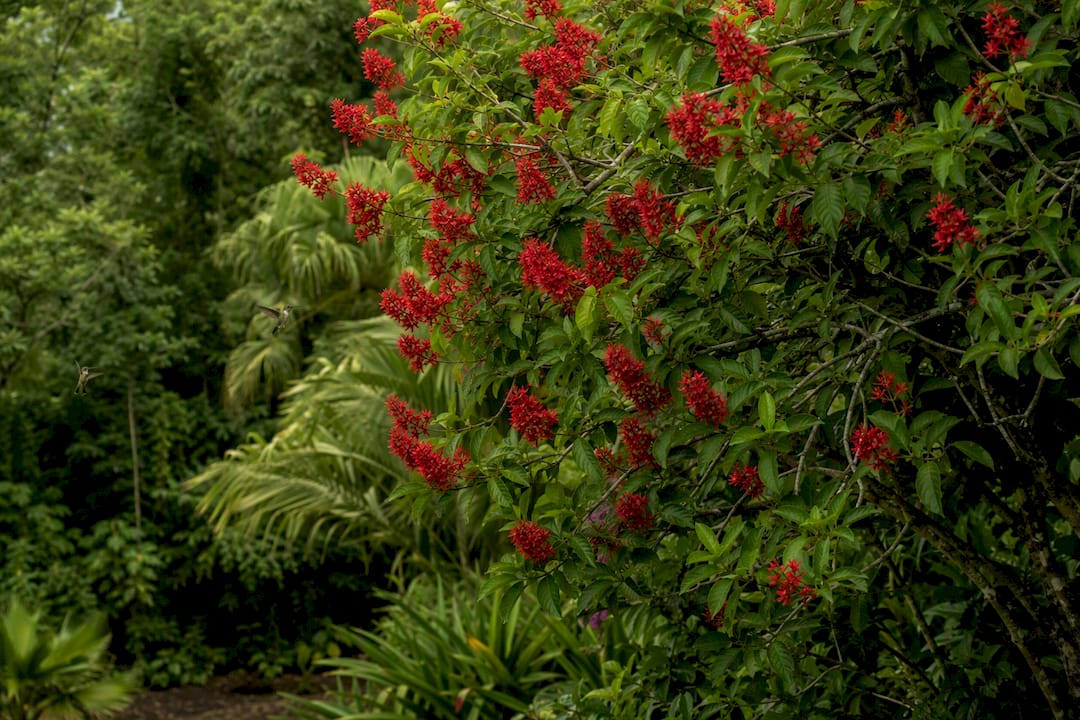
Fringetree (Chionanthus virginicus) also reaches about 20 feet, thrives in zone 9B and north, and produces fragrant white spring blooms. It wants moist, acidic soil, so raised or well-drained beds work better than low spots.
Chickasaw plum (Prunus angustifolia), sometimes sold as flatwoods plum, grows 12 to 20 feet tall and 15 to 20 feet wide, tolerates clay, sand, and drought once rooted, and offers white spring flowers plus edible fruit. Caveat: it often suckers from the base, so plan on pruning to keep a single trunk.
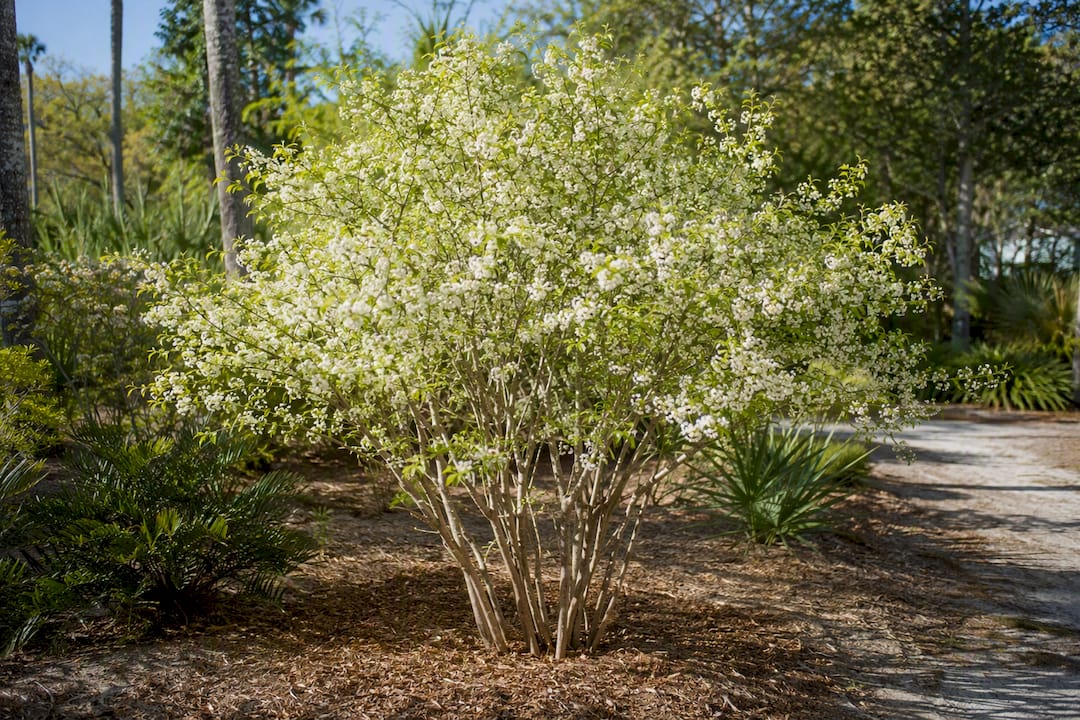
Kousa dogwood (Cornus kousa) stays 15 to 20 feet, prefers moist, loamy, well-drained soil with afternoon shade, and delivers showy white bracts in early summer. It’s less forgiving of Florida’s heat and drought than the natives on this list, so it fits shaded, irrigated yards better than exposed inland lots.
Saucer magnolia (Magnolia × soulangeana) reaches 20 to 25 feet with a broad, rounded canopy and puts on a dramatic pink and white flower show in late winter before leaves emerge. It wants full sun and well-drained soil and handles Central Florida’s climate reasonably well, though it’s not drought tolerant during establishment.
Loquat (Eriobotrya japonica) grows 15 to 20 feet tall with a 10 to 20 foot spread, tolerates a wide soil pH range and drought once mature, and works well as a patio specimen. It needs early training to a clear trunk if you want vehicle clearance underneath.
Japanese blueberry (Elaeocarpus decipiens) stays a manageable 15 to 20 feet and holds glossy, dense foliage year round, making it a solid privacy screen for tight side yards.
Simpson’s stopper (Myrcianthes fragrans), a Florida native, ranges 10 to 20 feet, tolerates salt and drought, and produces small white flowers followed by red berries birds love. It’s one of the most forgiving species on this list for coastal or reflected-heat sites.
Planting and Establishment: What Happens in the First Three Years
Planting day sets the tone for everything that follows. Dig a hole only as deep as the root ball and twice as wide, backfill with native soil, and apply mulch two to three inches deep, kept a few inches away from the trunk to prevent rot. Stake only if the tree can’t stand upright on its own, and remove stakes within a year.
- Planting day: Water thoroughly to settle soil around roots and eliminate air pockets.
- First 3 months: Water two to three times weekly, adjusting for rainfall.
- Months 3 to 12: Taper to once or twice weekly as roots establish.
- Years 1 to 3: Water during dry spells only, and prune to remove co-dominant leaders.
UF/IFAS recommends an establishment irrigation period of roughly three to six months for most newly planted trees, and reiterates the 15 foot foundation clearance rule during this window since roots and canopy both expand faster than homeowners expect.
- Drip irrigation delivers water more evenly than hand watering, especially for beds with multiple trees.
- Amend Florida’s sandy soils with compost at planting time, not fertilizer.
- Never bury the root collar, planting too deep is one of the most common causes of early tree failure.
- Skip heavy fertilization in year one; it pushes leafy growth at the expense of root establishment.
When Should You Hire a Certified Arborist?
Some decisions are worth paying for. A site assessment before planting, diagnosis after pest or disease damage, structural pruning in a tight space, or storm damage response are all situations where a professional eye catches problems a homeowner might miss until it’s expensive to fix.
Certified arborists bring science-based pruning techniques, formal risk assessment training, and a code of ethics backed by continuing education requirements, not just years of experience with a chainsaw.
UF/IFAS Extension notes that ISA certification requires documented work experience, a formal exam, and ongoing continuing education units, and that hiring a certified professional meaningfully improves the odds of appropriate, long-term tree care.
- Verify credentials through the ISA registry before hiring anyone.
- Consider a consulting arborist for unbiased species and placement advice before you commit to contracting the actual work.
A Practitioner’s View on Choosing and Planting Small Trees
Skip anything at the nursery with two trunks fighting for dominance. A well-formed sapling with a clear leader will outgrow a “bargain” multi-stem specimen within a couple of seasons, and it needs far less corrective pruning later.
Buy locally when you can. Native-plant nurseries usually know which root systems handle container life versus field-grown transplants, and that answer changes how you should water the first summer. The mistake I see most: someone plants a loquat or saucer magnolia eight feet from the house because it looks small in a five-gallon pot, forgetting it won’t stay that size.
Get Expert Help Planting the Right Small Tree
Choosing the right species is half the job. Getting it in the ground correctly, and keeping it structurally sound for the next twenty years, is where most DIY plantings go sideways. Mccullough Tree Service gives Central Florida homeowners something a nursery checkout line can’t: a certified arborist who evaluates your actual soil, sun, and utility lines before you plant, then shapes that young tree’s structure while corrections are still cheap and easy.
Our insured, credentialed crews handle everything from initial site assessments to early structural pruning near hardscapes and foundations, exactly the work that determines whether a small tree stays small and healthy or turns into a decade of problems. If you’re planning a planting project or already have a young tree that needs shaping, book a certified arborist consultation and get a site visit scheduled before you dig.
Sources
- Small Flowering Trees for your FL Yard – UF/IFAS Blogs
- Ten Small Trees for Tight South Florida Spaces (UF/IFAS extension PDF)
- Small Trees – UF/IFAS Gardening Solutions
- Tree selection and the Tree Recommendation Tool — UF/IFAS Extension (EP650)
Recommended
- 7 Best Tree Species for Orlando Yards: Expert Picks
- Tree Planting Guide Central Florida for Homeowners
- 6 Outstanding Examples of Native Trees for Florida Yards
- Tree Trimming in Florida: DIY Tips & Tricks