By: Shelby McCullough| Published: July 25, 2026
Tree crown reduction is a selective pruning method that reduces a tree’s overall size by cutting branches back to healthy lateral branches, preserving the tree’s natural shape and structural integrity throughout the process. Unlike hacking a tree down to stubs, proper crown reduction follows the one-third diameter rule: each cut is made back to a lateral branch that is at least one-third the diameter of the removed portion, giving that lateral branch the strength to take over as the new terminal.
The goal is not just a smaller tree. It is a smaller tree that stays healthy, holds its form, and does not create new hazards in the process.
When crown reduction makes sense:
- A tree has grown too close to a roofline, utility line, or structure and needs clearance
- Overextended branches are creating a failure risk, especially in wind-exposed locations
- Storm damage has left the crown unbalanced and in need of restoration
- A mature or historic tree needs to be retained rather than removed, and reducing its mass is the practical path forward
- The canopy is casting too much shade on a lawn, garden, or solar installation below
Crown reduction is not a one-time fix. Once you commit to keeping a tree at a reduced size, you are committing to periodic maintenance, sometimes annually, to hold that size without resorting to damaging cuts.
Table of Contents
- How does crown reduction compare to tree topping?
- What are the real benefits and risks of crown reduction?
- What does tree crown reduction actually cost?
- What do certified arborists recommend for proper crown reduction?
- Key Takeaways
- Ready to schedule a crown reduction in Central Florida?
How does crown reduction compare to tree topping?
This is where most homeowners get burned. Tree topping and crown reduction both make a tree smaller, but the similarity ends there.
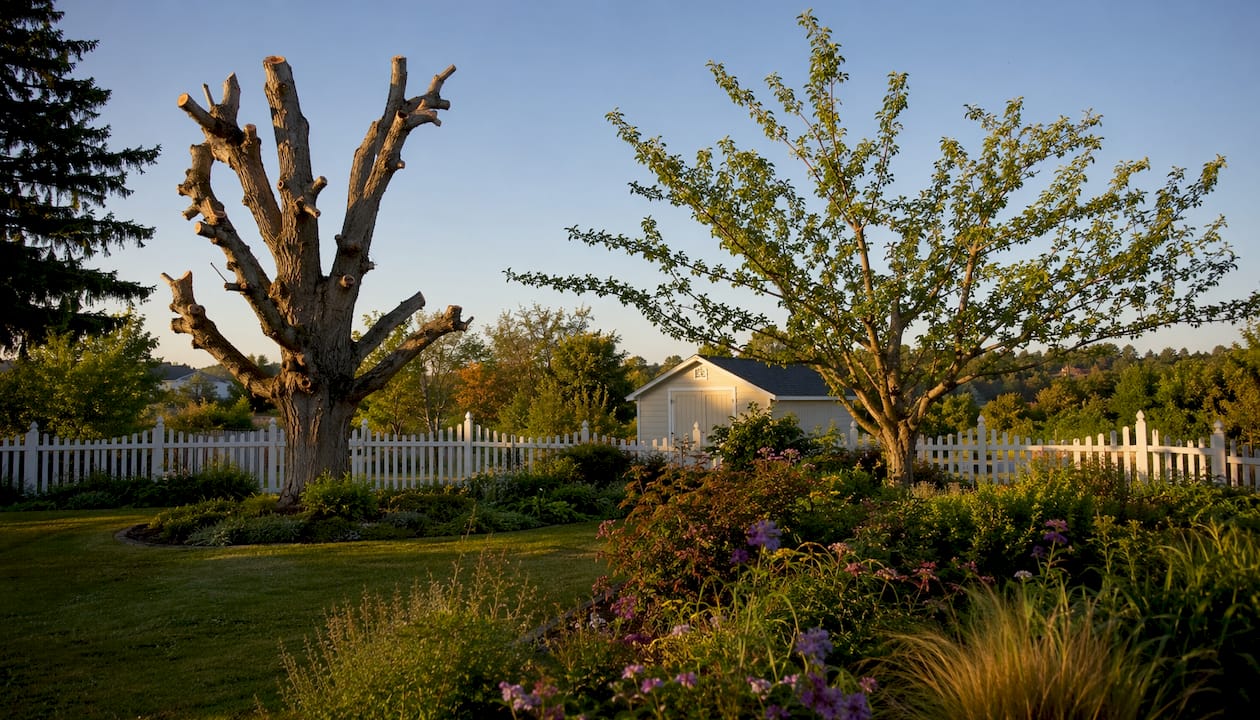
Topping cuts branches back to stubs with no regard for lateral branch size or tree structure. The result: massive wounds the tree cannot properly seal, rapid decay in numerous species, and dense clusters of weakly attached sprouts that grow fast and break easily. Topping causes decay, sprouts, cracks, and root decline and is widely condemned by certified arborists as permanently damaging. It also creates a cycle: those sprouts grow back quickly, so you end up paying for repeated pruning to manage the mess the first cut created.
Crown reduction, done correctly, maintains the tree’s form. Cuts are made to lateral branches large enough to assume the terminal role, wounds are smaller and better positioned to compartmentalize, and the resulting canopy looks like a naturally smaller version of the original tree.
| Feature | Crown Reduction | Tree Topping |
|---|---|---|
| Definition | Selective cuts to lateral branches of adequate size | Indiscriminate cuts to stubs regardless of branch size |
| Pros | Maintains form, reduces failure risk, preserves health | Fast, cheap upfront |
| Cons | Requires skilled arborist, higher initial cost | Causes decay, weak sprouts, ongoing maintenance costs |
| Tree health impact | Minimizes structural damage when done correctly | Permanently compromises structure and health |
| Typical cost | Higher per visit, lower long-term cost | Low upfront, high long-term due to regrowth management |
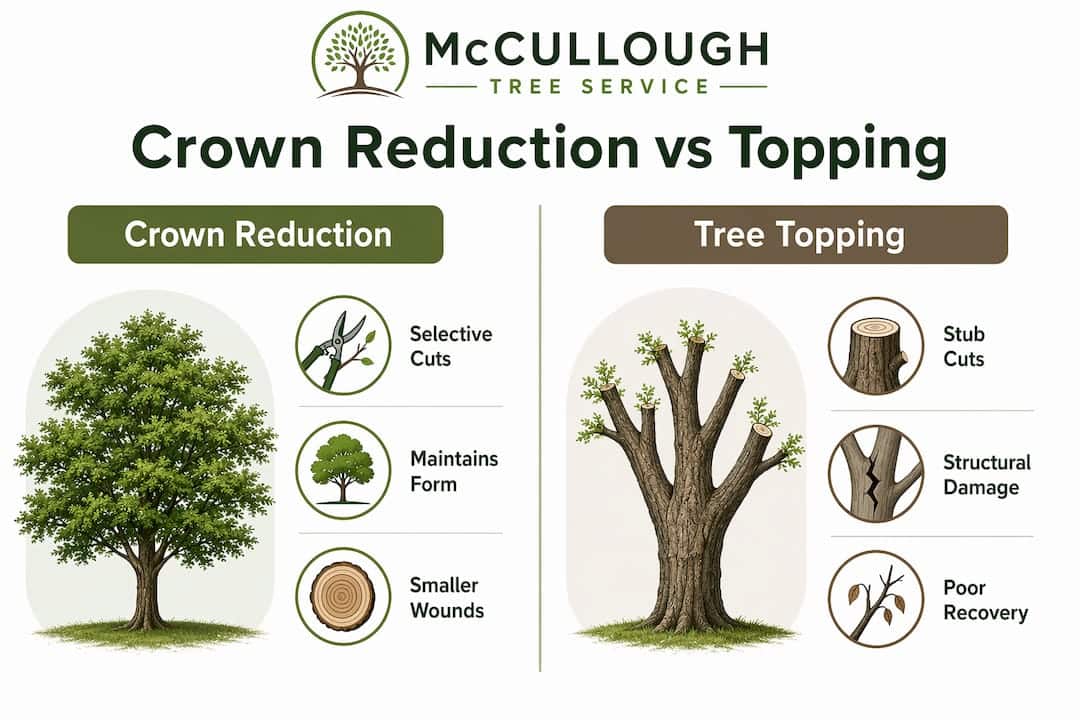
The importance of proper tree pruning cannot be overstated here: a topped tree rarely recovers its original structural integrity, and many eventually require full removal.
What are the real benefits and risks of crown reduction?
Crown reduction done right delivers measurable results. Research published by the International Society of Arboriculture found that compliant reduction pruning reduces branch stress in the critical fracture zone by approximately 50%, which directly lowers the risk of branch failure near buildings, vehicles, and people.
Key benefits:
- Reduces load-induced stress on branches, cutting failure risk significantly
- Preserves the canopy’s photosynthetic capacity better than topping
- Manages tree size for clearance from structures, utilities, and sight lines
- Maintains the tree’s natural silhouette rather than leaving an ugly stub profile
- Can extend the life of a mature or historic tree that would otherwise need removal
- Reduces wind resistance in storm-prone areas like Central Florida
The risks are real too, and mostly tied to execution errors.
Risks and how to avoid them:
- Wound exposure and decay: Every reduction cut creates a wound. In species that compartmentalize poorly (think laurel oak or certain maples), even well-placed cuts can lead to internal decay. Remove no more than 25% of live foliage at once on mature trees to prevent stress and sprouting, and be especially conservative with decay-prone species.
- Sunscald on retained bark: Removing too much canopy at once exposes previously shaded bark to direct sun, causing dead patches. This is especially common when the entire crown is reduced in one session.
- Stress-induced sprouting: Remove too much foliage and the tree responds with aggressive epicormic sprout growth, the same problem topping creates, just less severe.
- Structural weakness from oversized cuts: Cuts made to laterals smaller than one-third the diameter of the removed limb leave the lateral unable to sustain the remaining branch, leading to dieback.
Pro Tip: If a mature tree needs a significant portion of its live foliage removed, split the job into multiple sessions spaced at least one full growing season apart. This follows ANSI A300 pruning standards and prevents the energy crash that triggers both sprouting and internal decay.
The timing of crown reduction also matters. Late winter or early spring, before new growth flushes, is generally the best window for most species. Wounds close faster when the tree is about to enter its active growth phase. In Florida’s climate, the window shifts slightly, and a certified arborist familiar with local species will know exactly when to schedule the work.
What does tree crown reduction actually cost?
Crown reduction pricing is not standardized, and anyone quoting you a flat rate without seeing the tree is guessing. The real cost drivers are:
- Tree size and height: A 20-foot ornamental tree and a 70-foot live oak are entirely different jobs. Larger trees require more equipment, more time, and more skilled labor.
- Species: Some species require more conservative, careful cuts due to their tendency to decay. That extra care takes more time and raises the cost.
- Canopy complexity: A tree with dense, tangled branching or multiple codominant stems takes longer to prune correctly than a well-structured specimen.
- Access and location: A tree overhanging a pool, a roof, or a parked car requires rigging and precision that adds to the job cost.
- Clearance requirements: Utility line clearance work often involves coordination with local requirements and specific pruning specifications, which increases complexity.
- Arborist credentials: A certified arborist charges more than an unlicensed crew, and for good reason. The skill difference is the difference between a tree that recovers well and one that declines over the next five years.
Crown reduction generally costs more per visit than a rough topping job, but the long-term math favors it. Topped trees generate dense regrowth that needs managing every year or two. A properly reduced tree, maintained on a reasonable schedule, costs less over a decade.
When crown reduction is not the right answer, because the tree is too far gone, too large for its location, or structurally compromised beyond recovery, tree removal becomes the responsible choice. Getting a professional assessment first is always worth it.
What do certified arborists recommend for proper crown reduction?
The science behind crown reduction is well-established, and the standards are specific. UF/IFAS guidelines from arborist and researcher Edward F. Gilman set the technical benchmark most certified arborists in Florida follow.
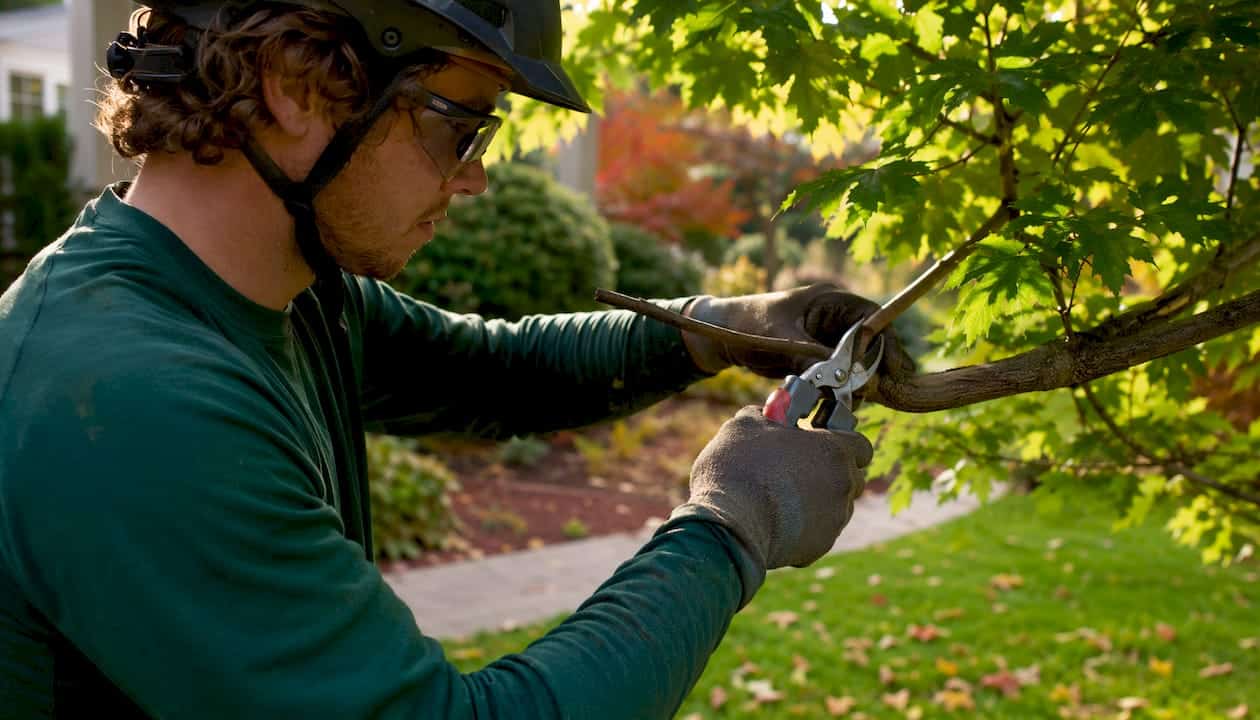
That last point trips up a lot of homeowners and even some inexperienced crews. A properly reduced crown looks slightly irregular, not neatly rounded. If the finished tree looks like a perfect ball or dome, someone pruned the lateral branches that were supposed to become the new structure.
Best practices from certified arborists:
- Always cut back to a lateral branch at least one-third the diameter of the removed limb; heading cuts to smaller laterals or bare stubs are a last resort, not standard practice
- Keep the pruning dose under 25% of live foliage for mature trees; younger trees tolerate slightly more
- Specify exact clearance distances before starting work so the pruning is consistent across the entire canopy
- Pruning objectives should target structural weaknesses like codominant stems, not just size reduction for its own sake
- Species that decay quickly from pruning cuts need more conservative treatment than decay-resistant ones
- Avoid reducing the entire crown in a single session on mature trees; partial reduction causes less physiological stress
- Combine crown reduction with structural pruning where appropriate to address both size and long-term form
For trees near utilities, buildings, or high-traffic areas, structural pruning is often performed alongside crown reduction to address codominant stems and other failure points at the same time.
Mcculloughtreeservice’s certified arborists apply these exact standards on every job in Central Florida, from single ornamental trees to large-scale commercial canopy management. The combination of ISA certification and deep familiarity with Florida’s specific tree species means the pruning decisions account for local conditions, not just textbook guidelines.
Key Takeaways
Crown reduction preserves tree health and structural integrity by cutting back to adequately sized lateral branches, never to stubs, and keeping the pruning dose under 25% of live foliage for mature trees.
| Point | Details |
|---|---|
| One-third diameter rule | Each cut must be made to a lateral branch at least one-third the diameter of the removed limb. |
| Pruning dose limit | Remove no more than 25% of live foliage at once on mature trees to prevent stress and sprouting. |
| Crown reduction vs. topping | Topping causes decay and weak sprouts; crown reduction maintains form and reduces branch stress by approximately 50%. |
| Cost drivers | Tree size, species, access, and arborist credentials all affect price; proper reduction costs less long-term than topping. |
| Timing matters | Late winter or early spring is generally optimal; Florida’s climate shifts this window, so local expertise counts. |
Ready to schedule a crown reduction in Central Florida?
If your tree is crowding a structure, dropping branches, or simply outgrowing its space, crown reduction may be exactly what it needs. Mccullough Tree Service’s certified arborists assess each tree individually, apply ISA and UF/IFAS pruning standards, and give you a clear plan before any cuts are made. Explore our professional tree trimming services or contact us directly for a site assessment and estimate.
Recommended
- Tree Pruning Importance: Key Benefits Explained
- Tree Trimming – McCullough Tree Service
- The Importance of Tree Pruning
- Tree Care 101: Trimming vs. Pruning Guide