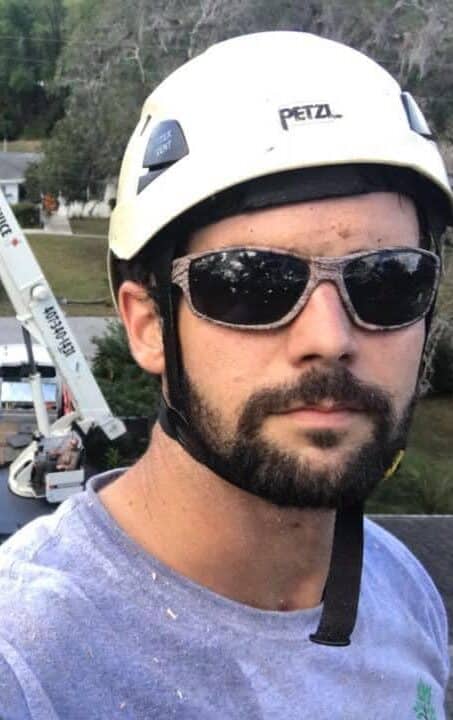
By: Shelby McCullough| Published: October 10, 2026
TL;DR: An ISA-Certified Arborist has passed a rigorous exam and maintains ongoing education in tree biology, risk assessment, and proper pruning, which matters in Central Florida because local ordinances often require their sign-off for permits and hurricane-risk documentation. Hiring one protects your trees, your property, and your wallet by avoiding bad pruning cuts, missed hazards, and permit violations.
If you own property in Orlando, Sweetwater, Union Park, Pine Castle, or Conway, you’ve probably had someone offer to “take down that oak” for a few hundred dollars cash. The question is whether that person actually knows what they’re looking at — or whether they’re just good with a chainsaw.
That difference matters more in Central Florida than almost anywhere else in the country. Our sandy soil, dense tree canopy, and hurricane exposure mean tree decisions carry real consequences for safety, property value, and sometimes legal compliance.
What Does "ISA-Certified Arborist" Actually Mean?
An ISA-certified arborist is a tree care professional certified by the International Society of Arboriculture (ISA), and certifications with the ISA are voluntary and mean someone has met high industry standards of knowledge, ethics, and experience caring for trees.
This isn’t a weekend course or a badge you can buy.
To qualify, a candidate needs at least three years of full-time arboriculture experience, or a relevant degree combined with the required work time, and certification is maintained through continuing education units, at least 30 over each three-year cycle.
The exam itself covers tree biology, identification, tree-soil-water relations, nutrition and fertilization, planting, pruning techniques, cabling, bracing and lightning protection, problem diagnosis and management, preservation, climbing and safe work practices, and risk assessment.
It’s also worth noting what the credential isn’t.
The ISA certification is not sponsored or endorsed by the government; it’s managed by the International Society of Arboriculture as a way for tree care professionals to demonstrate their commitment to the profession.
That doesn’t make it less rigorous —
the credential’s weight comes from the fact that ISA certification is accredited by the ANSI National Accreditation Board (ANAB) and meets the requirements of ISO 17024, the international standard for bodies that certify people.
What an Arborist Actually Does
Beyond climbing and cutting,
ISA Certified Arborists diagnose tree problems such as diseases, insect infestations, and decline, implement strategies to mitigate poor tree health, and provide emergency tree care.
They’re trained in tree health, pest management, soil fertility, assessing storm damage, cabling and bracing, and proper pruning techniques.
At McCullough Tree Service, our team includes three ISA-Certified Arborists who apply that training across certified arborist consultations, trimming, removals, and storm damage assessments throughout Orange and Seminole counties.
Why This Matters More in Central Florida
1. Local Permit Rules Often Require It
Orange County and the City of Orlando regulate the removal of mature trees, and the arborist credential isn’t just a nice-to-have — it’s often the legal gateway to doing the work at all.
For residential property in Orlando, a permit is not required if the property owner obtains a report from an arborist who is TRAQ (Tree Risk Assessment Qualification) certified by the International Society of Arboriculture or a Florida-licensed landscape architect confirming that the tree poses a danger.
That exemption traces back to state law.
Florida Statutes section 163.045 prohibits a local permit, fee, or mitigation requirement for qualifying tree pruning or removal on residential property when the owner has signed professional documentation showing the tree poses an unacceptable risk to persons or property.
Without a certified arborist’s signed assessment, homeowners in Orlando, Pine Castle, Conway, and surrounding Orange County communities simply don’t have access to that fast-track option.
2. Our Trees Face Real Hurricane Risk
Central Florida’s hurricane exposure raises the stakes on every tree decision.
Property damage could be reduced by having a professional arborist evaluate unhealthy, injured, or questionable trees to assess risk and treat problems, and hiring a certified arborist can be a worthwhile investment.
Species selection matters here too. University of Florida extension research cited by local arborists notes that
laurel oaks are relatively short-lived, usually showing considerable dieback as they reach 50 years, and tend to lose their strength and stability faster than most other oaks, giving them low wind resistance.
A trained eye can tell the difference between a laurel oak that needs monitoring and a live oak that’s perfectly stable — a distinction that matters a great deal when you’re deciding whether to spend money removing or preserving a tree before storm season. For a deeper look at what that evaluation involves, see our guide to post-storm tree assessments.
3. Sandy Soil and Dense Canopies Demand Local Knowledge
Central Florida’s soil and climate conditions aren’t the same as a tree care textbook written for the Northeast or Midwest. An arborist who works Orange and Seminole counties year-round understands how sandy, well-drained soil affects root structure, how afternoon thunderstorms stress already-weakened limbs, and which species common to Winter Park, Maitland, and Dr. Phillips neighborhoods are more failure-prone in our conditions.
Pros and Cons of Hiring a Certified Arborist
The Advantages
- Science-based diagnosis.
A certified arborist can diagnose tree diseases and pest infestations and prescribe appropriate treatments
rather than guessing. - Proper pruning cuts. Certified arborists follow ANSI A300 pruning standards, the nationally recognized standard of care for the industry, rather than topping or over-thinning trees in ways that cause long-term decline.
- Permit and insurance documentation. As noted above, Orlando’s own permitting process leans on TRAQ-certified assessments for hazard exemptions.
- Risk assessment specifically for storms.
Certified arborists assess structural risk, perform proper pruning using cuts that promote healing, guide planting decisions, and provide tree preservation services to protect trees during construction or stress events. - Accountability.
Hiring a certified arborist provides tree owners the opportunity to become better informed about proper tree care and their selection of services based on the expertise represented by the credential.
The Trade-Offs
- Higher upfront cost than an uncertified crew. You’re paying for expertise, insurance, and equipment — not just labor.
- Scheduling during peak season. Reputable certified arborists book up fast before hurricane season and after major storms.
- Not every job needs a full consultation. Routine shrub trimming or small deadwood removal may not require the same level of credentialing as removing a large oak near a structure.
When You Specifically Need a Certified Arborist
- You’re applying for a residential hazard-tree exemption from a permit in Orlando or Orange County.
- A tree shows signs of internal decay, root heave, or a new lean after heavy rain.
- You’re planning construction or an addition near mature trees and need a preservation plan.
- Your HOA or commercial property requires a documented risk assessment.
- You need crane-assisted removal of a large tree in a tight residential lot.
- You’re preparing property in Pine Castle, Conway, Union Park, or Sweetwater for hurricane season and want a professional read on which trees are actually a risk versus which just look intimidating.
How to Verify the Credential
Don’t just take a company’s word for it. Ask for the arborist’s ISA certification number, confirm it’s current (certifications expire every three years without continuing education), and ask specifically whether the inspecting arborist holds the TRAQ credential if you’re pursuing a hazard-tree permit exemption. If a company sends an uncertified crew lead to do an “assessment,” that’s a red flag.
The McCullough Tree Service Difference
McCullough Tree Service has been family-owned and operated in Longwood for more than 30 years, serving Orange and Seminole counties including Orlando, Winter Park, Maitland, Altamonte Springs, Casselberry, Oviedo, Lake Mary, Sanford, Apopka, Windermere, and the surrounding Pine Castle, Conway, Union Park, and Sweetwater communities. With three ISA-Certified Arborists on staff, we provide the kind of documented, standards-based assessments that hold up for permits, insurance claims, and HOA requirements — not just a quick opinion.
If you’re in Lockhart or Edgewater, our certified teams handle precision tree trimming in Lockhart and tree trimming in Edgewater using the same ANSI-based standards we apply everywhere else in Central Florida.
We’re fully insured, drug-free, eco-friendly, and paperless, and we offer free estimates and financing. Whether you need a pre-storm risk assessment, a permit-qualifying hazard report, or routine pruning done right, our certified arborist team is ready to help — building relationships one tree at a time.
Recommended Reads
- Certified Arborist in Orlando & Central Florida
- Tree Trimming Service in Lockhart | Certified Arborists
- Top Tree Trimming Service in Edgewater by Certified Experts
Sources