By: | Published: February 19, 2026
Falling branches, visible decay, and brittle wood are signs many Orlando homeowners spot in their yards. These warning signals can point to a dead or hazardous tree that threatens your family’s safety and your property’s wellbeing. Understanding the critical risk factors of tree decline and knowing when to call a certified arborist can help you prevent costly damage and maintain a healthier landscape.
Table of Contents
- What Makes a Tree Dead or Hazardous
- Dangers Posed by Dead Trees in Yards
- Orlando Laws and Removal Requirements
- Professional Tree Removal vs. DIY Risks
- Benefits of Timely Dead Tree Removal
Key Takeaways
| Point | Details |
|---|---|
| Tree Safety Assessment | Regular inspections by homeowners and certified arborists can identify hazardous tree conditions before they pose risks. |
| Importance of Professional Removal | Hiring professionals for tree removal ensures safety and minimizes potential property damage. |
| Legal Regulations | Homeowners must understand local laws and obtain necessary permits before tree removal. |
| Timely Action | Prompt removal of dead trees prevents structural damage and reduces safety hazards in residential areas. |
What Makes a Tree Dead or Hazardous
Trees in Orlando’s urban landscape can become dangerous when they lose their structural integrity and health. Identifying whether a tree is dead or hazardous requires understanding specific warning signs that indicate potential risks to your property and safety.
Structural defects often emerge through several critical indicators that signal a tree’s declining condition. Structural defects can compromise tree stability and increase the likelihood of partial or complete tree failure. These defects typically manifest through:
- Dead or brittle branches hanging precariously
- Large cracks or splits in the trunk
- Visible decay or fungal growth
- Root damage or soil destabilization
- Significant lean or unbalanced canopy structure
Certified arborists recognize that hazardous trees develop from multiple interconnected factors. Natural aging, storm damage, pest infestations, and disease can progressively weaken a tree’s mechanical strength. Decay and structural compromises create scenarios where trees become increasingly vulnerable to catastrophic failure.
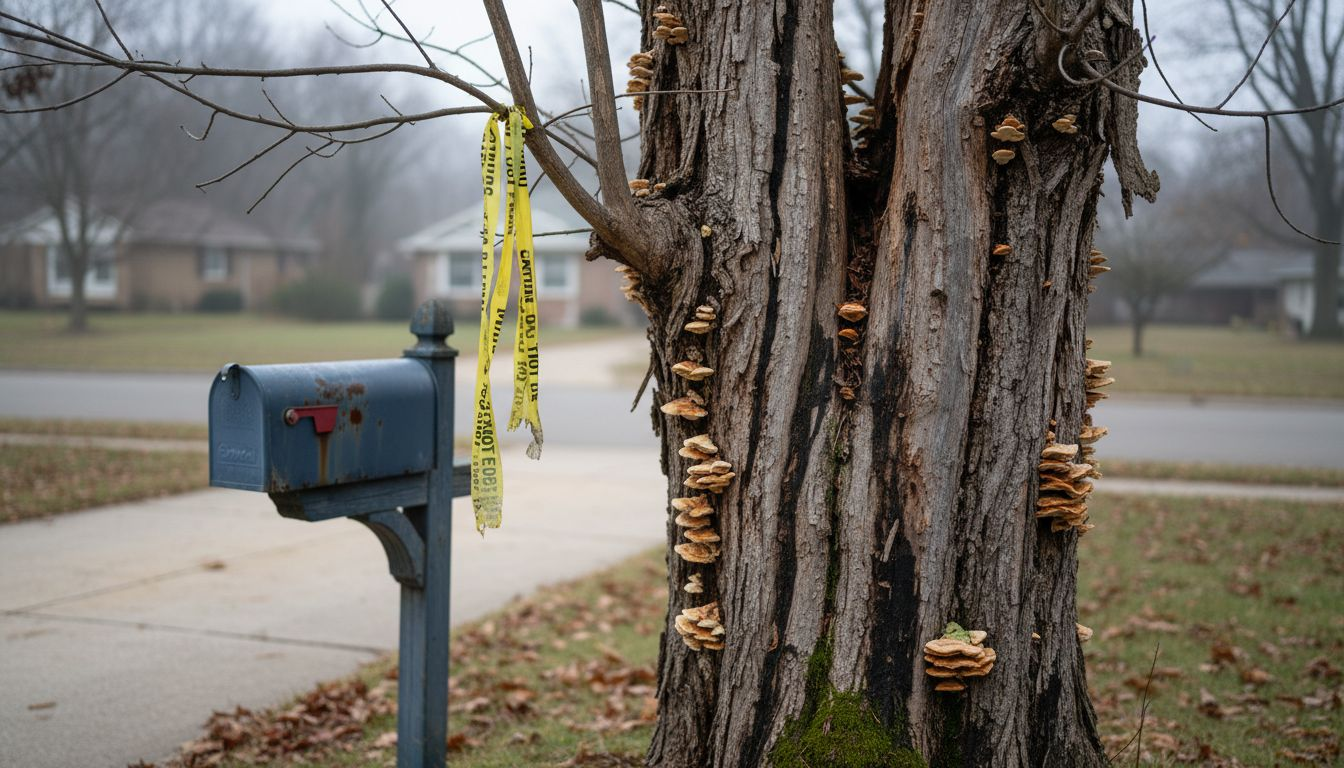
Understanding these risk factors is crucial for proactive tree management. While some signs of tree decline are obvious, others require professional assessment. Homeowners should conduct regular visual inspections but rely on expert evaluation to determine definitive risk levels.
Here’s a concise summary of factors leading to hazardous trees and their impact on property and safety:
| Risk Factor | How It Weakens Trees | Potential Impact on Property |
|---|---|---|
| Storm Damage | Breaks branches, cracks trunk | Falling debris, roof damage |
| Pest Infestation | Eats wood, spreads disease | Structural instability, pest spread |
| Natural Aging | Reduces strength, causes decay | Increased risk of tree failure |
| Disease | Decays roots, weakens structure | Soil instability, plant health risk |
| Mechanical Injury | Damages roots or trunk | Unbalanced tree, property hazard |
Pro tip: Conduct annual tree health assessments with a certified arborist to identify potential hazards before they become dangerous emergency situations.
Dangers Posed by Dead Trees in Yards
Dead trees represent more than just an aesthetic problem for Orlando homeowners – they pose serious safety risks that can lead to significant property damage and personal injury. Hazardous trees increase unexpected failure risks during storms, wind events, and extreme weather conditions.
The potential dangers of dead trees in residential yards are substantial and multifaceted:
- Falling branches that can damage roofs, vehicles, or structures
- Potential injury to people or pets underneath or near the tree
- Increased risk of property damage during severe weather
- Attraction of harmful pests and wood-destroying insects
- Potential spread of tree diseases to neighboring healthy trees
Structural compromise is the primary concern with dead trees. As trees lose their vitality, their internal wood becomes brittle and weak, making them increasingly unstable. Urban landscape dead trees require careful management to balance safety with ecological considerations.
While dead trees might provide some ecological benefits like habitat for certain wildlife, the risks in residential areas far outweigh these potential advantages. Professional arborists recommend proactive assessment and removal to prevent catastrophic failures that could result in expensive repairs or personal harm.
Pro tip: Schedule a professional tree inspection annually to identify potential hazards before they become emergency situations.
Orlando Laws and Removal Requirements
Navigating tree removal regulations in Orlando requires understanding specific local and state guidelines that protect both property owners and the urban ecosystem. Florida state law provides clear guidelines for residential tree removal, especially when safety is a primary concern.
The key requirements for tree removal in Orlando include:
- Obtaining documentation from a certified arborist
- Understanding permit requirements for residential vs. commercial properties
- Providing evidence of tree hazards or structural damage
- Potential replacement tree requirements
- Compliance with local and state regulations
Residential Property Regulations are particularly nuanced. Tree removal permits have specific local requirements that homeowners must carefully navigate. Commercial properties always require a formal permit, while residential owners may have more flexibility if they can demonstrate tree-related risks.
Homeowners should be aware that while state law provides protections, local ordinances may have additional stipulations. Professional documentation from a certified arborist becomes crucial in substantiating the need for tree removal, especially when the tree poses an unacceptable risk to persons or property.
Pro tip: Consult with a certified arborist to obtain professional documentation before initiating any tree removal process in Orlando.
Professional Tree Removal vs. DIY Risks
Removing dead trees might seem like a straightforward task, but the risks associated with DIY tree removal can be catastrophically high. Professional arborists use critical safety protocols that protect both property owners and surrounding landscapes from potential damage.
The key differences between professional and DIY tree removal include:
- Specialized equipment and safety gear
- Expert risk assessment capabilities
- Advanced technical knowledge of tree mechanics
- Comprehensive insurance coverage
- Precise removal techniques to minimize property damage
- Professional liability protection
Structural Complexity makes tree removal far more dangerous than most homeowners realize. Hazardous tree removal requires extensive expertise to prevent catastrophic accidents. Professionals understand intricate details like branch tension, root systems, and potential failure points that untrained individuals might completely overlook.
Amateur attempts can result in devastating consequences, including personal injury, property destruction, and potential legal liabilities. Professional arborists conduct thorough assessments, use advanced equipment, and implement strategic removal techniques that ensure safety and minimize collateral damage.
To help Orlando homeowners understand removal options, here’s a comparison of professional tree removal versus DIY attempts:
| Aspect | Professional Arborist | DIY Removal |
|---|---|---|
| Equipment | Specialized tools, safety gear | Basic tools, limited safety |
| Knowledge | Deep tree risk assessment | Limited understanding, risks missed |
| Liability Coverage | Comprehensive insurance | No insurance, personal risk |
| Property Safety | Minimal collateral impact | High risk of damage |
Pro tip: Always obtain multiple professional quotes and verify an arborist’s certification before attempting any tree removal project.
Benefits of Timely Dead Tree Removal
Removing dead trees promptly is crucial for maintaining both property safety and landscape health. Timely tree removal prevents unexpected property damage and protects homeowners from potential costly accidents and liability risks.
The key benefits of proactive dead tree removal include:
- Preventing potential structural damage to buildings
- Reducing wildfire risk in residential areas
- Stopping pest and disease spread to healthy trees
- Maintaining overall landscape aesthetic value
- Eliminating potential safety hazards for residents
- Creating opportunities for strategic landscape replanting
Landscape Protection goes beyond simple aesthetic considerations. Dead trees significantly increase wildfire vulnerability and can become dangerous fuel sources during high-risk environmental conditions. Professional removal ensures that potential risks are systematically mitigated before they escalate into serious problems.
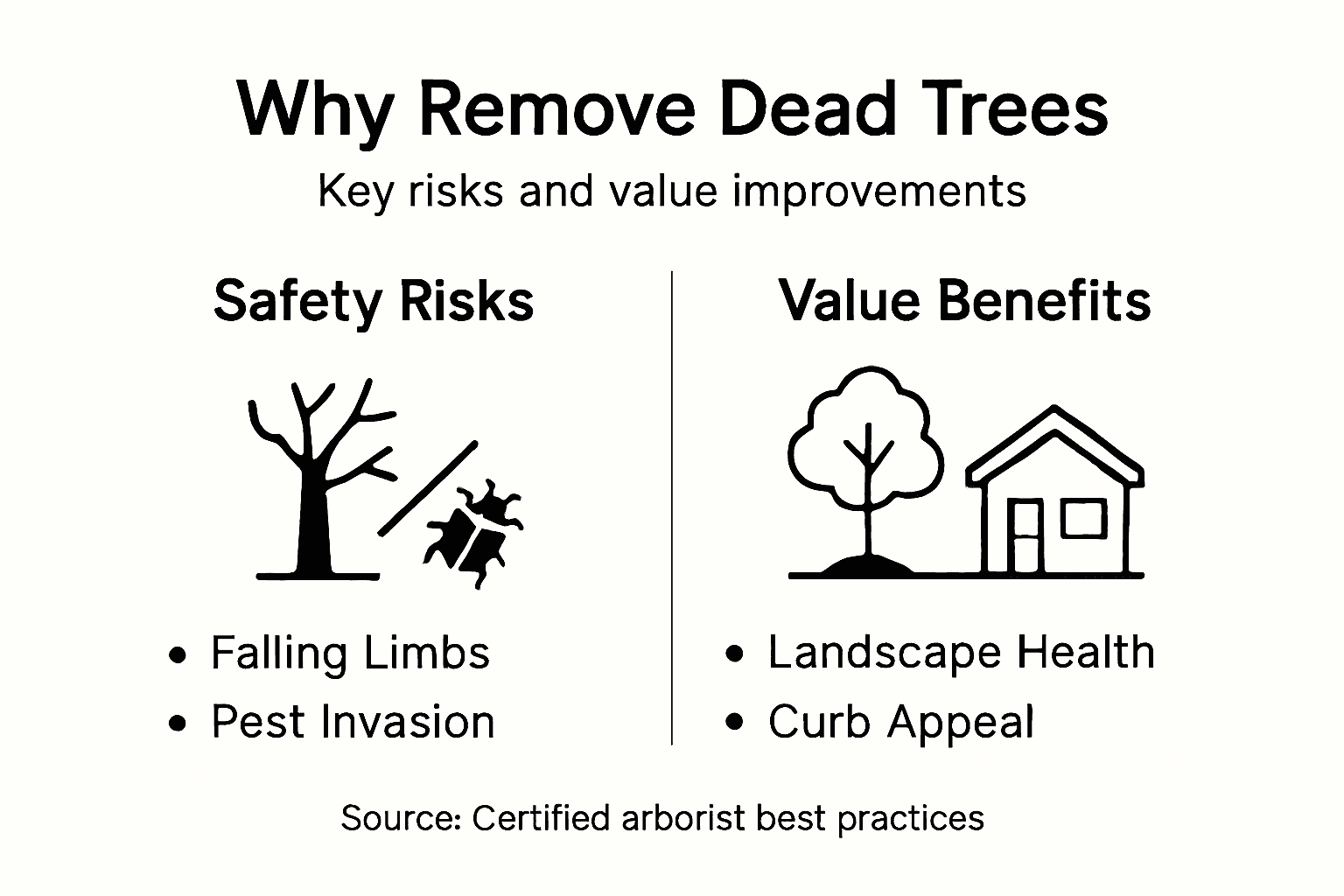
Homeowners should understand that dead trees are not just visual nuisances but potential sources of significant risk. Their structural weakness, combined with potential pest infestations and disease transmission, makes early intervention critical for maintaining a safe and healthy outdoor environment.
Pro tip: Schedule an annual professional tree assessment to identify and address potential dead or hazardous trees before they become emergency situations.
Protect Your Orlando Property with Expert Dead Tree Removal
Dead trees present serious safety challenges and threaten your landscape’s health as outlined in the article. From structural defects and pest infestations to increased risk of storm damage, leaving hazardous trees unattended puts your home, family, and property at risk. If you want to avoid costly repairs and minimize dangerous situations, timely removal is critical.
McCullough Tree Service specializes in professional tree removal and assessments designed specifically for Orlando and Central Florida residents. Our certified arborists use deep expertise to identify hazardous trees, assess risk factors like decay and structural instability, and safely remove dead trees before they cause damage. We also offer stump grinding, storm cleanup, and tree planting services to keep your landscape healthy and beautiful year-round.
Don’t wait until dead or hazardous trees become an emergency. Visit McCullough Tree Service today to schedule a professional tree health assessment and explore our comprehensive tree removal solutions. Protect your property and loved ones now with trusted, certified expertise you can count on.
Frequently Asked Questions
What are the dangers of having a dead tree in my yard?
Dead trees can pose serious risks, such as falling branches that can damage property or injure people or pets. They can also attract harmful pests and potentially spread diseases to nearby healthy trees.
How can I tell if a tree is dead or hazardous?
Signs of a dead or hazardous tree include dead or brittle branches, large cracks in the trunk, visible decay or fungal growth, and significant leaning. A thorough inspection by a certified arborist can provide a definitive assessment.
Why is timely removal of dead trees important?
Removing dead trees promptly prevents unexpected property damage, reduces wildfire risks, stops the spread of pests and diseases, and enhances the overall aesthetic value of your landscape.
Should I attempt to remove a dead tree myself or hire a professional?
It’s generally safer to hire a professional arborist for tree removal, as they have the expertise, specialized equipment, and insurance to handle the risks involved in the process. DIY removal can lead to personal injury and property damage.
Recommended
- Why You Should Remove Trees Near Your House
- Signs Your Tree Needs Removal
- Tree Removal and Property Value in Orlando
- 7 Key Benefits of Professional Tree Removal for Homeowners