By: Shelby McCullough| Published: July 1, 2026
TL;DR:
- Seasonal pruning aligns with a tree’s biological cycles to promote health and safety. Pruning at the wrong time can weaken trees, increase disease risk, and reduce storm resilience. Certified arborists recommend specific timing for different pruning objectives to ensure proper wound healing and structural integrity.
Seasonal pruning is the practice of cutting branches at specific times of year to align with a tree’s biological cycles, energy reserves, and growth patterns. Property owners who prune at the wrong time risk weakening their trees, inviting disease, and reducing the structural integrity that matters most during Florida’s storm season. The New York Botanical Garden establishes that pruning timing is critical because a tree’s ability to seal wounds depends directly on its energy reserves and pest activity cycles. Get the timing right, and pruning becomes one of the most effective tools you have for tree health, safety, and curb appeal.
Why seasonal pruning matters: tree energy cycles explained
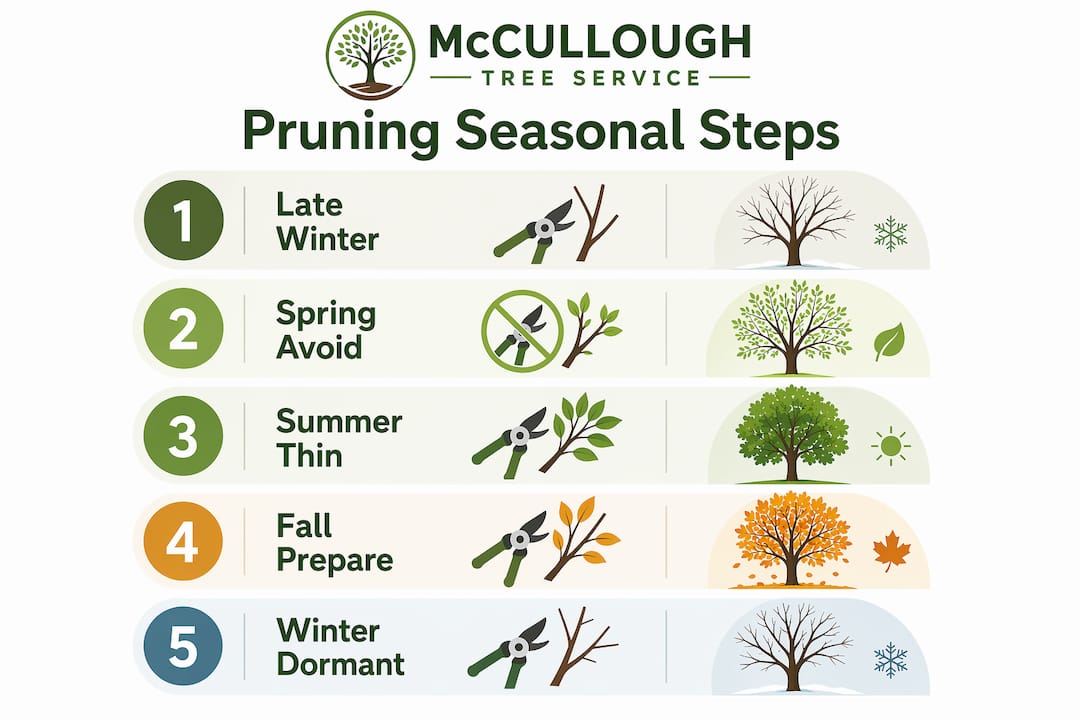
A tree’s energy reserves fluctuate throughout the year, and those fluctuations determine how well it heals after a cut. Energy reserves peak in late dormancy, just before bud swell in late winter. That is the window when pruning causes the least stress and gives the tree its strongest defense against pathogens entering through fresh wounds.
The worst time to prune is during active leaf formation in spring. At that stage, the tree is burning through stored energy to push out new growth. A pruning cut made then forces the tree to redirect even more resources to wound closure, slowing both healing and growth. The result is a weakened tree that is more vulnerable to fungal infection and insect attack.
Two additional periods to avoid are active leaf-fall in autumn and peak summer growth. During leaf-fall, the tree is pulling nutrients back from leaves into storage. Cutting branches disrupts that process and reduces the energy the tree banks for winter. During peak summer growth, wounds stay open longer because the tree’s resources are already committed elsewhere.
Key timing rules to follow:
- Late dormancy (late winter): Best for most deciduous trees. Energy is high, pests are inactive, and wounds close fast after bud break.
- Leaf-formation phase (early spring): Avoid. Energy reserves are at their lowest point.
- Peak summer growth: Use only for canopy maintenance, not structural work.
- Active leaf-fall (autumn): Avoid. Disrupts nutrient recovery and weakens winter reserves.
- Dead or hazardous branches: Remove any time of year, regardless of season.
Understanding these cycles is the foundation of every good pruning decision. Timing is not a preference. It is biology.
What are the benefits of winter dormant pruning?
Dormant pruning, done in late winter before bud swell, is the most effective approach for structural tree work. Winter pruning stimulates vigorous spring growth and strengthens the tree’s long-term architecture. The tree responds to dormant-season cuts with strong, well-directed shoot development once temperatures rise.
The structural benefits go beyond just new growth. Removing dead, diseased, or crossing branches in winter eliminates the weak points that cause failures during high winds. For property owners in Central Florida, where hurricane season runs june through november, this matters enormously. A tree pruned for structure in february or march enters storm season with a cleaner, more wind-resistant canopy.
Pest and disease risk also drops significantly during dormant pruning. Most insects and fungal pathogens are inactive in winter. Wounds made during this period close before pest populations peak in spring and summer. That timing advantage is one reason certified arborists consistently recommend late dormancy as the primary pruning window for most species.
Here is a step-by-step approach for effective dormant pruning:
- Inspect the full canopy before making any cut. Identify dead wood, crossing branches, and any limbs growing toward the structure or power lines.
- Start with dead and diseased branches. These come out first, regardless of season, but winter makes the work cleaner and safer.
- Remove crossing or rubbing branches. Left in place, they create wounds that invite decay.
- Cut at the branch collar. The branch collar is the slightly raised ring of bark where a branch meets the trunk. A clean cut there, without cutting into the collar itself, allows the tree to form a natural barrier against pathogens.
- Avoid wound dressings. Applying paint or sealant to pruning cuts is counterproductive. Clean cuts at the branch collar promote natural recovery far better than any coating.
Pro Tip: Never remove more than 25% of a tree’s live canopy in a single dormant season. Removing too much at once stresses the tree just as badly as pruning at the wrong time.
When and why to use summer pruning for tree maintenance
Summer pruning serves a different purpose than dormant pruning. Heavy structural work belongs in winter; summer pruning is for maintenance, canopy control, and fruit quality. Knowing the difference prevents you from making cuts that harm rather than help.
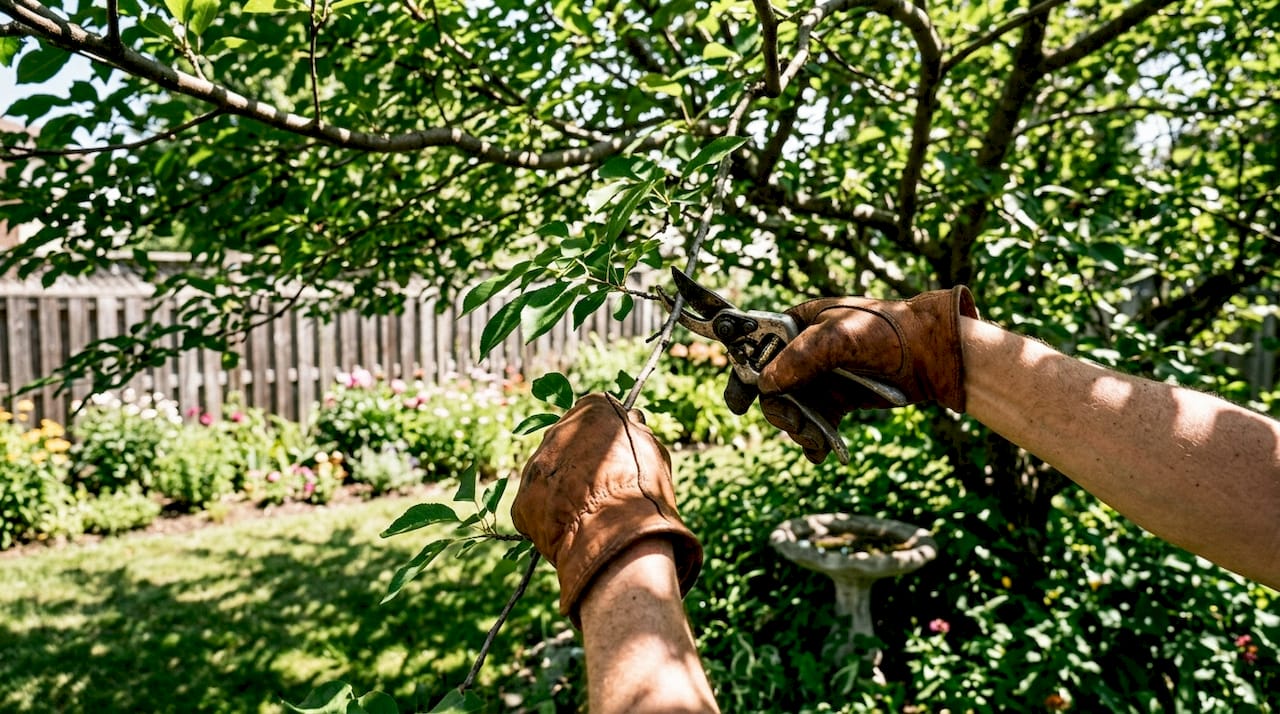
The primary benefit of summer pruning is canopy management. Summer cuts reduce canopy density by 20–30%, which improves light penetration and air circulation through the interior of the tree. Better airflow reduces the humidity that fungal diseases need to spread. More light reaching the interior also improves fruit size, color, and ripening on fruit-bearing trees.
Summer pruning also controls excessive vegetative growth without triggering the aggressive regrowth that dormant pruning can produce. When you remove a branch in winter, the tree responds in spring with multiple new shoots from that point. Summer cuts slow that response because the tree’s energy is already committed to existing growth.
Key uses for summer pruning:
- Canopy thinning to reduce wind resistance and improve light distribution.
- Removing water sprouts (the fast-growing vertical shoots that appear after dormant pruning).
- Controlling fruit tree size and directing energy toward fruit development rather than excess foliage.
- Correcting minor structural issues that were not addressed in winter.
Pro Tip: In Central Florida’s climate, summer pruning works best in june or july, before the most intense heat of late summer stresses the tree further. Avoid pruning during drought periods, when the tree is already under water stress.
Common pruning mistakes and safety considerations
Each pruning cut is a wound. Unnecessary cuts weaken the tree and increase disease susceptibility. Pruning is beneficial only when performed with clear objectives, which is why understanding what not to do is just as important as knowing the right technique.
Topping is the most damaging mistake property owners make. Topping means cutting large branch ends back to stubs, which destroys the tree’s natural form and triggers invasive regrowth that is structurally weak. Topped trees develop dense clusters of fast-growing shoots called water sprouts. These sprouts are poorly attached and break easily in storms, creating the exact hazard the property owner was trying to prevent.
Safety around utilities is non-negotiable. Never prune within 10 feet of power lines. That work requires a certified arborist with the proper equipment and utility clearance. The tree trimming safety protocols that professionals follow exist because contact with energized lines is fatal.
Additional mistakes to avoid:
- Pruning during active pest outbreaks. Fresh wounds attract beetles and borers that are already active in the area.
- Pruning during drought stress. A water-stressed tree cannot close wounds effectively, leaving it exposed to infection.
- Using a chainsaw on a ladder. DIY pruning on ladders greatly increases fall risk. Any cut that requires a ladder and a chainsaw belongs to a professional.
- Flush cuts. Cutting flush with the trunk removes the branch collar and destroys the tree’s natural defense zone.
The importance of tree pruning goes hand in hand with doing it correctly. A bad cut causes more long-term damage than no cut at all.
Practical seasonal pruning guidelines by tree type
Timing recommendations vary by species and growth objective. The table below covers the most common scenarios property owners encounter.
| Tree type | Best pruning season | Reason |
|---|---|---|
| Most deciduous trees | Late winter (dormancy) | Peak energy reserves; wounds close fast after bud break |
| Spring-flowering trees (e.g., dogwood, redbud) | Immediately after bloom | Pruning post-bloom preserves buds formed the previous fall |
| Fruit trees | Late winter + light summer | Winter for structure; summer for size and fruit quality control |
| Evergreen trees | Late winter to early spring | Minimal sap flow; new growth quickly covers cuts |
| Dead or hazardous branches | Any time | Safety takes priority over seasonal timing |
Spring-flowering trees deserve special attention. Pruning a dogwood or redbud in late winter removes the flower buds that formed the previous fall. You get a structurally improved tree but no bloom that year. Pruning right after the flowers fade solves both problems. The tree keeps its bloom cycle, and you still get to shape it before summer growth begins.
For most deciduous trees in Central Florida, late winter pruning before bud swell is the standard recommendation. The seasonal pruning approach that combines dormant structural work with light summer maintenance produces the healthiest, most resilient trees over time.
Key Takeaways
Seasonal pruning works because it aligns cuts with a tree’s peak energy reserves, reducing stress, accelerating wound closure, and protecting against disease and structural failure.
| Point | Details |
|---|---|
| Prune in late dormancy | Late winter is when energy reserves peak and pest activity is lowest, making it the safest pruning window. |
| Avoid leaf-formation phase | Pruning during early spring stresses trees most because energy reserves are at their lowest point. |
| Use summer pruning for maintenance | Summer cuts reduce canopy density 20–30% and improve light and airflow without triggering aggressive regrowth. |
| Never top a tree | Topping destroys natural form and creates structurally weak regrowth that fails in storms. |
| Match timing to species | Spring-flowering trees need post-bloom pruning to preserve flower buds formed the previous fall. |
Pruning is about more than a tidy yard
Most property owners think about pruning when a branch looks out of place or a tree starts crowding the roofline. That reactive approach misses the bigger picture. A well-pruned tree is not just attractive. It is structurally prepared for the next storm, resistant to the diseases that spread through poorly ventilated canopies, and capable of living decades longer than a neglected one.
What I have seen repeatedly in tree care is that the damage from a single bad pruning decision, whether it is topping, a flush cut, or pruning at the wrong time, can take years to show up. By the time a property owner notices decay or structural failure, the wound is already old. That lag between cause and consequence is why so many people underestimate how much timing and technique matter.
The trees that perform best long-term are the ones that received consistent, well-timed pruning from early in their life. They develop strong branch architecture, seal wounds efficiently, and shed wind load in ways that poorly pruned trees cannot. A well-pruned tree prioritizes long-term resilience over immediate appearance, and that resilience shows up most clearly when a major storm moves through.
My honest recommendation: treat pruning as a scheduled maintenance task, not a cosmetic fix. Know your species, respect the seasonal windows, and call a certified arborist for anything near utilities or above ladder height. The cost of professional pruning is a fraction of what you pay for emergency tree removal after a structural failure.
— Results
Mcculloughtreeservice: professional seasonal pruning in Central Florida
Certified arborists bring more than tools to a pruning job. They bring species knowledge, seasonal timing expertise, and the safety training that complex cuts require.

Mcculloughtreeservice serves residential and commercial property owners across Orlando and Central Florida with professional tree trimming aligned with seasonal best practices. Whether you need dormant structural pruning before bud break, summer canopy thinning, or a safety assessment for branches near power lines, the team at Mcculloughtreeservice handles it with licensed, insured professionals. Their certified arborists in Orlando provide site-specific recommendations that protect both your trees and your property. Contact Mcculloughtreeservice for a free estimate and get your trees on the right seasonal schedule.
FAQ
Why does pruning season affect tree health?
Pruning season determines how well a tree seals its wounds. Late dormancy pruning aligns cuts with peak energy reserves, allowing the tree to close wounds quickly before pests and pathogens become active in spring.
What is the best time of year to prune most trees?
Late winter, just before bud swell, is the best time for most deciduous trees. Energy reserves are at their highest, pest activity is low, and new growth quickly covers pruning wounds.
Should you prune spring-flowering trees in winter?
No. Pruning spring-flowering trees like dogwood or redbud in late winter removes the flower buds formed the previous fall. Prune them immediately after they finish blooming to preserve next year’s flowers.
Is summer pruning bad for trees?
Summer pruning is not harmful when used correctly. It reduces canopy density by 20–30%, improves airflow, and controls excessive growth. Avoid summer pruning during drought stress or active pest outbreaks.
When should a certified arborist handle pruning instead of a homeowner?
Any pruning within 10 feet of power lines, cuts requiring a chainsaw on a ladder, or structural work on large trees requires a certified arborist. DIY pruning in these situations creates serious safety and liability risks.
Recommended
- Tree Pruning Importance: Key Benefits Explained
- Pruning Trees: Essential Tips and Benefits
- Tree Care 101: Trimming vs. Pruning Guide
- The Importance of Tree Pruning