By: Shelby McCullough| Published: May 24, 2026
TL;DR:
- Proper tree clearance enhances ecosystem health by reducing overcrowding and edge effects that weaken forests. It also ensures legal compliance and significantly minimizes risks of property damage and injury during storms or disasters. Engaging certified arborists for strategic pruning and removal protects your property, supports the environment, and ensures adherence to local regulations.
Many property owners hesitate when someone suggests removing or trimming trees. It feels counterintuitive, almost like harming something that adds value to the land. But understanding why tree clearance is important changes that perspective fast. Strategic clearance protects your property from physical damage, keeps you legally compliant, reduces disaster risk, and actually supports healthier tree growth over time. This article walks you through the real reasons to clear trees, with specifics on ecology, safety law, disaster preparedness, and the right techniques to use.
Table of Contents
- Key Takeaways
- Why tree clearance is important for ecosystem health
- Legal responsibilities and liability
- Property damage, disasters, and infrastructure
- Choosing the right clearance method
- My take on what property owners get wrong
- Get professional clearance help in Central Florida
- FAQ
Key Takeaways
| Point | Details |
|---|---|
| Clearance supports ecosystem health | Larger, well-managed forest patches show 38% greater productivity per hectare than fragmented, overcrowded patches. |
| Legal obligations are real | Municipal codes require specific clearance heights and classify overhanging vegetation as a public nuisance with legal consequences. |
| Disaster funding depends on it | FEMA assistance for tree removal only applies when trees pose an immediate hazard to your home or essential utilities. |
| Not all clearance is the same | Pruning, trimming, and full removal serve different purposes. Choosing the wrong method can increase storm damage risk. |
| Professional assessment prevents costly mistakes | Improper cuts can weaken trees and recreate hazards rather than eliminate them. |
Why tree clearance is important for ecosystem health
One of the biggest misconceptions about tree clearance is that it hurts the environment. The reality is more nuanced. Overcrowded trees compete for sunlight, water, and nutrients. When that competition goes unmanaged, weaker trees suffer and the entire patch becomes less productive.
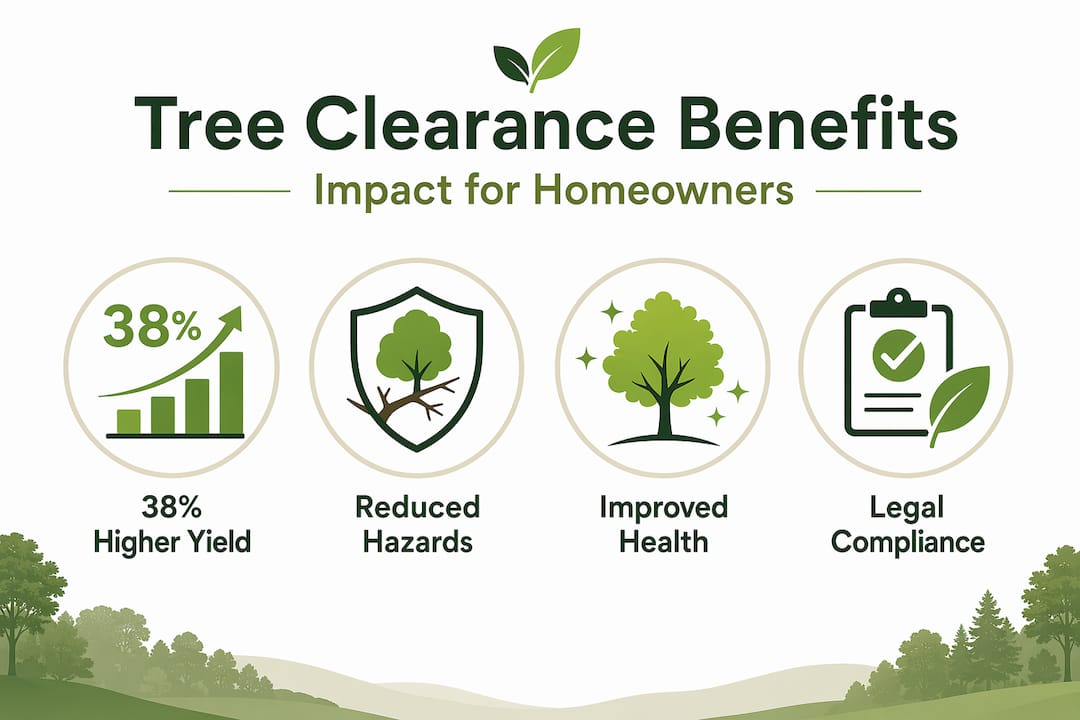
A 2026 study published in Nature Ecology & Evolution found that productivity per hectare is roughly 38% higher in large, contiguous forest patches compared to isolated, fragmented ones. The takeaway for property owners is direct: trees managed with intentional spacing and clearance contribute more to carbon sequestration, soil health, and biodiversity than crowded stands left entirely untouched.
There is also the issue of edge effects. When trees are fragmented or poorly spaced, a greater proportion of the canopy sits at the edge of a stand, exposed to wind, drought, and temperature swings. Understanding the environmental impact of trimming helps property owners see that strategic clearance actually reduces those edge effects and strengthens the remaining trees.
Balancing clearance with biodiversity matters, too. Removing every competitor is not the goal. The goal is giving your healthiest, most structurally sound trees the space they need to thrive while preserving understory diversity where appropriate.
Pro Tip: Before clearing any tree cluster, identify your two or three “legacy trees,” meaning the largest and healthiest specimens worth protecting. Clear around them first and evaluate the rest from there.
Legal responsibilities and liability
Most property owners do not realize how much legal exposure comes with neglected trees. Municipal codes across the country treat overhanging or obstructing vegetation as a public nuisance, and that classification has real consequences.
Here is what the law typically requires:
- Clearance height over sidewalks: Many municipalities, including under Spokane’s municipal code, mandate at least 8 feet of clearance above pedestrian pathways.
- Clearance height over streets: The same code requires 14 feet of clearance above public roads. If pruning cannot fix the obstruction, removal becomes mandatory.
- Damage to public utilities: Municipal authority extends to ordering removal or pruning when trees damage utilities, block rights-of-way, or create direct safety hazards.
- Permit requirements: Major pruning or removal of street trees typically requires a permit, though emergency situations allow immediate work with rapid notification to the relevant authority.
If a tree on your property injures a pedestrian or damages a neighbor’s structure and you were aware of a hazard, you can face a negligence claim. Courts have consistently held that property owners carry the responsibility of maintaining vegetation that affects public or adjacent private spaces.
The good news is that compliance is straightforward when you work with a certified arborist who understands local codes. Understanding tree safety priorities before you have a problem is far less expensive than dealing with one after the fact.
Pro Tip: Check your specific county or city ordinance for clearance height requirements. They vary by jurisdiction. What passes in one city may trigger a nuisance citation in another.
Property damage, disasters, and infrastructure
Tree clearance becomes most urgent right before storm season. For property owners in Florida and other hurricane-prone states, this is not a theoretical concern.
Here is a practical breakdown of how clearance directly protects your property and your eligibility for financial help after a disaster:
- Root damage prevention. Tree roots seeking water will infiltrate foundation cracks, sewer lines, and irrigation systems. Clearance and strategic removal of trees planted too close to structures can prevent thousands of dollars in repair costs.
- Pre-storm limb management. Removing deadwood, weak branch unions, and overhanging limbs before a storm significantly reduces the chance of limb failure. Clearance pruning targets structural vulnerabilities, not just appearances.
- Wildfire risk reduction. Fuel treatments that reduce tree and brush density cut wildfire spread and damages substantially. Research shows prescribed fuel treatments deliver $3.73 in benefits for every $1 invested, with one study attributing $2.8 billion in damage reductions to clearance-based fuel management.
- FEMA funding eligibility. After a declared disaster, FEMA individual assistance covers tree removal only when the tree poses an immediate hazard to your primary residence or essential utilities. Aesthetic removal does not qualify. Proactive clearance of genuinely hazardous trees before a storm is your best insurance.
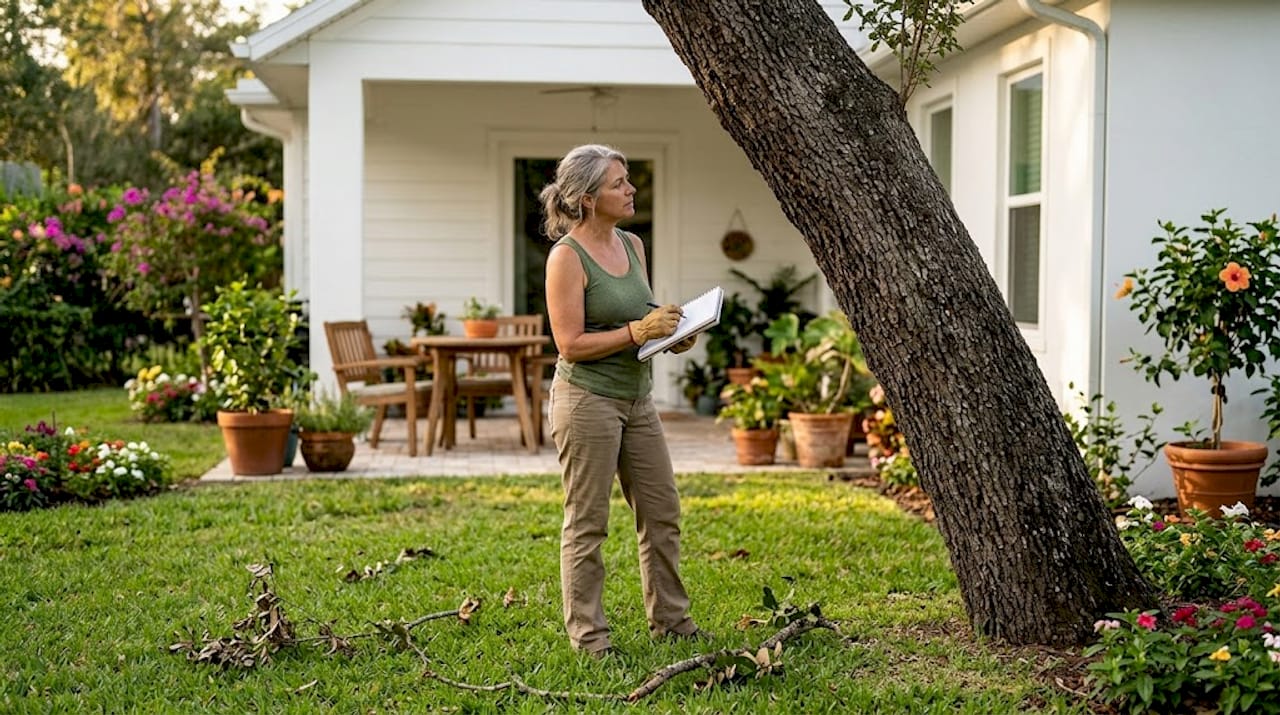
For Florida homeowners specifically, a mature oak leaning toward your roof is not just a cosmetic issue. It is a liability, a storm risk, and potentially a disqualifier for disaster relief if it falls and the damage could have been prevented. The need for tree clearance is never more obvious than when you are standing in a debris field after a hurricane wondering if it could have been avoided.
You can learn more about post-storm priorities through storm recovery steps that outline what to address first and what qualifies for emergency intervention.
Choosing the right clearance method
Not every tree situation calls for full removal. Understanding the differences between clearance methods helps you make smarter decisions and avoid creating new problems in the process.
| Method | Purpose | Key benefit | Risk if done wrong |
|---|---|---|---|
| Crown lifting | Raise canopy height for clearance | Meets sidewalk/street codes | Removes too much lower growth at once |
| Structural pruning | Improve branch architecture | Reduces long-term failure risk | Wrong cuts recreate weak attachment points |
| Clearance pruning | Remove deadwood and hazard limbs | Reduces storm damage | Over-thinning increases wind resistance |
| Full removal | Eliminate irreparable hazard trees | Eliminates risk at the source | Stump left behind can harbor pests |
The most misunderstood method is thinning. Many homeowners request it believing that removing interior branches helps trees breathe and resist wind. The opposite can be true. Thinning the canopy can actually increase the sail effect, making trees more vulnerable to wind loading during a storm rather than less.
Proper clearance pruning, by contrast, targets failure mechanisms specifically: deadwood, codominant stems with weak unions, branches rubbing against structures, and limbs hanging over occupied areas. As one expert framework describes it, wrong cuts recreate hazards rather than eliminate them, making risk assessment the foundation of any clearance work.
For a side-by-side breakdown of what separates pruning from trimming in daily practice, the trimming vs. pruning guide offers a clear framework without the jargon.
Tree removal is the right call when structural defects are irreparable, when the tree poses an active hazard to a structure, or when disease has compromised the tree’s integrity beyond recovery. The point is that clearance is a spectrum, not a binary choice between “cut it all down” and “leave everything alone.”
My take on what property owners get wrong
I have worked alongside property owners who either want to clear everything at once or refuse to touch a single branch because they worry about harming the ecosystem. Both instincts, taken to extremes, cause real problems.
What I have learned is that tree clearance is fundamentally a management decision, not a one-time event. The property owners who get the best outcomes treat their trees the way a good coach manages a team: they identify the strongest performers, give them room to grow, and remove what is holding the rest back.
The biggest mistake I see is reactive clearance. Waiting until a limb falls, a root cracks a foundation, or a municipal notice arrives means you are already paying a premium, whether in repair costs, legal exposure, or emergency service rates. Proactive clearance guided by regular tree maintenance almost always costs less and produces better results.
I am also direct with people about the ecological guilt that sometimes stops clearance from happening. Removing one overcrowded tree to give three healthy ones proper root space and sunlight is not destruction. It is stewardship. The trees that remain will grow stronger, store more carbon, and live longer. That is a better outcome for the land.
If you are evaluating your property right now, start with a certified arborist assessment before making any decisions. Let the condition of the trees guide the approach, not assumptions in either direction.
— Mcculloughtreeservice
Get professional clearance help in Central Florida
If this article has clarified why tree clearance is important for your specific situation, the next step is getting an expert set of eyes on your property.
Mccullough Tree Service provides certified arborist assessments for residential and commercial properties across Orlando and Central Florida. Whether you need targeted professional tree trimming to meet clearance codes, strategic hazard tree removal before storm season, or a full property evaluation to prioritize what needs attention first, the team brings licensed expertise to every job. No guessing, no over-clearing, and no cutting corners on compliance. Contact Mcculloughtreeservice to schedule your assessment and get a clear picture of what your property actually needs.
FAQ
What does tree clearance actually mean for homeowners?
Tree clearance refers to the strategic removal, pruning, or trimming of trees and branches to reduce hazards, meet legal requirements, and support property and ecosystem health. It includes everything from crown lifting for sidewalk compliance to full removal of structurally compromised trees.
How does tree clearance help prevent storm damage?
Clearance pruning removes deadwood, weak branch unions, and limbs overhanging structures before storms arrive. According to arborist guidance, targeting failure mechanisms rather than general thinning is the most effective way to reduce storm-related limb failure.
Can I get FEMA help to pay for tree removal?
FEMA individual assistance covers tree removal only when a tree poses an immediate threat to your primary residence or essential utilities. Removal for aesthetic reasons or general property cleanup does not qualify under FEMA’s assistance criteria.
Is tree clearance bad for the environment?
Strategic clearance actually supports ecosystem health. Research shows larger contiguous forest patches are significantly more productive per hectare than fragmented ones, meaning thoughtful clearance that reduces overcrowding can improve carbon sequestration and biodiversity over time.
Do I need a permit to remove or prune trees on my property?
It depends on your municipality and whether the tree is classified as a street tree or protected species. Many jurisdictions require permits for major pruning or removal, though emergency hazard situations typically allow immediate work with prompt notification to local authorities.
Recommended
- The Importance of Tree Pruning
- Tree Pruning Importance: Key Benefits Explained
- Why regular tree maintenance matters for property owners
- Land clearing benefits for a usable, valuable property