By: Shelby McCullough| Published: January 30, 2026
A sudden storm in Central Florida can turn healthy trees into unexpected liabilities on commercial properties. Managing tree removal is more than an aesthetic upgrade—it is a matter of safety and legal compliance. Property managers face challenges in identifying hazardous trees and meeting strict municipal requirements. This guide provides clear steps to help you prioritize comprehensive tree risk assessment and streamlined permit acquisition, keeping your property both beautiful and compliant.
Table of Contents
- Step 1: Assess Site and Identify Trees for Removal
- Step 2: Obtain Necessary Permits and Approvals
- Step 3: Prepare Site and Secure Surroundings
- Step 4: Perform Safe Tree Removal Procedures
- Step 5: Clear Debris and Inspect Final Results
Quick Summary
| Key Point | Explanation |
|---|---|
| 1. Conduct a Thorough Assessment | Perform a detailed tree risk assessment to identify trees at risk of removal based on structural and health indicators. |
| 2. Obtain Necessary Permits | Contact local authorities early to secure required permits for tree removal compliance, preventing potential fines. |
| 3. Ensure Site Preparation | Establish a safety perimeter, clear the work area, and verify safety equipment to protect workers and bystanders. |
| 4. Follow Safe Removal Procedures | Utilize proper cutting techniques and maintain clear communication to ensure safe and effective tree removal. |
| 5. Conduct Final Site Cleanup | Thoroughly clear debris and inspect the site to ensure safety and prepare for future landscaping or development. |
Step 1: Assess Site and Identify Trees for Removal
Removing commercial trees requires strategic planning and precise identification of potential hazards. This initial assessment phase helps you determine which trees need removal while minimizing risks to property and personnel.
Begin by conducting a comprehensive tree risk assessment across your commercial property. Look for critical indicators that suggest a tree might require removal:
- Structural damage like large cracks or splits in the trunk
- Root system problems including exposed, damaged, or decaying roots
- Significant lean beyond the tree’s normal vertical position
- Dead or dying branches concentrated in the tree’s upper canopy
- Signs of disease such as fungal growth or bark discoloration
Careful documentation during this stage is crucial. Property managers should photograph and record detailed observations about each tree’s condition, which supports legal compliance and provides a clear record for future decision-making. Tree risk management involves systematically evaluating not just the tree’s health, but its potential impact on surrounding structures and people.
Here is a quick reference to help you distinguish high-risk trees on commercial properties:
| Risk Factor | Common Signs | Potential Impact |
|---|---|---|
| Structural weakness | Deep trunk cracks | Increased fall hazard |
| Root problems | Exposed or decayed roots | Foundation damage risk |
| Canopy dieback | Dead upper branches | Falling limbs threat |
| Disease presence | Fungal growth, discolor | Tree decline, disease spread |
Your assessment should prioritize trees located near buildings, parking areas, walkways, and other high-traffic zones. Professional arborists recommend creating a risk matrix that categorizes trees based on their potential danger level, helping you make informed removal decisions.
Pro tip: Consider scheduling a professional inspection to get a comprehensive and legally defensible assessment of your commercial property’s trees.
Step 2: Obtain Necessary Permits and Approvals
Before removing commercial trees, you must navigate the complex landscape of local regulations and secure appropriate legal permissions. This critical step ensures your tree removal project remains compliant with municipal and county guidelines.
Start by contacting your local building department or municipal planning office to understand specific permit requirements. Different jurisdictions have varying regulations, but most commercial properties need official authorization before tree removal. Key steps include:
- Scheduling an initial consultation with local authorities
- Completing detailed permit application forms
- Providing site plans and tree removal specifications
- Paying required permit fees
- Obtaining written approval from municipal inspectors
Most municipalities require a comprehensive tree removal permit that documents:
This table highlights key permit requirements across municipalities:
| Permit Element | Why It Matters | Typical Documentation |
|---|---|---|
| Tree inventory | Confirms scope of removal | Species, diameter list |
| Removal reason | Justifies request | Written rationale |
| Mitigation plan | Ensures environmental balance | Replanting details |
| Arborist report | Provides expert assessment | Signed inspection form |
- Total number of trees to be removed
- Species and size of each tree
- Reason for removal
- Proposed mitigation or replanting plans
- Professional arborist assessment
Failure to obtain proper permits can result in significant fines and potential legal complications for commercial property owners.
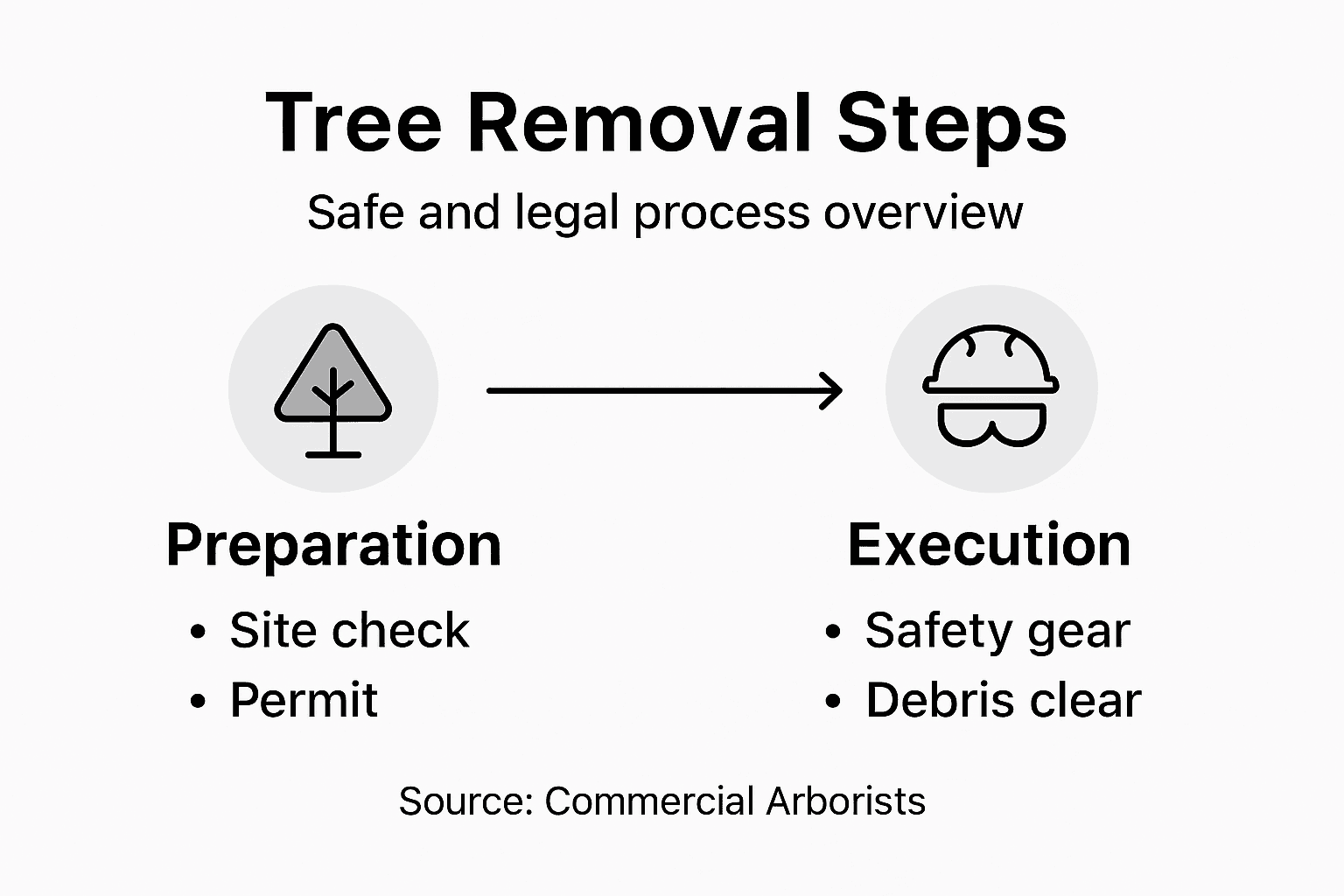
Reach out to your local government at least 30-45 days before planned removal to account for potential review and approval processes. Some areas might require additional environmental impact assessments or neighborhood notifications.
Pro tip: Keep copies of all permit documentation and approvals in a secure file for future reference and potential legal protection.
Step 3: Prepare Site and Secure Surroundings
Before initiating tree removal, comprehensive site preparation is crucial to ensure worker safety and minimize potential property damage. Creating a safe work environment requires strategic planning and thorough risk assessment.
Begin by establishing a clear safety perimeter around the removal site. OSHA workplace safety guidelines recommend creating designated hazard zones with clear boundaries to protect workers and bystanders. Your preparation checklist should include:
- Marking off the entire work area with caution tape or temporary fencing
- Removing vehicles, equipment, and movable objects from the immediate zone
- Notifying nearby property owners and employees about upcoming work
- Ensuring clear access routes for emergency vehicles
- Checking overhead power lines and utility connections
Critical safety equipment and protective measures are non-negotiable during commercial tree removal:
- Install warning signs around the perimeter
- Set up protective barriers
- Verify personal protective equipment for all workers
- Establish communication protocols
- Prepare emergency medical and evacuation plans
Proper site preparation is not just a recommendation—it’s a legal and safety imperative that protects workers, property, and potential bystanders.
Ensure all team members understand their specific roles and have completed necessary safety training before beginning the removal process. Conduct a final walkthrough to confirm all safety protocols are in place and potential hazards have been mitigated.
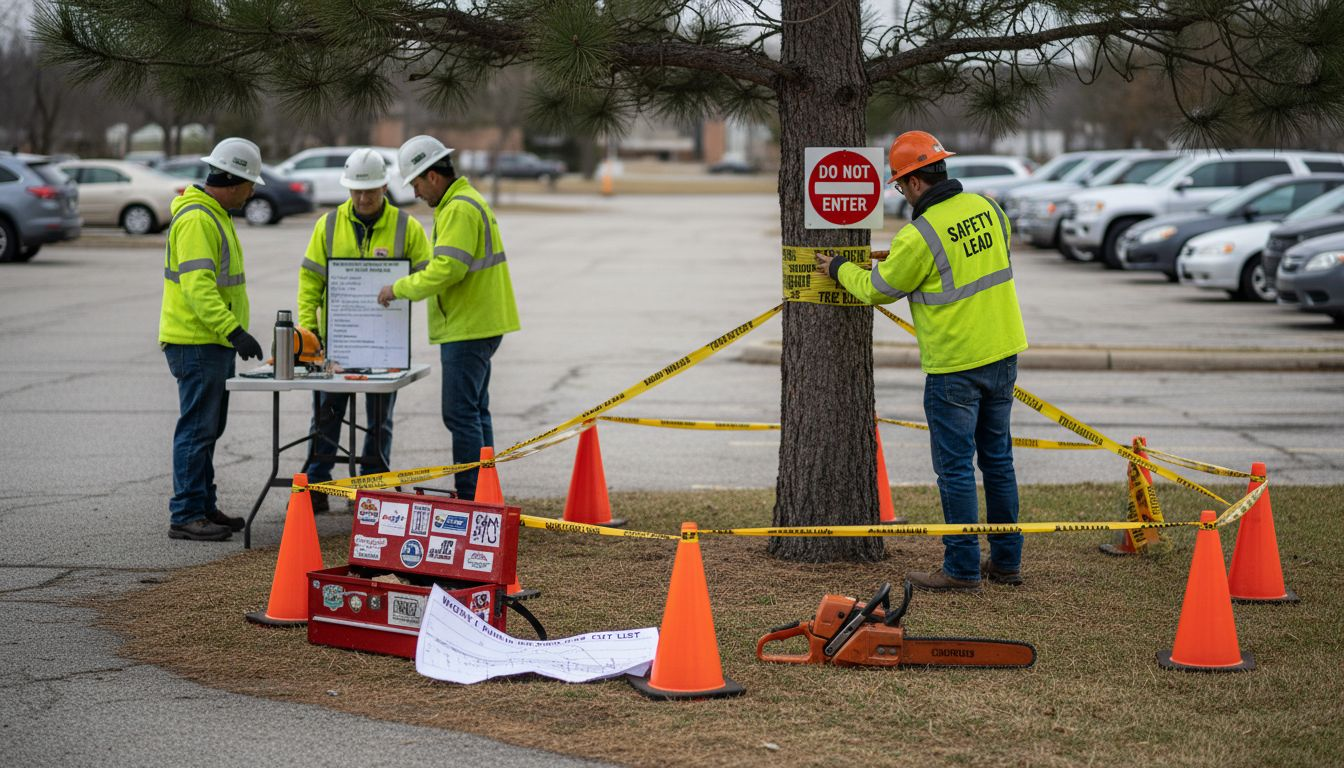
Pro tip: Designate a safety coordinator to continuously monitor site conditions and maintain strict adherence to safety protocols throughout the tree removal operation.
Step 4: Perform Safe Tree Removal Procedures
Executing a successful commercial tree removal requires precision, technical expertise, and strict adherence to safety protocols. Your goal is to systematically deconstruct the tree while minimizing risks to personnel and surrounding property.
OSHA safety standards emphasize comprehensive preparation before initiating any tree removal work. Professional tree removal typically follows a strategic sequence:
- Start with detailed tree assessment
- Determine precise cutting angles
- Use appropriate cutting techniques
- Employ directional felling methods
- Manage potential fall zones
Critical safety steps for tree removal include:
- Verify all personal protective equipment
- Clear the immediate work zone of personnel
- Establish multiple escape routes
- Use proper cutting techniques
- Control tree descent direction
Precision and safety are not optional – they are fundamental requirements in professional tree removal.
When cutting, always work from the top down, removing branches systematically before tackling the main trunk. This method provides better control and reduces unexpected movement. Professional arborists recommend using a directional notch and back cut technique to guide the tree’s fall precisely.
Pro tip: Always maintain a minimum distance of two tree lengths from the falling tree and never turn your back during the removal process.
Step 5: Clear Debris and Inspect Final Results
After successfully removing a commercial tree, thorough cleanup and site inspection are critical to ensuring a professional, safe, and compliant outcome. This final stage transforms your work site from a tree removal zone back to a pristine, safe commercial landscape.
Begin by systematically clearing all tree debris, which involves multiple strategic steps:
- Sort debris by size and type
- Separate branches and trunk sections
- Prepare materials for recycling or disposal
- Level the ground where the tree was removed
- Check for any remaining roots or underground obstacles
Your site inspection should cover several key evaluation points:
- Verify complete tree removal
- Assess ground-level conditions
- Check for potential underground damage
- Examine surrounding landscape integrity
- Document final site status
Comprehensive cleanup is not just about aesthetics—it’s about maintaining safety and preparing the site for future landscaping or development.
Pay special attention to the stump removal area, ensuring no significant root systems remain that could compromise future construction or landscaping. If stump grinding is part of your process, confirm that the ground is properly leveled and backfilled to prevent settling.
Pro tip: Take high-resolution photographs of the cleared site from multiple angles to document your work and protect against potential future disputes.
Ensure Safe and Compliant Commercial Tree Removal With Expert Help
Removing commercial trees safely and legally requires more than just careful planning. You face challenges such as obtaining the right permits, performing precise risk assessments, and preparing your site to protect people and property. Without professional expertise, these steps can be overwhelming and risky. McCullough Tree Service brings certified arborist experience to every job, guiding you through local regulations, expert risk evaluations, and efficient removal procedures that protect your investment and peace of mind.
Ready to eliminate hazards and improve your commercial property safely and legally? Benefit from our licensed team specializing in commercial tree removal and preventative care in Orlando and Central Florida. Contact McCullough Tree Service today at https://mcculloughtreeservice.com for a thorough assessment and reliable service that keeps your business compliant and your landscape healthy.
Frequently Asked Questions
What are the signs that a commercial tree needs to be removed?
A commercial tree may need removal if it shows structural damage, has root system problems, or exhibits significant lean. Conduct a thorough tree risk assessment to document indicators such as dead or dying branches and signs of disease.
How do I obtain permits for removing trees on commercial property?
To remove trees legally, contact your local building department to understand permit requirements. Prepare the necessary documentation, including a tree inventory, removal rationale, and mitigation plans, and submit your application at least 30-45 days before the planned removal.
What safety measures should I take before removing a commercial tree?
Establish a clear safety perimeter around the tree removal site to protect workers and bystanders. Use caution tape, remove nearby vehicles, and ensure all workers are equipped with personal protective equipment before starting the removal process.
How should I prepare the site before removing a tree?
Before tree removal, prepare the site by marking the work area off clearly, notifying nearby property owners, and ensuring access for emergency vehicles. Conduct a final safety check to confirm all precautions are in place to mitigate risks.
What is the recommended method for safely cutting down a tree?
To safely cut down a tree, start with a detailed assessment and use proper cutting techniques, including directional felling methods to control the tree’s fall. Always maintain a safe distance and establish multiple escape routes before commencing cutting.
What should I do after the tree has been removed?
After removal, clear all debris and level the ground where the tree stood. Conduct a final site inspection to ensure no roots remain, and document the completed work with photographs to maintain a record for compliance purposes.
Recommended
- Commercial Tree Removal Guide for Safe Property Management
- Commercial Tree Removal Explained: Ensuring Safety and Compliance
- How to Trim Commercial Trees for Safety and Curb Appeal
- How to Cut Down a Tree Safely
- Tree Service Orlando FL
- Tree Service Winter Springs FL