By: Shelby McCullough| Published: February 23, 2026
Stumps left behind after tree removal in Central Florida can quickly turn from a forgotten nuisance into a major headache. These remnants spoil the look of your yard, attract pests, and can even spread harmful fungi like Ganoderma and Armillaria. Professional stump removal reclaims your outdoor space, reduces safety risks, and protects your property from pest invasions. Discover which removal methods work best in Orlando’s humid climate and why prompt action means lasting peace of mind.
Table of Contents
- What Is Stump Removal And Why It Matters
- Types Of Stumps And Removal Methods
- Safety, Pest, And Disease Risks Of Stumps
- Legal Rules And Permit Requirements In Florida
- Landscaping, Property Value, And Cost Benefits
Key Takeaways
| Point | Details |
|---|---|
| Importance of Stump Removal | Stump removal benefits homeowners by reclaiming yard space, improving safety, and preventing pest problems. |
| Methods of Stump Removal | Options include professional grinding, chemical treatment, manual digging, and natural decay, each with varying timelines and effectiveness. |
| Risks of Leaving Stumps | Unattended stumps can attract pests, cause property damage, and lead to safety hazards for residents and visitors. |
| Financial Considerations | Early professional stump removal can save homeowners from higher costs related to pest damage and property value loss in the long term. |
What Is Stump Removal and Why It Matters
After a tree comes down, what’s left behind is often forgotten. That leftover stump becomes an eyesore on your Orlando property, but it’s far more than an aesthetic problem.
Stump removal is the process of eliminating tree stumps left behind after tree cutting. The main methods include grinding, digging, chemical treatment, or promoting natural decay. Each approach has different timelines and costs, depending on your stump size and yard situation.
Here’s what makes removal worth the effort:
- Reclaims your landscape. Stumps occupy valuable yard space and prevent replanting, new construction, or landscaping projects.
- Eliminates safety hazards. Hidden roots create tripping risks, and rotting wood attracts pest infestations.
- Stops pest problems before they start. Decaying stumps become breeding grounds for termites, carpenter ants, and wood-boring beetles that can spread to your home.
- Improves property value. A clean, stump-free yard looks maintained and increases curb appeal.
Why Stumps Are a Real Problem for Orlando Homeowners
Central Florida’s warm, humid climate accelerates wood decay. But that doesn’t mean stumps disappear on their own. Grinding, decay, or digging out stumps are the primary removal strategies. Natural decay can take years—sometimes decades—leaving your property compromised in the meantime.
Unlike northern climates where winters help break down wood, Florida’s moisture and pests create different challenges. Stumps sit there, growing softer, attracting unwanted wildlife into your yard and potentially toward your home.
The longer a stump remains, the deeper its root system spreads. This complicates future removal and can damage underground utilities, irrigation lines, or septic systems if you later decide to dig it out.
Professional Removal Versus DIY Approaches
Professional stump grinding is the fastest and safest option. A certified arborist brings the right equipment to eliminate stumps completely, including roots, in a single visit. You get immediate results and peace of mind that it’s done correctly.
Alternatives exist:
- Natural decay: Inexpensive but takes 3-10+ years.
- Chemical treatments: Faster than waiting but still require multiple applications.
- Manual digging: Labor-intensive and risky for large stumps.
Professional grinding removes the entire stump and root system in one visit, restoring your yard immediately and preventing pest infestations.
Pro tip: Schedule stump removal within a few months of tree cutting, before roots establish deeper into your soil and the wood becomes a pest haven.
Types of Stumps and Removal Methods
Not all stumps are created equal. The type of stump you’re dealing with directly impacts which removal method works best for your Orlando yard.
Understanding Stump Types
Stumps vary based on tree species, size, age, and how long they’ve been in the ground. A fresh oak stump behaves differently than a decaying pine stump that’s been sitting for two years.
Fresh stumps still have solid wood and active root systems. These are easier to grind but harder to remove by hand. Decaying stumps have softer wood and weakened root systems, making them riskier since hidden rot creates safety hazards.
Small stumps under 12 inches wide present different challenges than massive 24-inch oak stumps. Root systems also vary dramatically. A pine might have shallow roots, while a live oak develops deep taproots extending several feet below ground.
Removal Methods for Every Situation
Your stump type determines the best approach. Here are the main options:
- Stump grinding: The fastest, most thorough method. A grinder pulverizes the stump and roots into mulch within hours. Best for all stump sizes.
- Natural decay: Inexpensive but slow. Takes 3-10 years depending on climate and wood type. Works for small stumps you’re willing to wait on.
- Hand digging: Effective for small, young stumps with shallow roots. Labor-intensive and risky for larger specimens.
- Chemical treatment: Prevents resprouting and can accelerate decay. Multiple applications needed; works best combined with other methods.
- Mechanical digging: Backhoes and excavators handle massive stumps with complex root systems. Requires professional equipment and space.
Matching Method to Your Stump
Small residential stumps under 15 inches respond well to grinding or chemical treatment. Large stumps from mature trees typically require professional grinding or mechanical excavation.
If your stump sits near your home, utilities, or irrigation lines, grinding is safest. It removes the entire root system without digging and damaging underground infrastructure.
For stumps in remote yard areas where you’re not planning future construction, natural decay or accelerated decay treatments might save money despite taking longer.
Here’s how stump removal methods compare for Orlando homeowners:
| Method | Typical Timeline | Best For | Pros |
|---|---|---|---|
| Grinding | Hours to 1 day | All stump sizes | Immediate results, removes roots |
| Chemical Treatment | Weeks to months | Smaller, less urgent stumps | Accelerates decay, reduces resprouting |
| Manual Digging | 1-2 days | Small, shallow-rooted stumps | No chemicals, DIY friendly |
| Mechanical Digging | Hours to 1 day | Large, deep-rooted stumps | Handles massive root systems |
| Natural Decay | 3-10+ years | Remote, unused yard areas | Zero cost, no equipment needed |
The right removal method depends on stump size, location, timeline, and budget—not all stumps need the fastest solution.
Pro tip: Ask a certified arborist to assess your specific stump before choosing a method; they can identify hidden factors like root depth and decay status that determine the safest, most cost-effective approach.
Safety, Pest, and Disease Risks of Stumps
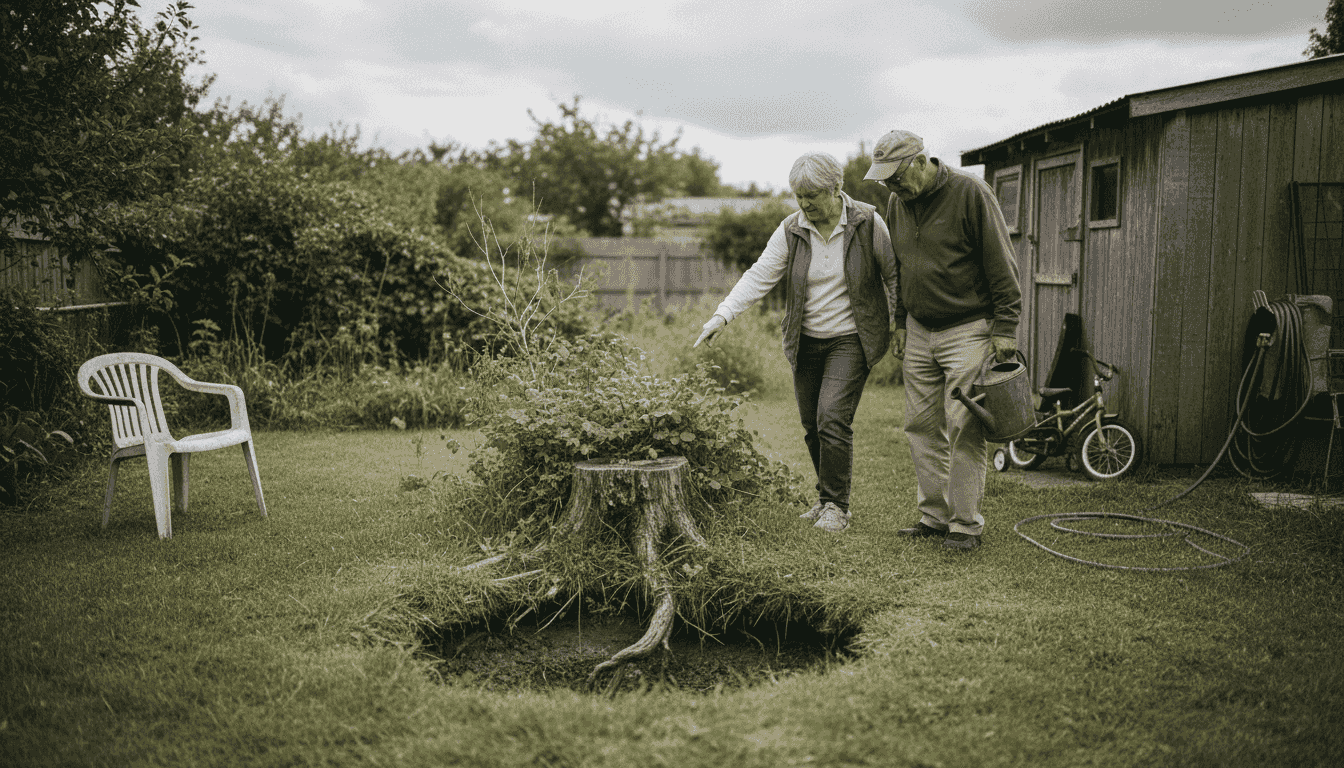
A stump sitting in your yard isn’t just an eyesore. It’s a silent threat that invites safety hazards, pest infestations, and disease into your property.
Physical Safety Hazards
Hidden stumps and their root systems create real dangers for your family and visitors. Tripping hazards lurk beneath overgrown grass, especially around the perimeter where roots surface. Children playing in the yard face injury risks from exposed wood and protruding roots.
Decaying wood becomes increasingly unstable. A stump that looked solid last year might collapse suddenly, creating holes and creating foot-catching traps. Mowing becomes treacherous when stumps sit in your lawn.
Pest Infestations and Wood-Boring Insects
Decaying stumps are pest magnets. Termites, carpenter ants, wood-boring beetles, and other destructive insects treat stumps as buffets and breeding grounds.
Here’s the dangerous part: once pests establish colonies in your stump, they can migrate to your home’s foundation, wooden structures, or landscape trees. What starts as a stump problem becomes an infestation problem affecting your entire property.
Common stump-dwelling pests include:
- Termites (subterranean and drywood species)
- Carpenter ants (massive colonies)
- Longhorn beetles and bark beetles
- Powder-post beetles
- Carpenter bees
Disease and Fungal Threats
Decaying wood becomes a disease factory. Harmful fungi like Ganoderma and Armillaria colonize stumps and spread root rot throughout your landscape. These pathogens cause trunk decay and tree decline in neighboring vegetation.
Florida’s warm, humid climate accelerates fungal growth. Stumps become infection sources that threaten nearby healthy trees, shrubs, and even your lawn. What appears to be a single dead stump can compromise the health of surrounding plants.
Sprouts emerging from stumps create additional disease vectors. These weaker growths attract pathogens and pests more readily than established trees.
Property Damage and Underground Risks
Expanding root systems damage underground utilities, irrigation lines, and septic systems. As stumps decay, their roots spread deeper and wider, seeking moisture and breaking apart concrete, pipes, and drainage systems.
Removing stumps years after tree cutting costs significantly more when root damage has already occurred.
Stump removal protects your family, landscape health, and property infrastructure from pests, disease, and hidden structural damage.
Pro tip: Have stumps removed within the first few months after tree cutting, before pests establish deep colonies and fungal spores spread throughout your soil.
Legal Rules and Permit Requirements in Florida
Florida’s tree removal regulations vary significantly by county and municipality. Understanding local requirements protects you from fines and ensures your stump removal stays compliant.
State-Level Protections and Exemptions
Florida state law provides some protections for residential property owners. If a tree poses an unacceptable risk to persons or property, documentation from a certified arborist can exempt you from local permit requirements and fees.
This exemption applies to tree removal, pruning, and trimming on residential properties. However, mangrove protection regulations always supersede this exemption. If your property contains mangroves, additional rules apply.
County and Municipal Permit Requirements
Your specific county determines permit needs. Most Central Florida counties require permits for removing trees larger than 6 inches in diameter.
Common permit requirements include:
- Tree removal permits for larger specimens
- Permits obtainable by homeowners, contractors, or certified arborists
- Varying fees depending on acreage and tree size
- Tree pruning usually exempt if less than 25% canopy removal
- Specific requirements for lot trees and street trees
Getting Your Stump Removal Permit
Contact your local county or city planning department to confirm requirements for your property. Bring your property address, tree location, and tree size information.
A certified arborist or licensed contractor can handle permit applications on your behalf. This ensures compliance and prevents costly violations. Many professionals include permit acquisition in their removal services.
The permit process typically takes 1-3 weeks. Plan ahead if you’re on a timeline for stump removal.
Protected Trees and Special Considerations
Florida protects certain tree species, particularly native oaks and other heritage trees. Some municipalities have additional protections beyond state law. Before removing any tree, verify whether it’s protected in your area.
Cutting trees in Florida legally requires understanding both state protections and local ordinances. Protected tree violations carry significant penalties.
Permits aren’t just bureaucratic hurdles—they protect your property value and ensure your stump removal meets environmental standards.
Pro tip: Always contact your county’s environmental services or planning department before removing a stump, and request written confirmation that no permit is required; this protects you if enforcement questions arise later.
Landscaping, Property Value, and Cost Benefits
Removing a stump transforms your yard from incomplete to investment-ready. The financial and aesthetic returns far outweigh the removal cost.
Reclaiming Usable Yard Space
A stump occupies valuable real estate on your property. It blocks landscaping improvements, prevents new plantings, and creates visual dead zones that reduce curb appeal.
Once removed, that space becomes yours to use. Landscaping improvements transform stumpy eyesores into garden beds, patios, walkways, or lawn restoration.
You gain flexibility for property redesign. Growing families need swing sets. Entertaining requires clear sightlines and open space. Stump removal removes the obstacle.
Property Value Increases
Buyers notice stumps immediately. A clean, stump-free yard signals property maintenance and care. Neglected stumps suggest deferred maintenance and potential pest problems that make buyers nervous.
How stump removal affects property value:
- Increases curb appeal and first impressions
- Removes red flags about pest infestation or foundation damage
- Demonstrates proactive property maintenance
- Creates space for valuable landscaping features
- Improves perceived property condition to appraisers
A well-maintained landscape adds measurable value. Real estate studies consistently show that landscaping improvements return 100-150% of investment at sale time. Removing stumps is foundational to achieving that return.
Cost Comparisons and Long-Term Savings
Stump removal costs range from $150-$500 for small residential stumps. This seems expensive until you compare it against alternatives.
Waiting costs money:
- Pest damage to your home: $1,000-$5,000+ (termites alone)
- Root damage to utilities, irrigation, or septic: $2,000-$10,000+
- Reduced property value at sale: $5,000-$15,000+
- Delayed landscaping improvements you’ve been planning
Removing stumps within months of tree cutting prevents escalating costs. The earlier you act, the less damage occurs underground and the more quickly you reclaim your yard.
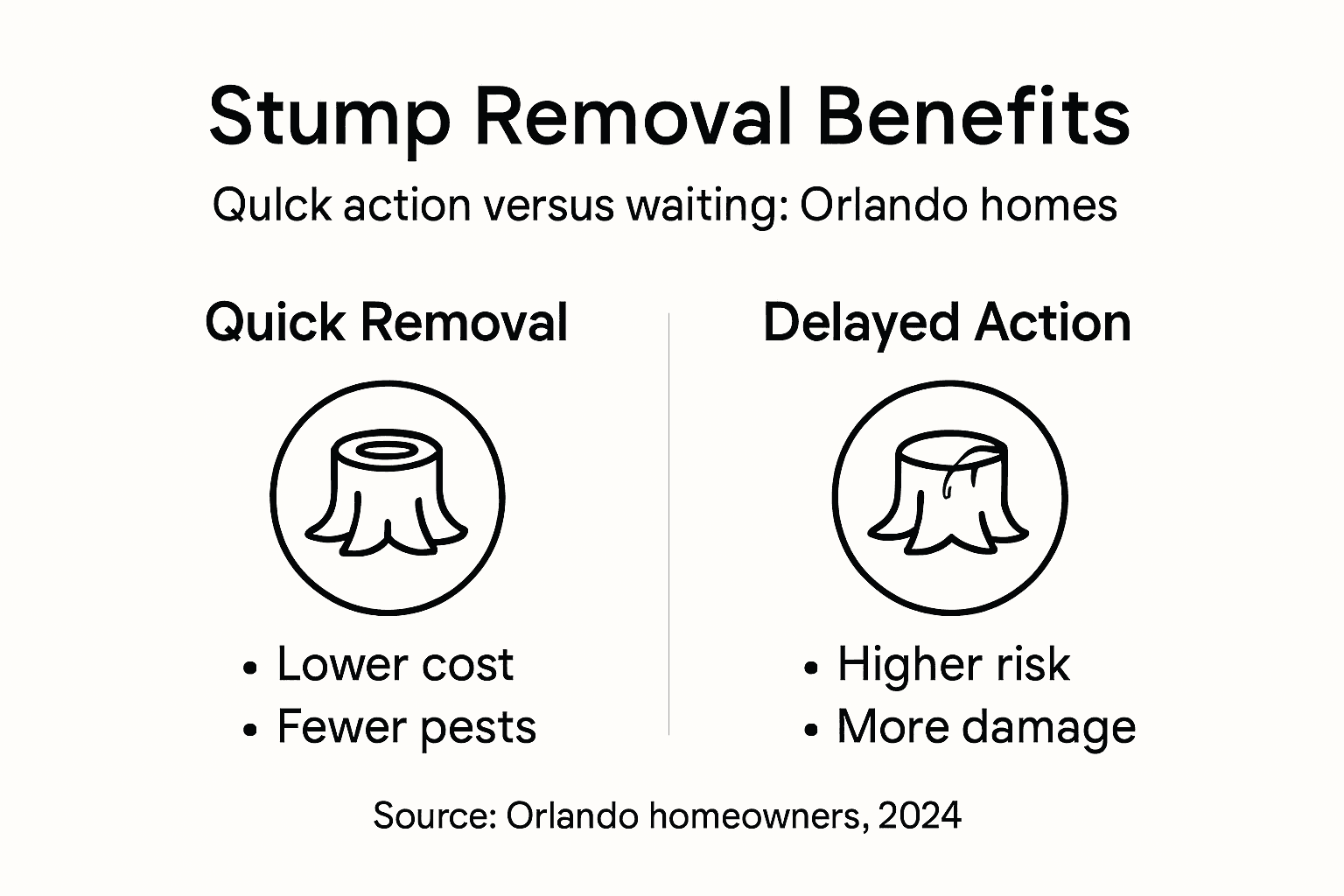
See the long-term financial impact of stump removal decisions:
| Scenario | Typical Cost Range | Potential Property Impact | Risk Level |
|---|---|---|---|
| Professional Removal (prompt) | $150-$500 | Increased value, lower risks | Low |
| DIY Natural Decay (years) | Minimal upfront | Delayed landscaping, pest exposure | Moderate to high |
| Waiting (pest or root issues) | $1,000-$10,000+ | Utility damage, major repairs | High |
Professional Removal Versus DIY Waiting
Natural decay takes years and leaves your yard compromised. Professional grinding costs upfront but solves the problem immediately, protecting your property and enabling landscaping plans.
Professional stump removal is an investment that protects property value, enables landscaping improvements, and prevents costly pest and root damage.
Pro tip: Include stump removal in your landscaping budget when planning outdoor improvements; having a stump-free canvas makes contractor estimates accurate and prevents surprise costs from root complications.
Protect Your Orlando Property with Expert Stump Removal Solutions
If you have a tree stump lingering on your property you understand the risks it brings from pest infestations to safety hazards and reduced curb appeal. Removing that stump quickly is critical to protect your home from termite damage and root system problems that worsen over time. At McCullough Tree Service, our certified arborists specialize in professional stump grinding that eliminates the entire stump and roots safely and efficiently.
Don’t let a decaying stump threaten your family’s safety or your property value. Act now before pests establish colonies or root damage spreads under your lawn. Contact us today at McCullough Tree Service to schedule a thorough stump removal consultation or explore our comprehensive tree trimming and removal services. Protect your investment and reclaim your landscape starting today.
Frequently Asked Questions
What are the main reasons for removing a tree stump?
Removing a tree stump helps reclaim valuable yard space, eliminates safety hazards, prevents pest infestations, and improves property value.
How can stumps affect my property?
Stumps can create physical safety hazards, attract pests like termites and carpenter ants, and cause damage to underground utilities as their roots spread.
What are the different methods for stump removal?
The main methods include stump grinding, manual digging, natural decay, chemical treatments, and mechanical digging. The best method depends on stump size, age, and location.
Is it better to hire a professional for stump removal or do it myself?
Hiring a professional is usually faster and safer, as they have the right equipment to completely remove the stump and roots. DIY methods can be labor-intensive and may not effectively address larger stumps.
Recommended
- What Is Stump Removal and Its Key Benefits
- Tree Removal and Property Value in Orlando
- Role of Tree Removal in Orlando Landscaping
- Proper Tree Removal: Protecting Safety and Property
- Tree Service Orlando FL
- Tree Service Winter Springs FL