By: Shelby McCullough| Published: February 24, 2026
Storm season in Orlando can turn your peaceful yard into a scene of fallen branches and damaged trees, leaving you searching for help you can trust. Protecting your property means more than just cleanup—it demands a provider with active, comprehensive insurance and the right certifications to handle both emergencies and detailed tree health assessments. This guide shows Orlando homeowners how to identify truly insured and certified tree services, safeguarding your home, wallet, and peace of mind.
Table of Contents
- Insured Tree Service Defined and Misconceptions
- Types of Insurance in Tree Care Services
- Legal Requirements for Tree Work in Orlando
- Risks and Liabilities of Uninsured Providers
- Benefits of Hiring Certified and Insured Arborists
Key Takeaways
| Point | Details |
|---|---|
| Insured Tree Services Provide Protection | Hiring an insured tree service protects homeowners from the financial burden of property damage and worker injuries that may occur during tree work. |
| Common Misconceptions About Insurance | Not all tree service companies are fully insured; homeowners should verify coverage and understand what is included or excluded in policies. |
| Importance of Certification | Certified arborists combine expertise with liability coverage, ensuring high standards in tree care while protecting homeowners from costly mistakes. |
| Permit Responsibilities | Homeowners must ensure that the necessary permits are obtained before any tree work begins to avoid fines and legal complications. |
Insured Tree Service Defined and Misconceptions
An insured tree service means a company carries active insurance policies covering property damage and worker injuries. This isn’t just paperwork—it’s financial protection if something goes wrong on your property.
Tree service involves inherent risks. A branch might fall on your roof, a worker could get hurt, or equipment could damage your fence. When a company has insurance, their policy covers these costs instead of you absorbing them personally.
What Insurance Coverage Looks Like
Insured tree services carry two critical insurance types:
- General liability insurance covers property damage like trees falling on structures, damaged vehicles, or injury to bystanders
- Workers’ compensation insurance protects company employees if they’re injured on your property
Both types shield you from unexpected financial responsibility. Without them, you’re the backup plan.
Common Misconceptions About Tree Service Insurance
Most Orlando homeowners believe all tree services are automatically insured. That’s dangerously wrong.
Some companies carry minimal policies with high deductibles—$2,500 to $5,000 per claim. Others have policies that specifically exclude hazardous work like climbing, emergency removals, or storm cleanup. You might think you’re covered when you’re actually exposed.
A policy that excludes the exact work being performed provides zero protection for you as the homeowner.
Another misconception: insurance proves competence. It doesn’t. Insurance only means financial backup exists if something fails. Competence comes from proper training, certifications, and experience—which is why professional accountability matters when assessing tree risks.
Some homeowners think their own homeowner’s insurance covers tree service accidents. Often it doesn’t, or only partially covers them after paying your deductible.
Why This Matters Right Now in Orlando
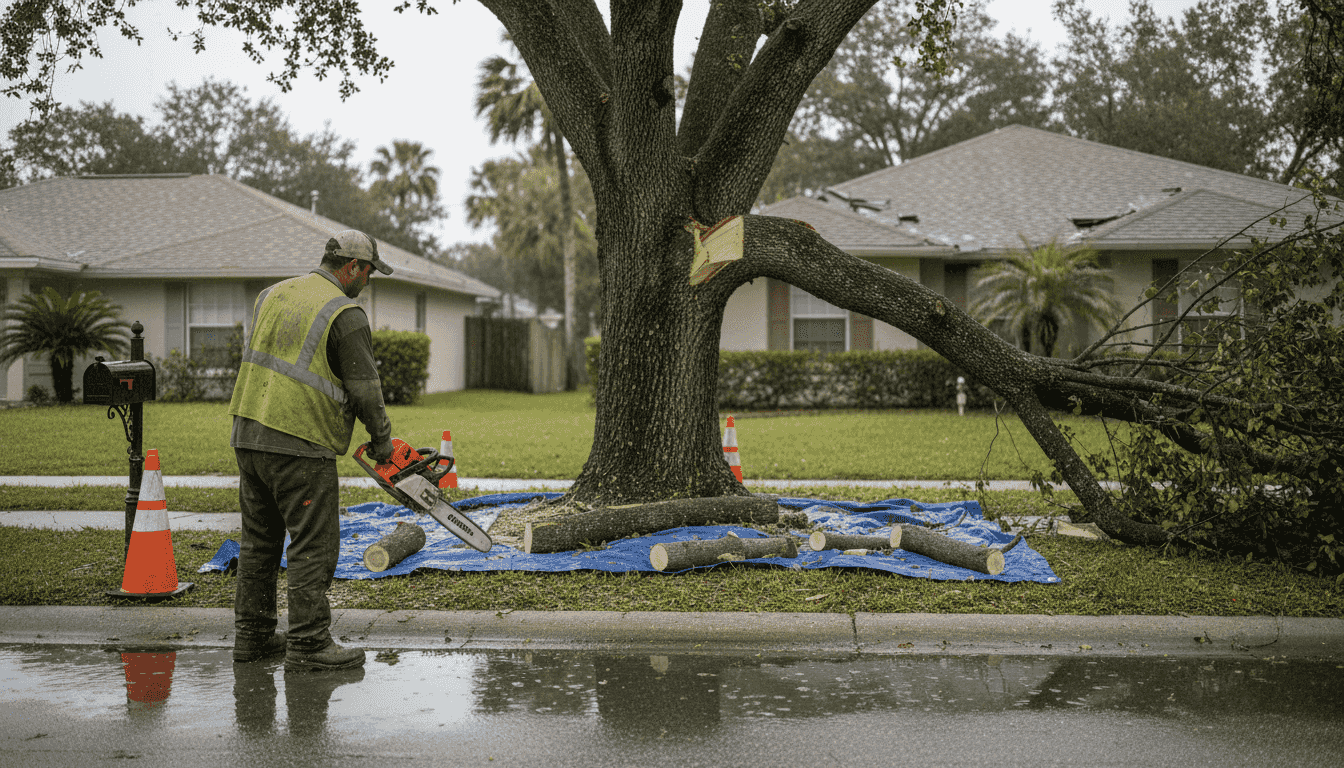
Orlando’s weather creates constant tree risks. Hurricane season, afternoon thunderstorms, and age-related tree failures happen regularly. When a tree company damages your property during cleanup or removal, you need that general liability insurance to cover repairs immediately—not months later in court.
Pro tip: Ask for a Certificate of Insurance before any work starts, verify the active dates match your job timeline, and confirm the coverage limits are at least $300,000 for property damage.
Types of Insurance in Tree Care Services
Tree service companies need multiple insurance types to protect you legally and financially. It’s not just general liability—there are several layers of coverage that work together.
When you hire a tree service, you’re asking them to work on your property with equipment, vehicles, and workers. Each activity carries different risks. The right insurance policies cover all of them.
The Main Insurance Types
General liability insurance is the foundation. It covers property damage like a branch falling on your roof, a chipper throwing debris into your neighbor’s fence, or a worker accidentally damaging your home’s siding.
Workers’ compensation insurance protects employees injured on the job. If a crew member falls from a ladder or gets hurt by equipment, this coverage pays their medical bills and lost wages—not you.
Beyond those two, additional coverage types mitigate financial risks depending on the work being done:
Here’s how different types of tree service insurance compare in terms of protection:
| Insurance Type | Who It Protects | Main Purpose |
|---|---|---|
| General Liability | Homeowner, Bystanders | Covers property and third-party damage |
| Workers’ Compensation | Employees, Homeowner | Pays for worker injuries, shields owner |
| Commercial Auto | Homeowner, Public | Covers accidents involving vehicles |
| Pollution Liability | Homeowner, Environment | Handles fuel or chemical spills |
| Professional Liability | Homeowner | Protects against assessment mistakes |
| Equipment Breakdown | Homeowner, Contractor | Covers machinery failures on site |
- Commercial auto insurance covers damage or liability from trucks transporting equipment and debris
- Pollution liability insurance protects against environmental damage if chemicals or fuel spill on your property
- Professional liability insurance covers errors in tree assessment or recommendations that cause loss
Why Multiple Policies Matter
One insurance policy rarely covers everything. If a tree company only has general liability but no workers’ compensation, they’re cutting corners on employee protection.
Your situation might need specialized coverage. If you’re having a hazardous tree removal near power lines, the contractor should carry additional equipment breakdown insurance for the crane or lift truck involved.
A company carrying only basic general liability is likely underinsured for the risks your property faces.
Certified professionals maintain comprehensive policies specifically because they understand the real risks they create. This protects both them and you.
Checking Coverage Limits
Insurance amount matters as much as insurance type. A policy with $50,000 general liability won’t cover a tree crashing through your roof and destroying a vehicle parked underneath.
Most Orlando properties need at least $300,000 to $500,000 in general liability coverage. Storm cleanup and emergency removals should trigger higher limits.
Pro tip: Request the Certificate of Insurance listing all coverage types, policy limits, and expiration dates, then verify directly with the insurance carrier that coverage includes tree removal work.
Legal Requirements for Tree Work in Orlando
Orlando doesn’t let homeowners remove trees whenever they want. Florida state law and city ordinances govern tree work, and violating them costs real money.
Florida Statute 163.045 sets statewide rules about when permits are required. The city of Orlando has its own additional requirements layered on top. This means you need to follow both.
When You Need Permits
Not every tree removal needs a permit. Small landscaping work on young trees might not. But most tree removals in Orlando require permits under building and development codes before work starts.
Permits are typically required for:
- Trees above a certain diameter (usually 6 inches or larger)
- Heritage or protected species trees
- Trees in environmentally sensitive areas
- Any tree removal that affects stormwater management
- Work near power lines or structures
Heritage trees get extra protection. Oak trees, pine trees, and other native species may need special approval from the city before removal.
What Happens Without a Permit
Skipping the permit process creates legal exposure for both you and the contractor. Florida tree work regulations exist to ensure responsible management and environmental protection.
Fines for unpermitted tree work start at hundreds of dollars and escalate quickly. You could face citations, forced restoration costs, or legal liability if the work causes property damage.
A contractor who skips permitting to save time or money is creating financial risk you’ll ultimately bear as the property owner.
The contractor might disappear after illegal work, leaving you responsible for fines and enforcement actions. Insurance won’t cover unpermitted work either.
Your Responsibility as a Homeowner
You’re responsible for ensuring permits are obtained before work begins. This isn’t the contractor’s responsibility alone—it’s yours legally.
A legitimate insured contractor will automatically handle permit applications. They’ll know which trees need permits in your neighborhood and submit the paperwork to the city.
If a contractor says “permits take too long” or “we can skip that,” walk away. That’s a major red flag.
Pro tip: Call the City of Orlando Building Department before hiring anyone to ask which trees on your property require permits, then verify your contractor includes permit costs in their estimate.
Risks and Liabilities of Uninsured Providers
Hiring an uninsured tree service operator isn’t just risky—it’s financially catastrophic. One accident can drain your savings and damage your property permanently.
When something goes wrong during tree work, the bill lands on your doorstep. Without the contractor’s insurance to cover it, you pay everything.
The Real Financial Exposure
Consider what can actually happen. A tree falls on your roof during removal—$15,000 in repairs. A crew member gets injured and sues you—legal fees and settlement costs. Equipment damages your neighbor’s fence—you’re liable for that too.
These aren’t hypothetical scenarios. They happen regularly in Orlando.
Uninsured tree service providers expose homeowners to substantial property damage and personal injury claims that can financially destroy a family.
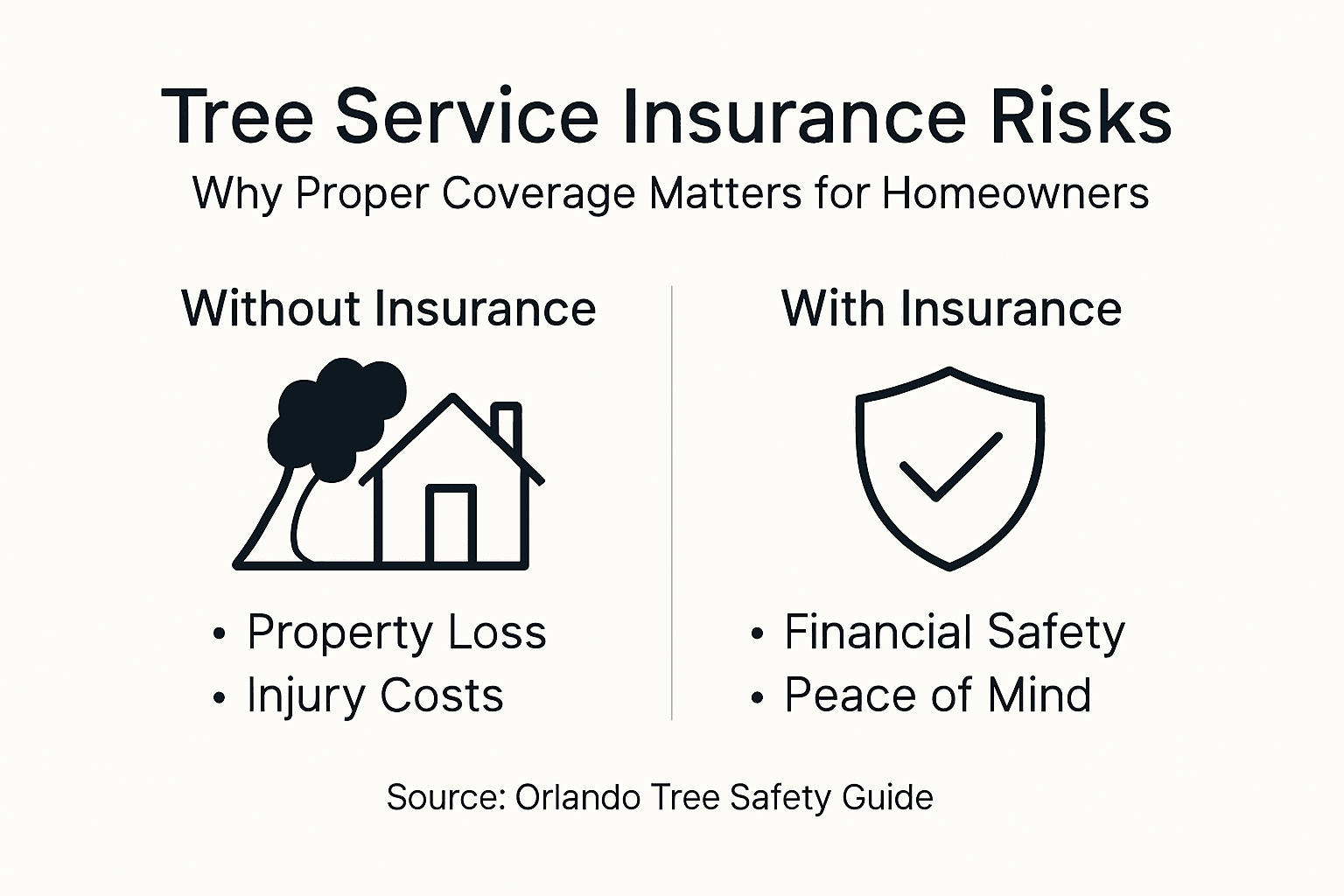
Your homeowner’s insurance typically won’t cover contractor accidents. Your policy covers trees on your property, not damage caused by hired workers using equipment.
Specific Liability Scenarios
Here’s what you’re personally responsible for if the contractor has no insurance:
- Property damage to your home, vehicle, fence, or landscaping
- Neighbor damage if a tree falls on their property or a branch hits their house
- Worker injuries if an employee gets hurt and sues you directly
- Medical bills for anyone injured on your property during the work
- Legal defense costs even if you ultimately win a lawsuit
One serious accident can cost $50,000 to $200,000 in medical bills alone.
Why “Cash Discount” Contractors Are Dangerous
Uninsured operators often undercut licensed, insured competitors by 30% to 50%. They pitch the cash discount as a win for you. It’s actually a transfer of risk to you.
They’re cheaper because they skip insurance premiums. When something breaks, you absorb the loss instead.
This chart highlights the main differences between insured and uninsured tree service providers:
| Aspect | Insured Provider | Uninsured Provider |
|---|---|---|
| Accident Costs | Handled by insurer | Homeowner pays all expenses |
| Credibility | Certified and accountable | Unverified and unregulated |
| Permit Compliance | Follows city requirements | Often skips required permits |
| Price Structure | Higher due to coverage | Lower but transfers risk to owner |
| Legal Protection | Includes legal defense | Owner faces lawsuits directly |
An uninsured contractor offering a discount is simply shifting their insurance costs onto your shoulders.
They’re betting nothing will go wrong. But in tree work, something often does.
Professional Risk Management Protects You
Insured contractors carry liability coverage specifically because they understand tree work risks. They’ve seen accidents happen and know the financial consequences.
They inspect trees properly, use safe equipment, and follow industry standards—partly because their insurance requires it. This competence combined with insurance protection gives you real safety.
Pro tip: Always verify insurance coverage is active on the day work begins by calling the insurance company directly with your job date, not just by looking at the Certificate of Insurance.
Benefits of Hiring Certified and Insured Arborists
Certified arborists aren’t just tree experts—they’re your protection against costly mistakes. Their credentials, training, and insurance create a safety net most homeowners don’t realize they need.
When you hire someone with certifications and active insurance, you’re hiring accountability. They’ve proven their knowledge through rigorous testing and ongoing education.
What Certification Actually Means
Certified arborist credentials require hundreds of hours of documented experience, formal education, and passing a comprehensive exam. It’s not an online course or a weekend seminar.
Certifications mean the arborist follows industry standards like ANSI A300, which defines proper practices for pruning, removal, planting, and emergency care. These standards exist because they work and prevent damage.
Uncertified operators have no accountability to professional standards. They do whatever they think is right, which often damages trees or creates hazards.
How Certification Protects Your Trees
Certified arborists bring extensive training and experience in tree biology, care, and risk management that directly improves outcomes for your property.
A certified arborist won’t remove a healthy tree that just needs pruning. They understand tree biology well enough to recommend cost-effective solutions that preserve your trees longer.
They spot diseases, pest damage, and structural problems that untrained eyes miss. Early detection prevents expensive problems later.
The Insurance Protection Layer
Certification plus insurance creates complete protection:
- General liability covers property damage they cause during work
- Workers’ compensation protects their employees and shields you from injury lawsuits
- Professional liability covers mistakes in assessment or recommendations
- Combined coverage means you’re never the financial backstop
Insurance companies won’t insure unprofessional operators. They only cover certified arborists who follow safe practices and reduce risk.
A certified, insured arborist costs more upfront but saves thousands by preventing tree damage, property damage, and liability exposure.
Real Benefits You’ll Experience
Beyond insurance and credentials, certified arborists deliver:
- Better tree health through proper pruning and care techniques
- Reduced hazards from proper risk assessment and removal planning
- Higher property value from well-maintained, attractive trees
- Emergency response expertise when storms create urgent situations
- Documentation of work completed for insurance and property records
They also handle permits correctly, ensuring your work complies with Orlando city regulations.
Pro tip: Ask prospective arborists for their International Society of Arboriculture certification number and verify it’s current before scheduling any work.
Protect Your Orlando Property with Certified and Insured Tree Care
The article highlights how crucial it is for Orlando homeowners to hire an insured tree service to avoid costly risks like property damage, legal liability, and safety hazards. Without proper coverage such as general liability and workers’ compensation insurance, you could be left bearing the full financial burden of accidents or damage during tree removal or storm cleanup. At McCullough Tree Service, we understand these challenges and provide certified arborist expertise combined with comprehensive insurance coverage to ensure your property and family are protected.
Why settle for less when you can have peace of mind through:
- Certified arborists trained to handle complex tree health and safety issues
- Licensed and insured services including pruning, removal, stump grinding, and emergency storm response
- Full compliance with Orlando city permits and regulations so you avoid fines and delays
Don’t risk your home or finances by hiring uninsured operators offering low prices. Visit McCullough Tree Service today to request a detailed estimate and verify our insurance credentials. Learn more about how our tree trimming and removal services protect your investment while maintaining the beauty and safety of your property. Act now to ensure your upcoming tree care work meets Orlando’s legal requirements and industry standards.
Frequently Asked Questions
What does it mean for a tree service to be insured?
An insured tree service has active insurance policies that cover property damage and worker injuries. This protects homeowners from financial responsibility in case something goes wrong during the tree work.
What types of insurance should a tree service have?
A reputable tree service should carry general liability insurance, which covers property damage, and workers’ compensation insurance, which protects employees in case of injuries sustained while working on your property.
Why is it important to verify a tree service’s insurance?
Verifying insurance helps ensure you’re protected from unexpected costs related to property damage or worker injuries. Many companies may have minimal coverage or exclusions that could leave you liable for damages.
What are the risks of hiring an uninsured tree service?
Hiring an uninsured tree service poses significant risks, including financial responsibility for property damage, injuries to workers, and potential legal liabilities. This can lead to costly repairs and lawsuits if accidents occur during the job.
Recommended
- Benefits of Licensed Tree Services in Orlando Homes
- Role of Tree Maintenance: Enhancing Orlando Properties
- Commercial Tree Care Explained: Orlando Property Impact
- 4 Reasons To Regularly Trim Your Trees – McCullough Tree Service
- Tree Service Orlando FL
- Tree Service Winter Springs FL