By: Shelby McCullough| Published: March 25, 2026
You’ve probably heard your arborist mention terms like cabling, topping, or DBH and felt uncertain about what they truly mean. Understanding tree care terminology isn’t just about sounding knowledgeable; it directly impacts the health of your trees and the safety of your property. This guide clarifies the essential vocabulary used by tree care professionals in Central Florida, empowering you to make informed decisions that protect your landscape investment and ensure your trees thrive for years to come.
Table of Contents
- Key takeaways
- Understanding foundational tree care standards and certifications
- Key terminology for tree anatomy and pruning techniques
- Advanced terminology: tree measurement, risk support, and removal methods
- Professional tree care services to support your property
- Frequently asked questions
Key Takeaways
| Point | Details |
|---|---|
| ANSI A300 standard | ANSI A300 is the national standard guiding pruning, cabling, and preservation practices for professional tree work. |
| ISA certified arborists | ISA certification signals a qualified professional who can assess health, diagnose issues, and apply safe pruning and support methods. |
| Pruning types | Pruning types include cleaning, thinning, reduction, and elevation to guide cuts that protect structure and health. |
| Topping avoidance | Topping is harmful and should be avoided to prevent weak structure and potential failure. |
| Cabling and bracing | Cabling and bracing provide support to weak tree unions to prevent failure and extend tree life. |
Understanding foundational tree care standards and certifications
Professional tree care relies on established standards that protect both trees and property owners. ANSI A300 is the industry standard for tree care practices including pruning, cabling, and preservation, serving as the benchmark for professional tree operations. These guidelines ensure that tree work follows scientifically sound methods rather than outdated or harmful techniques. In Central Florida, where hurricanes and tropical storms pose constant threats, following ANSI A300 standards becomes even more critical for maintaining structurally sound trees that can withstand severe weather.
Local Florida counties reference ANSI A300 when establishing tree protection ordinances and permitting requirements. This means that professional tree care in your area must comply with these standards to meet legal and safety requirements. When you hire a tree service that follows ANSI A300, you’re ensuring that work performed on your property meets both industry best practices and local regulatory expectations.
Certified arborists, particularly those credentialed by the International Society of Arboriculture, bring verified expertise to complex tree care situations. ISA certification requires passing rigorous examinations covering tree biology, diagnosis, maintenance practices, and safety protocols. These professionals understand how Central Florida’s unique climate, soil conditions, and tree species require specialized approaches that differ from generic tree care methods used in other regions.
Key responsibilities and qualifications of ISA-certified arborists include:
- Conducting thorough tree health assessments using standardized evaluation methods
- Diagnosing diseases and pest infestations specific to Florida’s subtropical environment
- Recommending appropriate pruning techniques that promote long-term structural integrity
- Implementing support systems like cabling and bracing according to ANSI standards
- Ensuring all work complies with local tree protection ordinances and safety regulations
- Maintaining continuing education to stay current with evolving arboricultural science
Choosing an ISA-certified arborist protects you from the risks associated with unqualified tree workers who may use dangerous techniques or cause irreversible damage to your trees. The certification demonstrates a commitment to professional standards that goes beyond simply owning equipment and advertising tree services.
Pro Tip: Always verify an arborist’s ISA certification number through the ISA website before hiring them for complex work like large tree removal or structural support installations. This simple step confirms their credentials are current and valid.
The combination of ANSI A300 standards and ISA certification creates a framework for professional tree care that prioritizes safety, tree health, and property protection. Understanding these foundational elements helps you evaluate tree service providers and recognize when work is being performed according to industry best practices. For Florida tree care standards, professional companies maintain updated knowledge of both national guidelines and state-specific requirements that affect your property.
Key terminology for tree anatomy and pruning techniques
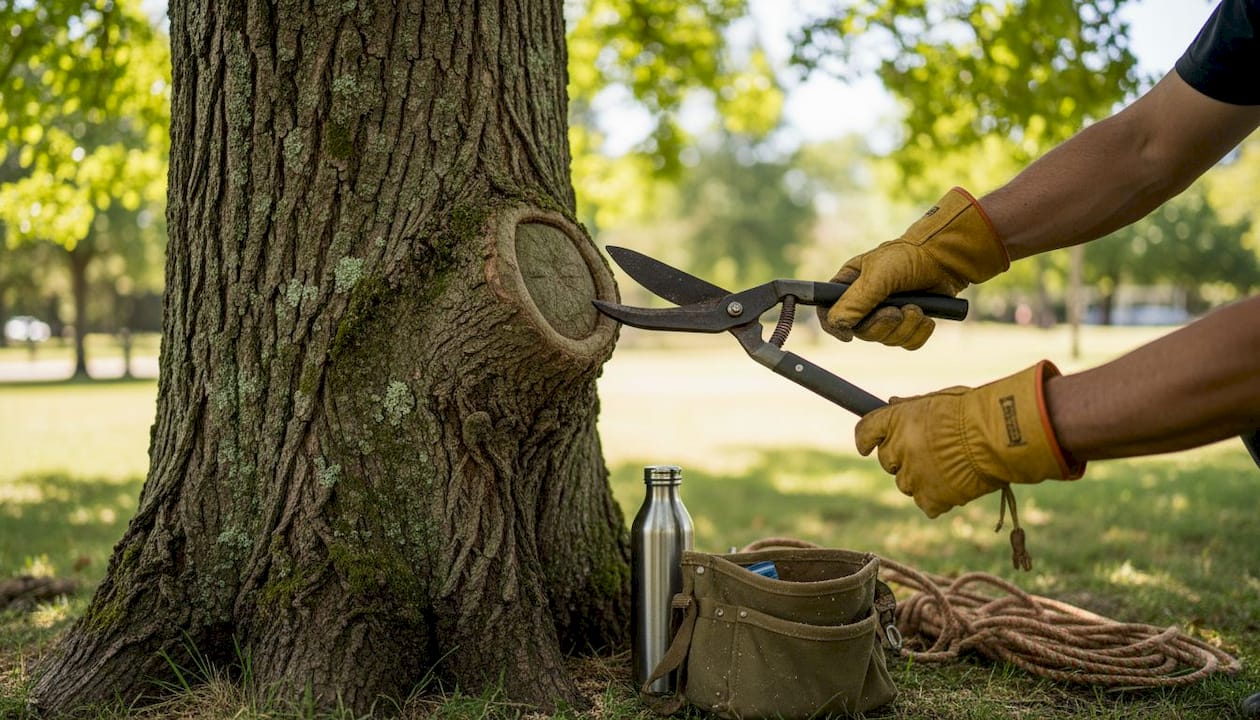
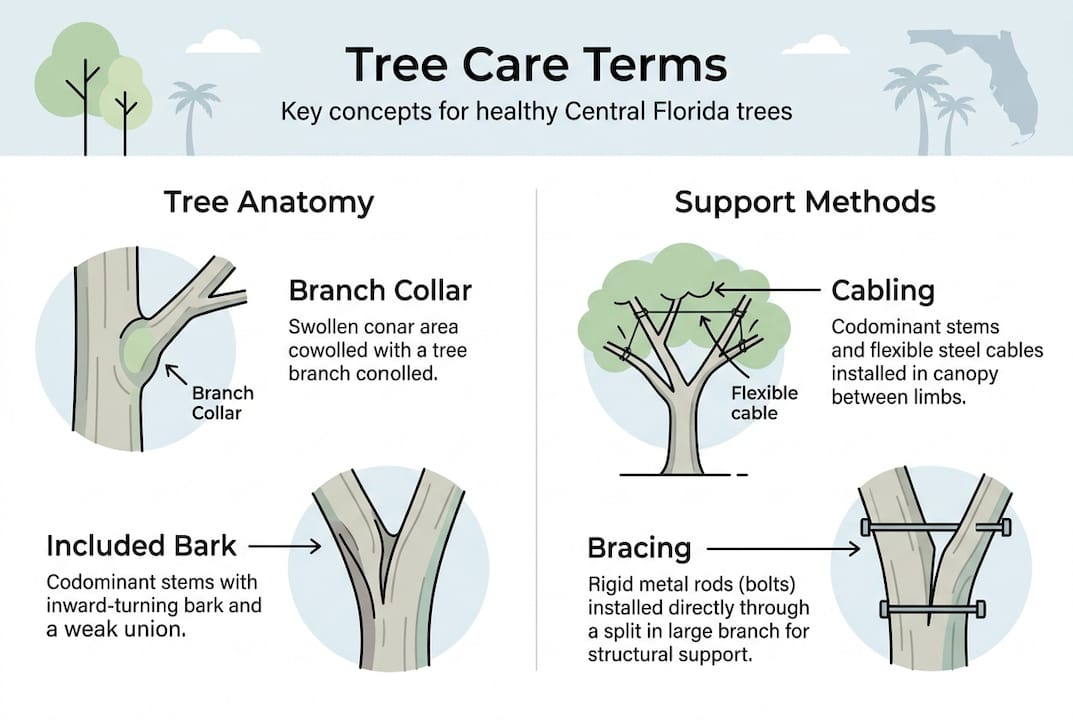
Proper pruning begins with understanding tree anatomy and where cuts should be made. The branch collar is the swollen area at the branch base where proper pruning cuts are made to promote healing. This specialized tissue contains cells that rapidly seal the wound, protecting the tree from decay and disease. Cutting too close to the trunk removes this protective collar, while leaving too much stub prevents proper wound closure. Both mistakes create entry points for pathogens that can compromise the entire tree.
Included bark occurs when bark becomes trapped between a branch and the trunk or between two co-dominant stems. This condition creates a structural weakness because bark cannot fuse like wood tissue. Florida live oaks commonly develop included bark at major branch unions, making them vulnerable to failure during storms. When you notice a tight V-shaped branch union rather than a U-shaped one, included bark is likely present. In severe cases, cabling or strategic pruning may be necessary to prevent catastrophic branch failure.
Professional tree care recognizes four distinct tree care pruning techniques, each serving specific purposes:
| Pruning type | Purpose | Effects on tree |
|---|---|---|
| Cleaning | Remove dead, diseased, or damaged branches | Improves health and safety |
| Thinning | Selectively remove branches to increase light and air | Reduces wind resistance, maintains natural form |
| Reduction | Decrease tree height or spread by cutting to laterals | Controls size while preserving structure |
| Elevation | Remove lower branches to provide clearance | Creates space for vehicles, pedestrians, structures |
ANSI A300 recommends no more than 25% live crown removal during any single pruning session to maintain tree vigor and avoid stress. Removing too much foliage at once depletes the tree’s energy reserves and triggers survival responses that can weaken its structure. In Central Florida’s intense growing season, even well-intentioned over-pruning can cause excessive regrowth that requires frequent maintenance and creates long-term structural problems.
Topping, classified as indiscriminate severe cutting and prohibited as it weakens trees by ISA, represents one of the most harmful practices still mistakenly used by unqualified tree workers. This technique involves cutting main branches back to stubs or lateral branches too small to assume the terminal role. The result is rapid regrowth of epicormic sprouts, weakly attached shoots that emerge from dormant buds beneath the bark. These sprouts grow quickly but lack the structural integrity of natural branches, creating hazards that often exceed the original concern that prompted the topping.
Best practices for maintaining tree vigor through proper pruning include:
- Making cuts just outside the branch collar at a slight angle
- Removing no more than one quarter of the live crown in a single year
- Timing pruning to avoid peak disease transmission periods for susceptible species
- Prioritizing removal of dead, diseased, and crossing branches before aesthetic cuts
- Using the three-cut method for large branches to prevent bark tearing
- Sterilizing tools between trees to prevent pathogen spread
Pro Tip: Reduction cuts should always be made to lateral branches at least one-third the diameter of the removed section. This maintains the tree’s natural taper and ensures the remaining branch can support itself, unlike topping cuts that leave stubs incapable of proper regrowth.
Understanding the importance of pruning terminology helps you communicate effectively with tree care professionals and recognize when improper techniques are being proposed. When an arborist explains their pruning plan using these specific terms, they’re demonstrating knowledge of proper methods. Conversely, if a tree service suggests topping or fails to explain which pruning type they’ll use, consider it a warning sign to seek a more qualified provider.
Advanced terminology: tree measurement, risk support, and removal methods
Tree measurement follows standardized protocols that affect permitting and management decisions. DBH, measured at 4.5 feet above ground, serves as the standard for tree size assessment. This measurement point, called breast height, provides consistency regardless of who takes the measurement. Many Central Florida counties use DBH thresholds to determine which trees require permits for removal. For example, trees exceeding 24 inches DBH often need special approval before removal, while smaller trees may be exempt from permitting requirements.
Measuring DBH correctly requires accounting for variations in trunk shape and ground slope. On sloped terrain, measure from the uphill side of the tree. For trees with multiple trunks, measure each stem separately and calculate the combined cross-sectional area to determine the equivalent single-stem DBH. These technical details matter when determining permit requirements or assessing tree value for insurance or legal purposes.
When trees develop structural weaknesses but removal isn’t necessary or desired, support systems provide alternatives. Cabling uses flexible steel cables above weak unions, while bracing employs rigid rods through branches. These systems work differently but often complement each other in comprehensive support installations.
| Support method | Installation location | Materials used | Primary purpose |
|---|---|---|---|
| Cabling | Upper crown, above weak union | Extra-high-strength steel cable | Limit movement, redistribute stress |
| Bracing | Through weak union or split | Threaded steel rods with washers | Stabilize, prevent further splitting |
Cabling systems typically use extra-high-strength steel cable installed two-thirds of the distance between the weak union and the branch tips. The cable limits excessive movement during storms while still allowing natural flex that maintains branch strength. Static cabling provides the most restriction, while dynamic systems allow more movement but reduce shock loading during sudden wind gusts. Your certified arborist will recommend the appropriate system based on the specific structural defect and tree species.
Bracing involves drilling through stems and installing threaded rods with large washers to hold split or weak unions together. This rigid support prevents further separation and can save trees with significant structural defects. However, bracing requires precise installation to avoid creating new stress points or damaging critical tissues. Annual inspections of both cabling and bracing systems ensure they remain effective and haven’t caused damage as the tree grows.
Pro Tip: Trees with co-dominant stems showing included bark are prime candidates for preventive cabling before failure occurs. Installing support systems while the tree is healthy costs far less than emergency removal after storm damage and preserves valuable landscape trees.
When removal becomes necessary, rigging techniques allow safe dismantling of trees in confined spaces. Rigging uses ropes, pulleys, and friction devices to control heavy sections during cutting and lowering. This process prevents damage to nearby structures, utilities, and landscaping that would occur if sections were simply dropped.
Steps in safe rigging for professional tree removal operations:
- Assess the tree’s structure, lean, and surrounding obstacles to plan the removal sequence
- Install a secure anchor point in the tree or on nearby stable structures
- Attach rigging ropes to the section being removed using appropriate knots and hardware
- Make precise cuts that allow controlled separation of the section
- Lower sections gradually using friction devices that control descent speed
- Repeat the process, working from top to bottom until the tree is fully removed
Advanced rigging techniques like negative blocking and speedlining allow arborists to remove trees in extremely tight spaces where traditional methods would cause property damage. These specialized skills distinguish professional tree services from casual operators who lack the training and equipment for complex removals. In urban Central Florida settings where trees often grow close to homes, pools, and utility lines, proper rigging becomes essential for safe hazardous tree removal services.
Understanding these advanced concepts helps you appreciate the complexity of professional tree care and recognize when specialized expertise is necessary. Trees requiring support systems or complex removal aren’t suitable for generic landscape companies or unlicensed operators. The investment in qualified professionals protects both your property and the workers performing this inherently dangerous work.
Professional tree care services to support your property
Now that you understand the terminology and standards behind professional tree care, partnering with qualified experts ensures these principles benefit your property. McCullough Tree Service employs ISA-certified arborists who apply ANSI A300 standards to every project, from routine tree trimming services to complex structural support installations. Our team understands Central Florida’s unique challenges, including hurricane preparedness, subtropical pests, and the specific needs of native and commonly planted species throughout the Orlando region.
Our comprehensive services address every aspect of tree care using the proper techniques and terminology you’ve learned. Whether you need expert pruning to improve tree structure, cabling and bracing to support valuable specimens, or safe tree removal services for hazardous trees, our certified professionals deliver results that protect your investment. We never use harmful practices like topping, and we always explain our recommendations using clear terminology so you understand exactly what work will be performed and why it benefits your trees.
Benefits of choosing professional, certified tree care include:
- Expert assessment using standardized evaluation methods and industry terminology
- Safe work practices that protect workers, property, and bystanders
- Compliance with local tree protection ordinances and permitting requirements
- Improved long-term tree health through proper pruning and maintenance techniques
Our commitment extends beyond individual services to building lasting relationships with property owners who value their trees. We provide ongoing guidance about tree health, storm preparation, and maintenance scheduling that keeps your landscape thriving. Understanding tree care terminology empowers you to ask informed questions and make confident decisions, and our team welcomes the opportunity to explain our methods and recommendations in detail. For more information about proper techniques, explore our trimming vs pruning guide to deepen your understanding of these essential practices.
Frequently asked questions
What does ISA-certified arborist mean?
ISA certification from the International Society of Arboriculture verifies that an arborist has passed comprehensive examinations covering tree biology, diagnosis, maintenance, and safety. This credential ensures professionals possess the knowledge and skills necessary for safe, effective tree care rather than simply owning equipment. Certified arborists maintain their credentials through continuing education, staying current with evolving best practices and scientific research.
Why is topping harmful to trees?
Topping removes large portions of the crown through indiscriminate cuts that leave stubs or inadequate lateral branches. This practice triggers rapid regrowth of epicormic sprouts that attach weakly to the trunk and become hazardous within a few years. The severe wounds created by topping rarely close properly, providing entry points for decay organisms that compromise structural integrity. Professional arborists recognize topping as harmful and use proper reduction techniques instead.
What does DBH mean and why is it important?
DBH stands for diameter at breast height, a standardized measurement taken at 4.5 feet above ground level. This measurement provides a consistent way to assess tree size regardless of who takes the measurement or when it’s recorded. Many Central Florida counties use DBH thresholds to determine permit requirements for tree removal, with larger trees often requiring special approval before work can proceed.
How do cabling and bracing help trees?
Cabling installs flexible steel cables in the upper crown to limit excessive branch movement and redistribute stress loads during storms. Bracing uses rigid threaded rods installed through weak unions or splits to prevent further separation and stabilize compromised structures. These support systems extend the life of valuable trees with structural defects, often preventing the need for removal. Annual inspections ensure cabling and bracing systems remain effective as trees grow and conditions change.
Recommended
- Tree Planting Guide Central Florida for Homeowners
- Tree Permits in Central Florida – What Homeowners Need to Know
- Comprehensive Guide to Tree Services in Orlando
- Tree risk assessment tips for Central Florida owners