By: Shelby McCullough| Published: February 27, 2026
Managing your yard in Central Florida means more than just planting new shrubs or trimming a branch. Local rules about tree permits directly affect both your home’s safety and your property’s value. Florida Statute 163.045 lets you skip the permit process entirely if a certified arborist documents that a tree poses an unacceptable risk. Knowing when you need permission—and when you do not—saves you time, money, and a world of stress.
Table of Contents
- Tree Permits Defined In Central Florida
- Common Types Of Tree Permits And Exemptions
- Navigating Local Application Processes And Rules
- Risks, Penalties, And Legal Compliance Issues
- HOA, City, And County Differences Explained
Key Takeaways
| Point | Details |
|---|---|
| Understand Permit Requirements | Familiarize yourself with local regulations to determine when a tree permit is necessary, saving time and preventing legal issues. |
| Utilize Certified Arborist Reports | If a tree poses a risk, having a certified arborist document this can exempt property owners from needing a permit under Florida law. |
| Check HOA Regulations | Always obtain written approval from your HOA before applying for city or county permits, as HOA rules may be more stringent. |
| Plan Ahead for Applications | Initiate your permit application process 6-8 weeks before any planned tree work to accommodate processing times and avoid rush decisions. |
Tree Permits Defined in Central Florida
A tree permit is official approval from your local government that allows you to trim, remove, or significantly alter trees on your property. In Central Florida, these permits exist to protect both your community’s environmental health and your property’s value. Understanding what qualifies as a permit situation saves you time, money, and legal headaches.
Florida Statute 163.045 sets clear rules for residential tree permits. The law states that homeowners with professional documentation from a certified arborist proving a tree poses an unacceptable risk can often skip the permit process entirely. This is a game-changer for many property owners dealing with dangerous trees.
When You Need a Permit
Most Central Florida municipalities require permits for these activities:
- Removing healthy trees over a certain diameter (usually 6-8 inches)
- Removing protected tree species on your property
- Significant trimming that removes more than 25% of the canopy
- Any tree work in environmentally sensitive areas
- Commercial or land-clearing projects
When You May Not Need One
According to Florida Statute 163.045, property owners can bypass permits when a certified arborist documents that the tree presents genuine danger. This includes trees that are dead, diseased, or structurally compromised.
Understanding unacceptable risk is critical here. It’s not just your opinion—a professional assessment carries legal weight.
Local permits typically cost between $50-$300 and take 5-14 business days to process, so planning ahead matters.
Central Florida’s specific requirements vary by city and county. Protected tree species like oak, pine, and mahogany often have stricter regulations. Your local code enforcement office has the final word on what applies to your property.
Start by checking with your municipality directly. You’ll need your property address and tree details. If you’re unsure whether a permit applies, consulting a certified arborist removes the guesswork entirely.
Here’s a quick summary of permit requirements and common exemptions in Central Florida:
| Situation | Permit Needed | Key Requirement |
|---|---|---|
| Removing healthy large tree | Usually required | City/county size threshold applies |
| Removing protected species | Always required | Extra documentation mandated |
| Removing dead/unsafe tree | Often exempt | Certified arborist report needed |
| Significant canopy trimming | Usually required | >25% canopy triggers permit |
| Land-clearing for development | Always required | Special commercial permits needed |
Pro tip: Contact your city or county arborist or code enforcement before any tree work begins—one quick call prevents costly mistakes and ensures full compliance with local regulations.
Common Types of Tree Permits and Exemptions
Not all tree work requires a permit in Central Florida. Understanding the different permit categories and exemptions helps you stay compliant without unnecessary bureaucracy. The rules vary based on tree size, species, location, and condition.
Standard Removal Permits
A standard removal permit is required when removing healthy trees above a certain diameter threshold, usually 6 inches or larger. Most Central Florida cities require these permits to ensure trees aren’t needlessly removed and to document what’s being taken down.
The permit process typically involves:
- Submitting an application with property details
- Paying a fee (usually $50-$150)
- Waiting for municipal approval (5-14 business days)
- Completing the work within the timeframe specified
Protected Species Permits
Certain tree species receive extra protection under Florida law. Oak, pine, and mahogany trees often require enhanced removal permits with stricter approval standards. These species must be removed for legitimate reasons, not just property convenience.
Emergency Exemptions
This is where things get practical. Tree removal penalties show why exemptions matter. You generally don’t need a permit if the tree is:
- Dead or dying
- Diseased and documented by a certified arborist
- Posing genuine safety risk to structures or people
- Already hazardous when documented by a professional
Hazard Mitigation Exemptions
When a certified arborist documents unacceptable risk, you can skip the permit entirely. This exemption exists because dangerous trees shouldn’t wait for bureaucratic approval. Your documentation from the arborist becomes your legal protection.
If you hire unlicensed tree services, you lose this protection and face significant penalties under Florida law.
Land-clearing and commercial projects have their own permit categories with different requirements. Always verify your specific situation with your local code enforcement office since rules vary between municipalities.
Hiring a licensed professional for tree work ensures your paperwork is handled correctly from the start.
Pro tip: Get a certified arborist assessment before starting any tree work—the $150-$300 investment pays for itself by eliminating uncertainty and preventing costly compliance violations.
Navigating Local Application Processes and Rules
Each Central Florida municipality handles tree permit applications differently. Orange County, Orlando, Winter Park, and other cities have their own portals, requirements, and timelines. Knowing your specific jurisdiction’s process saves weeks of back-and-forth.
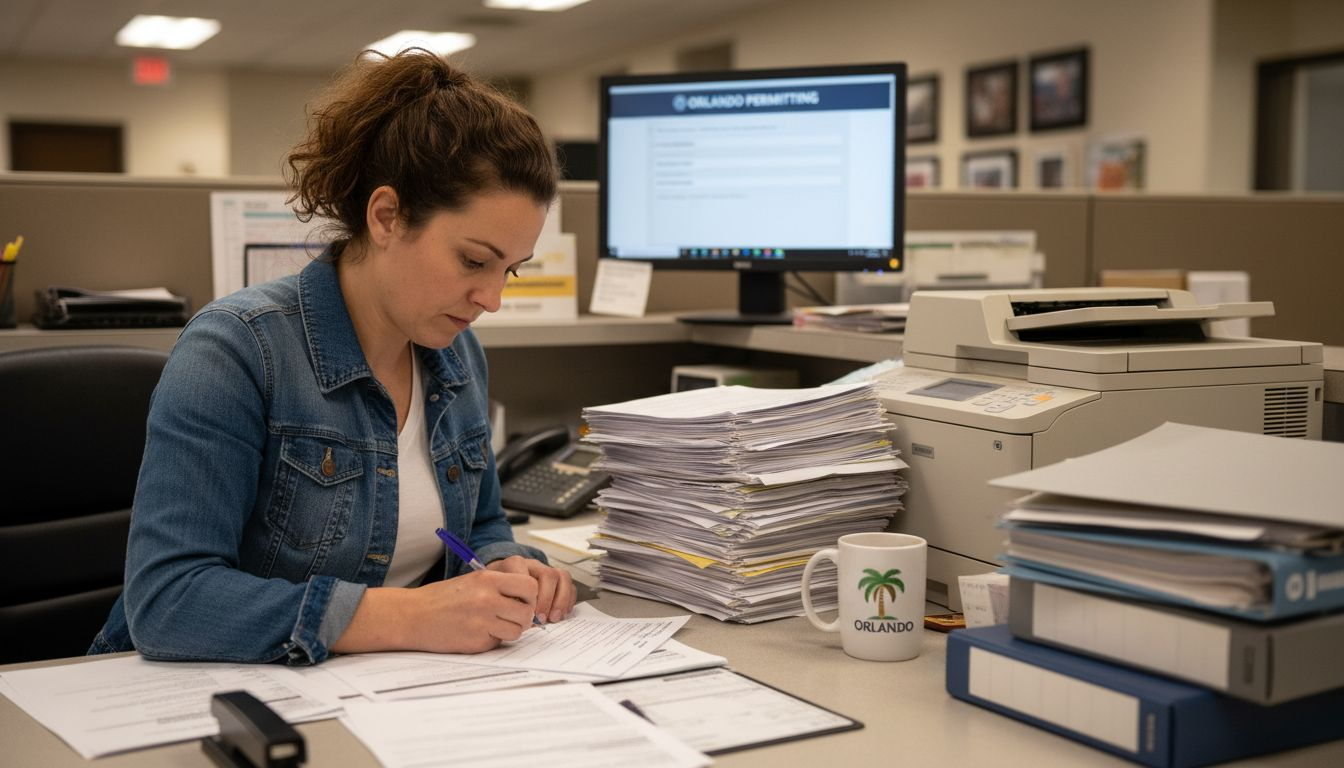
Step-by-Step Application Process
Most municipalities follow a similar workflow, though details vary. Here’s what to expect:
- Gather tree documentation including species, diameter, and condition assessment
- Complete the online or paper application through your city or county portal
- Submit required supporting documents (arborist reports, property surveys, etc.)
- Pay the application fee
- Await municipal review and approval notification
- Receive permit with specific work requirements and timeline
- Complete tree work within the permitted timeframe
- Request final inspection if required by your jurisdiction
Required Documentation
Orange County’s tree removal permit requirements illustrate what most Central Florida agencies expect. You’ll typically need:
- Certified tree survey with measurements and species identification
- Property survey showing tree location on your lot
- Arborist assessment for hazardous or diseased trees
- Justification for removal (if required by your municipality)
- Proof of ownership or authorization to request permits
Environmental Reviews and Mitigation
Larger removals or protected species often trigger environmental review processes. Some municipalities require mitigation plans, which might include replanting trees elsewhere on the property or paying into local tree funds.
Processing times range from 5-14 days for routine removals, but complex cases with environmental reviews can take 30-45 days.
Online portals make submissions easier, but rules still vary. Winter Park has stricter requirements than some neighboring areas. Orlando’s process differs from Seminole County’s approach.
Common Submission Mistakes
Avoid these costly errors:
- Incomplete applications that get rejected and resubmitted
- Missing arborist certifications or signatures
- Tree measurements that don’t match surveyed data
- Unclear property identification or tree location
- Starting work before approval arrives
Contact your local code enforcement office before submitting anything. A 10-minute call clarifies exactly what your jurisdiction requires, preventing rejection delays.
Pro tip: Request your permit 6-8 weeks before you plan to start tree work—this buffer accounts for processing time and any requested revisions without forcing rush decisions.
Risks, Penalties, and Legal Compliance Issues
Removing trees without proper permits carries real consequences in Central Florida. The financial penalties alone can devastate your budget, and legal complications extend far beyond fines. Understanding what’s at stake motivates compliance.
Financial Penalties
Unauthorized tree removal penalties in Florida can reach $15,000 per tree, especially for protected species like oak and mahogany. A single unauthorized removal of a large protected tree could cost you more than the tree was worth. Multiple violations multiply these costs exponentially.
These aren’t small infractions. The state treats unpermitted tree removal seriously because it impacts environmental quality and community character. Your homeowner’s insurance may not cover costs related to illegal tree work either.
Additional Legal Consequences
Fines represent only part of the problem. Courts can also order:
- Restoration and replanting requirements on your property
- Mitigation payments to local environmental funds
- Legal fees and court costs
- Liens placed against your property
- Criminal charges for egregious violations
Liability Issues
Unauthorized tree removal creates personal liability exposure. If a tree you illegally removed damages a neighbor’s property, you’re fully responsible for repairs. Your homeowner’s insurance won’t cover damages resulting from illegal activity.
Hiring unlicensed contractors compounds this risk. They may lack proper insurance, leaving you liable if someone is injured during unpermitted work.
One homeowner in Orange County paid $18,000 in fines plus $25,000 in restoration costs after removing three protected oaks without permits.
Property Value Impact
Unpermitted tree removal can damage your property value. Future buyers discover violations during title searches, and appraisals reflect missing mature trees. Selling becomes complicated when environmental violations appear in records.
Avoiding Compliance Disasters
Protect yourself with these steps:
- Verify permit requirements before any tree work
- Get written approval before hiring contractors
- Request permits early (6-8 weeks before work)
- Use only licensed, insured professionals
- Keep all permit documentation for your records
- Document tree conditions with professional assessments
When in doubt, contact your local code enforcement office. They answer questions for free and help you stay compliant without guesswork.
Pro tip: Save all permit documentation and correspondence in a property file—these records prove compliance if questions arise during home sales or insurance claims.
HOA, City, and County Differences Explained
Central Florida homeowners often navigate three separate layers of tree regulations: their HOA, their city, and their county. Each enforces different rules, and you must comply with all of them. Violating one layer doesn’t excuse you from the others.
Understanding the Three Layers
Think of it like this: your county sets baseline environmental protections, your city adds its own requirements on top, and your HOA imposes additional covenants specific to your community. Florida tree regulations vary significantly across different jurisdictions, with some areas designating heritage or specimen trees with stricter protections than others.
You must satisfy the strictest requirement among all three. If your county allows removal but your HOA prohibits it, you cannot remove the tree. Period.
To help you navigate local rules, here is a comparison of regulatory differences at each level:
| Regulatory Level | Example Authority | Notable Focus | Approval Supersedes |
|---|---|---|---|
| HOA | Condo/Neighborhood HOA | Aesthetic, uniformity | City/county if stricter |
| City | Orlando, Winter Park | Heritage/specimen trees | HOA if city’s rules stricter |
| County | Orange, Seminole | Baseline environmental laws | All unless stricter rule |
County-Level Requirements
Counties establish baseline environmental standards. Orange County, Seminole County, and others have their own tree ordinances protecting native species and specimen trees over certain sizes.
County rules typically cover:
- Tree size thresholds requiring permits
- Protected species lists
- Mitigation requirements for removal
- Environmental review processes
- Appeals procedures
City-Level Rules
Cities often impose stricter standards than counties. Winter Park is famous for aggressive tree protection ordinances. Orlando, Sanford, and other municipalities have their own unique requirements that may exceed county standards.
Cities control:
- Street tree removal permits
- Heritage tree designations
- Specimen tree protection
- Landscaping requirements
- Neighborhood aesthetic standards
HOA Restrictions
This is where many homeowners get surprised. HOAs enforce overlapping tree regulations beyond local government requirements, often with additional covenants and restrictions specific to your community.
Your HOA may require:
- Approval before any tree work
- Specific tree species for replacements
- Stricter size limitations than city or county
- Maintenance standards for existing trees
- Aesthetic considerations for landscaping
Get written approval from your HOA before requesting city or county permits—HOA denial means you cannot proceed, regardless of government approvals.
Real-World Example
A homeowner wants to remove a dying oak. The county allows it with arborist documentation. The city approves it. But the HOA denies it, citing community aesthetic standards. The homeowner cannot remove the tree.
Another scenario: an HOA permits removal, but the city designates it as a heritage tree. The city’s decision overrides the HOA approval. You’re stuck complying with the stricter rule.
How to Navigate All Three
Start with your HOA. Check your declarations and CC&Rs (Covenants, Conditions, and Restrictions) first. Contact your HOA board for written approval before doing anything else.
Then contact your city or county. Verify their specific requirements for your property address and tree type. Submit permits to the appropriate jurisdiction.
Always get approvals in writing. Email confirmations, permit numbers, and HOA letters protect you if disputes arise later.
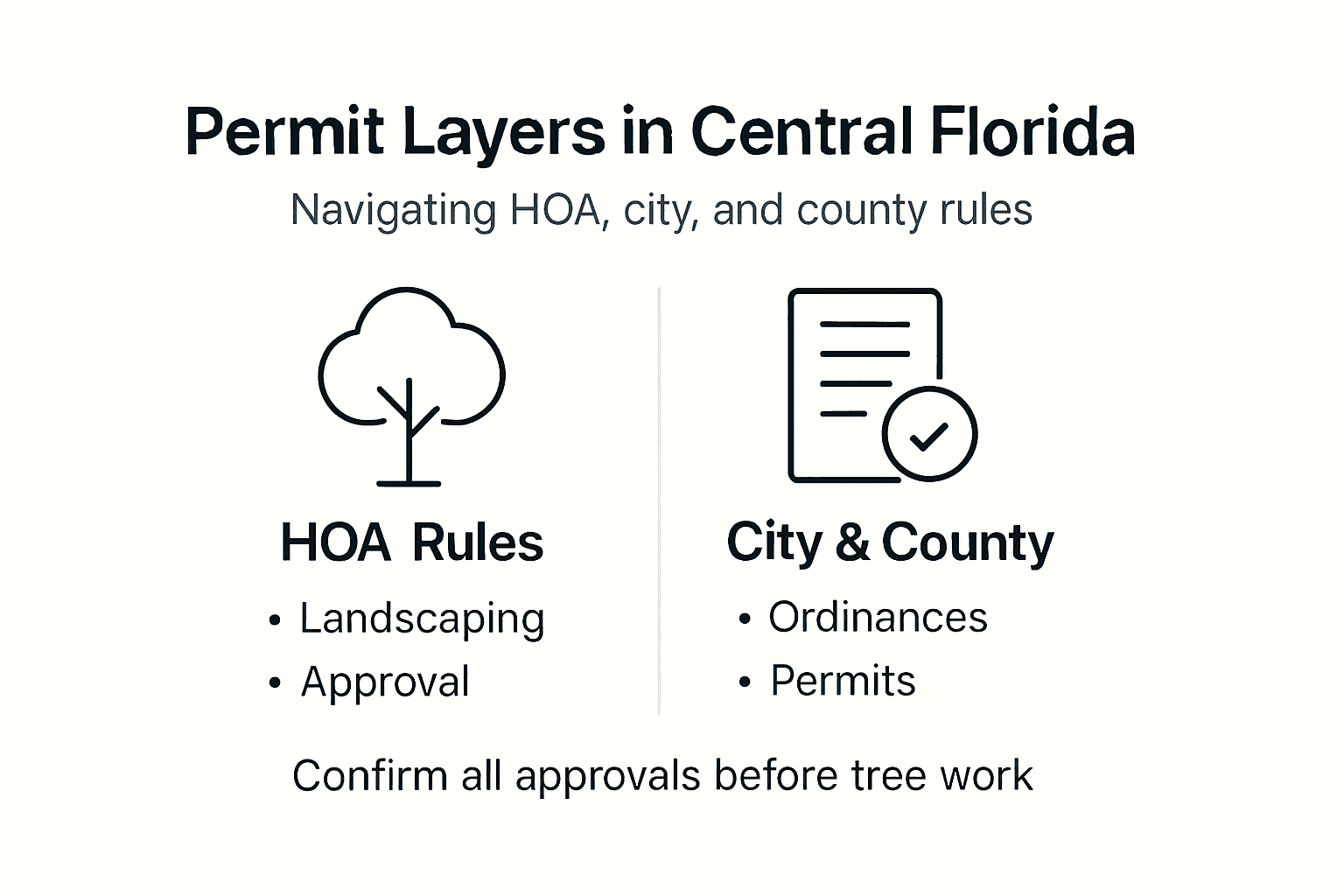
Pro tip: Request a copy of your HOA’s tree policy and your city’s complete tree ordinance before any planning—these documents spell out exactly what you can and cannot do on your property.
Get Expert Help Navigating Tree Permits and Care in Central Florida
Struggling with complicated tree permit requirements or facing uncertainty about what your property needs? McCullough Tree Service offers professional solutions tailored to Central Florida homeowners who want safe, legal, and efficient tree care. From certified arborist assessments that provide crucial documentation to expert tree trimming and removal services that comply with all local regulations, we take the stress out of managing your trees.
Don’t risk costly fines or delays from unpermitted work. Start confidently by consulting with industry-leading experts who understand the nuances of Florida Statute 163.045 and local codes. Visit McCullough Tree Service now to schedule your free estimate and get your property on the right track. Protect your investment with trusted, licensed professionals — contact us today.
Explore how we help with Tree Trimming and Removal or learn more about our full range of Certified Arborist Services. Your peace of mind begins here.
Frequently Asked Questions
When do I need a tree permit in Central Florida?
Most municipalities require a permit for removing healthy trees over 6-8 inches in diameter, significant trimming that removes more than 25% of the canopy, and anytime tree work takes place in environmentally sensitive areas.
Can I skip the tree permit process if an arborist says the tree is dangerous?
Yes, if you have professional documentation from a certified arborist that proves the tree poses an unacceptable risk, you may bypass the permit process entirely as per Florida Statute 163.045.
What are the consequences of removing a tree without a permit?
Unauthorized tree removal can result in financial penalties, which can reach up to $15,000 per tree, especially for protected species. Additional legal consequences may include restoration requirements and liability for damages caused by the removal.
What documentation do I need to apply for a tree permit?
Typically, you’ll need a certified tree survey with species and diameter, an arborist assessment for hazardous trees, a property survey showing tree location, and proof of ownership or authorization to request permits.
Recommended
- Tree Planting Considerations for Central Florida Homes
- Tree Planting Guide Central Florida for Homeowners
- What Is Tree Trimming? Key Facts for Florida Homeowners
- Tree Planting for Commercial Properties: Boosting Value and Compliance
- Tree Service Orlando FL
- Tree Service Winter Springs FL