By: Shelby McCullough| Published: May 20, 2026
TL;DR:
- Hiring a certified arborist ensures long-term tree health, safety, and regulatory compliance, preventing costly mistakes. Regular professional care extends tree lifespan, protects property value, and mitigates legal liability compared to DIY work. Verifying ISA certification, insurance, and obtaining multiple quotes are essential steps to select a qualified expert.
Most property owners look at a tree and see something simple: it grows, you trim it, done. That thinking is what leads to topped trees, botched removals, and six-figure liability claims. Understanding why hire an arborist in 2026 matters more than ever as property values rise, storm seasons intensify, and municipal tree ordinances get stricter. The trees on your property are long-term structural assets, and treating them like shrubs you can maintain with a YouTube tutorial is a costly mistake. This guide breaks down what certified arborists actually do, what they protect you from, and how to hire the right one.
Table of Contents
- Key Takeaways
- Why hire an arborist in 2026
- Key benefits for property owners in 2026
- Mistakes that DIY tree work causes
- How to choose the right arborist
- Arborist service costs and long-term value
- My honest take on tree care decisions
- Protect your trees with McCullough Tree Service
- FAQ
Key Takeaways
| Point | Details |
|---|---|
| Arborists are specialists, not landscapers | Certified arborists train specifically in tree biology, disease diagnosis, and safe removal. |
| Professional care protects property value | Regular arborist maintenance prevents costly emergency removals and extends tree lifespan significantly. |
| DIY tree work carries serious legal risk | Improper removal or pruning can trigger fines, insurance denials, and liability for property damage. |
| Hiring the right arborist takes verification | Always confirm ISA certification, insurance, and local licensing before any work begins. |
| Cost is lower than most owners expect | A diagnostic visit typically costs up to $200, far less than the damage an untreated tree can cause. |
Why hire an arborist in 2026
A certified arborist is not a landscaper who also trims trees. Arborists are trained specialists in tree biology, structural assessment, and long-term health management. The International Society of Arboriculture, known as the ISA, certifies professionals who have passed rigorous exams and logged verifiable field experience. The Tree Care Industry Association, or TCIA, offers additional accreditation that covers safety protocols and business standards.
What does that certification actually mean for your trees? An ISA-certified arborist can look at your live oak or your water-stressed magnolia and read what is happening inside before visible symptoms become irreversible. They understand how different species respond to Florida’s heat, soil chemistry, and wet-dry cycles. That species-specific knowledge is the gap between a tree that thrives for decades and one that quietly declines until it falls on your roof.
Here is what a certified arborist brings to a property visit:
- Disease and pest diagnosis with identification of pathogens, fungal infections, and insect infestations before they spread
- Structural risk assessment to identify compromised limbs, root damage, or co-dominant trunks that pose failure risk
- Pruning prescription based on tree species, age, and growth objectives rather than a one-size approach
- Soil and nutrition evaluation to address deficiencies that limit long-term health
- Safe removal planning when a tree must come down, using equipment and rigging that protects surrounding structures
Pro Tip: Ask any tree service provider for their ISA certification number before scheduling a visit. You can verify it directly on the ISA website in under two minutes.
The distinction from general landscapers matters because proper pruning techniques promote healthy new growth while reducing structural weaknesses and decay pockets. A landscaper following a mowing schedule does not have the training to make those calls.
Key benefits for property owners in 2026
The practical case for hiring a certified arborist comes down to five areas where professional service pays off directly.
1. Tree health and long-term property value
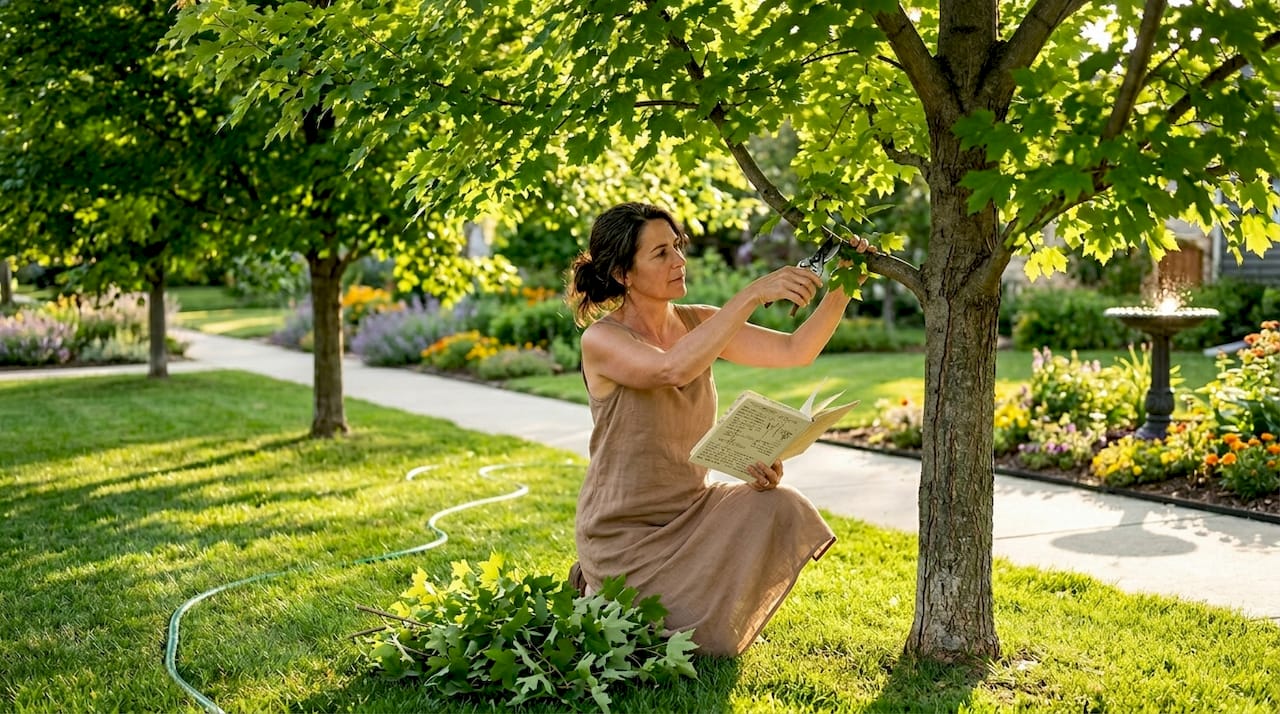
Healthy, mature trees add measurable value to residential and commercial properties. Certified arborists help maintain that investment through planting guidance, seasonal pruning, and timely removal when a tree becomes a liability. A neglected tree does not just die. It becomes a hazard that costs far more to remove than it would have cost to maintain.
2. Safety through hazard identification
An arborist reads a tree the way a structural engineer reads a building. They spot the co-dominant stem that splits in a storm, the root zone compromised by construction, and the deadwood that will fall on your fence before the next hurricane. That risk identification protects your family, your tenants, and the public on your property.
3. Proper pruning that prevents damage
Professional tree service providers use high-quality tools and cutting techniques that promote faster healing and healthier growth. Compare that to a chainsaw and a ladder: improper cuts create open wounds that invite disease and insects, shortening the tree’s lifespan by years.
4. Specialized equipment
Safe removal and serious pruning require equipment most property owners simply do not have: aerial lifts, rigging systems, wood chippers, and stump grinders operated by people who know how to use them safely. That equipment access is part of what you pay for.
5. Regulatory compliance
Arborists understand local regulations and can secure the permits required before removal or significant pruning. In many Florida municipalities, removing a protected tree without a permit triggers fines that dwarf the cost of the permit itself.
Pro Tip: In Central Florida, certain tree species and sizes fall under municipal protection ordinances. Before any removal, ask your arborist to check local codes. It takes ten minutes and could save you thousands in fines.
Mistakes that DIY tree work causes
The gap between what property owners think tree care requires and what it actually requires is significant. These are the most common and most expensive mistakes that certified arborists prevent.
- Topping trees: Cutting a tree back to stubs is one of the most damaging practices in tree care. It destroys the tree’s structure, creates massive decay pockets, and generates weak regrowth that is more likely to fail than the original canopy.
- Misidentifying disease or pests: A tree with yellowing leaves might have chlorosis, a fungal infection, a root problem, or a bark beetle infestation. Each requires a different response. Treating the wrong condition wastes money and allows the real problem to advance.
- Unsafe removal: A tree removal gone wrong does not just damage property. It injures people. Without proper rigging and drop zones, a falling tree section follows gravity, not your intentions.
- Ignoring seasonal timing: Pruning during active growth periods stresses certain species. Cutting during pest seasons can attract borers to fresh wounds. Arborists schedule work around biology, not convenience.
- Using unlicensed workers: If an uninsured tree worker is injured on your property, you may be liable. If their work damages a neighbor’s property, your homeowner’s insurance may deny coverage because you hired an unlicensed contractor.
“Hiring a certified arborist provides peace of mind ensuring tree health, public safety, and
long-term property value.”
The legal and insurance exposure alone makes the arborist vs DIY tree care comparison straightforward for any property manager who has read their policy documents carefully.
How to choose the right arborist
Knowing you need a certified arborist and finding a good one are two different problems. Here is a process that filters out unqualified providers quickly.
- Verify ISA certification. The ISA database is public and searchable. If someone calls themselves a certified arborist but cannot provide a certification number, move on.
- Confirm insurance and licensing. Ask for proof of general liability insurance and workers’ compensation coverage. In Florida, tree service companies must carry both. Call the insurer to confirm the policy is active.
- Get multiple quotes. Not because the cheapest is best, but because quotes reveal how different providers approach your specific trees. A good arborist explains their reasoning. A risky one just gives you a number.
- Check references and reviews. Look for patterns across reviews, not individual comments. Consistent praise for communication and follow-through matters more than a single five-star post.
- Ask about emergency response. Establishing relationships with reliable tree service companies before emergencies greatly reduces response time during storm damage. Having an arborist who already knows your property is a real advantage after a major storm.
Pro Tip: Schedule a routine assessment visit before you actually need urgent work. It builds the relationship, gives you a baseline health record for your trees, and means you are not calling strangers after a storm.
Here is a quick comparison to guide your evaluation:
| Criteria | Certified arborist | Unlicensed tree service |
|---|---|---|
| ISA or TCIA certification | Yes | Rarely |
| Carries liability insurance | Yes, verifiable | Often no |
| Provides written assessment | Yes | Rarely |
| Understands local ordinances | Yes | Unlikely |
| Emergency response reliability | High | Inconsistent |
Arborist service costs and long-term value
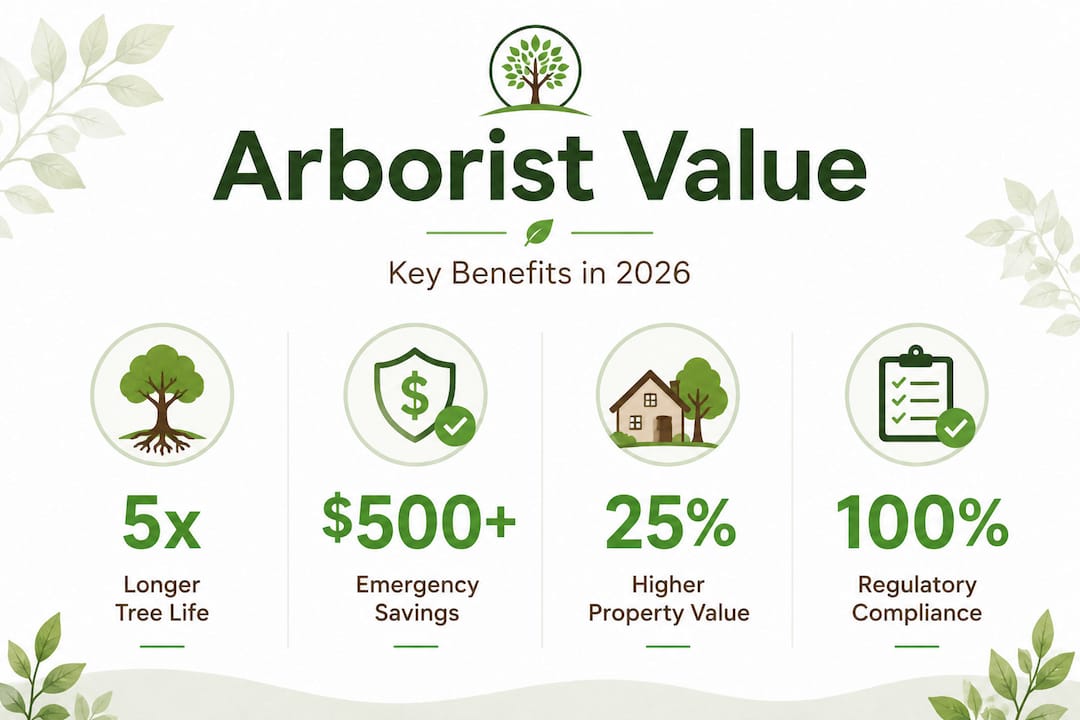
The cost question is where many property owners hesitate, and it is worth looking at the numbers honestly. An arborist diagnostic visit typically costs up to $200, with treatments starting around $150 and varying by tree size and scope.
That number looks different when you put it next to the alternatives. Emergency tree removal after storm damage costs several times more than preventive removal of a compromised tree identified during a routine assessment. A fallen tree that damages a roof, fence, or neighbor’s vehicle can easily cost tens of thousands of dollars, and insurance claims are complicated when maintenance records do not exist.
Regular tree maintenance prevents costly emergency removals and extends tree lifespan, saving money over time. That is not a vague benefit. It is the difference between a $250 annual pruning visit and a $4,000 emergency removal plus debris cleanup.
Pro Tip: Ask your arborist to create a written maintenance schedule with cost estimates for the next two to three years. It helps you budget accurately and creates documentation that can be useful when selling your property or filing insurance claims.
The value calculation also includes liability protection. A documented relationship with a licensed, insured arborist establishes that you took reasonable care of your trees. That documentation matters when insurance adjusters and attorneys ask questions after an incident.
My honest take on tree care decisions
I have seen property owners spend more money recovering from DIY tree work than they ever would have paid a certified arborist. A homeowner who tops their own oak because it looks crowded is not saving money. They are scheduling a future removal of a dying tree and paying twice.
What I find most underestimated is the value of an ongoing relationship with a single trusted arborist who knows your property. They remember what your trees looked like two years ago. They notice when something has changed. That continuity of observation is something no emergency call can replicate, because professional arborists who know your property respond faster and more accurately after storm damage.
My recommendation is simple. Do not wait for a problem to introduce yourself to a tree professional. Schedule a health assessment now, before something falls. The fee is small. The knowledge you gain about your property’s risk profile is not.
— Mcculloughtreeservice
Protect your trees with McCullough Tree Service
When you need certified arborist services in Orlando and Central Florida, Mcculloughtreeservice brings the credentials, equipment, and local expertise that property owners and managers can rely on. Their ISA-certified arborists handle everything from routine tree trimming services to complex tree removal and storm response, with a track record built on licensed, insured work across the region.
Whether you need a health assessment for a single tree or a full maintenance plan for a commercial property, Mcculloughtreeservice offers the kind of certified arborist consultations that give you real answers and a clear path forward. Schedule your assessment and protect the trees that protect your property.
FAQ
What does a certified arborist do differently than a landscaper?
A certified arborist specializes in tree biology, structural risk assessment, disease diagnosis, and safe removal, whereas a landscaper focuses primarily on general lawn and garden maintenance. The training and credentials required are fundamentally different.
When should I hire an arborist instead of waiting?
Hire an arborist when you notice dead limbs, unusual leaf loss, fungal growth, leaning trunks, or any tree near a structure or power line. Waiting until visible damage is severe almost always increases the cost and risk of intervention.
How much do arborist services typically cost in 2026?
A diagnostic visit from a certified arborist typically costs up to $200, with specific treatments starting around $150 depending on tree size and the complexity of work required.
Is DIY tree removal covered by homeowner’s insurance?
Many homeowner’s insurance policies complicate or deny claims when damage results from work performed by unlicensed or uninsured contractors. Using a certified, insured arborist protects your claim eligibility.
How do I verify an arborist is actually certified?
You can verify ISA certification directly through the ISA’s public online database using the arborist’s name or certification number. Always request proof before scheduling any work.
Recommended
- Arborist certifications 2026: Essential guide for Central Florida
- Why Hire Certified Arborists for Safe Tree Care
- How to Select Arborist Services for Safe Tree Care
- 7 Key Benefits of Arborist Services for Homeowners