By: Shelby McCullough| Published: May 31, 2026
TL;DR:
- Professional stump grinding quickly and safely removes tree stumps below ground, reducing hazards and promoting healthy soil. It costs around $250 per stump, with bundling multiple stumps lowering overall expenses, and involves thorough cleanup and preventive treatment. Compared to full removal, grinding preserves soil nutrients, minimizes disruption, and is ideal for landscaping or future construction projects.
Professional stump grinding is the most efficient method for removing tree stumps below ground level, using specialized rotary cutting machines to eliminate tripping hazards, pest attractants, and eyesores from residential and commercial properties. Property owners in Orlando and Central Florida face a specific challenge: Florida’s warm, humid climate accelerates fungal growth and termite colonization in decaying stumps, making fast, thorough removal a practical necessity rather than a cosmetic preference. This article covers how the process works, what it costs, how it compares to full stump removal, and why hiring professional stump grinding services protects both your property and your budget.
Why choose professional stump grinding over doing it yourself
Professional stump grinding delivers results that DIY methods simply cannot match in speed, safety, or thoroughness. A trained operator with a commercial-grade grinder can reduce a 24-inch stump to wood chips in under an hour. Renting a consumer-grade machine and attempting the same job without experience routinely takes a full day, often with incomplete results and a higher risk of injury.
The core process works like this: a rotating cutting wheel with carbide teeth grinds the stump in overlapping passes, working progressively deeper until the stump sits 6 to 12 inches below grade. Professionals select equipment based on stump size, access constraints, and soil conditions. Dedicated stump grinders are best suited for scattered stumps where precision matters more than speed, while track-mounted commercial grinders handle large or multiple stumps efficiently.
The benefits of stump grinding extend well beyond aesthetics. Grinding eliminates the physical tripping hazard, removes the decaying wood that attracts termites and carpenter ants, and stops the stump from becoming a fungal host that spreads root rot to nearby healthy trees. The resulting wood chips serve as organic mulch, which you can spread directly over garden beds to retain moisture and suppress weeds.
Here is what a professional stump grinding job typically addresses:
- Removal of the visible stump and surface roots to below grade
- Reduction of wood to chips usable as mulch or hauled away on request
- Leveling of the ground surface to prepare for sod, planting, or paving
- Assessment of nearby root systems to flag any structural concerns
Pro Tip: Ask your contractor to grind 8 to 12 inches below grade rather than flush with the soil. This depth prevents resprouting and gives you enough clean fill depth to lay sod or install a new planting without the stump interfering.
What does professional stump grinding cost in 2026?
Pricing for professional stump removal follows a straightforward model once you understand the variables. Most homeowners pay about $250 per stump, though large stumps can reach $1,600 depending on diameter, wood hardness, and site access. That range reflects the most common pricing structure: $2 to $5 per diameter inch, with a minimum call-out fee around $100 regardless of stump size.
The minimum fee is the most misunderstood cost driver. A contractor mobilizing equipment, driving to your property, and setting up for a single 10-inch stump still incurs the same travel and setup cost as a job with five stumps. Bundling multiple stumps into one service visit lowers the per-stump cost significantly because the mobilization fee gets spread across the whole job. If you have three or more stumps on your property, scheduling them together is the single most effective way to reduce your total bill.
Comparing DIY rental to professional service reveals a narrower gap than most property owners expect:
| Cost Factor | DIY Rental | Professional Service |
|---|---|---|
| Equipment cost | $100 to $300 per day | Included in labor quote |
| Operator skill required | High | Provided |
| Cleanup included | No | Usually yes |
| Liability coverage | None | Contractor’s insurance |
| Risk of utility damage | High | Low with proper assessment |
| Typical total cost | $150 to $400+ | $200 to $500 |
Renting stump grinders costs $100 to $300 per day, and that figure excludes the time cost, physical labor, and the real financial exposure if you hit an irrigation line or underground cable. Professionals carry liability insurance that covers property damage and injury. That coverage alone justifies the price difference for most property owners.
Additional cost factors worth knowing:
- Root complexity: Surface roots extending far from the stump add grinding time and cost.
- Soil conditions: Rocky or compacted soil dulls cutting teeth faster, increasing labor.
- Access: Stumps in tight spaces requiring smaller equipment take longer to grind.
- Debris disposal: Hauling wood chips off-site typically adds $50 to $100 to the total.
How does stump grinding compare to full stump removal?
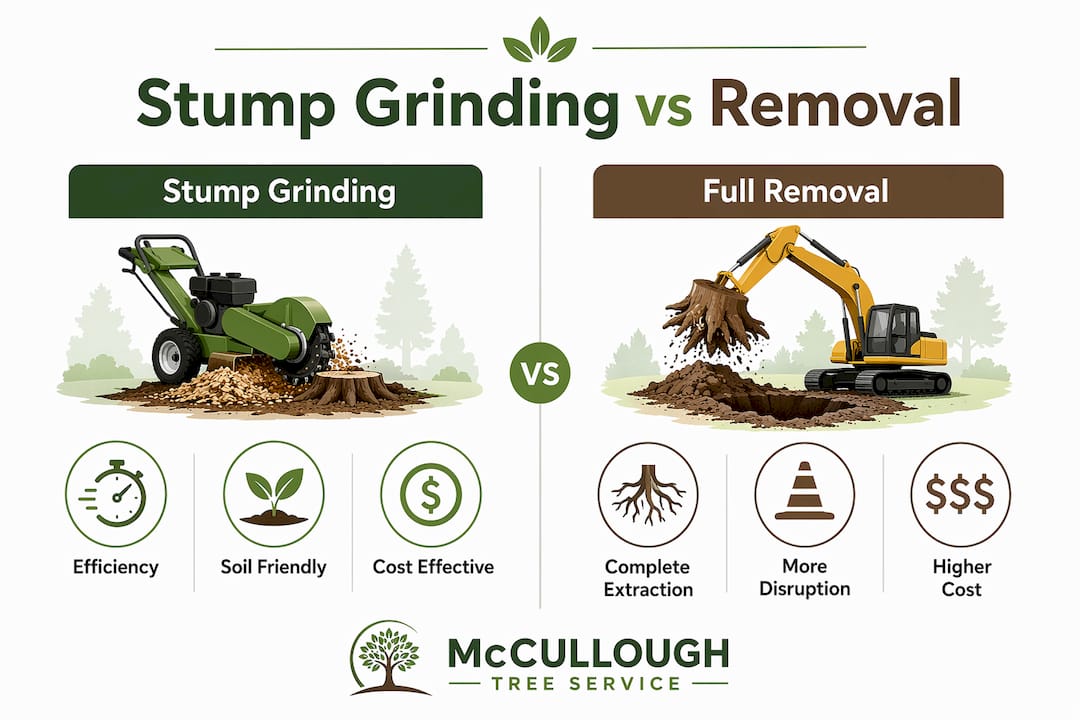
Stump grinding and full stump extraction solve the same problem through fundamentally different approaches, and choosing the wrong one creates unnecessary expense or landscape disruption. Grinding reduces the stump to below-grade wood chips while leaving the root system to decay naturally in the soil. Full extraction physically pulls the entire root ball from the ground, leaving a large hole that requires significant backfilling and soil restoration.
Grinding to ground level removes traffic obstacles and prepares the site for most landscaping uses without disturbing the surrounding soil structure. The roots left behind decompose over three to seven years, adding organic matter back to the soil rather than stripping it. Full root removal, by contrast, can cause measurable nutrient loss and soil compaction in the area surrounding the extraction point.
For land managers, grinding to grade improves trafficability with minimal soil disturbance, making it the preferred method for orchards, pastures, and commercial properties where ground stability matters. Residential property owners benefit from the same logic: grinding leaves your lawn intact, while full extraction turns a manageable stump into a construction project.
Full removal does have specific use cases. If you plan to pour a concrete slab, install a pool, or build a structure directly over the stump location, the root mass must come out. Persistent pest infestations in the root system, particularly from certain wood-boring beetles, may also warrant complete extraction.
Pro Tip: For most Central Florida residential properties, grinding 10 to 12 inches below grade is sufficient for replanting grass or installing a garden bed. Reserve full extraction for construction projects where the root mass would physically interfere with a foundation or hardscape.
What safety standards do professional stump grinders follow?
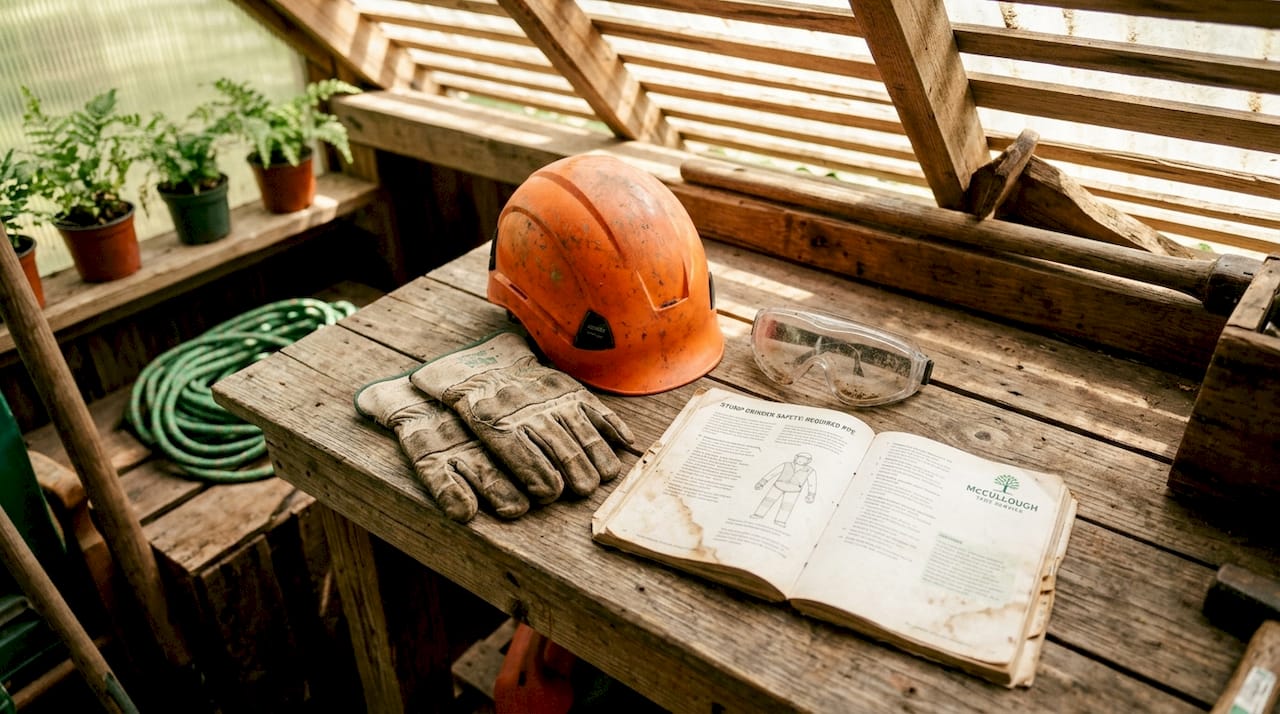
Professional stump grinding carries real physical risks: flying debris, contact with the cutting wheel, and underground utility strikes are the three most common hazard categories. Reputable contractors manage all three through documented training, proper personal protective equipment, and pre-job site assessments.
The Tree Care Industry Association sets the professional standard for training compliance. Employers must verify worker competency before allowing unsupervised operation of stump grinding equipment, with annual documented training and on-the-job assessments required for full compliance. This is not a voluntary guideline. It is a regulatory requirement that separates licensed contractors from unlicensed operators.
Here is what a properly credentialed stump grinding crew does before starting work:
- Call 811 (the national utility locate service) to flag underground lines at least three business days before grinding.
- Inspect the work zone for irrigation heads, buried cables, and hardscape within the cutting radius.
- Confirm all bystanders and pets are at least 50 feet from the cutting wheel during operation.
- Wear ANSI-rated face shields, hearing protection, cut-resistant chaps, and steel-toed boots.
- Verify the machine’s blade guard is intact and functioning before starting.
“Professional stump grinding provides safer outcomes by avoiding damage to underground utilities and property compared to DIY methods. Proper risk assessments and equipment use minimize accidents and property damage.” — Blogarama Tree Care Research
When verifying a contractor’s credentials, ask for proof of general liability insurance and workers’ compensation coverage. A contractor without both shifts the financial risk of any accident directly onto you as the property owner.
How do professionals handle cleanup after stump grinding?
Post-grinding cleanup separates a professional job from a rental-equipment attempt. After the cutting wheel finishes, the work area contains a mound of wood chips, exposed soil, and often a shallow depression where the stump sat. What happens next determines whether your yard looks restored or just less damaged.
Professional stump grinding typically includes cleanup services that remove wood chips and debris to restore yard aesthetics. The contractor rakes chips away from the grinding zone, either leaving them for you to use as mulch or loading them for off-site disposal. The exposed depression gets backfilled with a mix of topsoil and the finer wood chip material, then leveled to match the surrounding grade.
Controlling resprouting is the step most property owners overlook. Some tree species, particularly oaks and crepe myrtles common in Central Florida, send up shoots from the remaining root system for one to two growing seasons after grinding. Applying a stump treatment solution to freshly ground wood immediately after the job significantly reduces this. Covering the area with a thick layer of mulch also suppresses shoot emergence by blocking light.
Here is what thorough post-grinding restoration looks like:
- Backfill the depression with topsoil to match surrounding grade
- Compact lightly to prevent settling after the first rain
- Apply stump treatment to exposed root surfaces if resprouting is a concern
- Seed or sod the area within two weeks for fastest turf recovery
- Spread remaining wood chips as mulch in nearby beds rather than sending them to landfill
Pro Tip: If you plan to reseed the area, mix the fine wood chip material from grinding with topsoil at a 1:3 ratio before backfilling. The organic content improves water retention and gives new grass roots a better growing medium than plain fill dirt.
Proper cleanup also protects yard accessibility and aesthetics long after the grinding crew leaves. A leveled, filled surface prevents ankle-twisting depressions and gives your landscaper a clean canvas for whatever comes next.
Key takeaways
Professional stump grinding is the most cost-effective, least disruptive method for removing tree stumps from residential and commercial properties, provided you hire a licensed contractor with verified insurance and proper training.
| Point | Details |
|---|---|
| Cost efficiency through bundling | Scheduling multiple stumps in one visit lowers per-stump cost by spreading the mobilization fee. |
| Grinding beats full extraction for most jobs | Grinding to 10 to 12 inches below grade handles replanting and hardscape prep without stripping soil nutrients. |
| Safety requires verified credentials | Confirm liability insurance, workers’ compensation, and TCIA-compliant training before hiring any contractor. |
| Cleanup determines the final result | Backfilling, leveling, and stump treatment after grinding prevent resprouting and restore usable yard space. |
| DIY rental rarely saves money | After factoring in equipment rental, time, and liability exposure, professional service costs about the same with far less risk. |
What I’ve learned from watching property owners skip professional stump grinding
Property owners consistently underestimate the downstream cost of leaving stumps in place or attempting removal without professional equipment. The stump itself is rarely the problem. The problem is what grows in it and around it over the following 18 months.
I have seen termite colonies establish in a single decaying stump and spread to a home’s wooden fence posts within one season. I have seen a property owner rent a grinder, clip an irrigation line, and spend more on the repair than a professional job would have cost. These are not edge cases. They are predictable outcomes of skipping the professional assessment step.
The stump grinding advantages for Central Florida properties go beyond what applies in cooler climates. Florida’s year-round warmth means fungal growth and insect colonization happen faster and more aggressively than in northern states. A stump that might sit harmlessly for three years in Minnesota becomes a pest and disease vector in Orlando within a single summer.
The cost argument for professional service is also stronger than it appears on paper. When you bundle three or four stumps, use the wood chips as mulch, and avoid a utility strike or irrigation repair, the professional option frequently costs less in total than the DIY path. The value is not just in the grinding. It is in the assessment, the cleanup, and the liability coverage that comes with a licensed contractor.
— Mcculloughtreeservice
Get professional stump grinding from Mcculloughtreeservice
Mcculloughtreeservice serves residential and commercial property owners across Orlando and Central Florida with certified arborists and commercial-grade stump grinding equipment. Every job includes a pre-work utility assessment, full grinding to below-grade depth, and cleanup that leaves your yard ready for sod, planting, or hardscape installation.

Whether you have one stump or a dozen, the team at Mcculloughtreeservice prices jobs transparently and bundles multiple stumps to reduce your total cost. Learn more about the stump grinding process for Central Florida properties, or visit the stump grinding service page to request a free estimate. Licensed, insured, and backed by years of local tree care experience, Mcculloughtreeservice delivers results that protect your property and your investment.
FAQ
How much does professional stump grinding cost on average?
Most homeowners pay around $250 per stump, with pricing typically running $2 to $5 per diameter inch and a minimum call-out fee near $100. Large or difficult stumps can reach $1,600.
Is stump grinding worth it compared to leaving the stump in place?
Leaving a stump in place creates tripping hazards, attracts termites and carpenter ants, and can spread fungal root rot to nearby healthy trees. Professional grinding eliminates all three risks in a single visit.
How deep does a professional grind a stump?
Professionals typically grind 6 to 12 inches below grade, which is sufficient to replant grass or install a garden bed. Construction projects requiring a slab or foundation over the stump location may require full root extraction instead.
What is the difference between stump grinding and stump removal?
Stump grinding reduces the stump to wood chips below ground level while leaving roots to decay naturally. Full stump removal extracts the entire root ball, causing more soil disturbance and requiring significant backfilling.
How do I verify a stump grinding contractor is qualified?
Ask for proof of general liability insurance, workers’ compensation coverage, and confirmation that operators meet TCIA competency requirements including annual documented training before hiring.
Recommended
- How to grind stumps safely and effectively in your yard
- Top 5 advantages of stump grinding for Central Florida
- Purpose of Stump Grinding