By: Shelby McCullough| Published: June 3, 2026
TL;DR:
- Effective landscaping depends on thoughtful design, native plant selection, efficient irrigation, and consistent maintenance. Homeowners should plan based on site conditions, prioritize native species, and adopt smart watering practices to achieve sustainable, low-maintenance yards. Ongoing observation and phased development lead to thriving landscapes that enhance curb appeal and long-term health.
Effective landscaping for homeowners is defined by four integrated decisions: how you design the space, which plants you select, how you water them, and how consistently you maintain the result. Most yards underperform not because of bad taste but because of skipped planning steps and mismatched plant choices. The landscaping tips in this guide are grounded in research from the EPA and UF/IFAS, with specific techniques covering sustainable landscaping practices, smart irrigation, and low-maintenance plant strategies that work for real residential yards, including smaller lots in Central Florida and beyond.
1. How should homeowners plan their landscaping project?
Planning is the single factor that separates a yard that looks good for one season from one that performs for a decade. The EPA’s WaterSense program ties every design decision back to desired function, meaning you should define how you want to use the space before you buy a single plant.
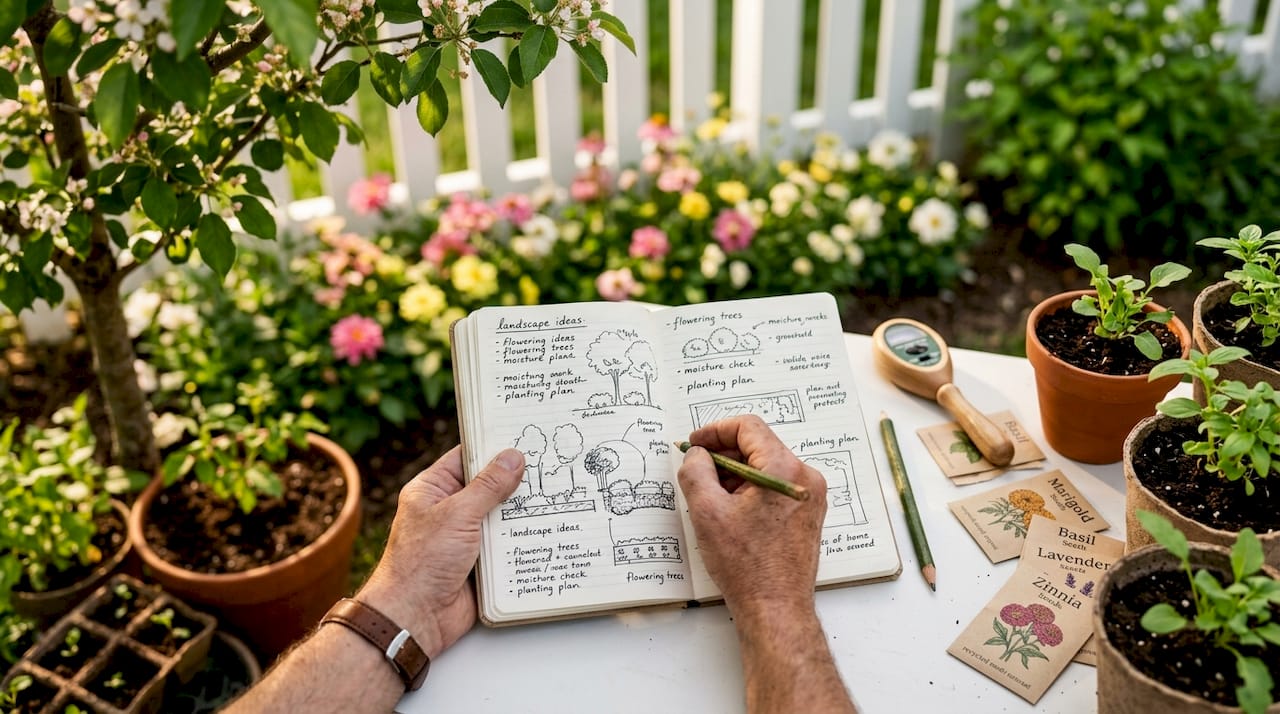
Start with a wishlist that reflects your actual lifestyle. Do you need a shaded seating area, a play zone for kids, a vegetable bed, or a mix of all three? Write it down. Then walk your yard at different times of day and note where sun hits, where water pools after rain, and which areas stay shaded. These site conditions determine which plants will thrive and where hardscape makes more sense than turf.
Set a realistic budget before you start shopping. Affordable landscaping ideas almost always involve phasing the project over two or three seasons rather than trying to do everything at once. Sketch a rough layout by hand or use free tools like the RHS Garden Planner or iScape to visualize plant placement before you commit.
Pro Tip: Map your yard’s sun and shade patterns across a full day before buying any plants. A spot that looks sunny at 9 a.m. may be fully shaded by noon, which changes your plant options completely.
2. Best plant selection strategies for sustainable home landscapes
Native plants adapted to local soils and climate require less water, fertilizer, and pest management than exotic alternatives. That is not a minor benefit. It translates directly into lower water bills, fewer chemical applications, and less weekend labor.
The most practical plant selection framework for homeowners is hydrozoning: grouping plants by similar water needs so your irrigation system can deliver the right amount to each zone without overwatering drought-tolerant species or underwatering thirsty ones. For Central Florida homeowners, McCullough Tree Service recommends reviewing their guide to Orlando tree species to identify regionally proven choices before finalizing a planting plan.
Consider plant function alongside aesthetics. Shade trees reduce cooling costs. Dense shrubs create privacy screens. Low-growing groundcovers stabilize slopes and suppress weeds without mowing. Blending these functional layers creates a yard that earns its keep year-round.
- Choose plants rated for your USDA hardiness zone and local soil type
- Group plants with similar water needs into dedicated irrigation zones
- Use native species as your default and treat exotics as exceptions
- Select pest-resistant cultivars to reduce the need for chemical sprays
- Avoid invasive species like Chinese tallow or air potato, which spread aggressively and require constant management
Pro Tip: Before buying any shrub or perennial, check the University of Florida IFAS Extension’s plant database for your county. It lists water needs, salt tolerance, and pest resistance for hundreds of species.
3. Which irrigation methods conserve water most efficiently?
Overwatering is the most common and most costly mistake homeowners make. Experts recommend matching plants to sites and watering only when plants actually need it, which dramatically reduces irrigation frequency compared to fixed calendar schedules.
Two technologies make this practical without requiring constant manual monitoring.
| Irrigation method | How it works | Best for |
|---|---|---|
| ET (evapotranspiration) controller | Schedules irrigation based on weather data and plant water balance calculations | Larger yards with diverse plant zones |
| Soil moisture sensor (SMS) | Bypasses scheduled cycles when soil moisture is already adequate | Homeowners upgrading existing timer systems |
| Calendar-based timer | Waters on a fixed schedule regardless of rainfall or soil conditions | Not recommended as a standalone system |
The good news for homeowners with existing irrigation timers is that adding an SMS controller to your current system upgrades its efficiency without replacing the whole setup. Florida-Friendly Landscaping guidelines recognize smart controller installation as a required practice for water conservation certification, which signals how significant the water savings actually are.
Mulch is the low-tech complement to smart irrigation. Applying mulch at 2 to 3 inches deep around plants retains soil moisture, suppresses weeds, and moderates soil temperature. That depth matters. Too shallow and weeds push through. Too deep and you risk root rot.
Pro Tip: Calibrate your irrigation zones at least once a year by placing empty tuna cans across each zone and running the system for 15 minutes. You want roughly 0.5 to 0.75 inches of water collected. Anything more is waste.
4. What maintenance practices keep a home landscape healthy?
Consistent maintenance prevents small problems from becoming expensive ones. The most effective landscaping maintenance tips focus on soil health, pest management, and mowing practices rather than cosmetic fixes.
- Mow turfgrass at the highest recommended height for your grass type. St. Augustine grass, common in Florida, performs best at 3.5 to 4 inches. Taller grass shades the soil, retains moisture, and crowds out weeds without extra effort.
- Replenish mulch every 6 to 12 months to maintain the 2 to 3 inch depth that controls weeds and retains moisture.
- Aerate compacted soil once a year, especially in high-traffic areas, to improve water infiltration and root development.
- Limit fertilizer applications. Choose slow-release organic options when fertilizer is genuinely needed, and never apply before heavy rain.
- Use Integrated Pest Management (IPM) to handle pest problems. IPM combines cultural controls (like proper spacing and watering), physical removal, biological predators, and selective chemical use only as a last resort.
The IPM approach matters because single-tactic pest control causes resistance over time. A caterpillar population that survives one pesticide application will produce offspring that are harder to kill. IPM’s layered escalation prevents that cycle from starting.
For persistent weed problems in new beds, consider soil solarization. Wetting the soil thoroughly and covering it with clear polyethylene for 6 to 8 weeks kills weed seeds and roots in the upper soil layer. It requires patience but eliminates the need for herbicides in that area.
5. How to enhance curb appeal and functionality with landscaping features
Curb appeal is not just about flowers. The structural elements of your yard, paths, edging, focal points, and grade changes, determine whether the space looks intentional or accidental.
The EPA’s guidance on landscape design choices connects functional design directly to long-term landscape health. A yard designed around how people actually move through it will have less compaction, fewer worn patches, and lower maintenance demands than one laid out purely for looks.
Practical features that deliver both function and visual impact include:
- Defined pathways: Gravel, stepping stones, or pavers guide foot traffic and prevent soil compaction in planted areas.
- Specimen trees or garden art: A single well-placed tree or sculpture creates a focal point that anchors the whole yard’s visual composition.
- Groundcovers on slopes: Plants like liriope, mondo grass, or native ferns stabilize slopes and prevent erosion without requiring mowing.
- Edging: A clean edge between turf and planting beds is one of the fastest, most affordable landscaping ideas for improving the overall appearance of a yard.
- Seasonal color rotation: Planting a mix of spring bulbs, summer annuals, and fall perennials keeps the yard visually interesting across all four seasons.
For homeowners working with limited space, landscaping design for small yards benefits most from vertical elements: trellises, tall grasses, and columnar trees that add height without consuming square footage. McCullough Tree Service’s resource on land clearing and property value covers how strategic removal of overgrown vegetation opens space for these design improvements.
Key takeaways
Effective homeowner landscaping requires planning around site conditions, selecting native plants grouped by water needs, using smart irrigation technology, and applying IPM-based maintenance to sustain results over time.
| Point | Details |
|---|---|
| Plan before you plant | Map sun, shade, and soil conditions before selecting any plants or features. |
| Choose native species | Native plants reduce water, fertilizer, and pest management demands significantly. |
| Upgrade to smart irrigation | ET controllers or soil moisture sensors prevent overwatering and lower water bills. |
| Apply mulch correctly | Two to three inches of mulch retains moisture and suppresses weeds without causing root rot. |
| Use IPM for pest control | Layered pest management prevents chemical resistance and reduces environmental impact. |
What I’ve learned after years of watching homeowners landscape
Most homeowners start too big. They clear the entire yard, order a truckload of plants, and try to install everything in a single weekend. Three months later, half the plants are dead, the mulch has washed away, and the project stalls. The yards that turn out best are the ones where the homeowner started with one bed, got it right, and expanded from there.
Native plants are the most underrated tool in residential landscaping. I have watched homeowners spend hundreds of dollars on exotic ornamentals that need constant babying, while their neighbors’ yards full of native species look better every year with almost no intervention. The aesthetic payoff is real, and the maintenance savings are substantial.
Smart irrigation technology intimidates people because of the upfront cost, but a soil moisture sensor controller added to an existing timer system typically pays for itself within one or two seasons through reduced water bills. The technology is not complicated. It is just a sensor that tells your timer to skip a cycle when the ground is already wet.
The most important thing I can tell any homeowner is this: your landscape is not finished when you plant it. It is a living system that changes with every season. Give it time, observe what works, and adjust. The homeowners who treat their yards as ongoing projects rather than one-time installations always end up with the best results.
— Mcculloughtreeservice
Ready to take your yard to the next level?
Your trees are the backbone of your landscape. Overgrown, damaged, or poorly placed trees undermine every other improvement you make to your yard. Mcculloughtreeservice provides certified arborist services across Orlando and Central Florida, including professional tree trimming to shape and maintain healthy canopies, and safe tree removal to clear space for new planting designs. Whether you are starting a new landscaping project or maintaining an established yard, their licensed team brings the expertise to protect your investment and improve your property’s appearance.
If you are unsure whether your trees need trimming or full removal, their trimming vs. pruning guide explains the difference and helps you make the right call before spending money on the wrong service.
FAQ
What are the first steps for homeowners starting a landscaping project?
Start by assessing your yard’s sun exposure, soil type, and drainage before selecting any plants. Define how you want to use the space, set a phased budget, and sketch a basic layout before purchasing materials.
Which plants are best for low-maintenance home landscaping?
Native plants adapted to your local climate and soil are the best choice for low-maintenance yards. They require less water, fertilizer, and pest management than non-native species, according to EPA WaterSense guidelines.
How do I stop overwatering my lawn and garden?
Replace calendar-based irrigation timers with a soil moisture sensor or ET controller, which waters only when plants actually need it. Adding mulch at 2 to 3 inches deep around plants also reduces how often irrigation is needed.
What is IPM and why should homeowners use it?
Integrated Pest Management (IPM) is a layered approach that combines cultural, physical, biological, and selective chemical controls to manage pests without causing resistance. It is more effective long-term than relying on a single pesticide.
How can I improve curb appeal on a tight budget?
Clean edging between turf and beds, fresh mulch, and one well-placed specimen plant or focal point deliver the highest visual return for the lowest cost. Affordable landscaping ideas almost always involve improving structure before adding more plants.
Recommended
- Why Hire an Arborist in 2026: What You Must Know
- Land clearing in landscaping: boost your property value
- Top Landscaping Services in Central Florida: What to Know