By: Shelby McCullough| Published: April 6, 2026
TL;DR:
- Land clearing prepares soil, removes obstacles, and shapes drainage patterns for successful landscaping or construction.
- Methods vary from mechanical, manual, chemical, to controlled burning, depending on property size and goals.
- Proper professional clearing increases property value, reduces future problems, and supports better landscaping design.
Most property owners think land clearing is just about cutting down trees. It isn’t. A well-executed clearing job shapes drainage patterns, eliminates invasive root systems, removes pest habitats, and creates the physical canvas that every successful landscaping project depends on. Whether you’re a homeowner in Orlando wanting to redesign your backyard or a developer preparing a commercial site in Central Florida, the quality of your land clearing work will determine what’s possible afterward. This guide walks you through what land clearing actually involves, which methods work best, how it affects your property value, and how to plan the process without making costly mistakes.
Table of Contents
- What is land clearing and why is it essential?
- Methods of land clearing for landscaping
- Land clearing’s impact on landscaping design and property value
- How to plan for land clearing: Steps, considerations, and common mistakes
- Our take: Why professional land clearing makes all the difference
- Connect with Central Florida’s land clearing experts
- Frequently asked questions
Key Takeaways
| Point | Details |
|---|---|
| Land clearing enables landscaping | Removing obstacles gives you a fresh start and prevents future site problems. |
| Method selection matters | Choosing the right clearing approach saves money, protects the environment, and supports property goals. |
| Professional expertise is critical | Qualified services handle compliance, safety, and maximize landscape investment. |
| Planning prevents headaches | Proper steps and permits ensure your project runs smoothly from start to finish. |
| Increases property value | Well-cleared land boosts usability and market appeal for both residential and commercial sites. |
What is land clearing and why is it essential?
Land clearing is the process of removing trees, stumps, brush, rocks, and debris from a piece of land to prepare it for a new purpose. That purpose could be a residential garden, a commercial parking lot, a sports field, or a full-scale construction project. The point is always the same: create a workable surface that supports whatever comes next.
As a property owner land clearing guide explains, land clearing prepares soil and enables landscaping and construction by removing every obstacle standing between raw land and a usable site. That includes visible debris and hidden problems like old root networks and compacted soil patches.
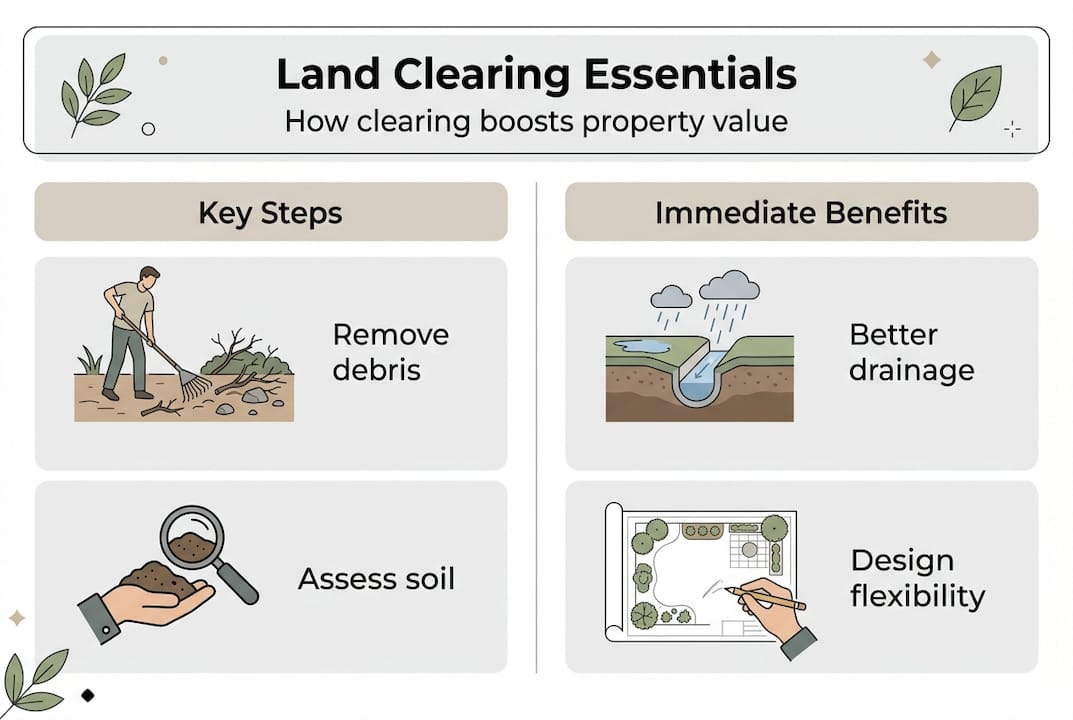
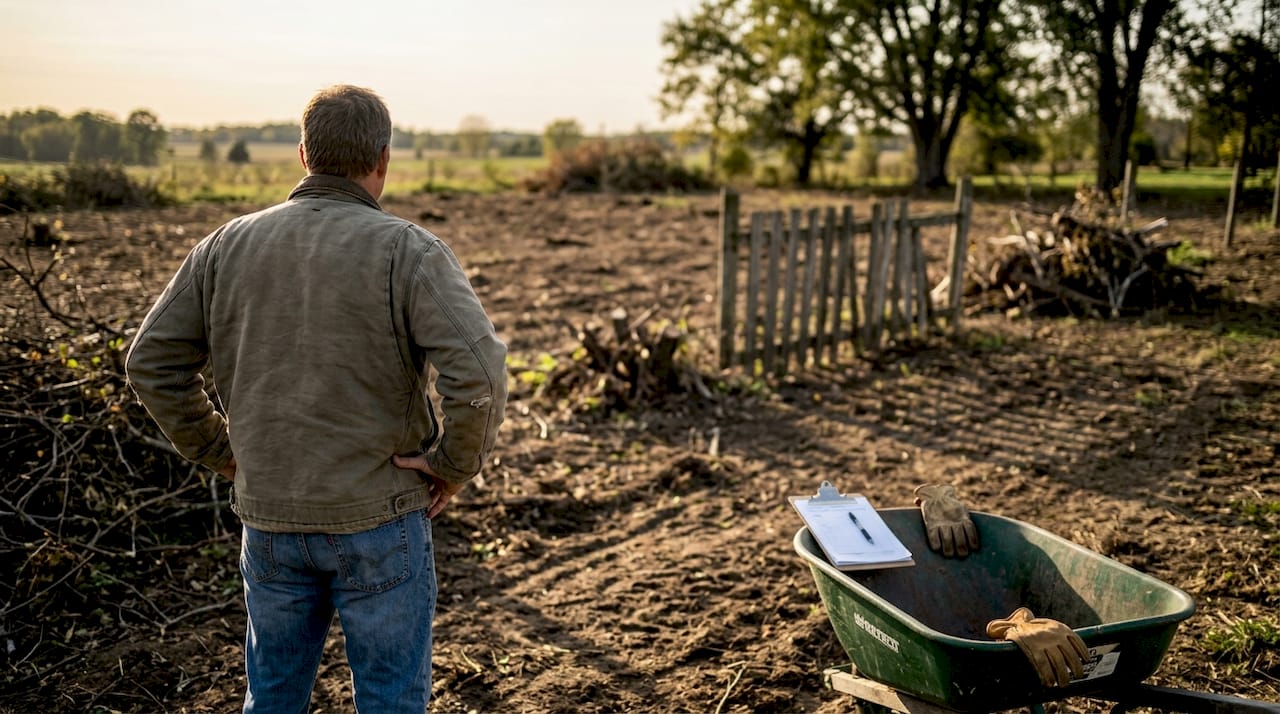
Without proper clearing, landscaping projects run into serious problems fast. Drainage issues are common when old stumps and root masses block natural water flow. Pest infestations thrive in decaying wood and dense brush. Uneven ground caused by buried debris makes it nearly impossible to establish a level lawn or lay a clean foundation.
Here’s what professional land clearing typically addresses:
- Tree removal and stump grinding
- Brush and shrub clearing
- Rock and debris removal
- Grading and soil preparation
- Drainage assessment and correction
- Invasive plant species elimination
The scale and regulatory requirements differ significantly between residential and commercial projects. A homeowner clearing a quarter-acre lot faces different permit requirements and equipment needs than a developer clearing 10 acres for a mixed-use project. Commercial clearing often involves environmental impact assessments, protected species checks, and stricter timeline controls. Residential jobs tend to be more flexible but still require local permit checks, especially when protected trees are involved.
“Land clearing isn’t just site prep. It’s the decision that defines every landscaping and construction outcome that follows.”
For Central Florida properties specifically, the sandy soil, high water table, and subtropical climate create unique clearing challenges. Root systems grow aggressively here. Invasive species like Brazilian pepper and cogon grass spread quickly if not fully removed during clearing. Getting this step right isn’t optional. It’s the foundation of everything.
You can find detailed land clearing tips for Central Florida properties that address these regional challenges directly.
Methods of land clearing for landscaping
Not every property needs the same approach. The right clearing method depends on your land size, vegetation density, soil type, budget, and landscaping goals. Here are the four main methods used across Central Florida:
- Mechanical clearing uses bulldozers, excavators, and forestry mulchers to clear large areas quickly. Best for commercial projects or heavily wooded residential lots. Fast and thorough, but higher equipment costs apply.
- Manual clearing relies on hand tools and labor for smaller, more precise jobs. Ideal for tight spaces, areas near structures, or where selective clearing is needed. Slower but more controlled.
- Chemical clearing uses herbicides to kill stubborn brush and invasive plants. Effective for vegetation that’s hard to remove mechanically. Requires careful application to avoid soil and water contamination.
- Controlled burning is occasionally used for large rural properties. It clears dense vegetation efficiently but requires permits and carries weather-dependent risks. Rarely used in suburban Central Florida.
As effective land clearing methods vary by property, method selection depends on your specific size and goals, not a one-size-fits-all formula.
| Method | Cost | Speed | Environmental impact | Best for |
|---|---|---|---|---|
| Mechanical | High | Fast | Moderate | Large lots, commercial sites |
| Manual | Low to medium | Slow | Low | Small areas, precision work |
| Chemical | Low to medium | Moderate | High if misused | Dense brush, invasive species |
| Controlled burn | Low | Fast | Moderate to high | Large rural properties |
Pro Tip: Mulching with a forestry mulcher is one of the smartest choices for Central Florida properties. It grinds trees and brush into fine wood chips that decompose into the soil, improving soil quality and moisture retention. You skip the debris hauling cost and give your future landscaping a nutrient head start.
For a full breakdown of options matched to different budgets, the Central Florida land clearing guide covers regional specifics in detail.
Land clearing’s impact on landscaping design and property value
Here’s where land clearing stops being just a prep task and becomes a genuine investment. A properly cleared property opens up design possibilities that an overgrown, debris-filled lot simply cannot support.
Once your land is cleared, you can plan with precision. Gardens, lawns, outdoor kitchens, pools, driveways, and commercial amenities all require a clean, level, well-drained base. Without clearing, you’re designing around problems instead of possibilities.
Preventing future issues is just as important as enabling new ones. Old root systems left in the ground continue to decay, creating sinkholes and soil instability. Invasive plants left partially cleared will regrow aggressively, undermining your landscaping investment within a season or two. Proper clearing eliminates these threats at the source.
Drainage improvement is another major benefit. Land clearing improves usability and property value by correcting the drainage patterns that dense vegetation and buried debris disrupt. In Central Florida, where heavy summer rains are routine, good drainage isn’t a luxury. It’s essential.
| Scenario | Estimated property usability | Market appeal |
|---|---|---|
| Overgrown, uncleared lot | Low | Difficult to sell or develop |
| Partially cleared lot | Moderate | Limited landscaping options |
| Professionally cleared lot | High | Strong buyer and developer interest |
Long-term landscaping benefits of professional land clearing include:
- Healthier plant growth from improved soil aeration and drainage
- Reduced pest pressure by eliminating decaying wood and brush habitats
- Lower maintenance costs over time without invasive species competing with your plants
- Greater design flexibility for both residential and commercial landscaping
- Increased curb appeal that directly supports property market value
For properties where tree removal is part of the clearing process, reviewing tree removal services gives you a clear picture of what professional removal involves and what to expect.
How to plan for land clearing: Steps, considerations, and common mistakes
Good planning separates a smooth land clearing project from an expensive, drawn-out headache. Follow these steps before any equipment hits your property.
- Site assessment. Walk the property with a professional. Identify trees, stumps, drainage patterns, soil conditions, and any structures nearby.
- Permit review. Check local regulations before anything is removed. Central Florida municipalities have specific rules about protected tree species and lot disturbance.
- Method selection. Based on your site assessment and budget, choose the clearing method that fits your landscaping goals.
- Safety planning. Identify utility lines, buried infrastructure, and access routes for equipment. Safety planning prevents costly accidents.
- Hire qualified professionals. Choose a licensed, insured service with direct Central Florida experience.
As planning land clearing requires permit review, site assessment, and method selection, skipping any of these steps creates problems that cost more to fix than they would have to prevent.
The most common mistakes property owners make include ignoring drainage during planning, leaving stumps in the ground to save money, and skipping permits on the assumption that small jobs don’t require them. All three mistakes create serious downstream issues.
Pro Tip: Always hire a local professional who knows Central Florida’s specific soil types, seasonal weather patterns, and municipal permit requirements. A contractor from outside the region may miss critical details that a local expert would catch immediately. You can review land clearing expert tips to prepare better questions before hiring.
Eco-friendly planning tips worth following:
- Choose mulching over burning whenever possible
- Preserve mature trees that don’t interfere with your plans
- Request a drainage assessment before clearing begins
- Ask about invasive species removal protocols
- Recycle cleared wood as mulch or compost on-site
Our take: Why professional land clearing makes all the difference
Here’s the uncomfortable truth: DIY land clearing looks affordable until something goes wrong. Homeowners who rent equipment without experience regularly damage underground utilities, destabilize drainage patterns, and leave root systems that cause problems for years. Some unknowingly remove protected trees and face fines that dwarf the cost of hiring a professional in the first place.
Certified professionals bring more than equipment. They bring site assessment expertise, knowledge of local permit requirements, and the judgment to make decisions that protect your property long-term. They also carry insurance, which matters enormously when heavy machinery is working near your home or commercial building.
We’ve seen properties where DIY clearing created more work than the original overgrown lot. Compacted soil from improperly operated machinery. Drainage channels blocked by poorly placed debris piles. Invasive species spread further because of incomplete removal.
Professional tree removal expertise is part of what makes a land clearing job truly complete, not just visually cleared. Always ask any service provider for proof of licensing, insurance, and local project experience before signing anything.
Connect with Central Florida’s land clearing experts
Ready to turn an overgrown or undeveloped property into something you can actually use and enjoy? McCullough Tree Service provides professional land clearing for residential and commercial properties across Central Florida, handling everything from initial site assessment to final cleanup.
Our team understands the local soil conditions, permit requirements, and landscaping goals that matter most to Central Florida property owners. Whether you need help choosing the right clearing methods for every budget, want to review our tree removal expertise, or are ready to start with our full land clearing guide, we’re here to help you move forward with confidence. Contact us today for a free estimate.
Frequently asked questions
How does land clearing improve landscaping?
Land clearing removes obstacles and debris, enabling a healthy, customizable landscape and preventing drainage issues that would otherwise undermine your investment.
What are the most eco-friendly land clearing methods?
Mulching and selective clearing are among the best eco-friendly options, preserving soil structure and minimizing environmental impact. Method selection should always reflect your property size and specific goals.
Do I need permits for land clearing in Central Florida?
Yes, permits are typically required for larger projects and when removing protected trees. Always review local regulations before starting, as planning land clearing must include a permit review step.
Can land clearing increase my property value?
Proper land clearing improves usability and market appeal, which can significantly boost property value, especially for lots that were previously difficult to develop or sell.
Recommended
- Expert Tips on the Land Clearing Process
- Land Clearing Process Guide for Property Owners
- Trees Boosts Property Value: Enhance Your Home’s Worth