By: | Published: August 17, 2026
The single most effective storm damage prevention list runs in this order: inspect your roof, clear gutters and extend downspouts, remove hazardous trees and trim overhanging limbs, secure or store loose yard items, board or shutter windows and reinforce the garage door, check your flood insurance status, elevate vulnerable utilities, and assemble an emergency kit with a written evacuation plan. Do the yard work and kit-building this weekend. Book the roof, tree, and structural fixes with a licensed contractor at least a month before storm season peaks, because that work takes longer to schedule than you’d expect.
Not every task on this list carries equal weight, and that’s the part most checklists get wrong. A cracked shingle you ignore for a season can cost you a roof. A patio chair you forget to bring in can put a hole through your neighbor’s window. Here’s the priority order that actually protects your property:
- Inspect the roof for missing shingles, cracked flashing, and loose sheathing.
- Clear gutters and downspouts, extending downspouts away from the foundation.
- Remove dead or diseased trees and trim branches overhanging the roof or power lines.
- Secure or store loose yard items: furniture, grills, planters, trash cans.
- Board or shutter windows and reinforce the garage door track.
- Confirm flood insurance is active (remember the 30-day waiting period).
- Elevate or protect utilities: electrical panel, water heater, HVAC condenser.
- Install backflow valves or floor drain plugs if your area floods.
- Assemble an emergency kit with water, food, meds, and a battery radio.
- Write and practice an evacuation plan with a family meeting point.
Some of these are Saturday-afternoon jobs. Others, like hurricane strap retrofits or removing a leaning oak near your roofline, need a licensed contractor or a certified arborist. Knowing which is which saves you money and possibly your house.
Key Takeaways
A prioritized storm damage prevention list works because it separates weekend-ready tasks from professional jobs, so nothing critical gets delayed by confusion over who should do it.
| Point | Details |
|---|---|
| Inspect roof and gutters early | Check for missing shingles, cracked flashing, and clogged gutters at least a season before storm risk peaks. |
| Buy flood insurance now | Coverage typically has a 30-day waiting period, so a last-minute policy won’t help. |
| Handle trees before they’re a hazard | Remove dead or leaning trees and trim overhanging limbs; hire a certified arborist for anything near rooflines or power lines. |
| Secure the openings | Board or shutter windows and reinforce the garage door track, since a single failure can pressurize and damage the whole structure. |
| Build and practice your plan | Assemble a supply kit and write an evacuation plan, then test both once a year before storm season starts. |
| Schedule tree work with a pro | Mcculloughtreeservice provides certified arborist inspections and removal services for the tree risks this checklist can’t fix with a weekend of DIY work. |
Table of Contents
- When Should You Start Your Storm Preparedness Checklist?
- How Do You Check Your Roof and Gutters for Storm Damage?
- What’s the Best Way to Protect Windows and Doors From Storms?
- Which Yard Hazards Cause the Most Storm Damage?
- How Do You Protect Utilities and Prevent Flood Damage at Home?
- What Should Be in Your Emergency Preparedness List?
- What Should You Do Immediately After a Storm?
- What Does a Certified Arborist Look for Before a Storm?
- Sources
When Should You Start Your Storm Preparedness Checklist?
The honest answer: months before the first storm watch is issued for your area. Homeowners who wait until a warning is on the radar make rushed decisions, and rushed decisions are how people end up boarding windows in the dark or discovering their flood policy hasn’t kicked in yet.
Here’s a realistic pre-season timeline broken into four windows.
Now through 3 months before storm season: Get a full roof inspection, schedule any tree removal or major pruning, and call your insurance agent for a policy checkup. This is also when you install hurricane straps, upgrade to impact glass, or add backflow valves, since all three often require permits and licensed labor with lead times measured in weeks, not days.
1 to 4 weeks before season: Clean gutters, test your generator, check your emergency kit for expired food and batteries, and confirm your evacuation plan still makes sense (new pets, new cars, new mobility needs all change the plan).
When a watch is issued: Bring in yard furniture, fuel up vehicles, charge devices, and fill containers with water. This is not the time to start a tree removal or order shutters.
The insurance timing deserves its own callout, because it trips up more homeowners than any other item on this list.
Flood insurance takes 30 days to activate. Standard homeowners insurance never covers flood damage, and a flood insurance policy purchased the week before a storm almost never pays out for that storm. If you live anywhere near a floodplain, coastal zone, or low-lying area, your policy needs to already be in force, not pending.
NOAA’s pre-season guidance makes the same point about supplies: buy your kit items while store shelves are still full, not after the first storm forecast empties them. Copy this into your calendar now:
- 3+ months out: roof inspection, tree work, insurance checkup, flood policy purchase.
- 1 month out: hurricane straps, shutters/plywood prep, generator service.
- 1 to 2 weeks out: gutter cleaning, kit inventory, plan review.
- Watch issued: secure loose items, fuel vehicles, charge devices.
How Do You Check Your Roof and Gutters for Storm Damage?
Your roof is the single largest surface area exposed to wind, and it’s usually the most expensive thing to fix after the fact. A thorough check for checking your roof for storms covers three things: shingle integrity, flashing condition, and the connection between your roof and your walls.
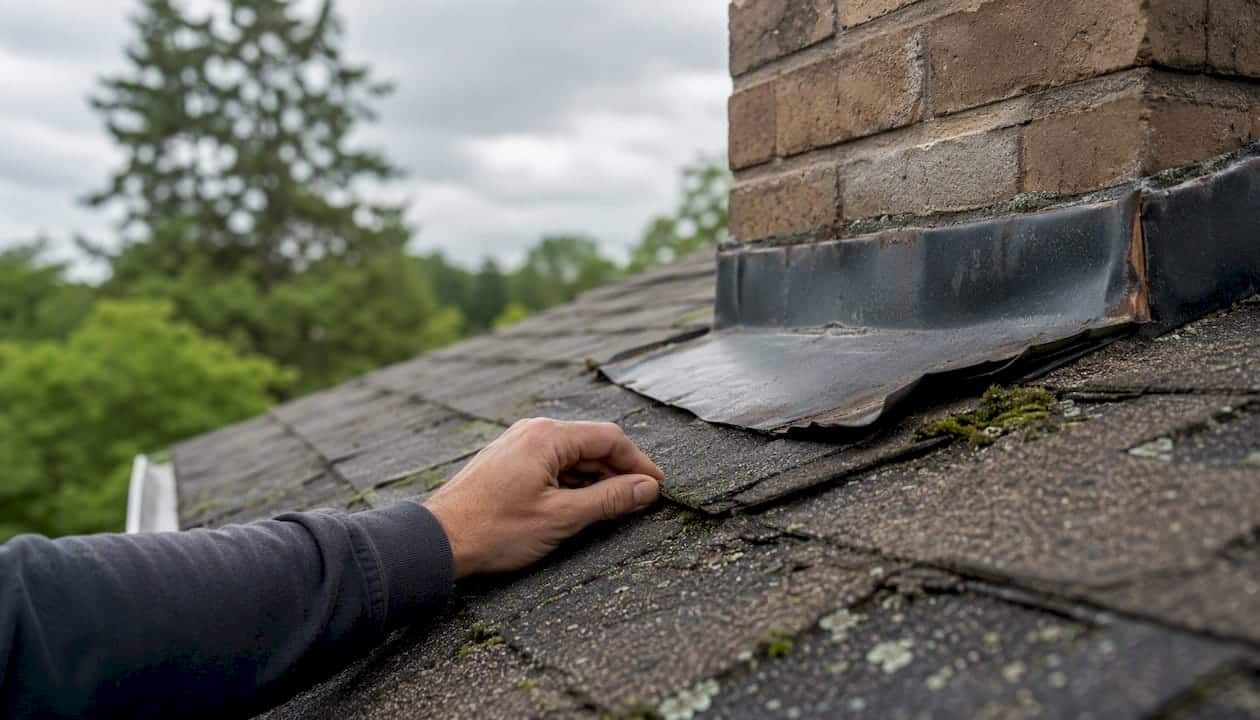
Walk your property line and look up rather than climbing onto the roof yourself. You’re looking for missing or curling shingles, cracked or lifted flashing around chimneys and vents, and any sagging along the roofline. Any of those are DIY-observable but usually not DIY-fixable. A missing shingle or two is a same-day patch job for a roofer. Sagging sheathing or widespread flashing failure means the whole roof deck needs evaluation.
The connection most homeowners never think about is the one that matters most in high wind: how the roof is actually fastened to the walls. FEMA’s guidance on continuous load path explains that galvanized hurricane straps fasten the roof structure directly to the wall framing, which keeps the whole system connected instead of letting wind peel the roof off one weak point at a time. FEMA also notes these straps can be difficult to retrofit and usually call for a licensed contractor, especially if your home was built before this kind of bracing was standard code.
Gutters get overlooked because they seem cosmetic. They aren’t. Clogged gutters push water toward your foundation instead of away from it, and pooling water at the foundation is one of the quieter causes of long-term structural and basement damage. Clean gutters twice a year at minimum, and extend downspouts so runoff clears the foundation. It is recommended to direct runoff several feet away from the foundation, and it costs a lot less than repairing a cracked foundation slab.
Pro Tip: Take photos of your roof from the ground every season, standing in the same four spots each time. Side-by-side comparisons make it far easier to spot new damage than trying to remember what the roof looked like last year.
Never get on a wet or steep roof yourself, and never work a ladder alone during high wind advisories. If a job needs a permit, hire someone licensed to pull it. It’s not a formality; it’s how the work gets inspected and how you stay covered if something fails.
What’s the Best Way to Protect Windows and Doors From Storms?
Board them, shutter them, or upgrade the glass, but do not tape them. That last one is a persistent myth worth killing outright: tape does nothing to stop a window from shattering under wind pressure, and it can actually make cleanup more dangerous by holding larger, sharper glass shards together.
Here’s why window protection matters more than it seems like it should. A single broken window or door during high wind doesn’t just mean a broken window. It lets wind pressure build up inside the house, and that internal pressurization can lift the roof from the inside, a failure mode FEMA specifically warns about. One weak point becomes a whole-house problem.
You have three real options for glazing protection:
- Manufactured storm shutters: the most convenient long-term option, since they’re installed once and deployed in minutes.
- Impact-resistant glass: the highest upfront cost, but no scrambling before every storm.
- Cut plywood panels: the budget option that works well if you prepare panels in advance.
If you go the plywood route, use 5/8-inch exterior-grade sheeting, not the thinner stuff sold for interior projects. Cut panels ahead of time, label which window each one fits, and overlap the window frame by at least 4 inches on every side. Store them flat somewhere dry, because a warped panel won’t seat properly when you need it in a hurry.
The garage door is the piece of this puzzle homeowners consistently underestimate. FEMA identifies the garage door as one of the most vulnerable points on the house in high wind, because standard tracks and panels weren’t built to resist the pressure a storm puts on that much surface area. Once a garage door fails, wind gets inside the structure, and you’re back to the same internal pressurization problem that a broken window causes. Reinforcing the tracks and bracing the panel is inexpensive compared to what a full garage door failure can trigger.
Pro Tip: If your garage door is older, ask a contractor whether it meets current wind load ratings before you spend money elsewhere. It’s often the cheapest fix with the biggest payoff.
Whatever method you choose, don’t wait until a watch is issued to install it for the first time. Shutters and plywood need practice runs so you’re not fumbling with unfamiliar hardware in the rain.
Which Yard Hazards Cause the Most Storm Damage?
Loose yard items and untended trees cause a disproportionate share of storm damage, and both are largely preventable with a few hours of work. High wind turns unsecured objects into projectiles, and a patio chair or a trash can moving at 60 miles per hour does real damage to siding, windows, and vehicles.
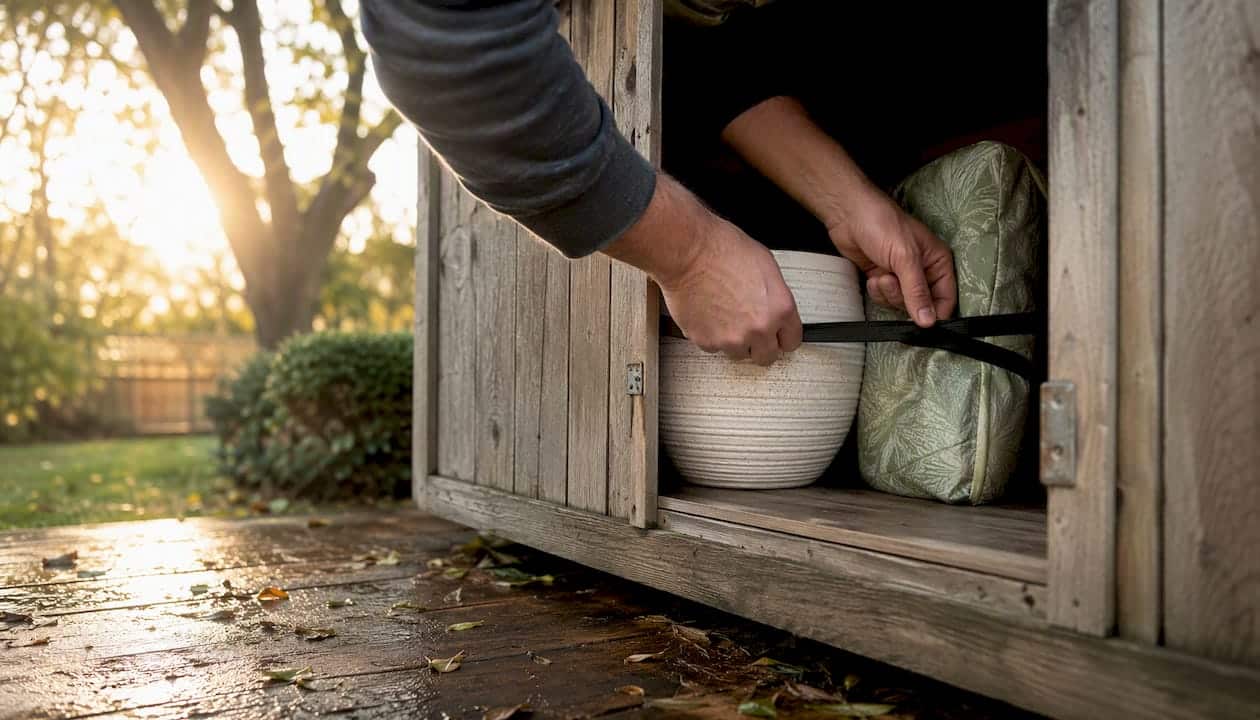
Start with what you can move. Bring patio furniture, grills, planters, and trash cans inside a garage or shed. If something is too large to move, like a swing set or a heavier planter, tie it down or weight it. Sheds themselves need anchoring, either with ground anchors or straps to a concrete pad; a shed that isn’t anchored can become one of the largest projectiles on your property.
Trees require more judgment, because not every risky tree is obviously risky from the ground.
| Tree Task | DIY-Appropriate? | When to Call an Arborist |
|---|---|---|
| Trimming small branches under 2 inches thick | Yes, with proper tools | Not usually needed |
| Removing dead or storm-damaged limbs | Sometimes, if reachable from the ground | If limbs are high or near power lines |
| Trimming near rooflines or siding | Rarely | Yes, height and roof risk make this a pro job |
| Removing a leaning or diseased tree | No | Always |
| Any work near power lines | No | Always, and often requires utility coordination |
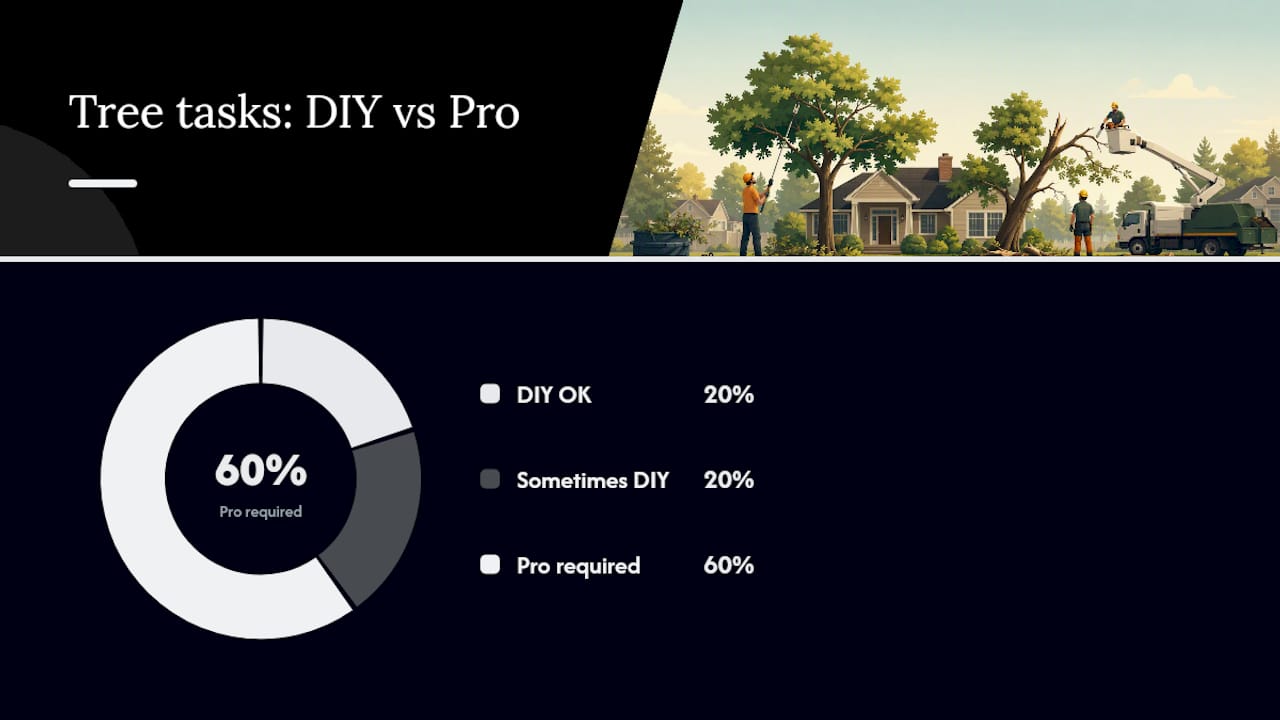
If a tree overhangs your roof, leans toward the house, or shows signs of root heaving or fungal growth at the base, that’s a removal or major-pruning conversation, not a weekend project. Central Florida’s storm-prone trees benefit from proactive trimming well before wind season rather than reactive cleanup after a limb comes down on a roof.
Never work near power lines yourself. Contact your utility company for line clearance and hire a licensed, insured tree contractor for anything within striking distance of overhead wires. Large removals often require a permit depending on your municipality, so check before the chainsaw comes out.
Vehicles and boats need attention too. Move cars out of flood-prone areas and away from trees with weak limbs. Boats on trailers should be moved to higher ground and strapped down; boats in the water need extra lines and fendering, or better yet, hauled out entirely if a serious storm is approaching.
How Do You Protect Utilities and Prevent Flood Damage at Home?
Protecting your utilities comes down to keeping electrical, water, and HVAC systems above the water line and keeping sewage from backing up into your house when storm drains overflow.
Your electrical panel, if it’s mounted low or in a garage prone to flooding, is worth discussing with a licensed electrician about relocation or raising. The same goes for outlets in flood-prone basements or ground-floor utility rooms. Water heaters and HVAC condensing units sitting directly on the ground are vulnerable to even modest flooding; elevating them on a block or platform is a common and relatively affordable fix.
Backflow valves and floor drain plugs matter more than most homeowners realize until the first time a storm backs sewage into a basement. A backflow valve keeps municipal sewer overflow from pushing back into your home’s plumbing during heavy rain events, and a simple floor drain plug can stop backup at ground level. Both are jobs for a licensed plumber, and both are far cheaper installed proactively than after a backup has already ruined flooring and drywall.
Generators deserve their own safety note, because generator misuse causes real harm every storm season. Run generators outdoors, at least 20 feet from windows and doors, and never in a garage even with the door open. Store fuel in approved containers away from living spaces. If you want a generator wired to power your home directly rather than running extension cords, that requires a transfer switch installed by a licensed electrician, both for safety and because an improperly connected generator can send power back into utility lines and endanger repair crews.
Insurers sometimes offer premium discounts for wind-resistant retrofits like hurricane straps and reinforced garage doors. Ask your agent after any major retrofit whether it qualifies.
Pro Tip: Before you invest in flood-proofing hardware, ask a licensed plumber or electrician whether your municipality offers rebates for backflow valves or panel upgrades. Some local governments subsidize this work because it reduces claims on public infrastructure after major storms.
What Should Be in Your Emergency Preparedness List?
Every household needs two things ready before storm season: a physical supply kit and a written plan for where everyone goes and how they communicate if separated.
For the kit, Ready at least one gallon of water per person per day for several days, plus nonperishable food, a battery-powered or hand-crank radio, flashlights, and a basic first-aid kit. Build from there with the extras that fit your household:
- Cash in small bills, since ATMs and card readers may be down.
- Phone chargers and a portable power bank.
- A week’s supply of prescription medications.
- Copies of insurance policies, IDs, and property deeds in a waterproof folder.
- Pet food, medications, and a carrier if you have animals.
- A backup power bank for medical devices if anyone in the household depends on one.
The evacuation plan matters just as much as the kit, and it’s the piece people skip most often. Pick two meeting places, one near home and one outside your neighborhood, in case roads are blocked. Choose an out-of-town contact everyone can reach even if local cell towers are overloaded. Map at least two evacuation routes, since the obvious one is often the one everyone else takes too.
Back up your documents digitally as well as on paper. Photograph your insurance policy, deed, and IDs, and store copies in cloud storage you can access from any device. FEMA specifically recommends keeping an off-site or digital copy of anything you’d hate to lose, since paper originals can be destroyed in the same event that damages your home.
Pro Tip: Run a practice drill once a year, even a casual one. Walk the evacuation route, test that everyone knows the meeting point, and confirm the out-of-town contact’s number is saved in every phone, not just written on a fridge magnet.
What Should You Do Immediately After a Storm?
Safety comes before cleanup, every time. Before you walk your property, check for downed power lines, standing water that could be electrically charged, and any structural damage that makes a building unstable to enter. If you smell gas, leave immediately and call the utility company from outside the house.
Once it’s safe, document everything before you touch anything. Photograph and video every room, every damaged item, and the exterior from multiple angles. Note serial numbers on damaged appliances and electronics where you can. This documentation is what turns a slow, disputed insurance claim into a fast, straightforward one, and adjusters move faster when they have clear evidence instead of a homeowner’s memory of what was damaged.
Triage what needs immediate professional attention versus what can wait:
- Downed power lines: call the utility company immediately, never touch or move them yourself.
- Leaning or split trees: call a licensed, insured arborist, especially if the tree threatens a structure or is tangled in lines.
- Structural damage or roof breaches: call a licensed contractor to tarp and stabilize before more rain gets in.
- Standing water inside the home: document it, then call your insurer and a water mitigation service.
A partner resource worth bookmarking now, before you need it, is this homeowner’s guide to filing a storm damage insurance claim, which walks through the documentation and timeline expectations that apply broadly no matter where you live.
Pro Tip: Vet any contractor who shows up unsolicited after a storm. Ask for a license number, proof of insurance, and a local address before signing anything, and keep every receipt, since insurers typically require itemized proof for reimbursement.
What Does a Certified Arborist Look for Before a Storm?
A trained eye catches tree risk that most homeowners miss entirely, and understanding what a certified arborist actually checks helps you know what questions to ask before hiring anyone for storm-prep tree work.
Here’s the checklist a professional runs through on a pre-storm assessment:
- Structural defects: cracks, cavities, or included bark where branches meet the trunk.
- Root health: heaving soil, exposed roots, or fungal growth at the base, all signs of instability.
- Co-dominant leaders: two trunks of similar size growing from one base, a common failure point in wind.
- Decay and disease: soft wood, fungal conks, or dieback in the canopy.
- Canopy density and proximity: how much sail area the tree presents to wind, and how close it stands to your roof, driveway, or power lines.
When you’re hiring for this work, ask direct questions before signing anything: Is the arborist certified, and can they show proof of insurance? What’s the exact scope of work, and does the quote include debris disposal? Will the job require a permit? What’s their response timeline if a storm damages the tree before scheduled work is complete?
Not every risky tree needs to come down. Selective pruning, sometimes called crown thinning, reduces the wind resistance of a dense canopy without removing the tree, and it’s often the right call for a structurally sound tree that’s just too heavy on one side. Removal becomes the answer when the defects are structural rather than cosmetic: a split trunk, extensive root damage, or decay that’s compromised the tree’s core.
Certified arborist standards exist for a reason. Large removals near rooflines or power lines carry real risk, both to the property and to whoever’s doing the cutting. A certified arborist follows documented safety procedures for rigging, drop zones, and line clearance that an uncertified crew often skips to save time.
Pro Tip: Get a written scope of work, not just a verbal quote, before any tree job over a few hundred dollars. It protects you if the job turns out to need more than originally estimated.
A Certified Arborist’s Take on What Actually Matters
Homeowners tend to focus on the visible stuff, boarding windows and stacking sandbags, while the tree in their backyard that’s been leaning a little more every year goes unaddressed. If I had to narrow this whole list to three things, it would be this: get your roof and trees inspected before the season starts, know your flood insurance status well before a storm forms, and don’t guess about a tree’s structural health from the ground. A tree that looks fine from your kitchen window can have root rot or a cracked co-dominant leader that only shows up on close inspection.
The trees that fall on houses are rarely a surprise to anyone who looked closely beforehand. That’s the frustrating part of this work. Most of the damage we clean up after a storm was preventable months earlier with a proper inspection and, in some cases, a removal that a homeowner put off because the tree still had green leaves. You can verify our approach and certifications directly before you decide who handles the work.
Get Your Trees Storm-Ready Before the Forecast Forces Your Hand
Every item on this checklist matters, but tree work is the piece most homeowners put off because it’s the hardest to judge on their own. Mcculloughtreeservice handles exactly that gap for Central Florida properties: proactive trimming to reduce wind resistance, hazardous tree removal before a storm turns a lean into a collapse, and emergency storm cleanup when the damage has already happened.

Booking is straightforward, and here’s what the process looks like from your end:
- A certified arborist inspects your trees and flags structural risk you likely can’t see from the ground.
- You get a written estimate before any work starts, no surprise charges.
- Scheduling fits your timeline, whether that’s routine pre-season pruning or an emergency call after a storm.
- Documentation and photos are provided for your insurance claim if storm cleanup is involved.
If you’ve got a tree that’s been on your mind, the one leaning slightly more than it used to, or branches hanging over the roofline, that’s exactly the kind of risk worth checking before the next watch is issued. Schedule a tree trimming inspection or get a quote on hazardous tree removal and get ahead of it now, while there’s still time to do the work properly instead of urgently.
Sources
Recommended
- Storm Damage Prevention Tips for Property Owners
- Storm Cleanup Guide 2025: Central Florida Homeowners
- Storm Damage Cleanup Tips for Central Florida Property Owners
- Storm Damage Cleanup Workflow for Central Florida