By: Shelby McCullough| Published: August 25, 2026
Stick with Mediterranean fan palm, fruitless olive, crape myrtle, Japanese maple, and dwarf citrus or dwarf palms grown in containers, and you’ll avoid most of the headaches that come with poolside planting. The one rule that matters more than species choice: set every tree back at least as far as its mature canopy will spread, sometimes called the drip-line. Get that distance right and root damage, leaf litter, and shade problems mostly take care of themselves.
- Plant: Mediterranean fan palm, fruitless olive, crape myrtle, Japanese maple, dwarf citrus/palms
- Avoid: Ficus, willow, poplar, eucalyptus, running bamboo, heavy fruit or nut droppers
Pro Tip: If you’re not sure how wide a species gets at maturity, look up its spread, not its height. A tree that stays short but spreads 20 feet wide can still drop leaves straight into your skimmer.
Key Takeaways
Choosing pool-safe trees comes down to matching mature canopy size to setback distance, and picking species with low litter and non-invasive roots from the start.
| Point | Details |
|---|---|
| Match setback to mature size | Small trees need 8 to 12 ft, medium trees 15 to 20 ft, and large trees 25 to 30+ ft from the pool edge. |
| Favor low-litter species | Mediterranean fan palm, fruitless olive, crape myrtle, and Japanese maple all shed minimal debris. |
| Skip aggressive-root trees | Ficus, willow, poplar, and eucalyptus commonly damage plumbing and decking near pools. |
| Use containers for tight spaces | Dwarf citrus and dwarf palms in pots sidestep root-spread concerns near decks entirely. |
| Call a pro for structural risk | Cracking decks, unexplained leaks, or large overhangs near a pool call for a certified arborist assessment. |
Table of Contents
- What Makes a Tree Risky Near a Swimming Pool?
- Best Trees For Pool Area Landscaping
- Trees To Avoid Near Your Pool
- How Far Should Trees Be Planted From a Pool?
- Keeping Trees And Pools Working Together
- When Should You Call a Certified Arborist?
- Getting Expert Help With Poolside Tree Decisions
- What Homeowners Get Wrong About Poolside Trees
- Sources
What Makes a Tree Risky Near a Swimming Pool?
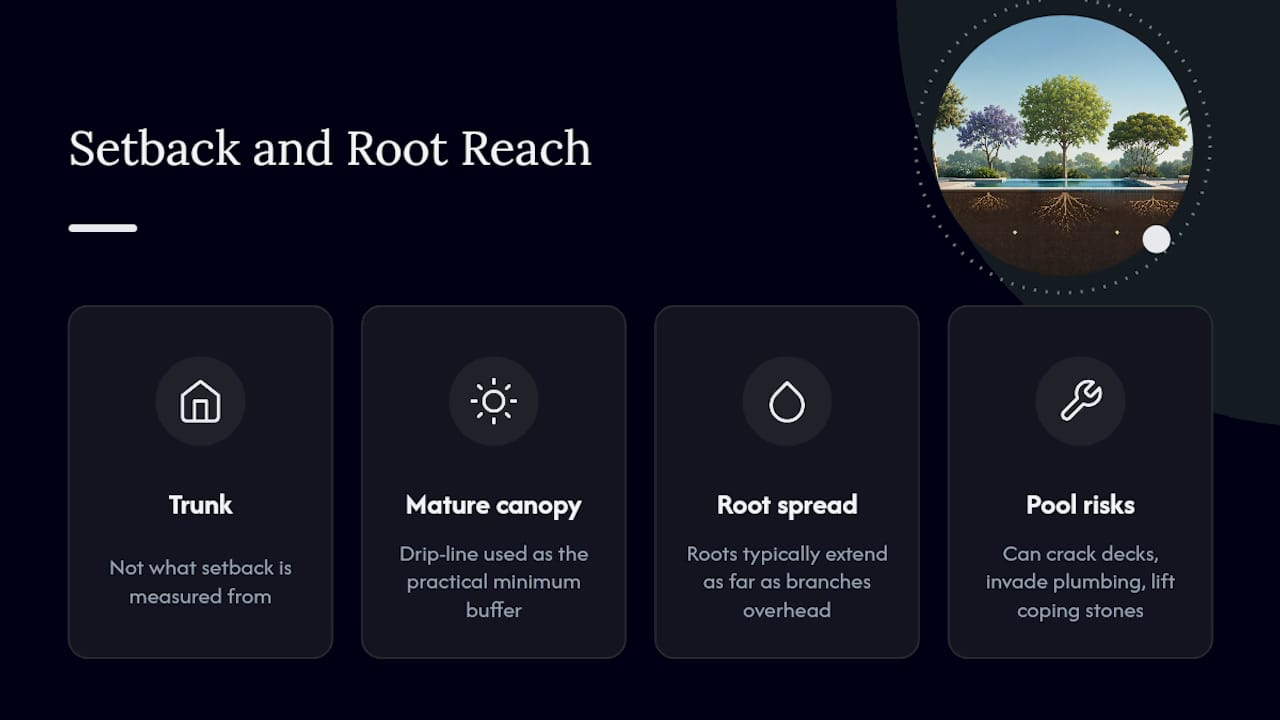
Roots are the real threat, not branches. Aggressive root systems seek out moisture and can crack pool decks, invade plumbing lines, or lift coping stones years after planting, long after the tree looked perfectly settled. That’s why setback distance gets measured from the mature canopy’s edge, not the trunk. A tree’s roots typically extend as far underground as its branches do overhead, so UF/IFAS’s residential planting guidance treats the drip-line as the practical minimum buffer.
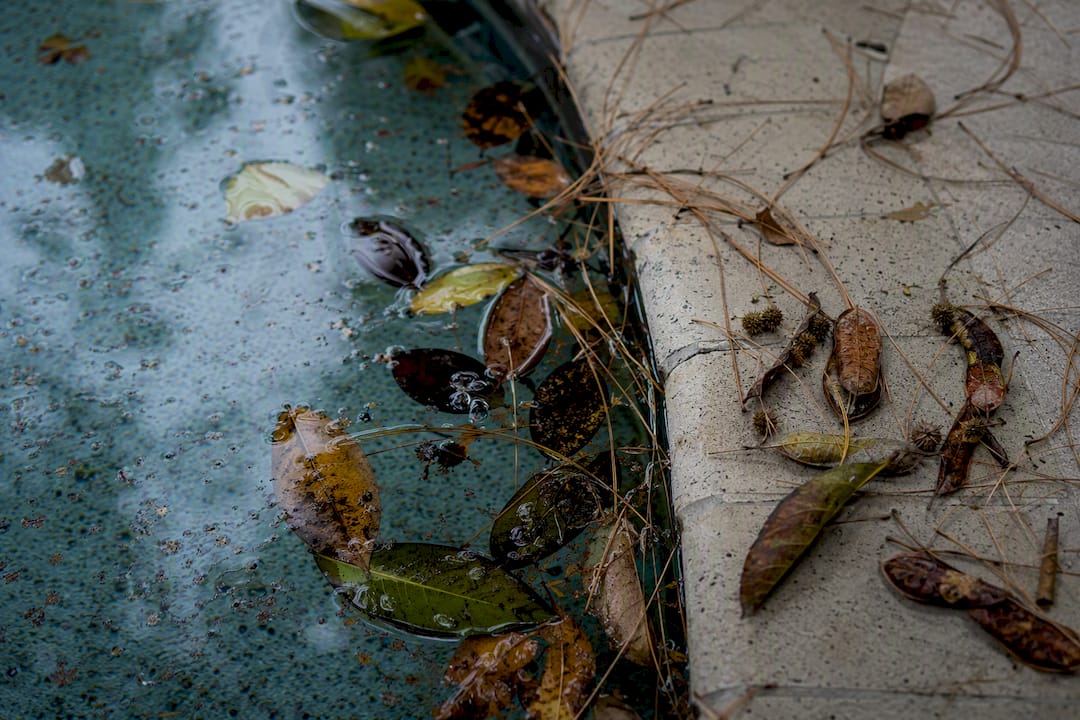
Litter matters just as much as roots, and not all litter behaves the same. Waxy leaves float and skim off easily. Small needles or tannin-rich leaves, like those from live oaks, sink and stain plaster or vinyl liners. Sticky sap gums up filter cartridges, and heavy fruit or seed pods can crack tile.
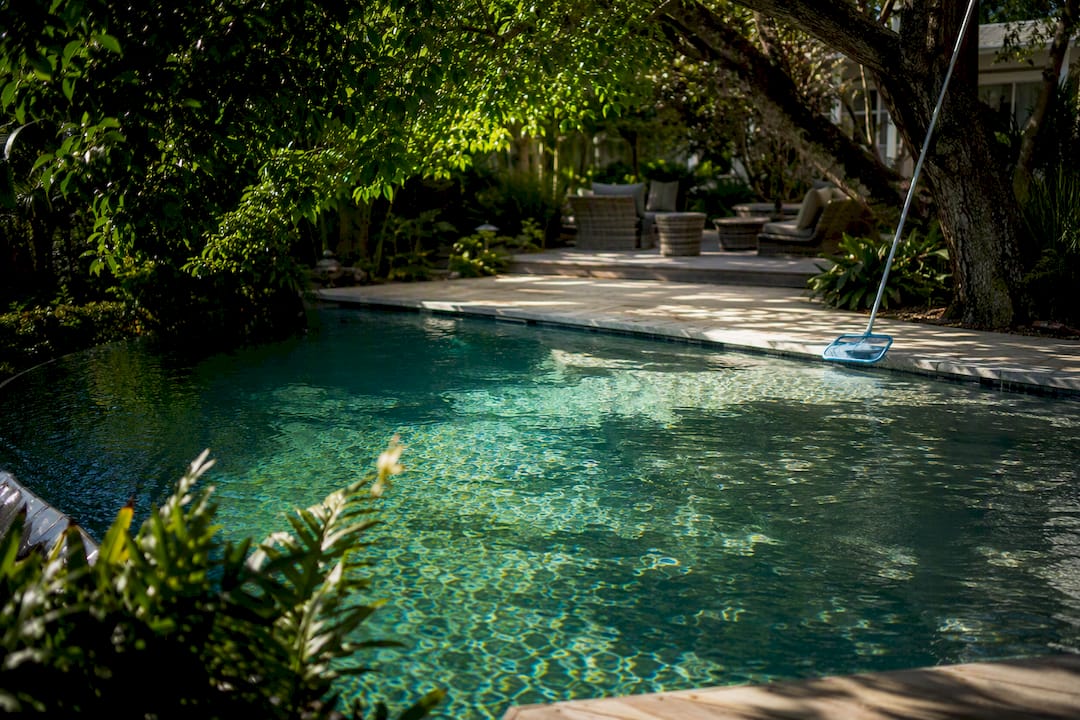
Shade cuts both ways. A canopy over the deep end cools water on brutal summer afternoons but also blocks the sunlight that keeps algae in check, so heavy shade sometimes means more chemical maintenance, not less. And conifers deserve a specific warning: chlorine vapor rising off warm pool water on sunny days can permanently damage sensitive conifer foliage, according to the same UF/IFAS guidance.
Best Trees For Pool Area Landscaping
These species show up again and again in UF/IFAS’s list of low-maintenance landscape trees for exactly the reasons pool owners care about: manageable roots, low litter, and predictable mature size.
-
Mediterranean fan palm (Chamaerops humilis). This slow-growing, clumping palm rarely tops 15 feet and drops minimal debris compared to feather palms. Its root ball stays compact, so it works well 8 to 10 feet from a deck edge. Trim spent fronds once or twice a year and you’re mostly done, similar to recommended practices highlighted by Tree Services in Tucson | Yard Smart.
-
Fruitless olive (Olea europaea cultivars). Bred without the messy fruit drop of standard olive trees, cultivars like ‘Wilsonii’ give you silvery, drought-tolerant foliage and shallow but non-invasive roots. They do need annual shaping to control size, since untrimmed olives can spread wider than expected.
-
Crape myrtle. Summer blooms and manageable litter make this a poolside favorite across warm climates. Choose dwarf or low-seed cultivars specifically for pool edges. Full-size varieties drop enough spent blossoms and seed pods to keep a skimmer busy.
-
Japanese maple (Acer palmatum). Compact, shallow-rooted, and happy in partial shade, this tree fits tight side yards near a pool without threatening the deck. It does drop leaves twice a year in some climates, once in fall and sometimes a light thinning in spring, so budget a little extra skimming during those windows.
-
Dwarf citrus and dwarf palms in containers. Containerizing dwarf cultivars sidesteps the root-spread question entirely, letting you place greenery right at the deck edge. Just watch for fruit drop staining pavers, and plan to move containers seasonally if frost threatens.
-
Simpson’s stopper or select hollies. Both work as dense screening hedges with controlled, non-invasive root systems, useful when your real goal is privacy rather than shade.
Trees To Avoid Near Your Pool
Some species cause enough damage that no amount of careful placement fully solves the problem.
- Ficus (weeping fig), willow, and poplar are notorious for aggressive, shallow roots that seek out pool plumbing and can crack decking from underneath, per common practitioner observations.
- Eucalyptus combines fast growth with heavy bark and leaf shedding, creating constant cleanup and root pressure near hardscape.
- Live oak, jacaranda, and sweetgum aren’t root hazards so much as maintenance nightmares. Live oak tannins stain plaster, jacaranda blooms coat water in purple film, and sweetgum seed balls clog filters, all documented in regional Florida pool-care guides.
- Running bamboo spreads through underground rhizomes that ignore property lines, let alone pool decks. Clumping bamboo behaves far better, but running varieties need serious containment or should be skipped near a pool entirely.
Distance and root barriers can rescue a marginal choice, but for the worst offenders on this list, no barrier fully eliminates the risk. That’s a species swap, not a placement fix.
How Far Should Trees Be Planted From a Pool?
The spacing guidance from UF/IFAS breaks down by mature size: small trees need 8 to 12 feet from the pool edge, medium trees need 15 to 20 feet, and large trees need 25 to 30 feet or more. The underlying principle stays the same across every category: setback should equal the mature canopy radius, not the size of the sapling you’re planting today.
- Small trees (under 20 ft mature): 8 to 12 ft minimum setback
- Medium trees (20 to 40 ft mature): 15 to 20 ft minimum setback
- Large trees (40 ft or taller): 25 to 30+ ft minimum setback
Root barriers extend your options when space is tight, and containers or raised beds sidestep the setback math altogether for smaller ornamental species. Before digging anything, locate underground plumbing and irrigation lines. Pool plumbing often runs at least 15 to 20 feet from planting zones in well-designed installations, but older properties can surprise you.
Pro Tip: Call your local utility-locate service before any new planting near a pool deck. It’s free, it’s fast, and it beats discovering a severed line with a shovel.
Keeping Trees And Pools Working Together
A little routine upkeep prevents most tree-related pool problems from ever becoming expensive ones.
- Prune on a schedule, not a whim. Thin crowns and remove overhanging limbs once or twice yearly to cut down on litter before it reaches the water, a tactic pool and tree professionals both recommend.
- Skim daily during peak drop season. Fresh debris skims off easily; debris left overnight starts staining plaster or breaking down into fine particles that clog filters.
- Brush the waterline weekly. This catches the film that tannins and pollen leave behind before it sets.
- Consider a pool cover or screen enclosure if you’re near heavy-litter species. The upfront cost usually pays for itself in reduced filter cleanings and chemical use.
- Watch water clarity and pH. A sudden shift after a windy day often means organic debris is breaking down in the water, not a chemical malfunction.
When Should You Call a Certified Arborist?
Some situations move past routine yard maintenance into safety territory. Call a certified arborist if you notice:
- Cracking or unexplained shifting in pool decking near a mature tree
- Slow leaks with no obvious plumbing cause, especially near tree root zones
- Large limbs overhanging the pool that show dieback, cracking, or storm damage
- Any tree removal planned within 15 to 20 feet of a pool shell or deck
Removing a large tree near a pool without a proper plan risks the deck, the shell, and anyone standing nearby. Root systems intertwined with plumbing need careful excavation, not guesswork, and stump removal close to a pool structure calls for equipment and technique most homeowners don’t have on hand.
McCullough Tree Service’s certified arborists handle root assessments, safe removals, stump grinding, and formal arborist reports for exactly these scenarios across Central Florida properties. If overhanging limbs are your main concern, our tree trimming services address that before it becomes a removal situation. For yards needing more substantial work, our land clearing guidance covers larger-scale projects near existing structures.
Getting Expert Help With Poolside Tree Decisions
Picking the right species solves half the problem. The other half is execution: correct planting depth, proper root barrier installation if needed, and knowing when a tree already growing too close needs professional intervention rather than a DIY trim.
If you’re dealing with a mature tree that’s already too close to your pool, whether it’s showing root intrusion, storm damage, or just needs a professional risk assessment, McCullough Tree Service’s removal team can evaluate the situation and handle removal safely without damaging your deck or shell. For trees worth keeping but needing crown reduction or overhang management, our pruning versus trimming guide explains what your tree actually needs before you hire anyone. Central Florida homeowners dealing with storm-damaged limbs near a pool can also see real removal work in our pool-deck tree removal video walkthrough.
What Homeowners Get Wrong About Poolside Trees
Most poolside planting advice treats species selection as the whole decision. It isn’t. Setback distance does more heavy lifting than people expect, and a “problem” species planted far enough back with a root barrier can outperform a “safe” species crammed six feet from the deck.
The bigger blind spot is timing. Homeowners plant a small, innocent-looking sapling and forget it will triple in canopy width within a decade. That fruitless olive or crape myrtle looks harmless at five feet tall. Ten years later, if it was planted too close, you’re not dealing with a landscaping inconvenience. You’re dealing with lifted pavers or a cracked skimmer line.
Where conventional advice really falls short is treating tree selection and professional inspection as separate topics. They’re not. The smartest move for a tree already growing close to an existing pool isn’t always removal or acceptance. It’s an arborist’s root assessment, which costs far less than a cracked shell and tells you exactly what you’re dealing with before you guess wrong.
— Results
Sources
These sources back the spacing rules and species guidance covered above:
- Special planting situations – Urban design – Landscape plants – Edward F. Gilman – UF/IFAS
- Tree Growth Problems Near Swimming Pools – Kelley Tree
- Best and Worst Trees to Plant Near Your Pool
- Trees Around Florida Pools – Florida’s Best Pools
Recommended
- Trees Near Power Lines: What Every Homeowner Must Know
- Identify unsafe trees: Essential signs for Central Florida homes
- How Close Can I Plant Trees to My House? Tree Placement Tips