By: Shelby McCullough| Published: December 19, 2025
Most American landowners underestimate how much preparation successful land clearing requires. From wild terrain to confusing permits, every property presents unique challenges that can cost thousands if overlooked. Assessing your site correctly at the very beginning safeguards your time, money, and environment. This guide details practical steps and expert tips for American projects, so you can avoid costly setbacks and create a stable, build-ready foundation with confidence.
Table of Contents
- Step 1: Assess Site Conditions And Requirements
- Step 2: Obtain Necessary Permits And Clearances
- Step 3: Remove Vegetation And Debris Safely
- Step 4: Grade And Prepare The Land Surface
- Step 5: Verify Results And Ensure Site Readiness
Quick Summary
| Key Point | Explanation |
|---|---|
| 1. Assess Site Conditions Thoroughly | Conduct a detailed site survey to document topography and obstacles before beginning land clearing. This informs your approach and equipment choices. |
| 2. Obtain Required Permits | Contact local authorities to secure necessary environmental permits and clearances. This protects both your project and the environment. |
| 3. Use Safe Debris Removal Techniques | Strategically remove unwanted vegetation, ensuring safety and sustainability. Employ appropriate tools and methods to minimize environmental impact. |
| 4. Grade the Land Correctly | Level the land using heavy machinery to create a stable, functional surface that promotes proper drainage and prevents erosion. |
| 5. Verify Site Readiness | Conduct a final inspection to ensure compliance with regulations and proper clearance. Document site conditions to avoid future issues. |
Step 1: Assess Site Conditions and Requirements
Before you start clearing your land, understanding the site’s unique characteristics is crucial. This step helps you determine the right approach and avoid potential complications. Site topography and physical properties play a critical role in planning your land clearing strategy.
Begin by conducting a thorough site survey. Walk the entire property carefully, documenting important features like terrain variations, existing vegetation, water sources, and potential obstacles. Pay special attention to slope gradients, as terrain with steep inclines can significantly impact clearing methods and equipment selection. Measure slope angles precisely using a digital inclinometer or surveying equipment. Slopes exceeding 12 to 14 degrees might require specialized machinery or modified clearing techniques to ensure safety and efficiency.
Document your findings comprehensively, creating a detailed site map that highlights key topographical features, potential challenges, and areas requiring specific attention. This preparation will guide your subsequent land clearing steps and help you anticipate potential issues before they become expensive problems.
Pro tip: Invest in a professional land survey if your property has complex terrain or unclear boundary markers. The upfront cost can save you thousands in potential disputes or rework.
Step 2: Obtain Necessary Permits and Clearances
Before revving up your land clearing equipment, you will need to navigate the maze of local regulations and secure the appropriate paperwork. Permits are not just bureaucratic hurdles they are crucial legal protections for both you and the environment. Depending on your local jurisdiction, land clearing activities often require specific environmental permits and documentation.
Start by contacting your local county or municipal planning department to determine exact permit requirements. If you are clearing a substantial area approximately five acres or more you may need to submit formal notification forms to your state forestry service. Prepare to provide detailed site plans, proposed clearing methods, and documentation about existing vegetation and terrain. Some jurisdictions will require an erosion control plan to minimize environmental impact. Be prepared to discuss your project specifics transparently and have comprehensive site survey documents ready.
Research potential environmental restrictions that might apply to your property. Some areas have protected habitats, wetland buffers, or specific conservation zones that could limit or modify your land clearing approach. This might involve consulting with local environmental agencies or obtaining additional specialized permits.
Pro tip: Create a dedicated folder to organize all permit documents, correspondence, and approvals. Digital and physical copies will help you track your progress and provide quick references during the land clearing process.
Step 3: Remove Vegetation and Debris Safely
Removing vegetation and debris is a critical phase of land clearing that requires strategic planning and careful execution. Forestry mastication offers an innovative approach to clearing land while minimizing environmental disruption, transforming dense brush and small trees into useful mulch.
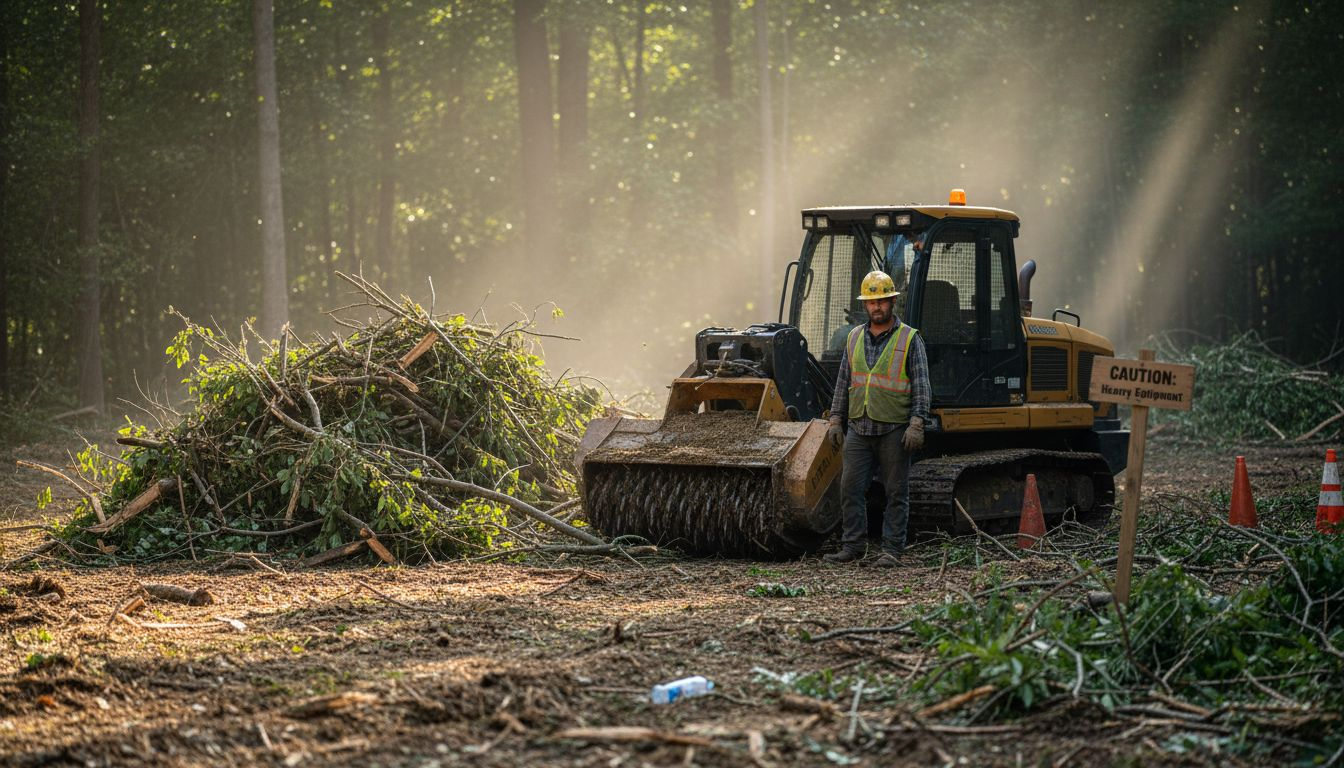
Selective clearing techniques allow you to preserve desired vegetation while efficiently removing unwanted growth. Begin by identifying which trees and plants you want to keep, then systematically remove vegetation using appropriate tools and techniques. Depending on your property’s characteristics, you might use manual tools like chainsaws and brush cutters for smaller areas, or rent specialized machinery like forestry mulchers for larger tracts. Always wear appropriate safety gear including hard hats, safety glasses, hearing protection, and sturdy work gloves. Work methodically and create designated areas for collecting debris to streamline the cleanup process.
When removing debris, consider sustainable disposal methods. Some vegetation can be transformed into mulch, used for landscaping, or composted. For larger quantities of woody debris, check with local waste management services about proper disposal or recycling options. Be mindful of potential wildlife habitats and avoid unnecessary destruction.
Pro tip: Rent or hire professional equipment for large clearing projects. Specialized forestry mulchers can clear an acre more efficiently and safely than manual methods, saving you time and physical strain.
Here is a comparison of common land clearing methods and their advantages:
| Method | Best For | Main Benefit | Environmental Impact |
|---|---|---|---|
| Manual Clearing | Small or complex areas | Precise control, low cost | Minimal disturbance |
| Forestry Mulching | Dense brush, large plots | Creates mulch, efficient | Preserves topsoil |
| Bulldozing | Large, open land | Fast for heavy debris | High soil disruption |
| Controlled Burning | Invasive plants, brush | Rapid clearing, enriches soil | Risk of spreading, emissions |
Step 4: Grade and Prepare the Land Surface
With vegetation cleared, the next crucial step is transforming your raw land into a stable and functional surface. Proper land grading involves carefully leveling the soil to create a solid foundation for future development, ensuring long term stability and preventing potential drainage issues.
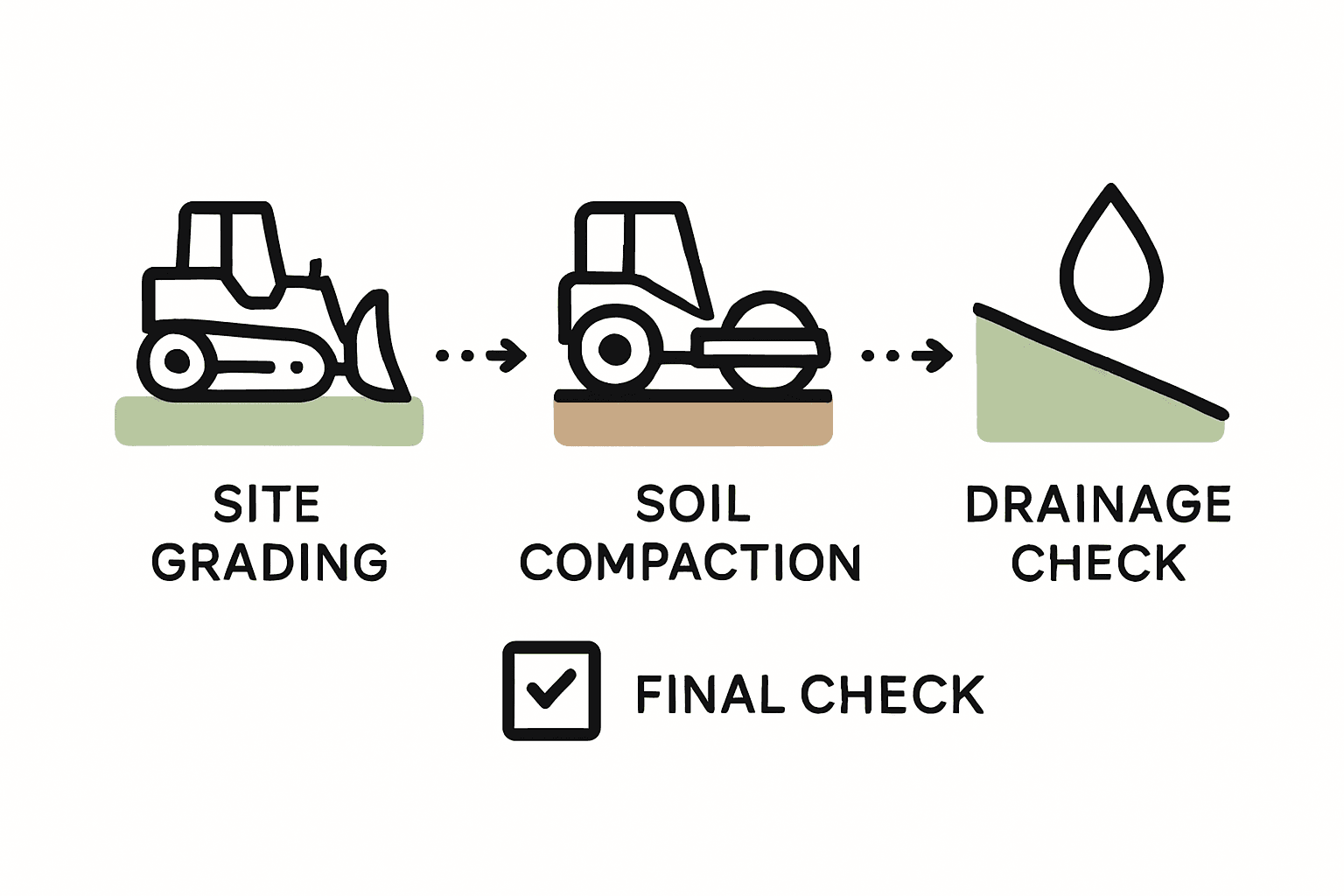
Improving soil health requires creating a level and porous ground that enhances water absorption and reduces runoff. Start by using heavy machinery like bulldozers or excavators to remove uneven terrain, large rocks, and remaining tree stumps. Pay close attention to the natural slope of your property to maintain proper water drainage. Use a laser level or transit to ensure precise grading and create gentle slopes that direct water away from potential building sites. Install erosion control measures such as silt fences, temporary berms, or ground cover to protect the newly graded surface from soil displacement during future rainfall.
After initial grading, compact the soil using plate compactors or rollers to create a stable base. This process reduces air pockets and increases ground density, providing a more reliable surface for construction or landscaping. Consider performing a soil test to understand the composition and potentially amend the soil with organic matter or stabilizing agents if needed.
Pro tip: Rent a laser level for precise grading. This tool can save you hours of manual measuring and help you achieve a perfectly even surface with minimal guesswork.
Step 5: Verify Results and Ensure Site Readiness
Your land clearing project is nearly complete, but the final verification step is critical to ensuring your site meets all necessary standards and requirements. A comprehensive final inspection will help confirm that all debris has been properly removed and the site complies with environmental regulations.
Carefully review the site for potential erosion risks and environmental concerns that might impact future development. Walk the entire cleared area systematically, documenting any remaining obstacles or potential issues. Check for uneven ground, exposed roots, hidden rocks, or areas that might need additional grading. Verify that all erosion control measures are properly installed and functional. Take photographs from multiple angles to create a comprehensive record of the site condition. Compare your current site against the original survey and clearing plan to ensure you have met all project objectives.
Reach out to local environmental authorities or a certified land management professional to conduct a final compliance review. They can provide an expert assessment of the site and confirm that all clearing activities adhere to local regulations and environmental standards. This additional verification can prevent potential future complications and provide peace of mind that your land is truly ready for its next phase of development.
Pro tip: Create a detailed site readiness checklist before the final inspection. Include specific criteria like ground smoothness, debris removal, erosion control, and regulatory compliance to ensure nothing gets overlooked.
This table summarizes essential site readiness checklist items to ensure thorough completion:
| Checklist Item | Importance | What to Verify |
|---|---|---|
| Ground Smoothness | High | Even, compacted surface |
| Debris Removal | Critical | All wood, brush, and trash gone |
| Erosion Control Measures | Essential | Silt fences, berms, mulching in place |
| Regulatory Compliance | Mandatory | All permits reviewed and on file |
Simplify Your Land Clearing Project with Expert Tree Services
Clearing land can feel overwhelming with so many steps like assessing site topography, obtaining permits, and safely removing vegetation. If your goal is to achieve a stable, ready-to-develop site while protecting the environment and complying with regulations then partnering with certified professionals is key. At McCullough Tree Service, we understand the challenges property owners face including selective clearing, erosion control, and grading precision. Our licensed arborists bring expertise in safe debris removal, stump grinding, and comprehensive land clearing tailored to Orlando and Central Florida properties.
Take control of your land clearing today by working with trusted experts who prioritize safety, efficiency, and environmental care. Visit McCullough Tree Service to explore our full range of tree care solutions including land clearing and storm cleanup services. Contact us now for a personalized estimate and let us turn your property into a secure, clean, and compliant foundation for your next project.
Frequently Asked Questions
What should I assess before starting the land clearing process?
Before starting the land clearing process, you should assess the site’s topography, existing vegetation, and any potential obstacles. Conduct a thorough site survey to document these features, which will help you develop an effective clearing strategy. Walk the property, measure slope angles, and take note of water sources and terrain variations.
How do I obtain the necessary permits for land clearing?
To obtain the necessary permits for land clearing, contact your local planning department to find out specific permit requirements. Gather documentation about your site, including plans for erosion control if required, and be prepared to discuss your project details clearly with local authorities.
What techniques can I use to remove vegetation safely?
You can use techniques like selective clearing, which allows you to preserve desired plants while removing unwanted vegetation. For larger areas, consider renting specialized machinery like forestry mulchers, and always wear appropriate safety gear when removing vegetation.
How do I grade and prepare the land surface after clearing?
To grade and prepare the land surface after clearing, use heavy machinery to level uneven terrain and create proper drainage. Ensure you compact the soil after grading to create a stable base, and consider performing a soil test to check the soil composition if needed.
What should I include in the final site verification process?
In the final site verification process, check for debris removal, erosion control measures, and overall ground smoothness to ensure site readiness. Walk the entire cleared area and document any remaining issues, comparing the current site with your original plan to confirm all objectives are met.
Recommended
- Clearing Your Yard After Storms Orlando Florida – McCullough Tree Service
- Be smart heading into storm season with Florida trees – McCullough Tree Service
- Pruning with a purpose: what is the goal for your tree? – McCullough Tree Service
- Questions to Ask a Tree Removal Service in Longwood | McCullough
- Tree Removal Maitland FL
- Tree Removal Orlando FL
- Tree Service DeBary FL