By: Shelby McCullough| Published: July 19, 2026
TL;DR:
- HOA arborist services use ISA Certified Arborists to protect community landscapes and ensure safety. Proper credentials, insurance verification, and documented risk assessments are essential for effective, legal, and strategic tree care. Hiring independent arborists and transparent communication with residents help boards enhance property values and minimize liability.
Arborist services for HOA properties are specialized tree care solutions delivered by ISA Certified Arborists to maintain, protect, and enhance community landscapes while managing safety and legal compliance. The standard industry term for this work is “commercial arboriculture,” and HOA boards that treat it as a risk management function rather than a landscaping expense consistently see lower liability exposure and stronger property values. Certified arborists bring science-based diagnostics, documented risk reports, and species-specific care that general tree crews cannot replicate. For property managers and board members, understanding what separates a certified arborist from a standard tree service is the first decision that shapes every outcome that follows.
1. What makes arborist services suitable for HOA properties?
The single most important qualifier is ISA certification. The International Society of Arboriculture (ISA) credentials indicate that a professional has passed rigorous exams and maintains continuing education units covering pests, fertilization, and advanced care techniques. The TRAQ (Tree Risk Assessment Qualification) credential goes further, certifying that an arborist can produce legally defensible risk reports. HOA boards should require both credentials before signing any contract.
Beyond credentials, insurance is non-negotiable. HOA boards must require $2–5 million in general liability coverage, plus workers’ compensation and commercial auto insurance from every tree contractor. Accepting anything less transfers financial risk directly to the association.
Verification matters as much as the requirement itself. Never accept insurance certificates handed directly by the contractor. Require certificates sent directly from the insurer to the HOA, and confirm that the HOA is listed as an Additional Insured. Verify ISA certification numbers on the ISA’s public directory at treesaregood.org.
Pro Tip: Ask for the arborist’s ISA certification number before the first meeting. A legitimate certified arborist will provide it without hesitation. A general tree worker who cannot produce one is not an arborist, regardless of how they market themselves.
Key qualifications boards should demand:
- ISA Certified Arborist credential with a current certification number
- TRAQ qualification for formal risk assessments
- $2–5 million general liability insurance, verified directly from the insurer
- Workers’ compensation and commercial auto insurance
- Proof of municipal or state licensing where required
- References from other HOA or commercial property clients
2. Core arborist services every HOA board should prioritize
Tree health and risk assessments
Professional tree risk assessments by ISA Certified Arborists should occur every 2–3 years, with annual visual inspections and post-storm checks in between. For a community with 50 trees, budgeting $3,000–$5,000 for an initial inventory and risk assessment is a realistic baseline. That investment produces a documented record that protects the board legally and guides every maintenance decision for years.
Pruning and canopy management
Regular pruning reduces hazard potential, improves structural integrity, and extends tree life. Pruning done incorrectly, such as topping or flush cuts, causes long-term damage that costs far more to remediate. Boards should specify that all pruning follows ANSI A300 standards, the American National Standard for Tree Care Operations, in every contract.
Emergency storm response
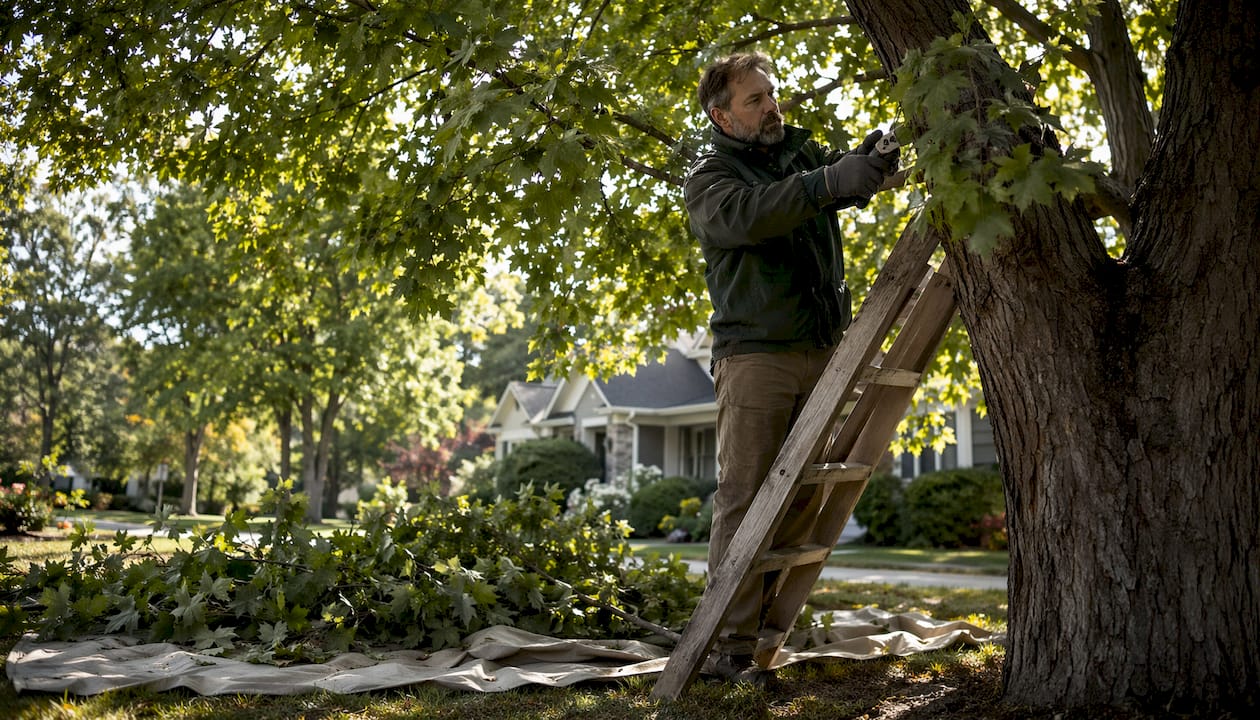
Central Florida’s storm season creates real urgency for HOA boards. A post-storm assessment of damaged trees by a certified arborist determines which trees are salvageable and which pose immediate hazards. Acting on a certified assessment rather than a visual guess protects the board from negligence claims if a tree fails after a storm.
Tree removal and strategic replanting
Removal is sometimes the right call, but species selection for replanting determines whether the community faces the same problems in 15 years. A certified arborist recommends species suited to local soil, climate, and spacing conditions. In Central Florida, that means accounting for hurricane wind loads, root zone conflicts with infrastructure, and drought tolerance.
Tree inventories and health mapping
A tree inventory assigns each tree a health rating, location, and risk score. Inventories support safety, budgeting, and communication by giving boards a visual map they can share with residents. When a removal decision is challenged at a board meeting, a health map with documented ratings ends the argument quickly.
Pro Tip: Ask your arborist to build a phased maintenance plan from the inventory. Spreading high-priority work across two budget cycles reduces annual spend without leaving critical hazards unaddressed.
3. How to vet, hire, and manage arborist contractors for HOA properties
A structured vendor selection process protects the board from both poor service and legal exposure. Standardizing bids with an exact scope of work is critical. When every contractor bids on identical specifications, the board can evaluate price and qualifications objectively rather than comparing apples to oranges.
The hiring checklist for HOA boards:
- Issue a written request for proposal (RFP) with a defined scope, timeline, and deliverables
- Require proof of ISA certification and TRAQ qualification in every submission
- Require insurance certificates sent directly from the insurer, not the contractor
- Check ISA certification numbers on the ISA public directory before shortlisting
- Verify that the contractor carries Additional Insured coverage naming the HOA
- Review references from at least two other HOA or commercial property clients
- Confirm the contractor holds any required state or municipal tree service licenses
Once hired, the relationship needs structure. Appoint a single HOA contact, typically the property manager, to handle all communication with the arborist. This prevents conflicting instructions and creates a clear documentation trail. Contracts should specify scope, warranty terms, cleanup responsibilities, and indemnification language. Hiring an unlicensed contractor exposes the HOA to liability that no amount of after-the-fact documentation can fix.
Document every service visit with dated work orders, photos, and the arborist’s written findings. Courts and insurers prioritize a documented paper trail of inspections and follow-up maintenance, not just tree health alone. That file is the board’s primary defense if a tree-related injury claim is ever filed.
4. What are the legal and financial benefits of professional arborist services?
Tree care for HOAs is a risk management and compliance decision that reduces liability and emergency costs while preserving curb appeal. Legal protection depends on documented due diligence. An ISA risk report showing that the board identified a hazard and acted on it is the difference between a defensible position and a negligence finding.
The financial case is equally strong. Proactive certified arborist management increases property values by 10–20% and reduces emergency costs over a 5–7 year horizon. That return makes the upfront cost of certified assessments look modest by comparison.
| Cost category | Proactive arborist care | Reactive approach |
|---|---|---|
| Biennial risk assessment | $3,000–$5,000 per cycle | $0 until incident occurs |
| Emergency removal after failure | Rare, lower cost | Frequent, higher cost |
| Liability claim exposure | Reduced by documentation | High without paper trail |
| Property value impact | +10–20% with healthy canopy | Neutral or negative |
| Municipal permitting delays | Reduced by 45–60 days | Standard or longer |
ISA certified arborists charge 15–30% more than uncertified tree workers. That premium prevents far more expensive reactive expenses down the line.
5. How to communicate tree care decisions to residents
Resident pushback on tree removals is one of the most common friction points for HOA boards. The solution is documentation presented clearly, not defensiveness. A tree inventory with visual health ratings and a risk map gives residents something concrete to review rather than a board decision that feels arbitrary.
Effective communication strategies for boards:
- Share the arborist’s written risk rating and health summary at the meeting where removal is proposed
- Use a standardized risk rating system, such as ISA’s Low, Moderate, High, and Extreme categories, so residents understand the scale
- Post the tree inventory map on the community portal or distribute it before annual meetings
- Invite the arborist to attend one board meeting per year to answer resident questions directly
- Document all tree-related decisions in meeting minutes with the arborist’s recommendation cited
Professional inventories and documentation help board members explain tree care choices and gain owner consensus. When residents see that a removal recommendation comes from a credentialed professional with a documented assessment, objections drop significantly. The arborist’s report does the persuading so the board does not have to.
Key takeaways
Arborist services for HOA properties require ISA certification, verified insurance, documented risk assessments, and a structured vendor process to protect community safety, legal standing, and property values.
| Point | Details |
|---|---|
| Require ISA certification | Verify certification numbers directly on the ISA public directory before hiring. |
| Mandate insurance verification | Require certificates sent from the insurer, not the contractor, with the HOA as Additional Insured. |
| Schedule risk assessments every 2–3 years | Budget $3,000–$5,000 for a 50-tree community inventory and risk assessment. |
| Separate assessor from service provider | Use a different arborist for risk assessment than for routine maintenance to maintain objectivity. |
| Document everything | A paper trail of inspections and follow-up work is the board’s primary legal defense. |
Why I think most HOA boards underestimate the assessor-service split
The single most overlooked practice in professional tree care for HOAs is keeping the risk assessor separate from the routine service vendor. Separating arborist assessment roles from routine tree service prevents conflicts and ensures objective diagnostics. When the same company assesses risk and performs the work, the financial incentive to recommend more work is obvious. An independent assessor has no stake in the outcome.
I have seen boards save significant money by getting a TRAQ-qualified arborist to produce the risk report, then putting the actual maintenance work out to competitive bid based on that report’s findings. The assessment costs more per hour than routine trimming. The total project cost is almost always lower because the scope is defined by science, not by a salesperson.
The other misconception I see regularly is treating certification as a premium add-on rather than a baseline requirement. ISA certification ensures up-to-date knowledge on pests, fertilization, and advanced care techniques. A board that hires an uncertified crew to save 20% on trimming often spends three times that amount correcting structural damage two seasons later. The math is not close.
Annual visual inspections supplemented by triannual certified risk assessments give boards the coverage they need without over-spending. That cadence is the standard I recommend to every property manager I work with.
— Results
Mcculloughtreeservice supports HOA boards with certified arborist care
Mccullough Tree Service staffs ISA Certified Arborists who deliver the full range of services HOA boards need, from formal risk assessments and tree health evaluations to routine pruning, removal, and post-storm cleanup. Every engagement is backed by the insurance coverage and documentation standards that protect associations from liability.
For boards managing community tree care in Orlando and Central Florida, Mcculloughtreeservice offers professional tree trimming and expert tree removal services tailored to HOA scopes and budgets. The team also supports inventory development and resident communication materials. Contact Mcculloughtreeservice to request a certified assessment and a proposal built around your community’s specific needs.
FAQ
What credentials should an HOA arborist have?
An HOA arborist should hold an ISA Certified Arborist credential and, for formal risk reports, a TRAQ qualification. Verify the certification number on the ISA public directory at treesaregood.org before signing any contract.
How often should HOA trees be professionally assessed?
ISA Certified Arborists recommend formal risk assessments every 2–3 years, with annual visual inspections and additional checks after major storms.
Why can’t a general tree service replace a certified arborist?
A general tree crew performs physical work but cannot produce legally defensible risk reports or diagnose disease and structural failure. Many HOA boards confuse general contractors with certified arborists, which creates liability gaps the board may not discover until a claim is filed.
What insurance must an HOA tree contractor carry?
Contractors must carry $2–5 million in general liability insurance, workers’ compensation, and commercial auto insurance. The HOA should be named as an Additional Insured, and certificates must come directly from the insurer.
Does professional tree care actually raise property values?
Proactive certified arborist management increases property values by 10–20% and lowers emergency costs over a 5–7 year period, making it one of the highest-return maintenance investments an HOA can make.
Recommended
- Role of Arborists in Development: 80% Tree Damage Cut
- Arborist Services for Retail Centers: 2026 Guide
- Defining Arborist Reports: What Property Owners Need to Know